
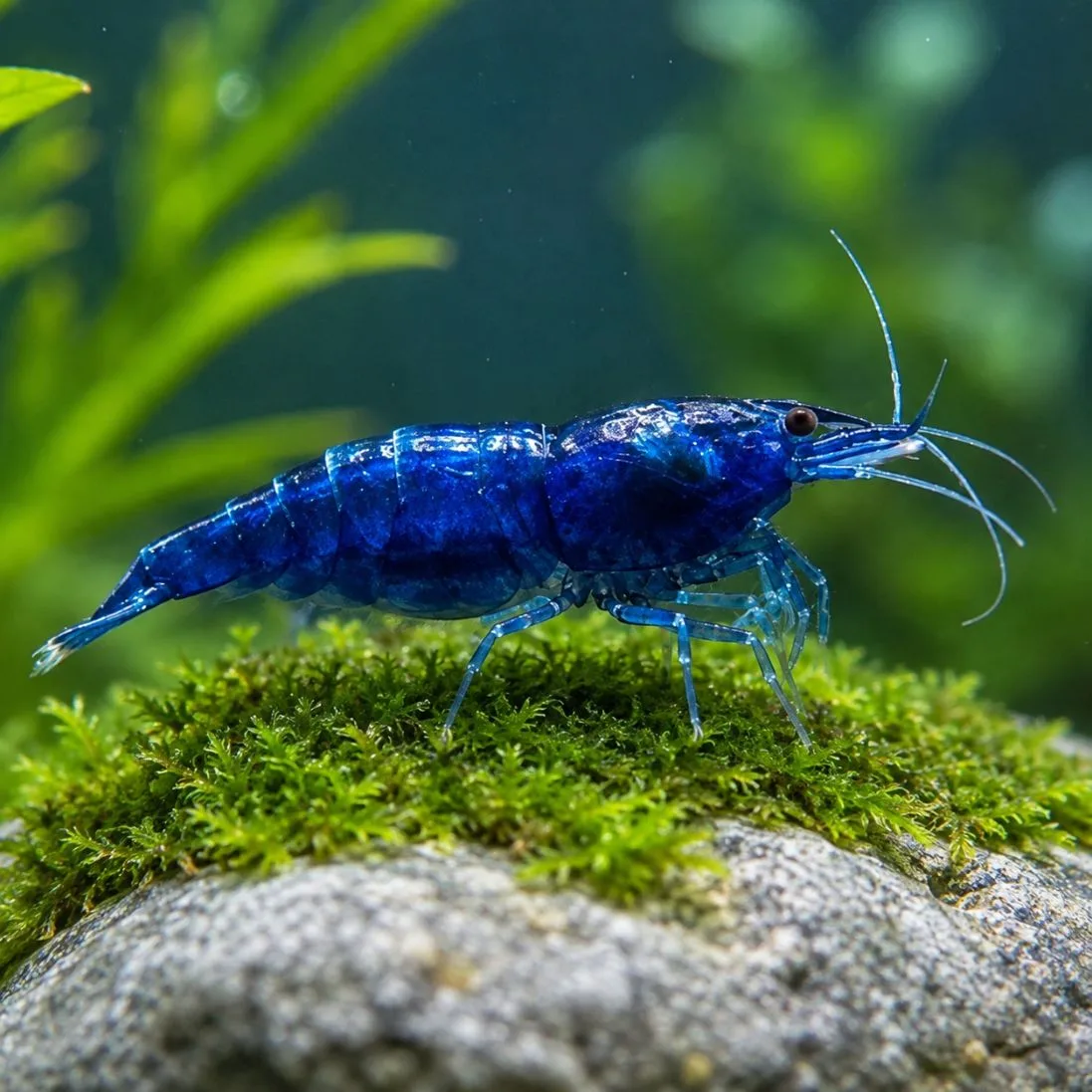
Blue Dream is a blue color line of Neocaridina davidi, the same species as the common cherry shrimp. It is one of the easier freshwater shrimp to keep once the tank is cycled and steady, and a reasonable first shrimp for someone already running a stable aquarium.
Does your water already suit Blue Dream shrimp?
Water fit is the first decision. Blue Dream sits inside the typical range for Neocaridina color lines below. Read these as a reference range rather than a promise, and remember your tank has to hold the values steadily rather than drift toward them.
| Difficulty | Often beginner-friendly in a stable, suitable tank |
|---|---|
| Temperature | 65-78°F (18-26°C) |
| pH | 6.5-8.0 |
| GH | 6-12 dGH |
| KH | 2-8 dKH |
| TDS | 150-300 ppm |
| Tank for a small colony | About 5 gal (19 L) or larger; stability matters more than the nominal minimum |
| Diet | Biofilm and algae plus appropriate supplemental foods |
| Behavior | Peaceful |
Test your water before you order
Measure temperature, pH, GH, KH and TDS now, not on the day the box lands. If a value sits outside the range above, correct it gradually over several days and let the tank settle first, because a fast move in hardness or TDS is itself the shock you want to avoid. If you are unsure, email contact@shrimpaquatics.com with your pH, GH, KH, TDS, temperature, tank size, cycle status and current livestock.
What you receive from our Blue Dream tanks
At Shrimp Aquatics, our Blue Dream are bred in our own shrimp tanks and are not collected from the wild. Stock ships from Vietnam. Color depth varies between individuals in every Neocaridina line, and we do not promise a sex, a sex ratio or a color grade for an order.
Prepare the tank before your Blue Dream shrimp arrive
- The tank is fully cycled, with ammonia and nitrite both reading zero on your own test and a biological filter established enough to keep them there. A calendar alone does not prove a cycle.
- Temperature, pH, GH, KH and TDS have held steady across several days rather than reading correctly once.
- Tap water, if you use it, is dechlorinated and tested. Local supply varies too much for anyone to call it fine without your numbers.
- Grazing surfaces are established, such as mature plants, seasoned hardscape or leaf litter, so the colony has biofilm and algae to work on from day one.
- No copper based treatment or fish medication is in the tank or its recent history. Copper and some fish medications can harm shrimp, so check the actual formulation of anything you have dosed.
- If you want shrimplets to survive, the filter intake is guarded or you are running a sponge filter.
Which tankmates put a Blue Dream colony at risk
Blue Dream shrimp are peaceful and defend nothing, so compatibility is really a question of what else will eat them. Small tetras and rasboras are often peaceful toward adults but take shrimplets, and small Corydoras do the same while competing for food on the bottom. Otocinclus carry a generally lower risk with adult shrimp, though they are sensitive and need a mature tank with grazing of their own. Bettas, larger fish and cichlids are a material predation risk and we do not describe them as shrimp safe. Whatever a fish’s reputation, its temperature and water chemistry must overlap with the range above before compatibility is worth discussing. Assassin snails prey on other snails, so check the species rather than assuming every snail is safe.
Mixing Blue Dream with other Neocaridina color lines
Blue Dream crosses with the other Neocaridina davidi color lines, and mixing them can produce wild type brown offspring, so we do not promise color stability in a mixed tank. If you expect to add more Neocaridina shrimp to this aquarium later, choose one color line and stay with it.
What to do on the day your Blue Dream shrimp arrive
Follow the instructions packed with your order first, because packing method, transit duration and species all change what is right that day. Shrimp Aquatics’ current shipment protocol, for eligible long distance orders arriving in a sealed transport bag, is to equalize temperature and then transfer the shrimp across without adding shipping water to the aquarium. Never pour transport water into your tank. If a bag has opened or leaked, or anything differs from the instructions supplied, email contact@shrimpaquatics.com before transferring them.
Feeding a new Blue Dream colony
Biofilm and algae in a mature tank do most of the feeding, and a new colony often grazes for a while before showing interest in prepared food. Offer appropriate supplemental shrimp food sparingly at first and take out what is left, so the tank is not carrying waste it was not carrying before.

There are no reviews yet.