
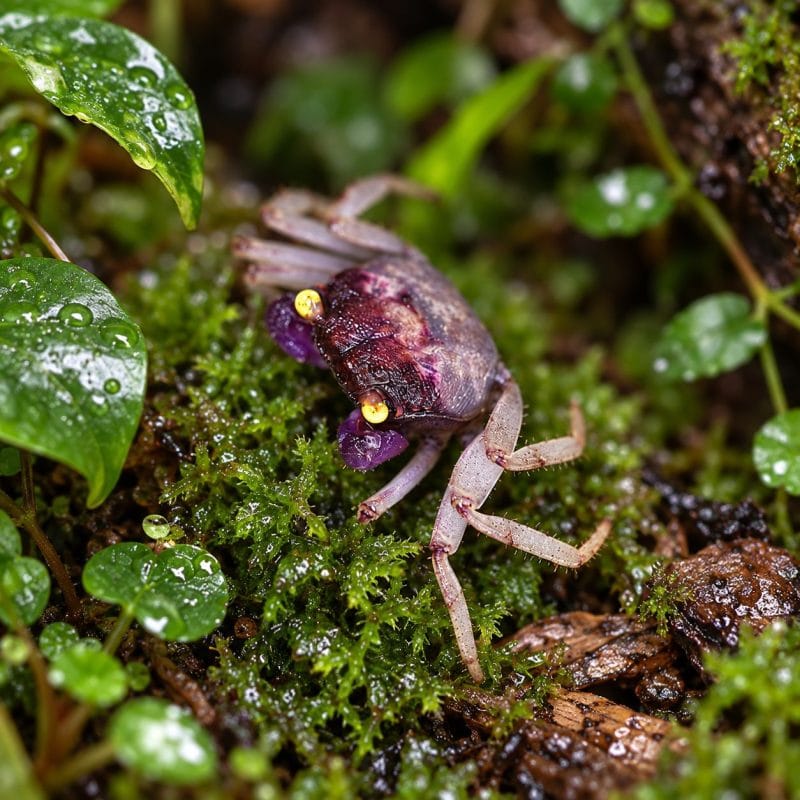

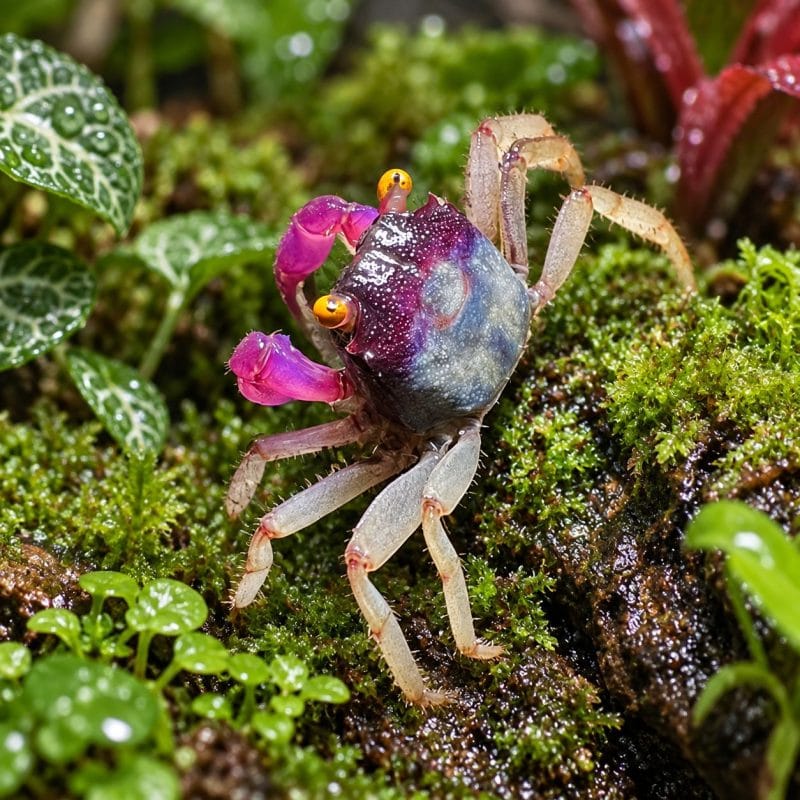
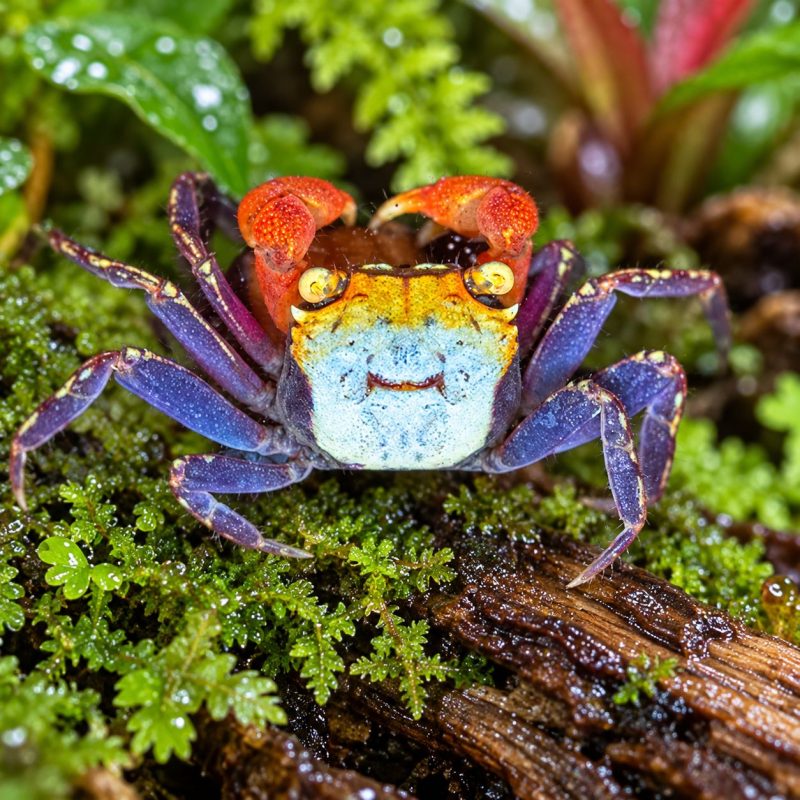
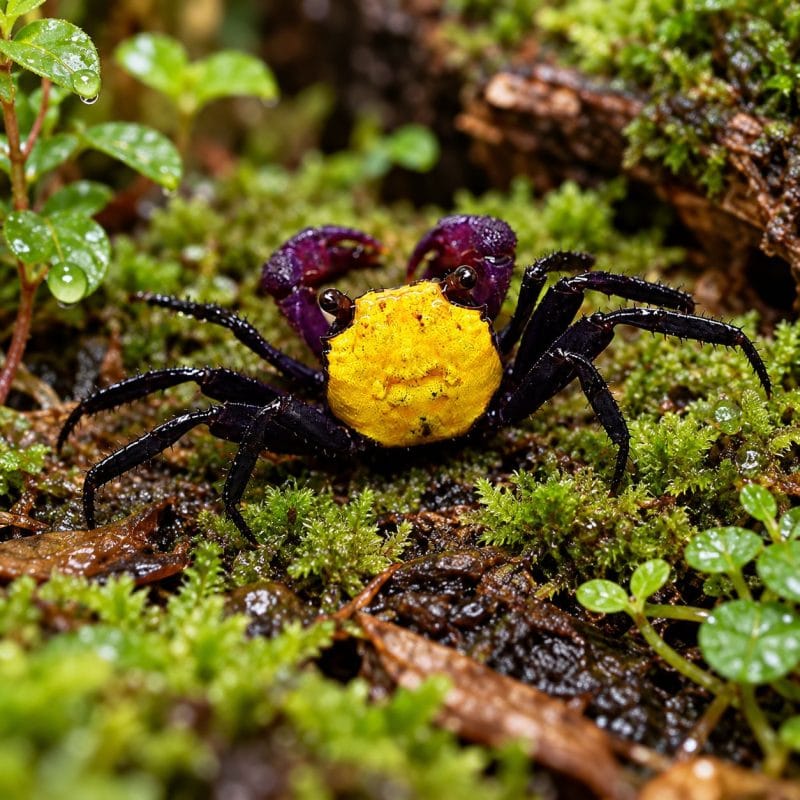
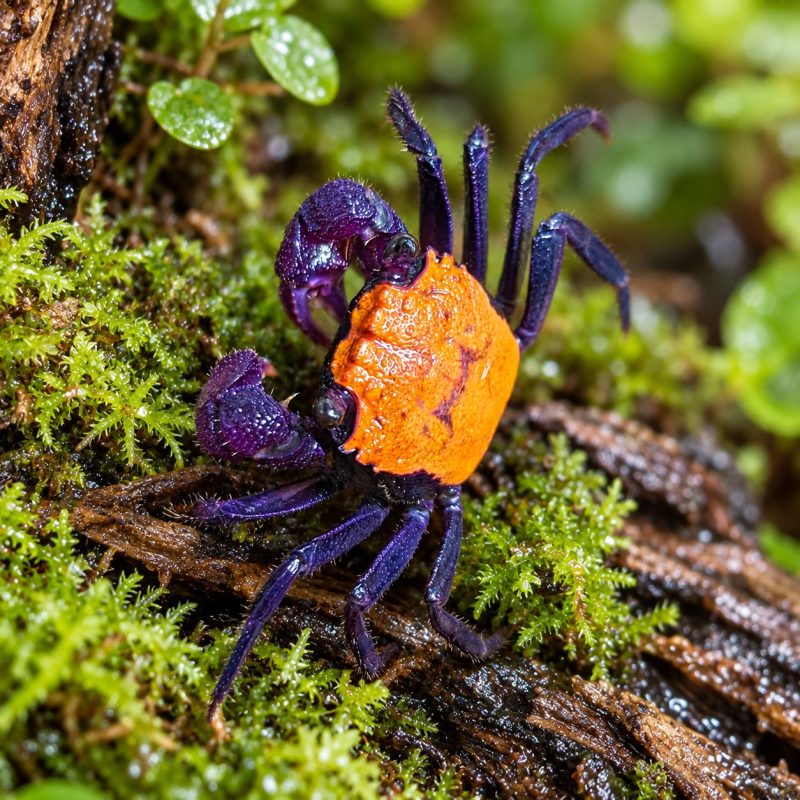
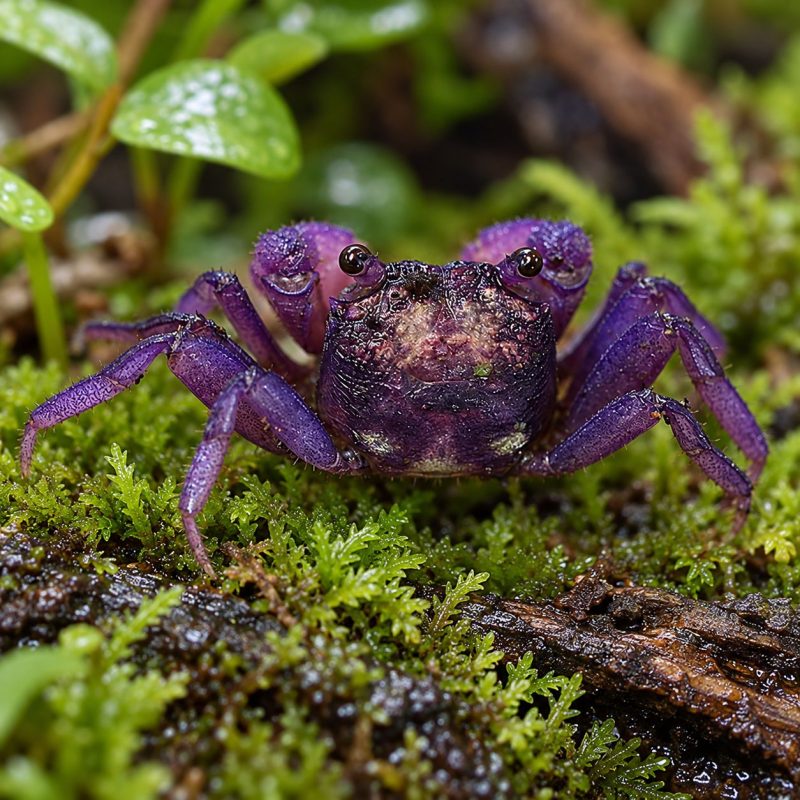
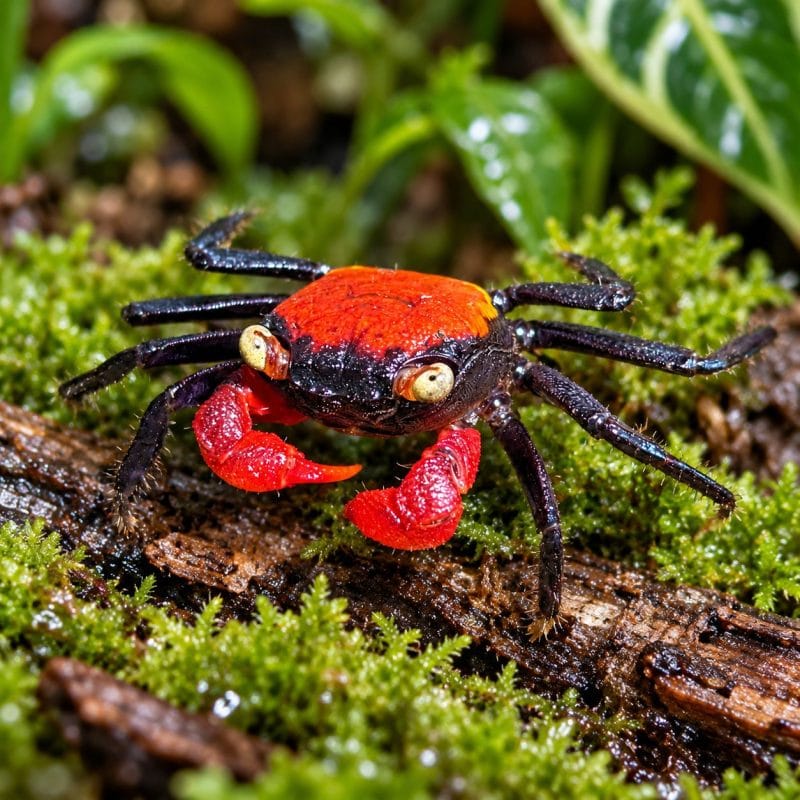
The Orchid vampire crab is a small, semi-terrestrial crab for a humid, escape-proof paludarium, so it’s the right buy only if you have, or are ready to build, an enclosure with real land and a water section it can climb into. Orchid is the trade name for the look: violet claws, a dark purple-gray shell, yellow eyes and pale legs. It’s a Geosesarma species, and the trade name doesn’t tell you which one, so we sell it by its line and we don’t promise coloration.
Is your paludarium ready for an Orchid vampire crab?
It’s ready when the lid seals, the air stays humid, the land has hides and the water section is cycled and easy to walk in and out of. Vampire crabs live on land, but they go into the water to molt, so a crab that can’t fully enter the water, or can’t climb back out, is at risk at its softest moment. A fully flooded tank is the wrong home, and so is a shrimp aquarium you were hoping to add a crab to.
| Temperature | About 78°F (26°C), held within 72-85°F (22-29°C) |
|---|---|
| Humidity | High. A closed lid, moist substrate and moss, and misting keep it up; dry air is the usual failure |
| Land | A real land area with enough hides that every crab can get out of sight at once |
| Water section | Cycled, with a gentle slope or ramp so a crab can walk in, go fully under and climb out |
| Lid | Closes with no gaps, including around cables and tubing |
Test the water section before you order
The water is where your crab molts, so it has to be cycled: ammonia 0 and nitrite 0 on your own test kit, with an established filter. A few weeks on the calendar doesn’t prove a cycle; the test does.
Can shrimp or fish share the water with Orchid vampire crabs?
Yes, Neocaridina shrimp can, and they’re the tank mate we’d pick first, as long as the water stays inside their own 65-78°F (18-26°C) range. The crabs’ band meets theirs at 72-78°F, so set the enclosure there and never warm the shrimp past it for the crabs. At Shrimp Aquatics, we keep Neocaridina shrimp in the water section of our vampire crab paludariums. They breed there, and the young grow up normally; the crabs rarely manage to catch them. Rarely isn’t never, though, so don’t add shrimp you’d hate to lose.
Fish are a narrower choice. We keep only small, peaceful fish with our crabs. An aggressive fish can eat a crab, or harass one that has come down into the water to molt, and a molt that is disturbed can fail.
Other vampire crabs are a no. Two crabs that look alike aren’t necessarily the same species, and we wouldn’t mix lines in one enclosure. Keep Orchid crabs with their own kind.
How should you feed an Orchid vampire crab?
Feed small portions and lift whatever is left the next morning, so leftovers don’t foul the land or the water section. In the wild, the described vampire crab species eat small insects, and probably midge larvae and plant detritus too. Skip food on arrival day and let the crabs settle into cover first; a crab that’s hiding isn’t hungry yet.
What arrives when you order an Orchid vampire crab?
You get the sex you pick: this listing has a Male or Female option, so you choose on this page. Everything in our catalog is bred or propagated in our own tanks rather than collected from the wild. We don’t promise breeding, clutch size or the number of young from any order.
Expect a small crab and a short life. Described vampire crab species measure about 10-15 mm across the shell, and species profiles by crab specialists put the longest lifespan at about two years for a few Geosesarma species; nobody has aged these crabs in a study. If a different look suits you better, compare our other vampire crab lines before you choose.
Have the enclosure humid and settled before delivery, follow the instructions packed with your order, and let the crabs walk into cover on their own. Livestock that arrives dead is replaced free of charge, counted from the first animal, when you report it within 2 hours of the carrier’s delivery time with an uncut unboxing video. The live arrival guarantee sets out how to film it. Confirming your own import rules is part of ordering. We cannot tell you that live freshwater invertebrates are legal to import where you live.



There are no reviews yet.