
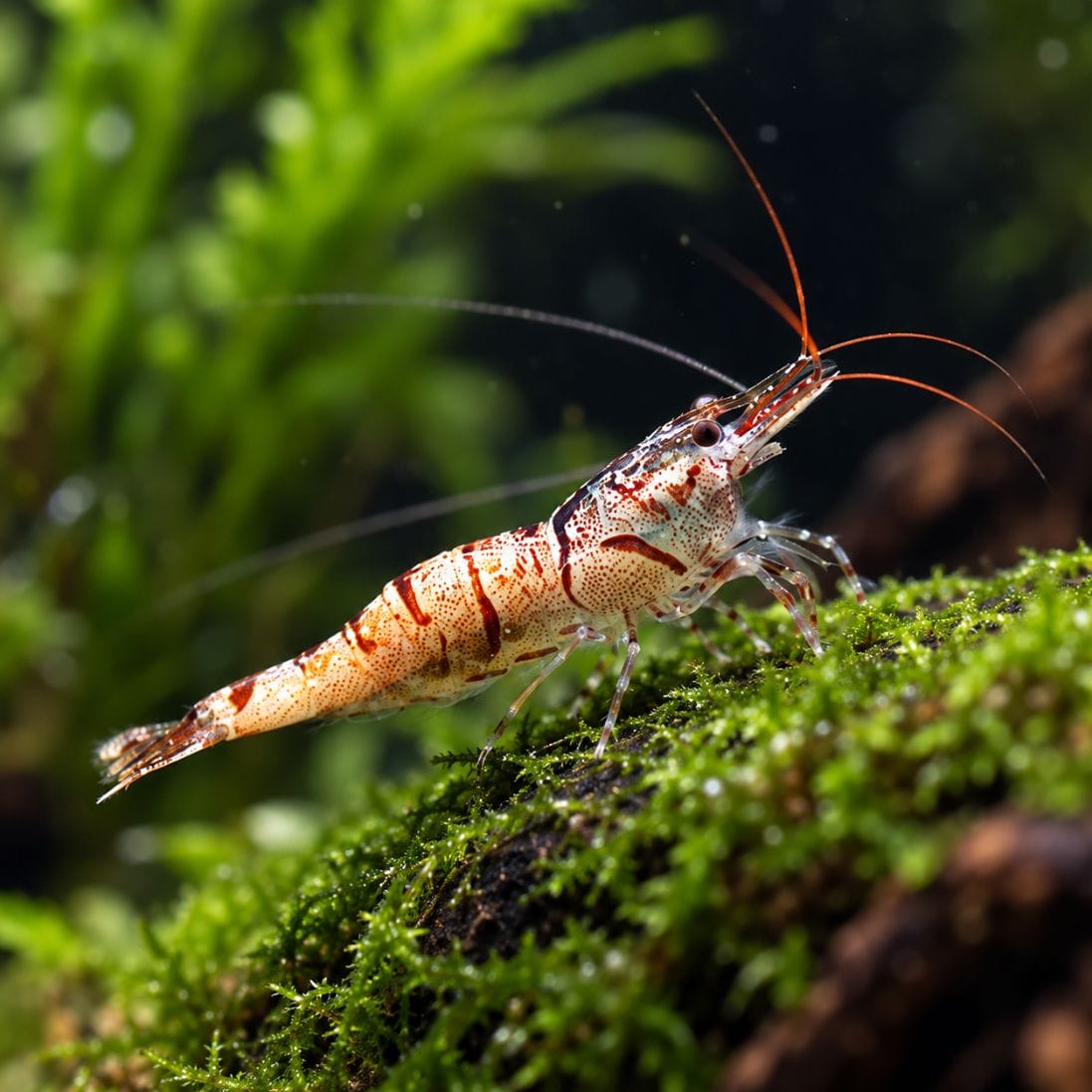
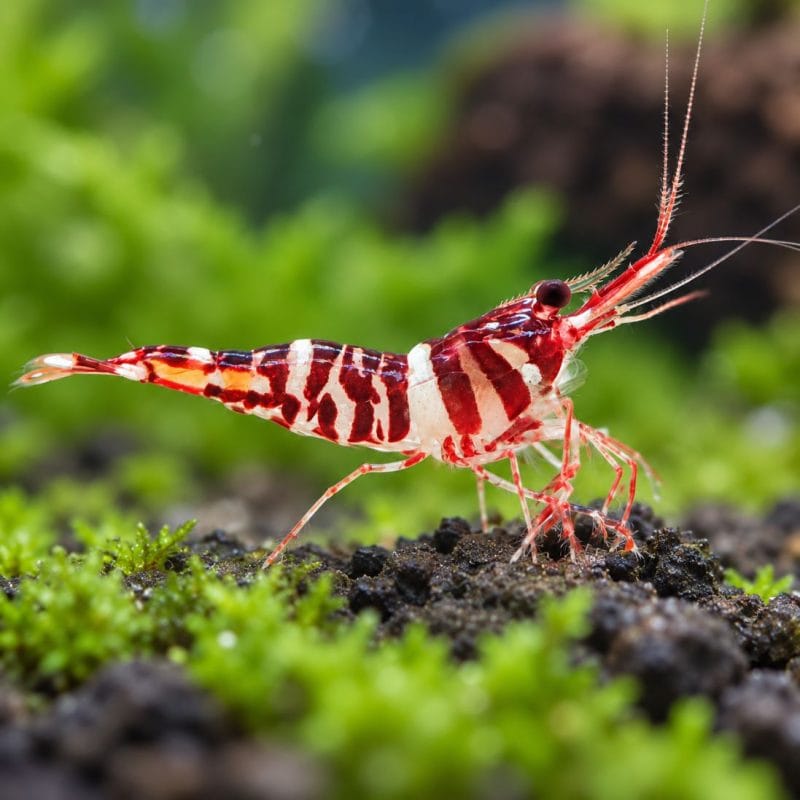
The Snow Zebra is a Sulawesi lake Caridina: an opaque white shrimp with dark banding across the tail, bred in our own tanks. It’s an advanced to expert animal, and the water it needs is warm and alkaline. If your tank isn’t already holding 79-86°F (26-30°C) and pH 7.5-8.5, sort the water out first and buy the shrimp later.
What you are buying when a shrimp is sold as Snow Zebra
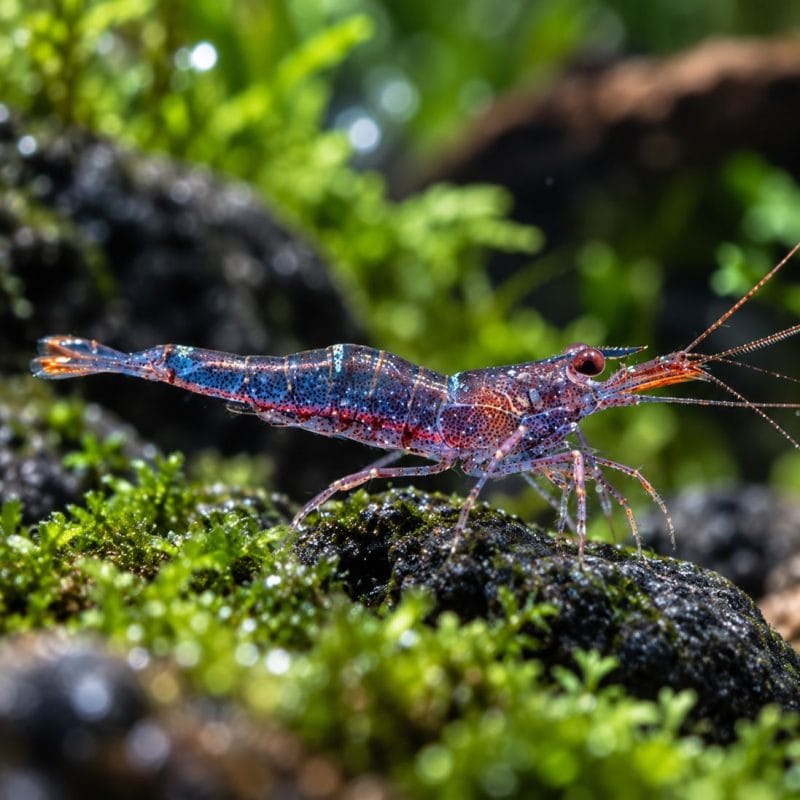
Snow Zebra is a trade name, not a settled species. The hobby has not agreed on which Caridina it is, and we won’t print a species name we can’t confirm for our own stock. What we can tell you is what arrives: a white bodied Sulawesi shrimp with dark transverse banding, tank-bred by Shrimp Aquatics and never collected from the wild.
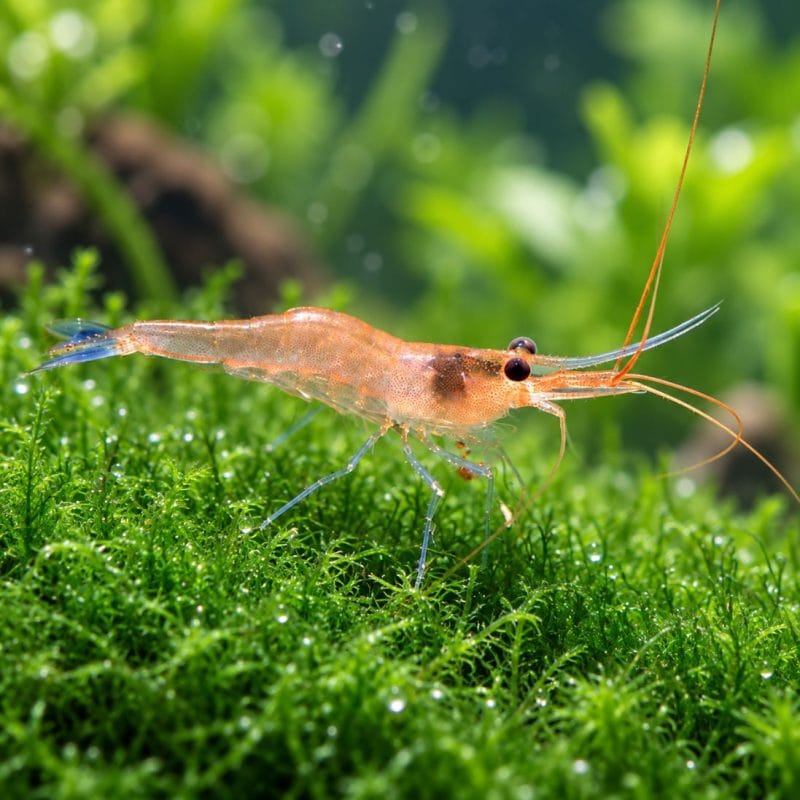
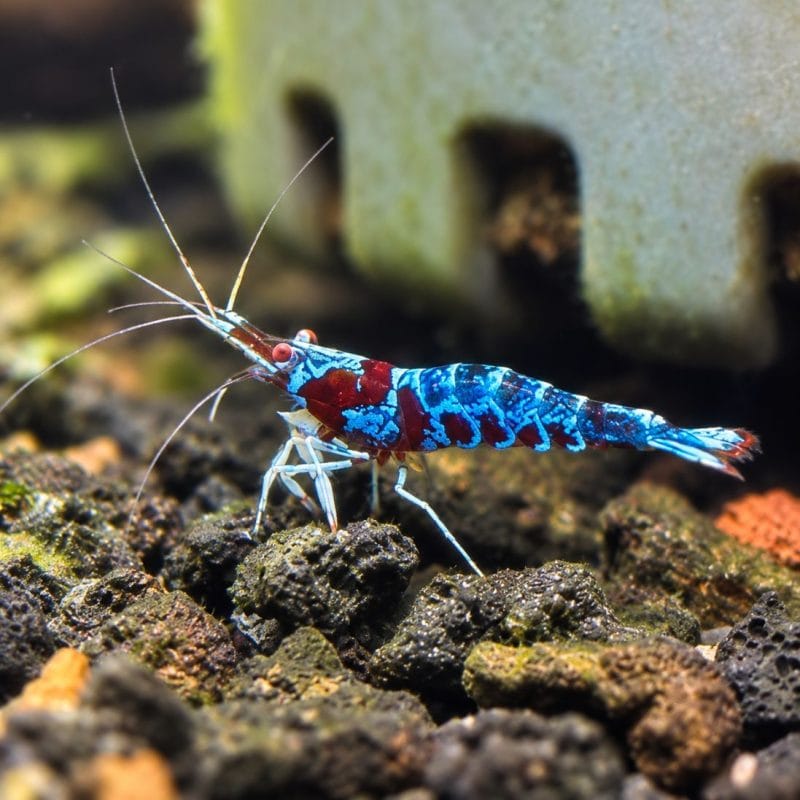
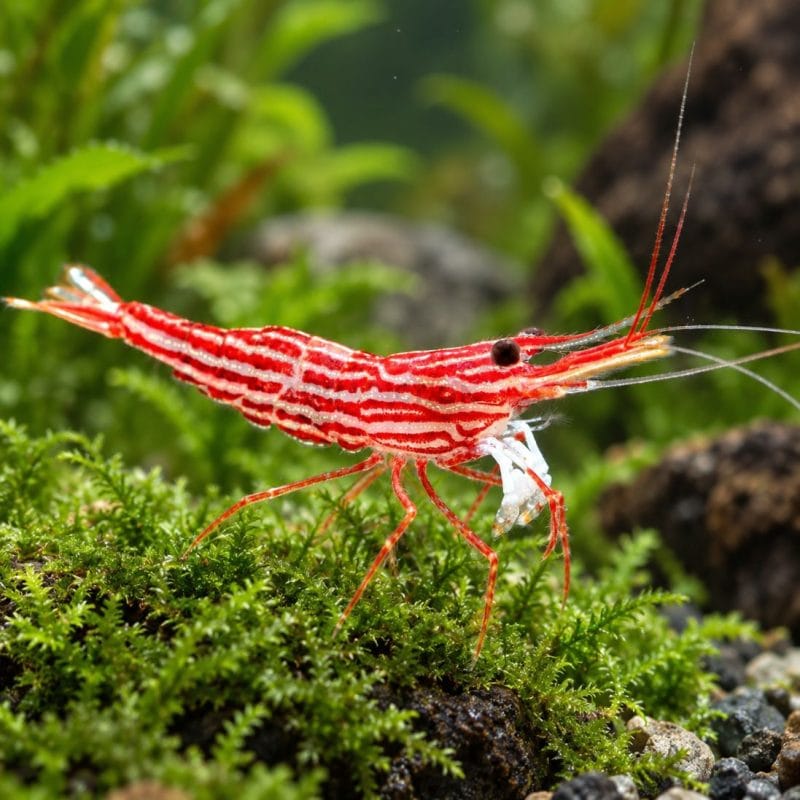
Color varies between individuals and usually deepens as a shrimp matures, so the photos show the line, not the animal you receive. We don’t sell these by grade, and we don’t promise sex or a sex ratio.
The warm alkaline water a Snow Zebra needs
Every Sulawesi lake shrimp we sell is kept in the same water, and the Snow Zebra is no exception. These are the numbers to hold, not numbers to chase.
| Difficulty | Advanced to expert |
|---|---|
| Temperature | 79-86°F (26-30°C) |
| pH | 7.5-8.5 |
| GH | 4-8 dGH |
| KH | 3-6 dKH |
| TDS | 150-250 ppm |
| Nitrate | Under 10 ppm |
| Ammonia and nitrite | 0 ppm |
| Substrate and hardscape | Inert only, no pH lowering soil |
| Diet | Biofilm, diatoms and algae, with occasional prepared food |
| Behavior | Peaceful and often shy |
Holding Sulawesi shrimp water parameters steady week to week matters more than landing on a middle number. A tank that sits at pH 7.8 and stays there will treat these shrimp better than one that drifts across the whole range every time you top it off. Steady is the whole job here.
Test before you order, not after
Read the tank you plan to use, on the day you plan to order. Warm alkaline water is less forgiving of waste than a cool soft tank, so last month’s reading isn’t the one that matters.
What our Sulawesi tanks run before your shrimp ship
At Shrimp Aquatics, most of our Sulawesi systems currently run at TDS 150 ppm, GH 6-7 dGH and pH 7.5. That sits at the lower end of the table above, so if your tank runs nearer the top of it, give the shrimp a slower, gentler introduction.
Check your tank against this list before you order Snow Zebras
- Ammonia and nitrite read 0, and nitrate stays under 10 ppm.
- Rock and glass carry visible biofilm and diatom growth the shrimp can graze from day one.
- Your heater holds one set point overnight as well as during the day.
- You mix replacement water outside the tank with a Sulawesi mineral, then test it before it goes in.
- You top off evaporation with pure RO water only, never with remineralized water.
- If any of these is still a plan instead of a habit, wait. A tank that’s cycled but not yet mature is the harder problem, because these shrimp graze from the moment they land.
Tankmates that suit a Snow Zebra tank
Rabbit snails from the same lakes are the easy answer. They want the same warm alkaline water, turn coarse waste into grazing surface, and aren’t a threat to a shrimplet. Beyond that, keep it thin: every extra animal competes for the same biofilm and adds waste to water that’s already warm.
Bee and Crystal Caridina are a no. Their water pulls the opposite way, and no middle setting serves both. Neocaridina can share a Sulawesi tank, but only at Sulawesi temperature, which sits above the water those shrimp are usually kept in. Fish described as shrimp-safe will still take shrimplets, and some will take an adult after a molt. Do you have another tank to move fish into if shrimplets start disappearing? If not, start this one as a single species tank. That’s what we’d do.
What to feed Snow Zebras, starting on arrival day
A mature tank does most of the feeding by itself. Prepared food is occasional here, not daily, and the usual rule is to lift anything still sitting on the rock after an hour. Food breaking down in warm water raises ammonia fast, and that’s a bigger risk than a light week.
On arrival day, follow the instructions packed with your order. Equalize temperature with the bag sealed, transfer the shrimp without adding transport water to your aquarium, and then leave them alone. Keep the lights low, skip feeding for the first day, and let them find the rock. Unsure whether your setup fits? Email your readings, tank size and cycle status to contact@shrimpaquatics.com and we’ll tell you honestly. If a different line suits your water better, you’ll find it among the rest of our Sulawesi shrimp lines.





There are no reviews yet.