
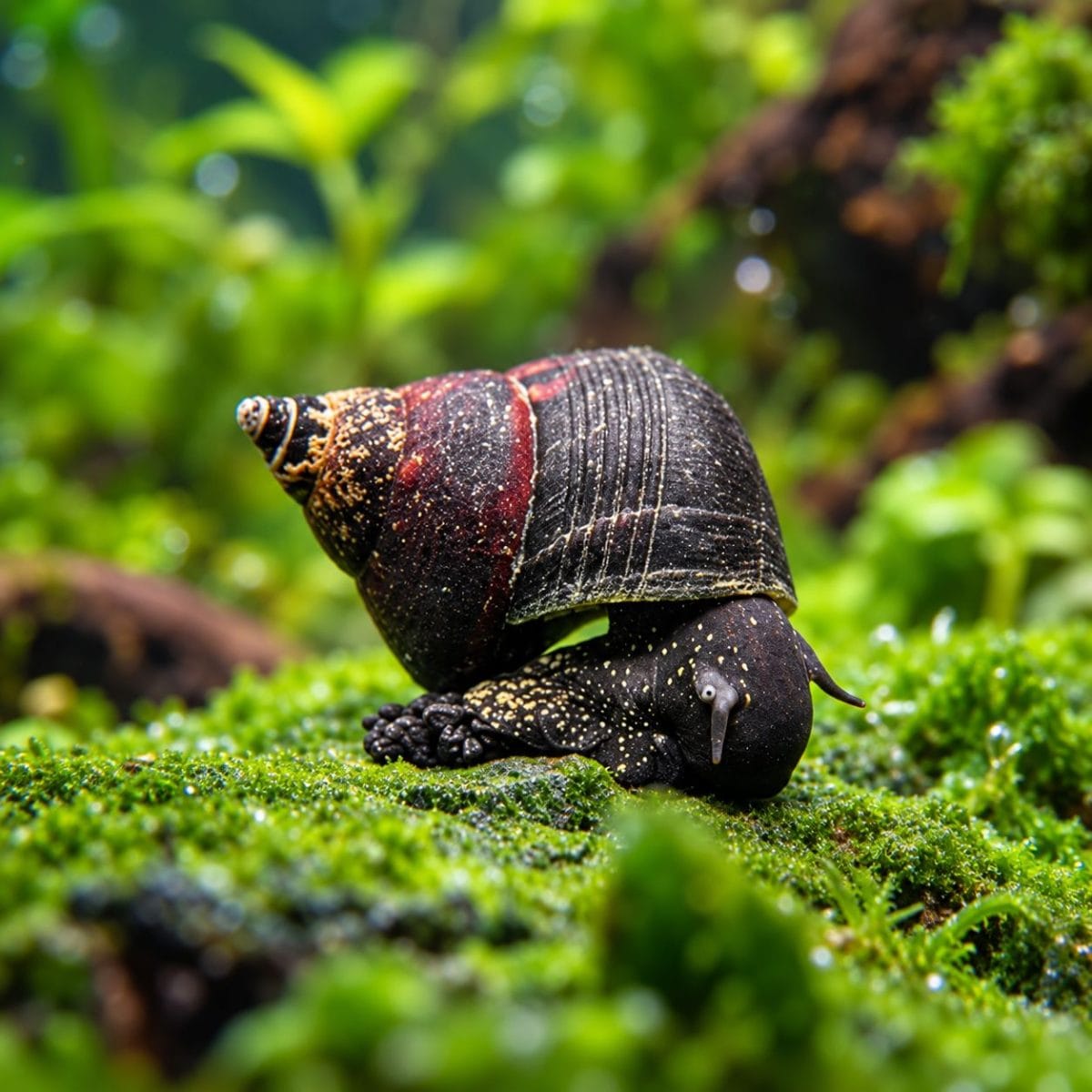
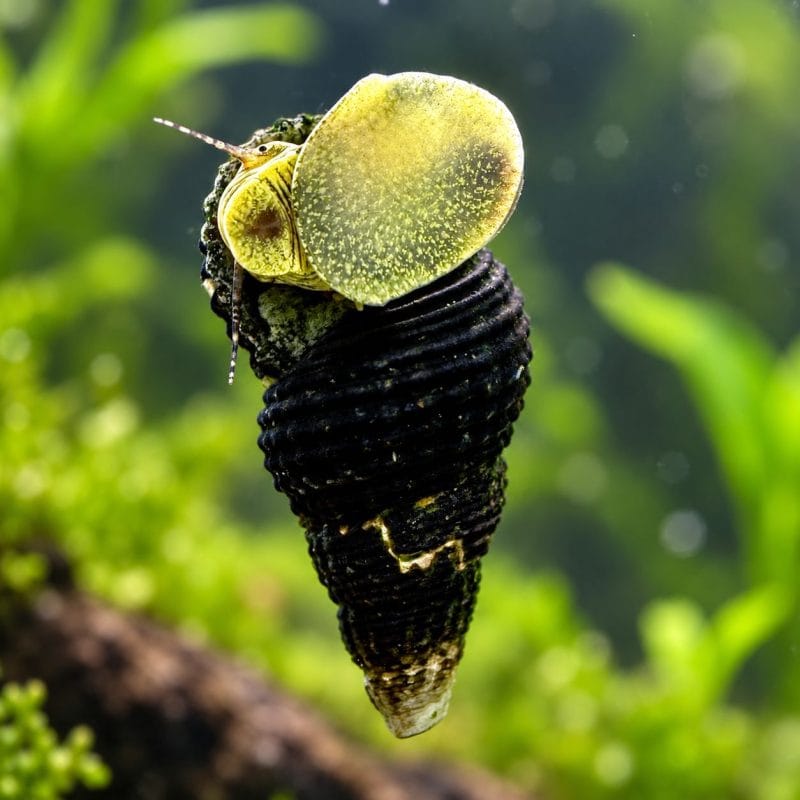
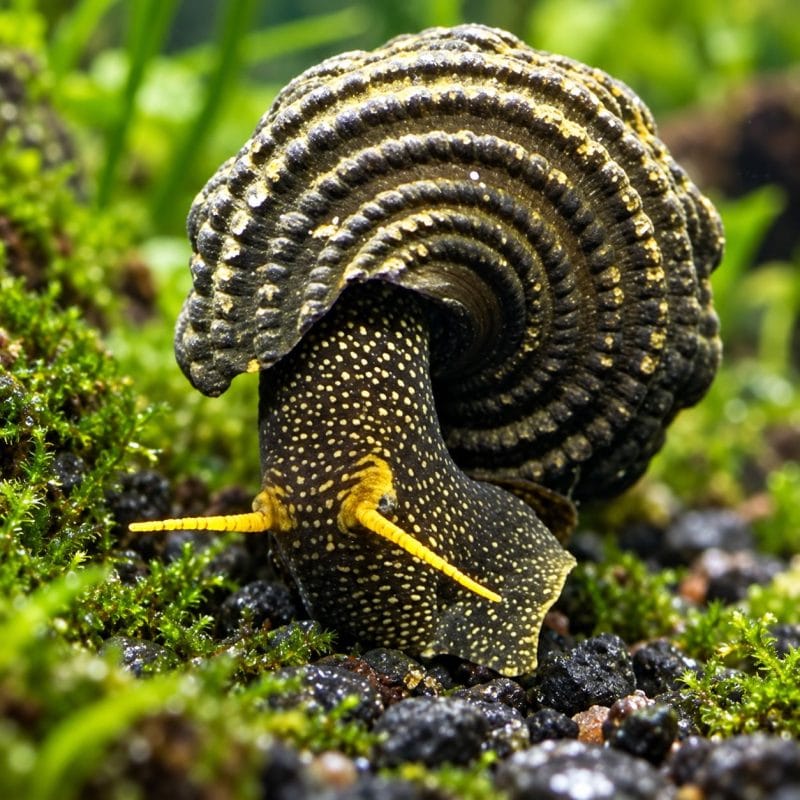
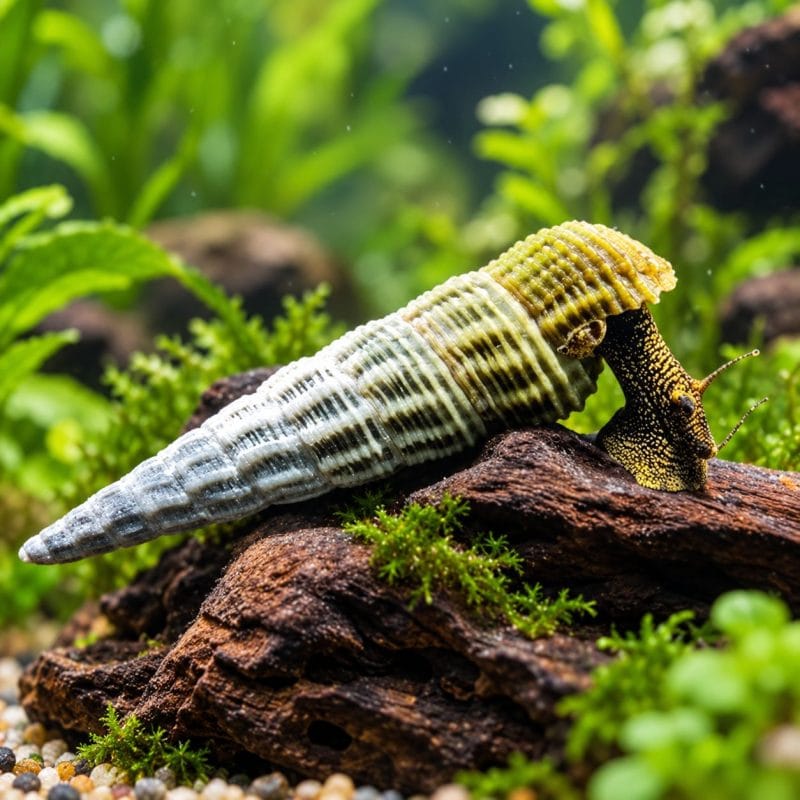
The Triangle Rabbit Snail is a tank-bred Sulawesi rabbit snail (Tylomelania sp.) for keepers who already run a mature, warm, alkaline tank. If your tank runs below 79°F (26°C), below pH 7.5 or on an active soil, it isn’t the right tank for this snail yet.
Should you buy a Triangle Rabbit Snail for your tank?
Yes, if your water already sits in the range below and the rock and glass carry a film of algae and biofilm. No, if you want a hardy snail for a room-temperature community tank or something to clear your algae. We rate the snail itself as moderate, because it’s a hardier animal than the Sulawesi shrimp it usually lives with. The tank is the demanding part. That’s why this isn’t a beginner snail, and why it won’t make Sulawesi keeping any easier.
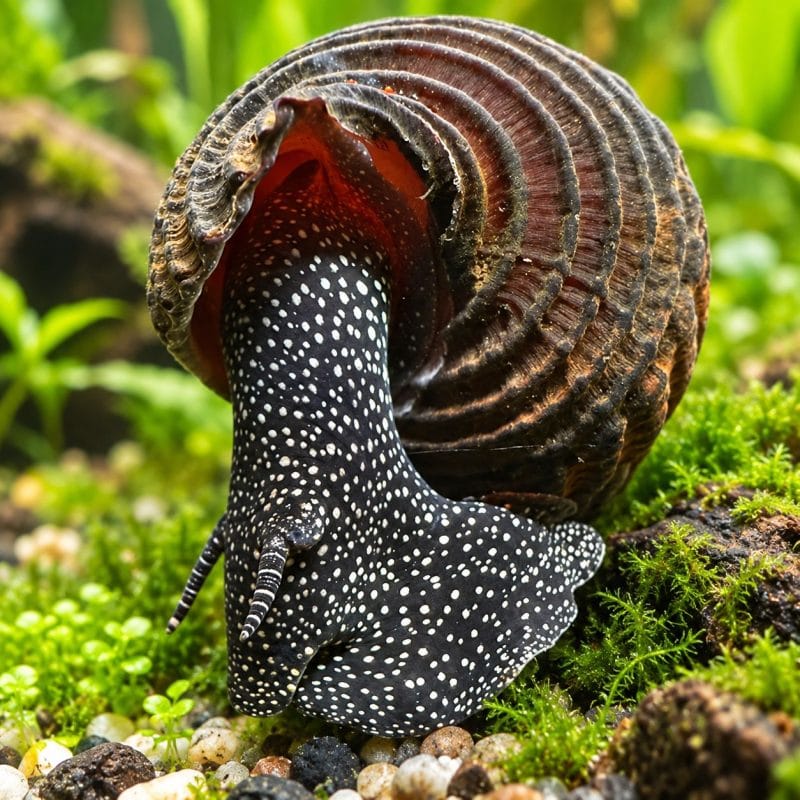
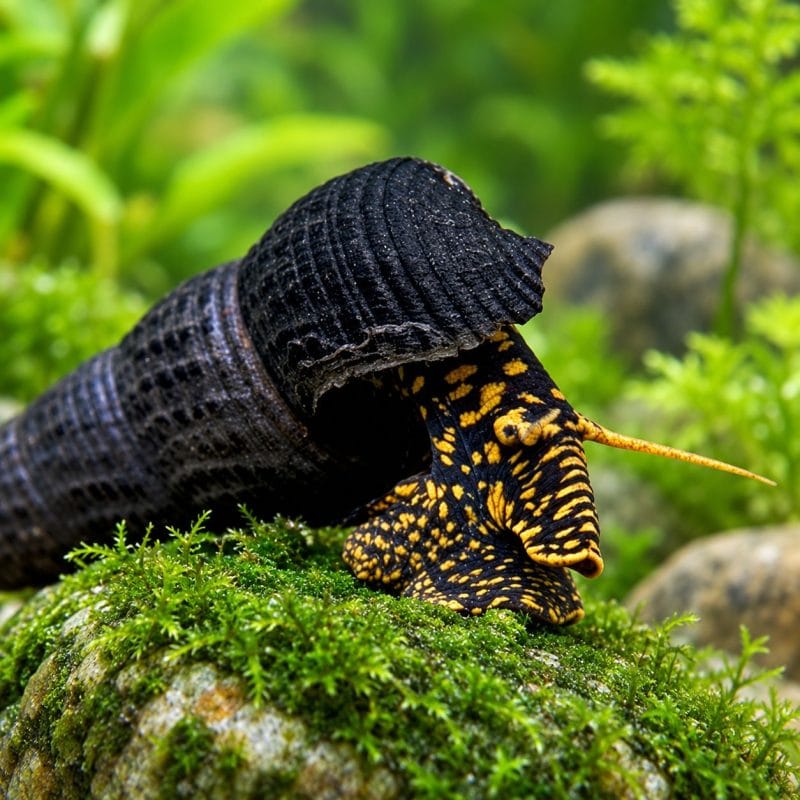
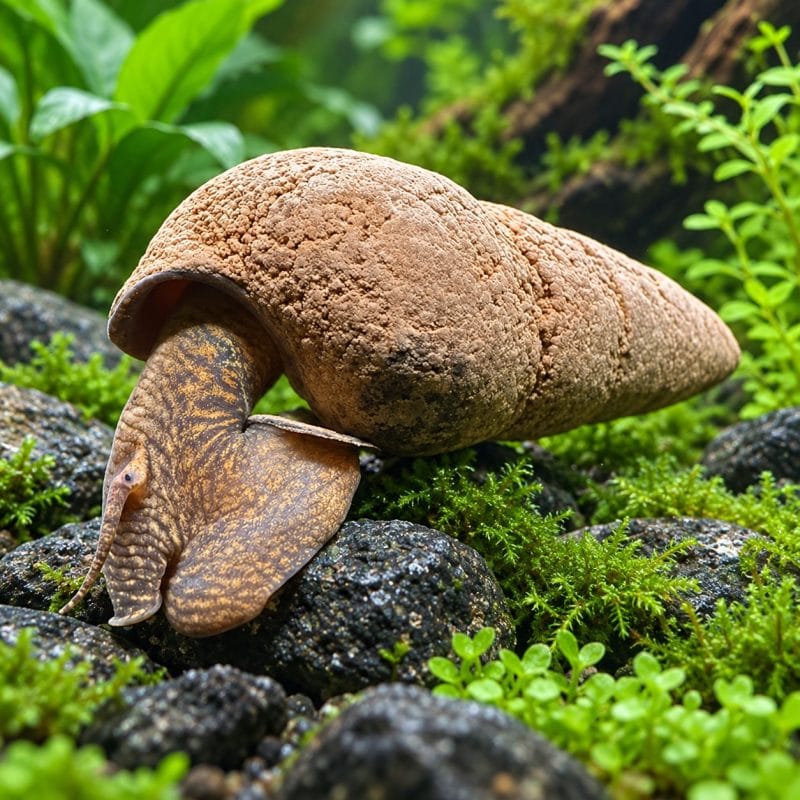
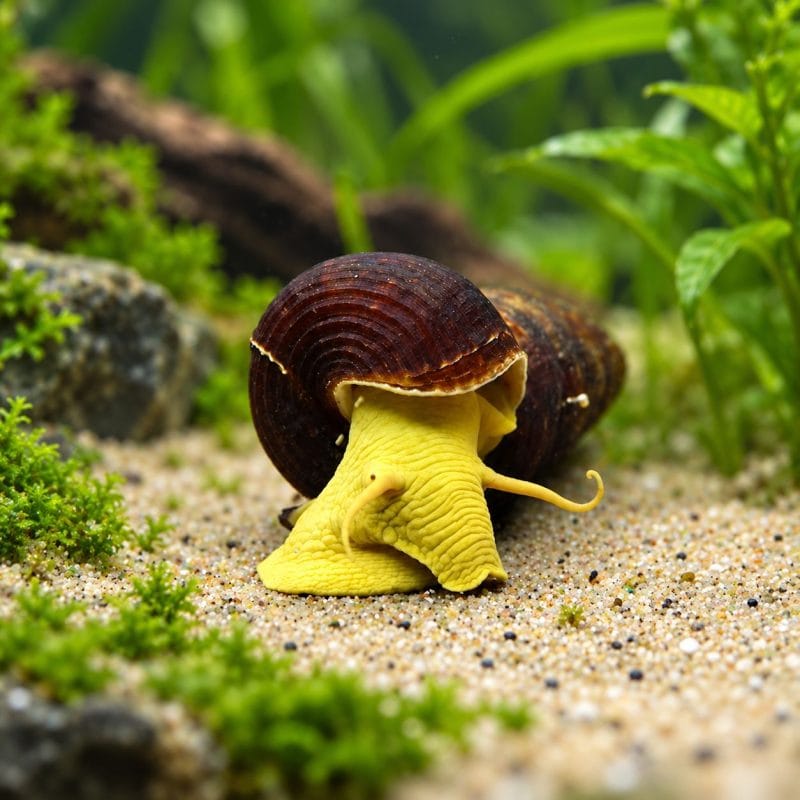
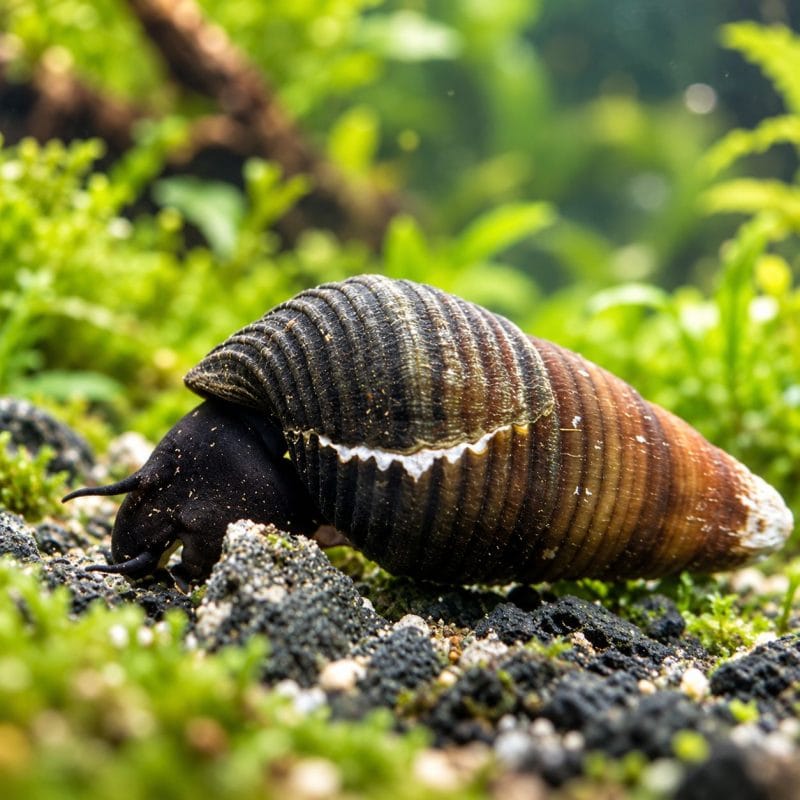
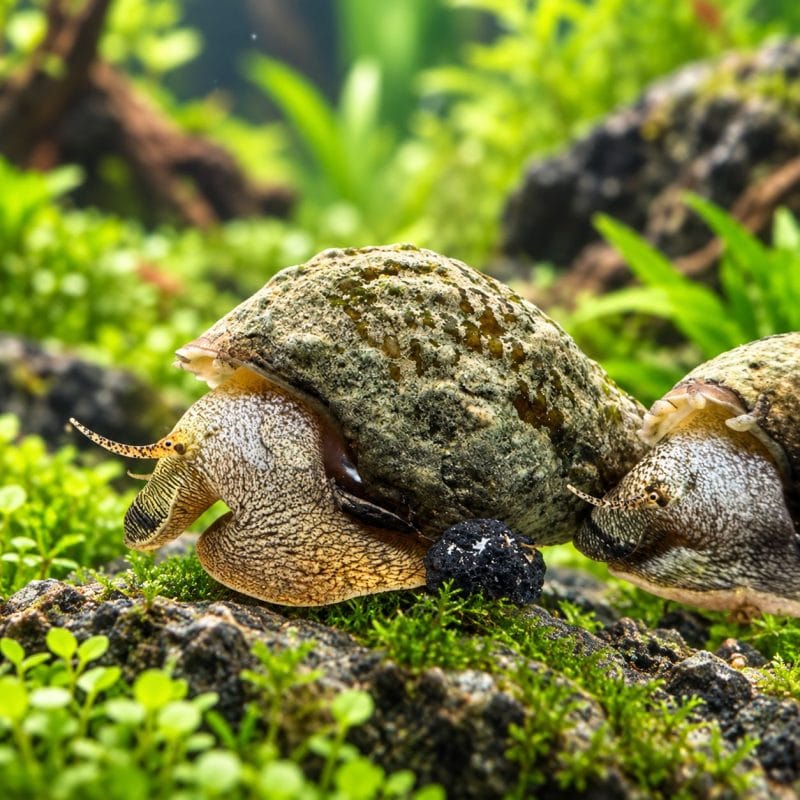
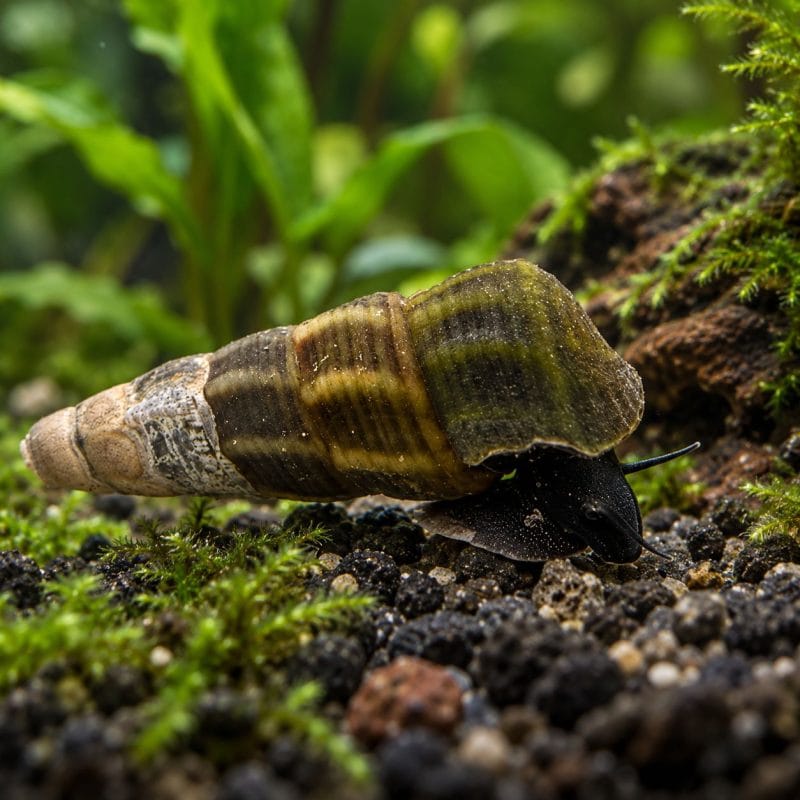
At Shrimp Aquatics, this line is bred in our own tanks, not collected from the wild. “Triangle” is the trade name for this line, not a species name, so we sell it as Tylomelania sp. Shell shape, color and pattern vary from snail to snail, and we don’t promise a particular look, or breeding, sex or the number of young from any order. All of our Sulawesi snail lines need the same water, so picking a different one won’t get you around the setup.
What water does a Triangle Rabbit Snail need?
Hold the numbers below steady. It’s the same range we give our Sulawesi shrimp, and a tank that stays inside it week after week matters more than hitting one exact figure.
| Temperature | 79-86°F (26-30°C) |
|---|---|
| pH | 7.5-8.5 |
| GH | 4-8 dGH |
| KH | 3-6 dKH |
| TDS | 150-250 ppm |
| Nitrate | Under 10 ppm |
| Substrate | Inert sand and hardscape, no active pH-lowering soil |
Test before you order
Measure temperature, pH, GH, KH and TDS in the tank the snail will actually live in, not in your tap water. If anything sits outside the table, correct it and let it settle before you order. Don’t plan to fix the water after the snail arrives, because fast swings in temperature, pH or hardness are a risk of their own.
Is your tank ready for a Triangle Rabbit Snail?
Every line below should be a yes before you check out.
- Ammonia and nitrite read 0, with an established biological filter. A date on the calendar doesn’t prove the tank is cycled.
- You can see a film of algae and biofilm on the rock and glass. A rabbit snail adds to the grazing load, so a spotless tank is an empty larder.
- Your heater holds 79-86°F (26-30°C) through the whole year.
- pH, GH, KH and TDS have stayed in range across several tests, and KH isn’t drifting down between water changes.
- The substrate is inert, with nothing pulling pH down.
- Nothing containing copper goes into the tank, including fish medications.
- There are no assassin snails in the tank.
Which tankmates suit a Triangle Rabbit Snail?
Sulawesi shrimp are the natural match. They want the same water and graze the same film, so the only real question is whether your tank grows enough of it to feed both. In a small tank, keep total stocking modest.
Neocaridina are a no. Their water chemistry overlaps, but their temperature doesn’t: Neocaridina are kept at 65-78°F (18-26°C), and this tank starts at 79°F (26°C). Bee and Taiwan Bee Caridina need soft, acidic water, the opposite of this setup. Assassin snails hunt other snails, so never keep them together.
How do you feed a Triangle Rabbit Snail?
Mostly you don’t. It grazes the film of algae, biofilm and aufwuchs on rock and glass, which is why that film has to be there before the snail is. Don’t buy it as an algae eater or a cleanup crew. If you offer prepared food, keep it to a small top-up and lift what’s left within a few hours so it doesn’t foul warm water. There’s no published record of what this snail accepts beyond grazing, so we won’t hand you a menu, and no food makes up for a tank that isn’t mature.
What should you do when your Triangle Rabbit Snail arrives?
Follow the acclimation instructions packed with your order, because packing and transit time change what’s safest. Don’t pour the shipping water into your tank. A new snail may stay shut in its shell for a while after the journey, so keep the lights low, leave it alone and keep testing the water as usual. If something about it worries you in the first weeks, compare it with what healthy looks like in Sulawesi rabbit snail care before you change anything in the tank.


There are no reviews yet.