
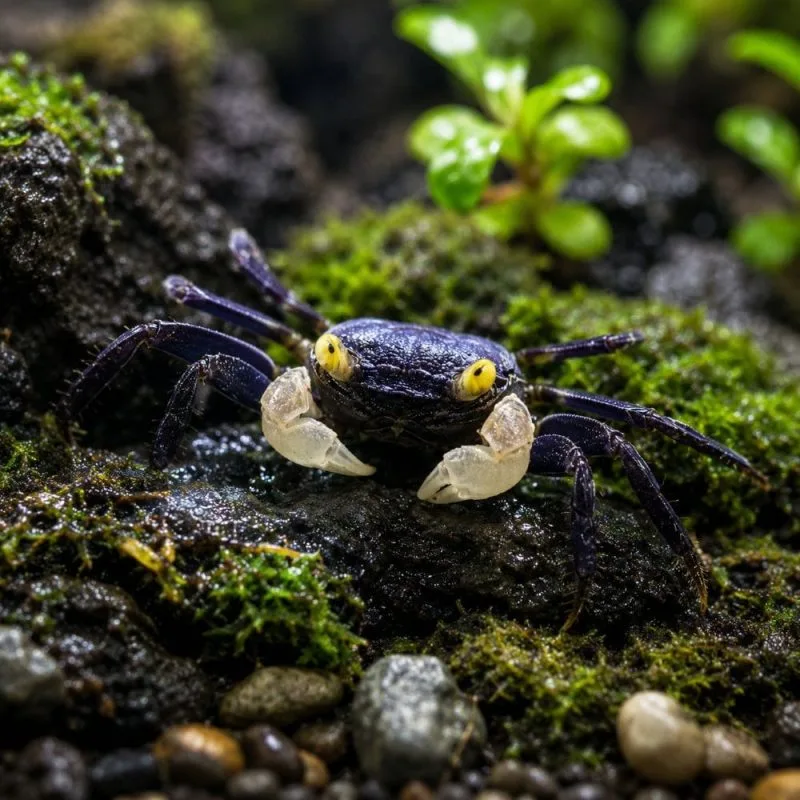

Is Geosesarma pontianak right for your paludarium?
This crab rewards keepers who already run a humid, planted setup. It punishes anyone expecting a low-maintenance aquarium pet. Before you buy, be honest about which side you’re on.
A good fit if
- You can build and run a tall, bioactive paludarium
- You’ll hold humidity at 75% or higher
- You want a striking display animal, not a handling pet
- You’re fine feeding live micro-prey like isopods and springtails
Not the right species if
- You want a fully aquatic tank
- This is your first crab or first vivarium
- You can’t keep humidity high and stable
- You plan to mix crab species or color morphs
A land crab, not an aquarium crab
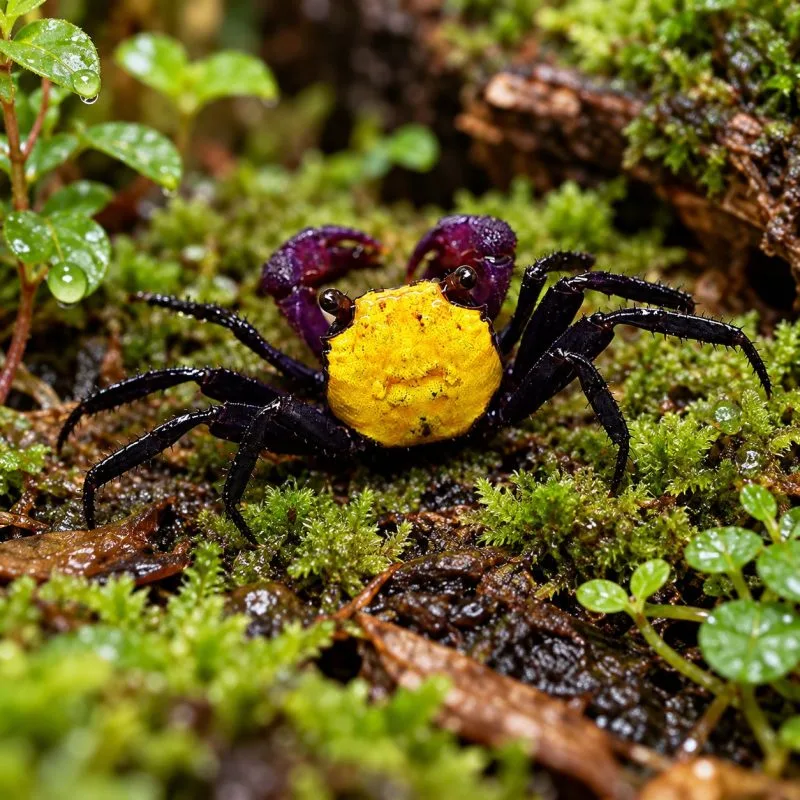
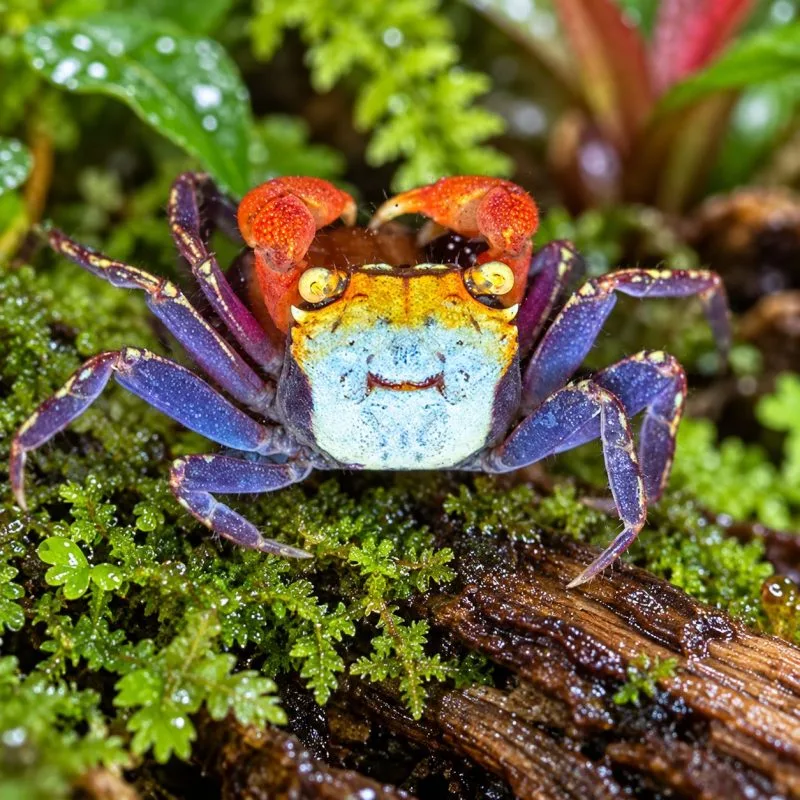
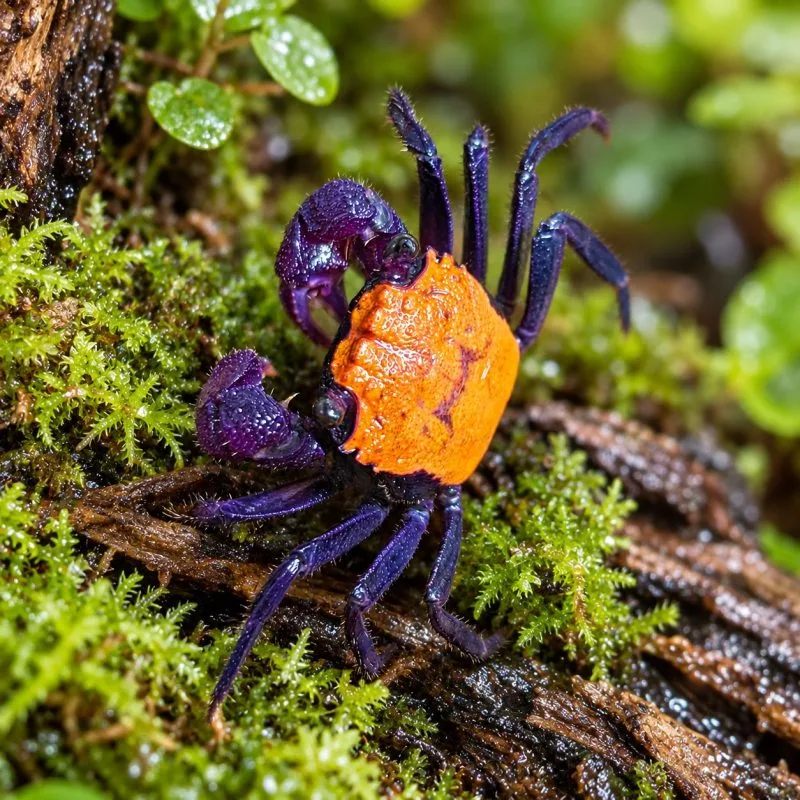
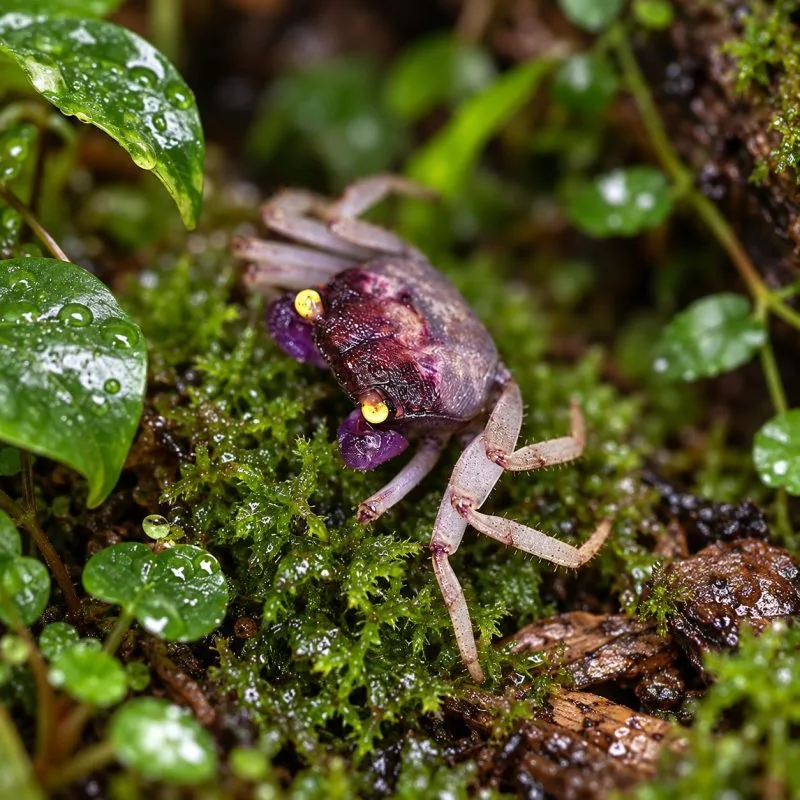
Dropping a Vampire Crab into a full water tank drowns it. Geosesarma pontianak breathes air through moist gill chambers, but it goes into the water to molt. It needs a paludarium: mostly land, a pool it can climb into and fully enter, and high humidity.
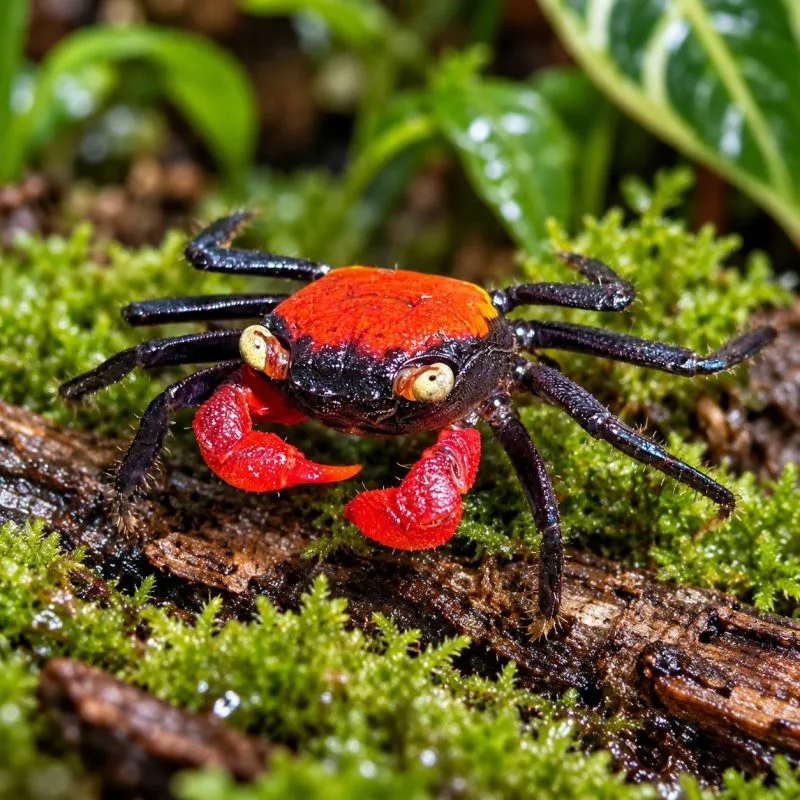
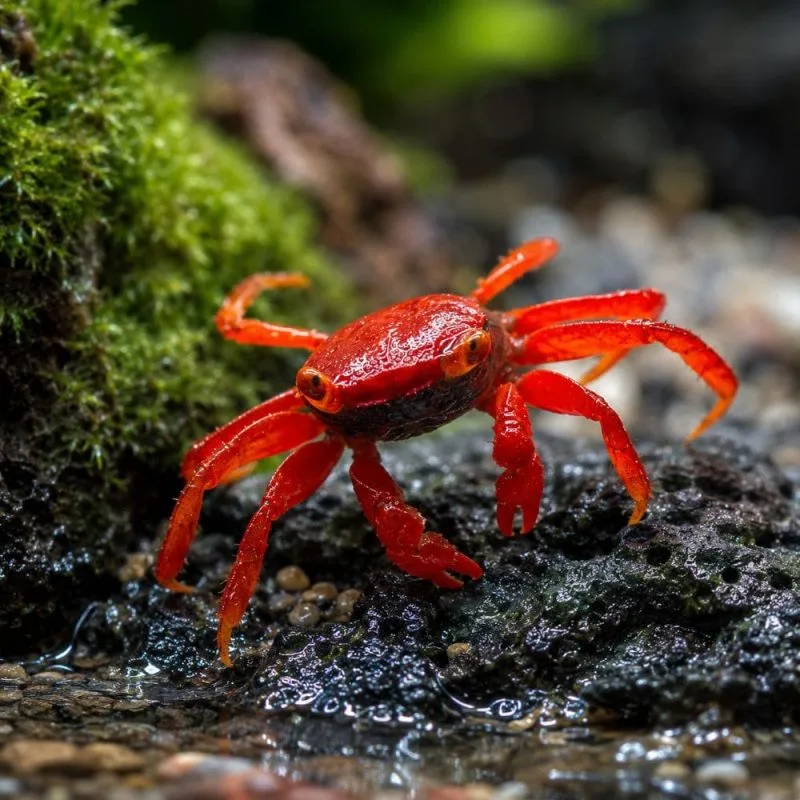
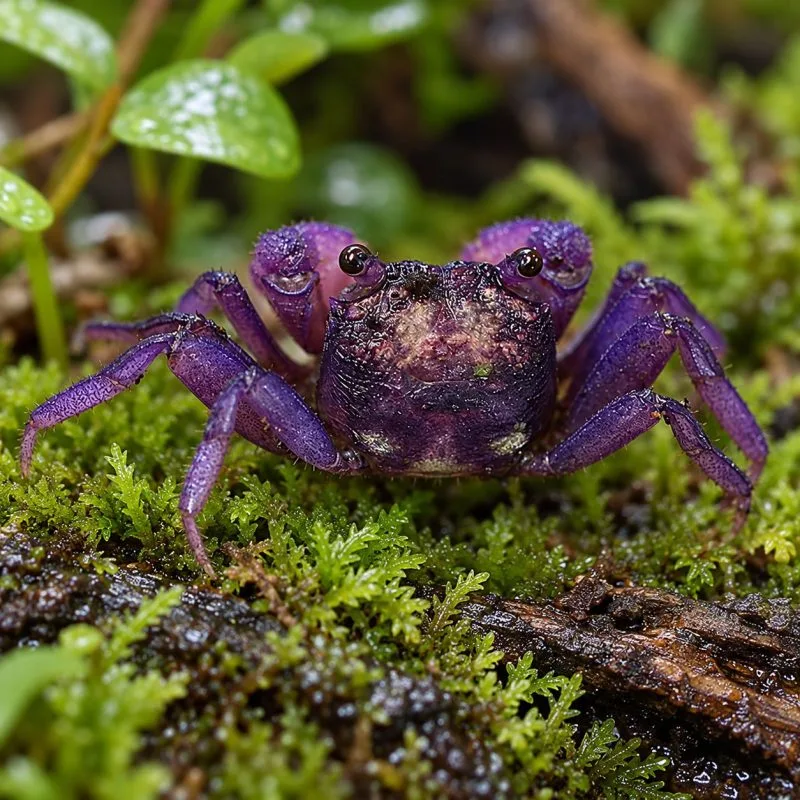
Trade names in this group are messy. “White-handed,” “White Mandarin,” and “White Glove” get stuck on several Geosesarma species, some black-legged, some red. We list this crab as the true red-legged G. pontianak. If you’ve been comparing photos and getting a confusing mix, that’s why. Ask us for current photos before you order.
Water and enclosure that keep them thriving
Build up, not out. These crabs climb, and males claim vertical territory, so a tall enclosure with cork bark, driftwood, branches, and live plants does more for peace than floor space alone. A cramped, flat tank turns into a fight over ground level.
Keep the land section deep and moist with a bioactive substrate, plenty of leaf litter, and hides. The water section stays shallow and clean, and it should be remineralized, never pure RO. Soft, mineral-free water strips the calcium a crab needs to harden its new shell after molting, and that alone kills a lot of Vampire Crabs.
Humidity is the daily job. Aim for 75% or higher with a tight lid, regular misting, and live plants or moss holding moisture. If the air dries out, molts fail. Stable conditions matter more than chasing a perfect number, so confirm your ranges with your own gauge.
Why our crabs are tank-bred, not wild-caught
Wild-collected Mandarins are notorious for dying in transit and in the first few weeks home. They arrive stressed, dehydrated, and often dropped straight into the wrong water. Every crab we ship is bred in our systems and raised in a warm, humid climate, so it hasn’t been pulled from an isolated forest or shipped across the planet in a collector’s bag.
It matters for the species too. G. pontianak is hyper-local to one region of Borneo and produces only small broods, so wild harvest hits these populations hard. Choosing tank-bred keeps the crab in the hobby without adding pressure to the wild.
Feeding your White-handed Vampire Crab
They’re hunters as much as scavengers. Offer live micro-prey (isopods, springtails, small crickets, fruit flies) alongside blanched, calcium-rich greens like nettle, spinach, zucchini, and peas, plus a quality crustacean pellet for protein and minerals.
In a bioactive setup they’ll thin out your cleanup crew fast, so keep restocking springtails and isopods. Steady access to calcium and protein is what carries them through each molt.
Tank mates and compatibility
At Shrimp Aquatics, we keep Neocaridina shrimp in the water section of our vampire crab paludariums. They breed there, the young grow up normally, and the crabs rarely manage to catch them. We keep only small, peaceful fish with our crabs, because an aggressive fish can eat a crab or harass one that has come down into the water to molt. Use the table as guidance, not a shopping list.
| Generally workable | Avoid |
|---|---|
| Neocaridina shrimp in the water section, our first choice | Large, aggressive or bottom-hunting fish, which can eat a crab or disturb a molt |
| Small, peaceful fish that suit the water section | Other Geosesarma species or color morphs; keep each line in its own enclosure |
| Bee or Crystal shrimp, only if the water stays inside their own 60-72°F (15.5-22°C) range | Warming the water for the crabs when the shrimp need it cooler |
| Springtails and isopods as a bioactive cleanup crew (also live food) | Crablets left with the adults, which eat the young they find |
| Live moss, hardy terrestrial or marginal plants, and a same-species group in a large, tall, heavily structured setup | Any full aquarium setup, since a submerged tank is fatal |
Keeping a small same-species group works only with real space and hides. Sex them by the belly flap: males have a narrow, triangular apron, females a broad, rounded one. Claws can mislead, especially on young males, so the apron is your reliable tell.
Common mistakes to avoid
- Housing them underwater. A full aquarium drowns them; they need land and air.
- Using pure RO water. Without minerals, molts fail and crabs slowly waste away.
- Letting humidity drop. Dry air leads to failed molts and death.
- Going wide instead of tall. Too little vertical space triggers fatal territorial fights.
- Mixing species or morphs. Different Geosesarma attack each other on sight.
Settling your crab in after shipping
Have the paludarium cycled, humid, and warm before the box lands. On arrival, open it in a draft-free room, let your crab settle in a moist container for a short while, then move it gently onto the land section. There’s no need to submerge it. Watch, don’t handle, for the first few days.
Live animals cross borders under rules that vary by country. Check your own country’s rules on importing live invertebrates before you order.

There are no reviews yet.