
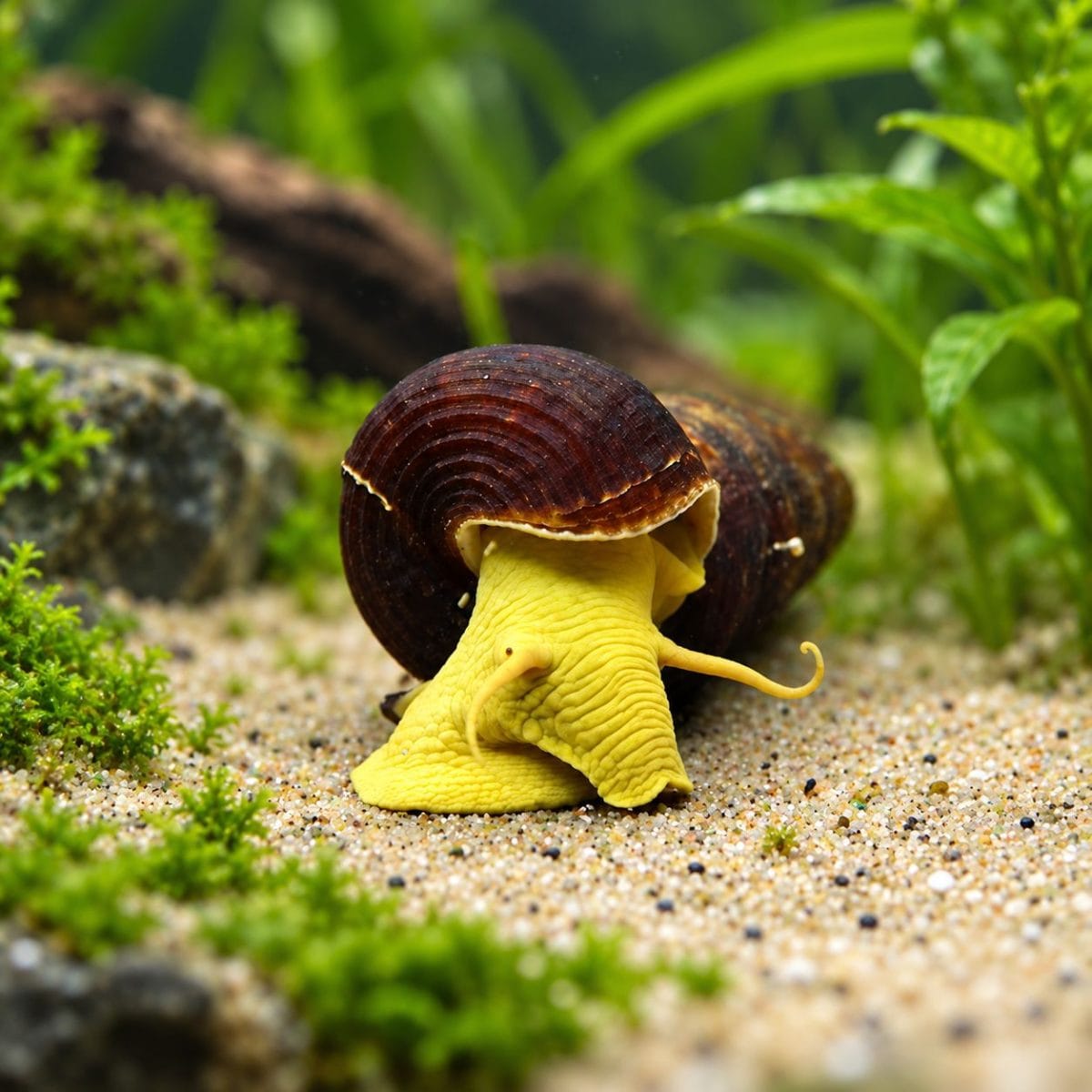
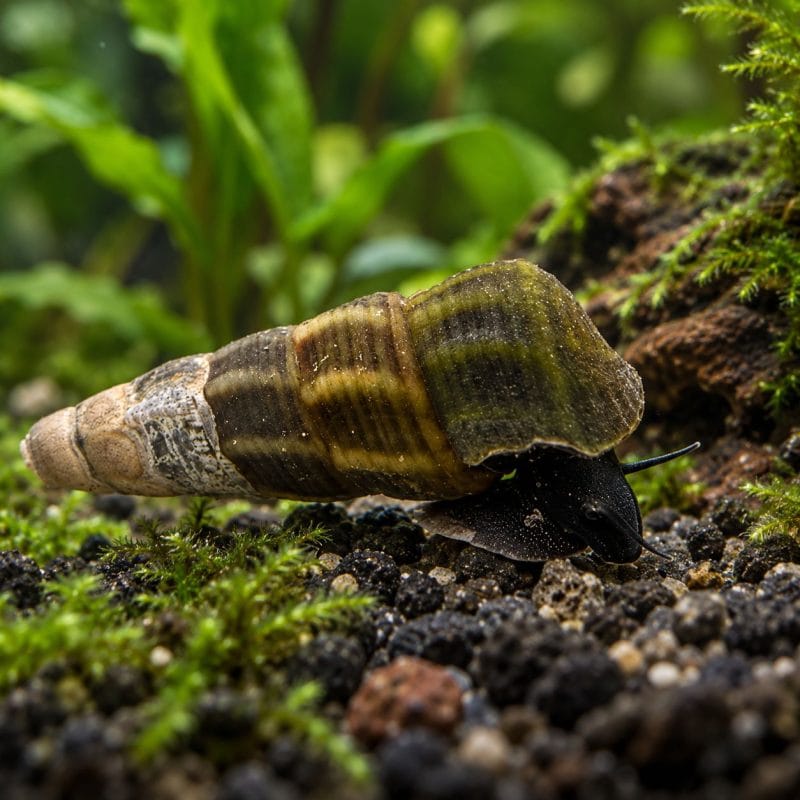
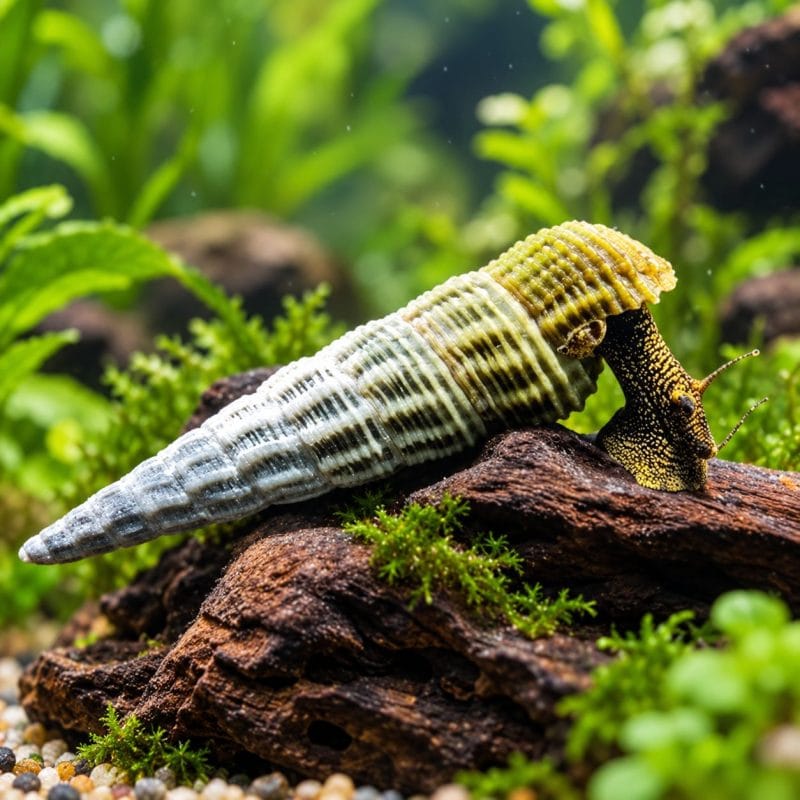
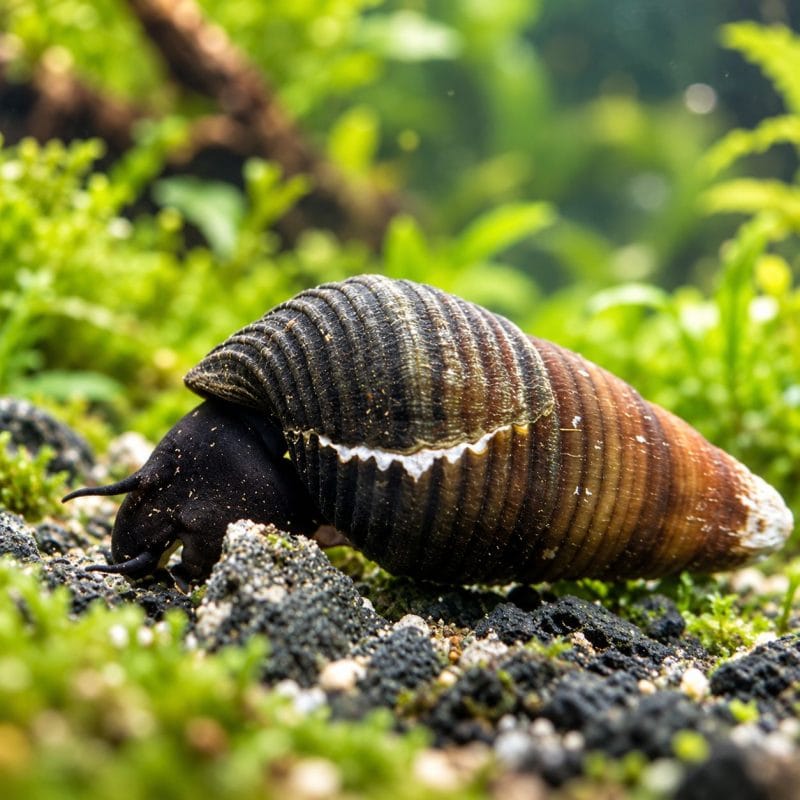
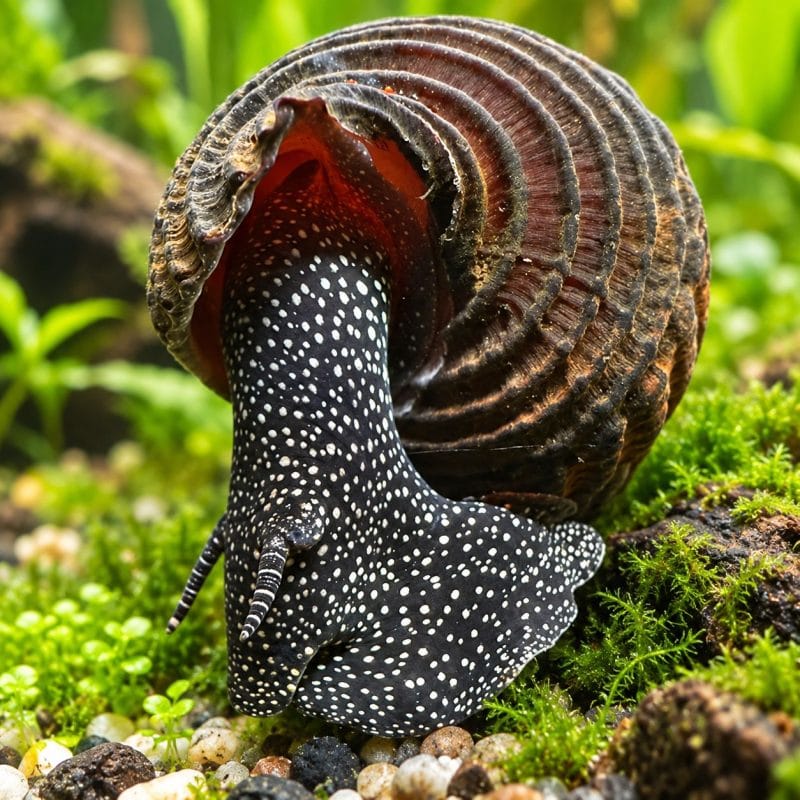
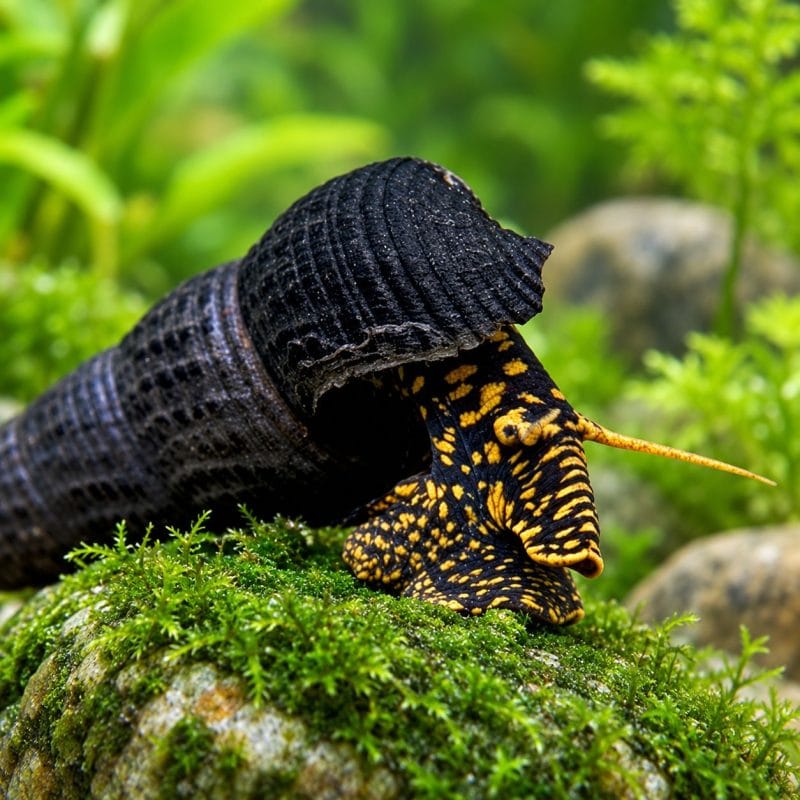
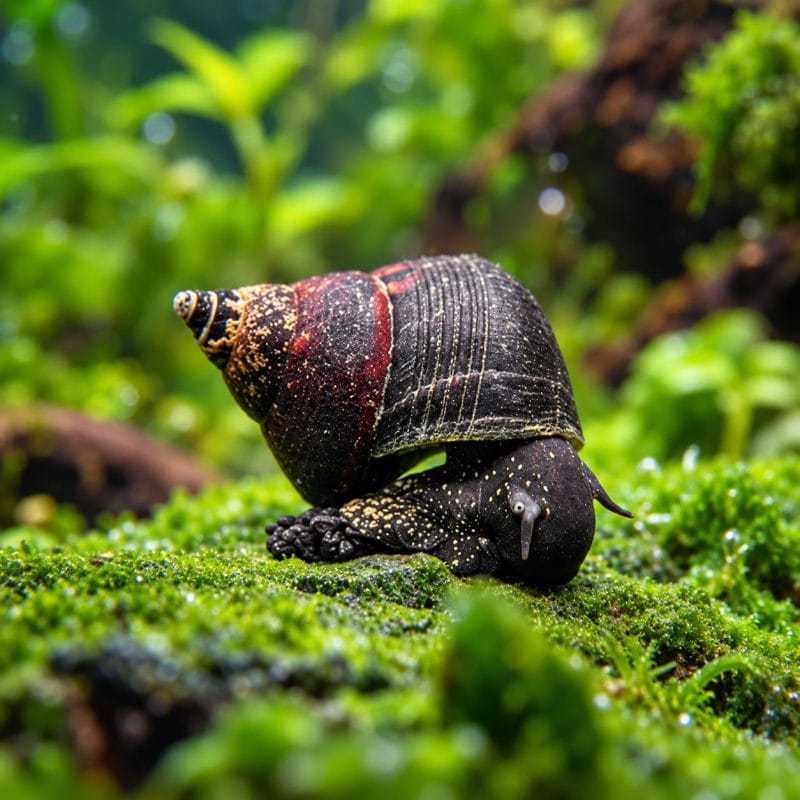
The Yellow Poso Rabbit Snail is a good buy if you already run a mature Sulawesi tank at 79-86°F (26-30°C) and pH 7.5-8.5, and a poor one if you don’t. It’s a large, slow rabbit snail (Tylomelania sp.) with a long shell and a yellow body, and it needs exactly the water Sulawesi shrimp need. Every one we sell is tank-bred by Shrimp Aquatics, not collected from the wild.
“Poso” is a trade name. We don’t sell this line as a confirmed Lake Poso animal, and we don’t attach a species name to it, because its species hasn’t been confirmed. What you’re choosing is the look and the pace: a big, calm grazer for a tank that’s already running. The snail itself is moderate to keep. The water is the demanding part.
Is your tank ready for a Yellow Poso rabbit snail?
Only if it already holds the water below and shows a visible film of algae and biofilm on the rock and glass. Test before you order, because the snail will live in whatever your tank reads today.
| Temperature | 79-86°F (26-30°C) |
|---|---|
| pH | 7.5-8.5 |
| GH | 4-8 dGH |
| KH | 3-6 dKH |
| TDS | 150-250 ppm |
| Nitrate | Under 10 ppm |
| Substrate | Inert substrate and hardscape, no active pH-lowering soil |
At Shrimp Aquatics, most of our Sulawesi systems currently run at TDS 150 ppm, GH 6-7 dGH and pH 7.5, and that’s the water this line is kept in. If your readings sit elsewhere inside the table, don’t push your tank toward ours before the order lands. A steady tank inside the range matters more than a match.
Check KH before you order
Soft, acidic water is the wrong direction for this snail. Test pH and KH first, and if KH drifts in your tank, fix that before anything else, because a stable KH is what keeps pH inside the range.
- Ammonia and nitrite read 0, and the filter is fully established.
- Temperature, pH, GH, KH and TDS have held steady inside the table above.
- You can see a film of algae and biofilm on rock and glass.
- There’s grazing to spare after your shrimp, because a snail this size counts toward the load.
- The tank has only just finished cycling.
If you’re still building the tank, the Sulawesi rabbit snail care setup applies to this line unchanged, so plan around it and add the snail once the film shows. We wouldn’t make this snail your way into Sulawesi keeping, and it isn’t an easier start than Sulawesi shrimp.
How much does a Yellow Poso rabbit snail graze in a shared tank?
More than its slow pace suggests. It grazes the algae and biofilm on hard surfaces, the same layer your Sulawesi shrimp feed on, so count every snail against that layer when you plan stocking. Don’t buy it as an algae eater or a cleanup crew: Sulawesi Keepers reports that filamentous green algae aren’t a natural food for these snails.
If the surfaces start to look bare, offer a small amount of prepared food and lift what’s left within a day. What each snail accepts beyond grazing varies, so watch what yours actually takes. Extra food won’t make up for a tank that hasn’t grown its film yet.
Which tankmates suit a Yellow Poso rabbit snail?
Sulawesi shrimp suit it best. They share the same water and the same grazing surface, so the only question is whether your tank grows enough film for both. Rabbit snails from our other Sulawesi snail lines need the same water as this one, so water isn’t what you’re weighing when you add a second line; grazing space is.
Neocaridina don’t belong here. The Neocaridina range tops out at 78°F (26°C) and this tank starts at 79°F, so the temperatures don’t overlap at any point. Bee and Crystal Caridina need soft, acidic water, the opposite of what this snail needs. Never add an assassin snail, and never treat the tank with copper or a copper-based medication. Read the label of anything you dose, plant fertilizers and algae treatments included.
What should you do when your Yellow Poso rabbit snail arrives?
Follow the instructions packed with your order, and don’t pour the shipping water into your tank. A rabbit snail may stay withdrawn in its shell for a while after arrival, so give it time in dim light before you judge it. You can skip feeding on the first day; a ready tank already has film on the rock.
We don’t promise breeding, sex or the number of young from any order. Rabbit snails are live-bearing, and the young arrive already shelled, so a tank that stays quiet for a long time isn’t a sign that something’s wrong.


There are no reviews yet.