
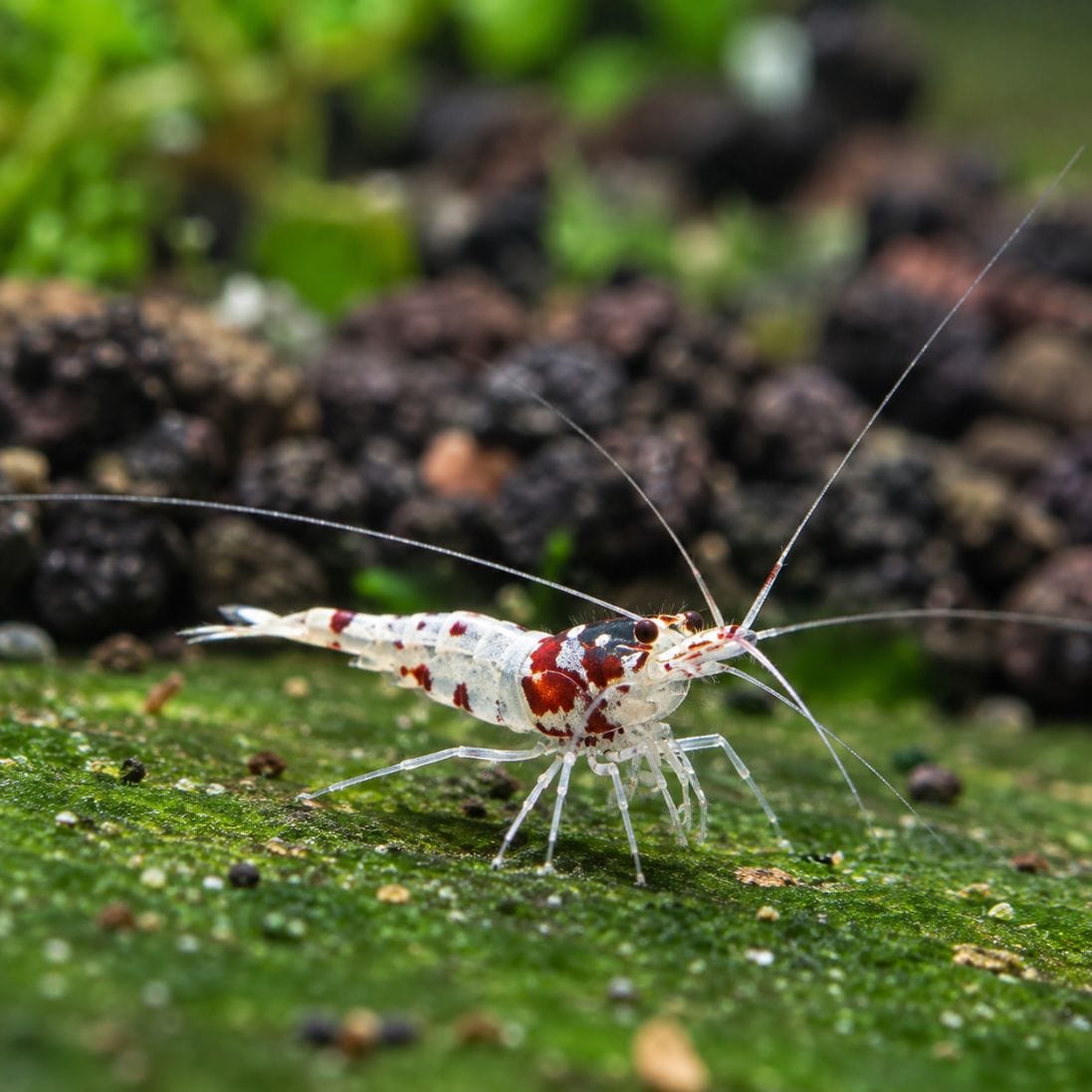
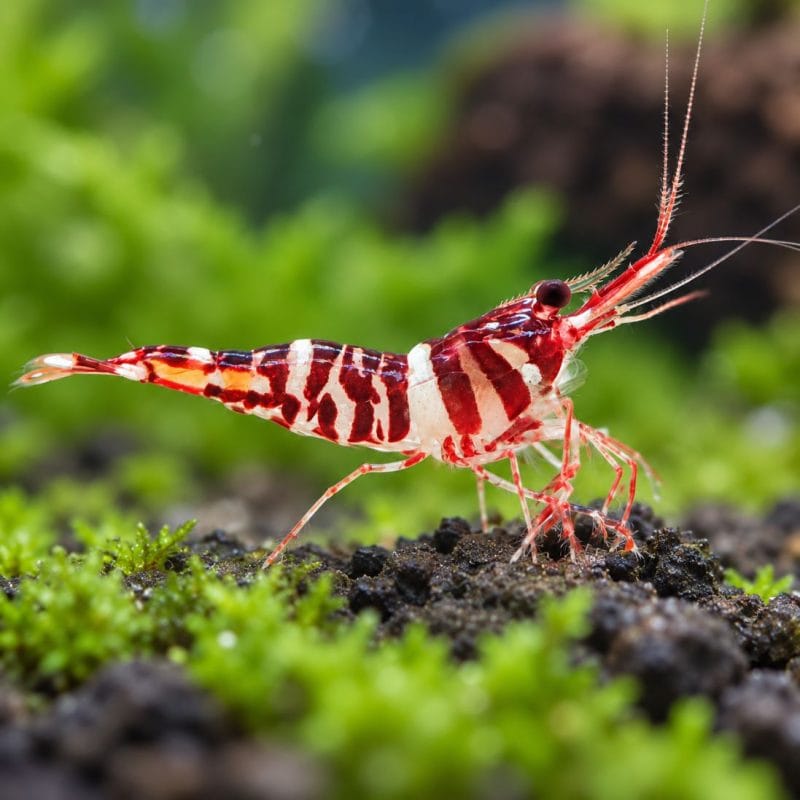
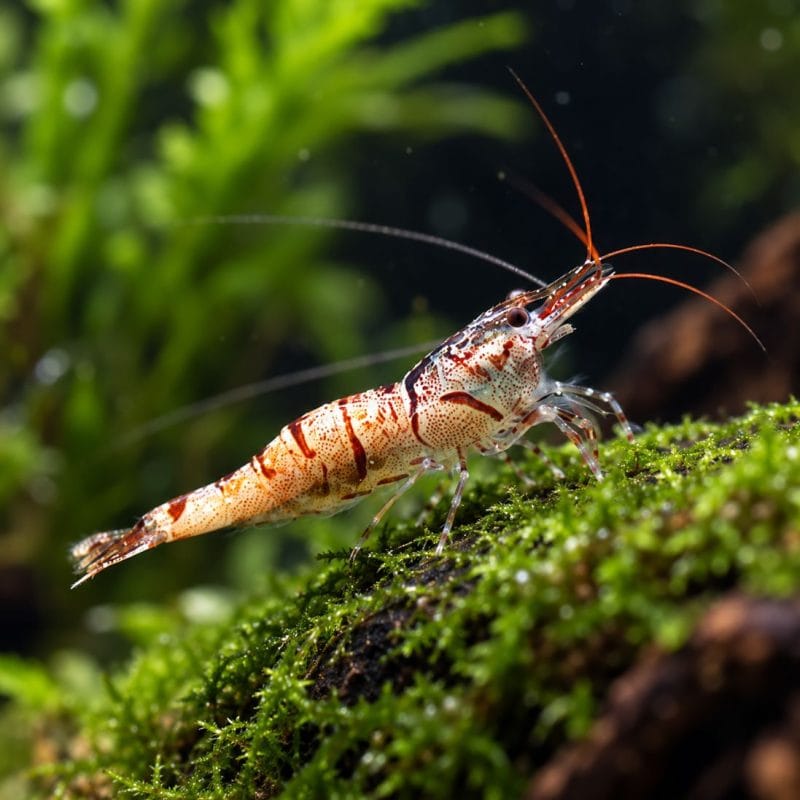
The Sulawesi White Ghost is a color line of Caridina dennerli, the same lake shrimp sold as the White Sock or Cardinal. The heavy red of the wild type has pulled back into broken burgundy patches over a clear, glassy body, and the front limbs stay opaque white. Ours are tank-bred at Shrimp Aquatics. They’re an advanced to expert animal, and the tank has to be ready before they are.
Is this the same shrimp as a White Sock or a bee shrimp?
Same species as the White Sock, bred for a different look. Both are Caridina dennerli from the Malili lakes in Sulawesi, so the care is identical to every other C. dennerli line we keep. What you’re choosing here is pattern, not a different set of needs.
The bee shrimp sold under the same “white ghost” trade word is a different animal with the opposite water: soft, acidic, almost no carbonate hardness. Don’t set this tank up from a bee shrimp care sheet. Same genus, same words on the label, wrong water.
Does your water already sit in the warm alkaline range?
| Temperature | 79-86°F (26-30°C) |
|---|---|
| pH | 7.5-8.5 |
| GH | 4-8 dGH |
| KH | 3-6 dKH |
| TDS | 150-250 ppm |
| Nitrate | under 10 ppm |
| Ammonia and nitrite | 0 ppm, always |
| Difficulty | Advanced to expert |
At Shrimp Aquatics, most of our Sulawesi systems currently run at TDS 150 ppm, GH 6-7 dGH and pH 7.5, so that’s the water your shrimp will be leaving. The closer your tank sits to it, the less the move asks of them.
Hold your Sulawesi shrimp care parameters steady for a few weeks before you order, because a reading that’s still drifting on arrival day is the shock you were trying to avoid.
Test your own water before you order
Use a liquid KH and GH test and a TDS pen. A strip that says “hard” won’t tell you anything useful at this end of the scale. KH is what holds the pH up, so if KH slides, pH follows, and steady water is most of the job with this group.
How to tell your tank is mature enough to take one
Cycled and ready aren’t the same thing. These shrimp graze all day, so the tank has to have been growing something to graze on for weeks before they arrive. Go down this list honestly:
- Ammonia and nitrite read 0, and have done for weeks, not days.
- Temperature holds inside 79-86°F (26-30°C) overnight as well as at midday.
- Carbonate hardness is still at 3-6 dKH between water changes, not only just after one.
- Nitrate sits under 10 ppm without you having to fight for it.
- Rock and glass carry visible brown diatoms and biofilm, not bare surfaces.
- No active, pH-lowering shrimp soil in the tank.
- No copper-based medication or plant fertilizer in this tank’s history.
If two or three of those are missing, it’s the water you should buy first. We’d rather you came back in a month than lost the shrimp in a week.
What can share a tank with White Ghosts
A species tank is the honest answer. Sulawesi rabbit snails (Tylomelania) are the usual exception, because they want the same warm alkaline water and they graze without crowding the shrimp. Count them into your stocking, though; a big snail puts out real waste.
Neocaridina are kept cooler than this, so at Sulawesi temperature you’re running them above their usual band, and they graze the same surfaces these shrimp depend on. Bee and Crystal Caridina are simply out: their water is soft and acidic, and no middle setting suits both groups. Most fish that tolerate this heat will also eat shrimplets, so treat peaceful as lower risk with adults, never as safe for babies.
If you’re building the rest of the tank around them, our other tank-bred Sulawesi shrimp lines sit in the same water and can share it.
What to do on arrival day
Have the tank at temperature before the box lands. Shrimp Aquatics’ current shipment practice is to equalize temperature with the bag still sealed and then net the shrimp across, so none of the shipping water goes into your aquarium. Follow the instructions packed with your order; packing, transit time and weather can change the call.
Keep the lights low and skip food for the first day. After that the tank does most of the feeding. Biofilm, diatoms and algae on the rock are the main food here, and prepared food stays occasional and small. If anything is still sitting there an hour later, it was too much. Lift it out, because warm water breaks leftovers down fast.




There are no reviews yet.