
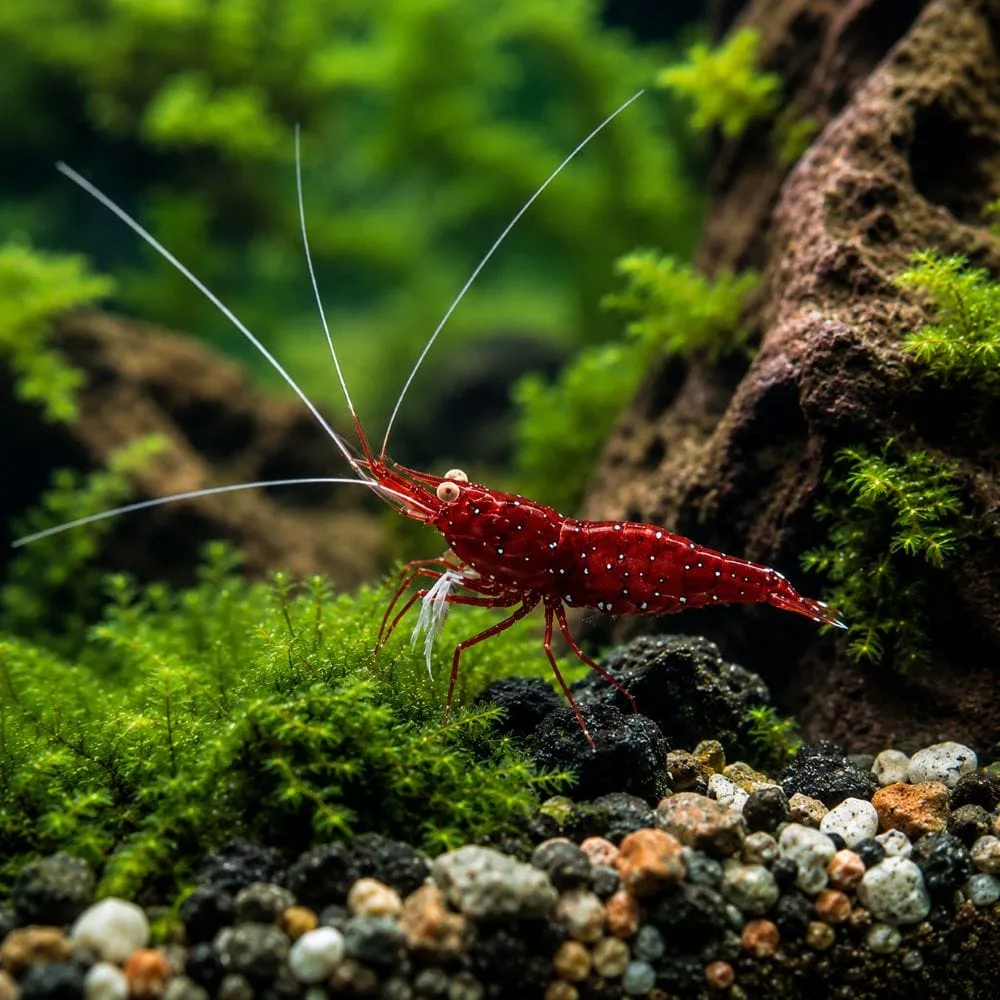
Is this shrimp right for your tank?
Buy the Orange Eye White Sock only if you can run a mature, remineralized, high-heat Sulawesi tank and hold it steady. This is an advanced Caridina dennerli that lives or dies on stability, and the Orange Eye line adds real cost on top of the difficulty.
We’d rather talk you out of a bad fit than sell you a shrimp that won’t make it. Here’s an honest split.
A good fit if you
- Already run RO/DI water and remineralize with a Sulawesi salt
- Can hold 79-86°F (26-30°C) year-round without stressing the tank
- Have a tank that’s been cycled and grazing-ready for 2-3 months
- Are comfortable with slow, patient breeding and small broods
- Want a species-focused Sulawesi display and will keep it that way
Not a fit if you
- Are new to shrimp or new to Sulawesi/Caridina keeping
- Plan to use tap water, or an active/buffering aquasoil
- Want them in a community tank with fish
- Keep the room cool or can’t guarantee stable heat
- Expect fast, forgiving breeding like Neocaridina
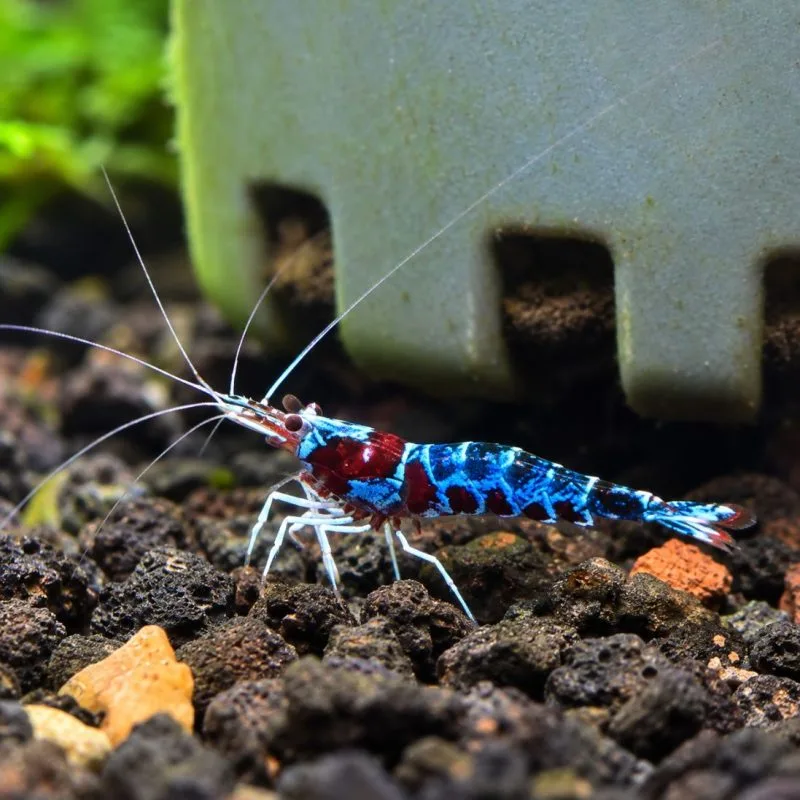
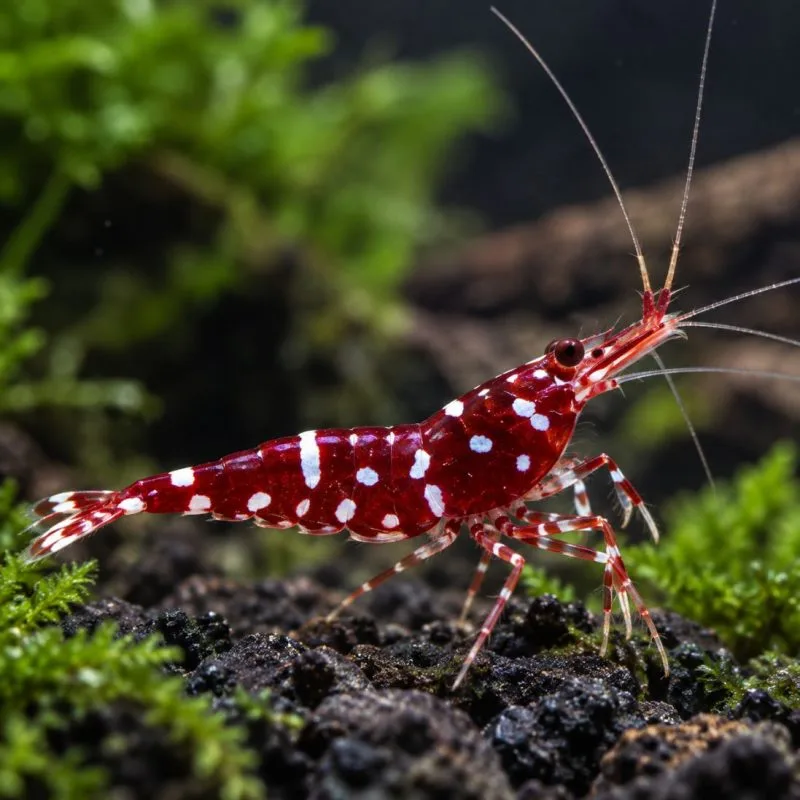
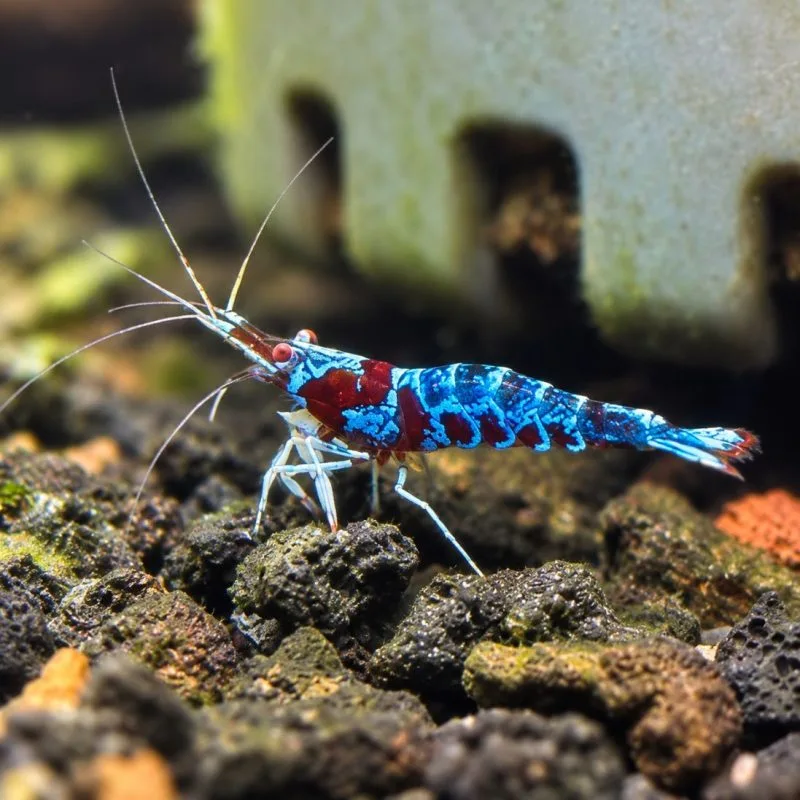
The color earns the trouble. Bright white front legs flick against a deep blood-red body as the shrimp grazes: the “white socks.” The recessive orange-eye trait then sets glowing amber eyes over that red shell. Because the trait is selected within the species, these are genetically pure C. dennerli, a color cultivar rather than a hybrid.
Why Sulawesi shrimp need high pH and warm, stable water
These shrimp evolved in one isolated, warm, alkaline lake system and never developed the tolerance that widespread species have. That biology drives every choice below.
At Shrimp Aquatics, most of our Sulawesi systems currently run at TDS 150 ppm, GH 6-7 dGH and pH 7.5, inside the group range of 79-86°F (26-30°C), pH 7.5-8.5, GH 4-8 dGH, KH 3-6 dKH and TDS 150-250 ppm. Treat these as a target to match slowly, not numbers to chase. Confirm with your own test kit and aim for stability first.
Remineralized RO water, not tap
Tap water is off the table. Trace heavy metals, chlorine, chloramine, and the wrong mineral ratio can kill this species even after a dechlorinator. Start from pure RO or DI water and remineralize with a Sulawesi-specific salt to reach the ranges above.
High heat plus high pH is an ammonia trap
Running warm and alkaline at once is the part casual keepers underestimate. Warm water holds less oxygen, so surface agitation from a sponge filter plus an extra air stone isn’t optional.
Above pH 8, more of any ammonia present shifts into its toxic free form. A little overfeeding or one decaying leaf can spike toxicity overnight in a warm, alkaline tank. Feed tiny amounts and keep the tank spotless.
Inert substrate and a genuinely mature tank
Use an inert substrate only, such as crushed black lava rock or a Sulawesi sand. Active buffering aquasoils fight the alkaline water, burn out, and cause pH swings that crash a colony. Black lava rock is the favorite: porous for biofilm, and its dark color makes the red body and orange eyes pop.
Give the tank 2-3 months to grow a thick biofilm layer before you add shrimp. There is no shortcut here, because the biofilm is their food.
Stable beats perfect. Sudden TDS or pH shifts after a large water change are a leading cause of failed molts and colony crashes. Do small, frequent changes, top off evaporation with pure RO only, and never dose copper-based medications. Copper is lethal to shrimp and snails.
Feeding: a mature tank does the work
Sulawesi shrimp graze natural biofilm and micro-algae, and they don’t reliably take keeper-added foods the way Neocaridina do. You can’t feed them more to make up for a thin tank, because a mature, biofilm-rich system is the food source.
The best thing you can do is grow that biofilm. A biofilm booster helps cultivate it across rock and sponge surfaces, so both adults and shrimplets always have something to graze. If you ever add food, keep portions tiny and pull anything uneaten within about two hours. Overfeeding is far more dangerous here than underfeeding.
Tank mates and compatibility
Keep Orange Eye White Socks in a Sulawesi-focused tank. They’re tiny, peaceful, and shy, and most fish that fit them in their mouth will treat them as food. No shrimp is universally “shrimp-safe” and this one is too delicate and valuable to gamble on community fish.
| Tank mate | Verdict | Why |
|---|---|---|
| Sulawesi snails (Tylomelania) | Compatible | Thrive in the same warm, alkaline water |
| A few Neocaridina (~5-10) | Use caution | A small group can coax shy Sula out to feed; too many strip the biofilm and starve them |
| Other Sulawesi Caridina species | Use caution | They crossbreed readily in a tank, so avoid them if you want a pure line |
| Caridina Bee (Crystal/Taiwan Bee) | Avoid | Need soft, acidic water, the opposite of Sulawesi |
| Fish (most) | Avoid | Will hunt shrimp this small |
If you keep a few Neocaridina with them, hold them at the Sulawesi parameters above and keep the group small. It’s a helper, not a colony.
What we ship and how to acclimate
Every Orange Eye White Sock we send is bred and raised in our own tanks: tank-bred, not wild-collected. For a species under real pressure in its home lakes, captive breeding is the responsible way to keep it, and it means your shrimp already know aquarium life.
Acclimation. Follow the instructions packed with your order. For a sealed bag after a long transit, the current Shrimp Aquatics shipment protocol is to float the bag to equalize temperature, then net the shrimp into the tank without adding the shipping water. Packing method, transit time and species can change the right method, so the sheet in the box takes precedence over this page. Keep the lights off for the first 24 hours.
- Float the sealed bag about 15-30 minutes to match temperature.
- Open the bag, net the shrimp out, and place them straight into the tank. Do not pour the bag water in.
- A small osmotic bump is safer than acute ammonia poisoning.
- Turn the lights off for the first 24 hours so they settle.
- Only add them to a fully cycled, biofilm-rich tank.
Have your tank cycled and ready before your order arrives. International customers should confirm their own country’s rules on importing live animals before ordering.
Common mistakes to avoid
- Tap water or the wrong salt. Use RO/DI remineralized with a Sulawesi salt, not general shrimp minerals.
- Active aquasoil. It buffers pH down and fights the alkaline water these shrimp need, so use inert substrate.
- Adding to a young tank. Without a thick biofilm layer they slowly starve, so wait 2-3 months.
- Big water changes. Sudden TDS or pH swings trigger failed molts, so go small and frequent.
- Acclimating from memory instead of from the order sheet. The right method depends on how long the bag travelled and how it was packed, so use the instructions packed with the shrimp.
- Copper medications. They are lethal to shrimp, so never dose them in the tank.

There are no reviews yet.