
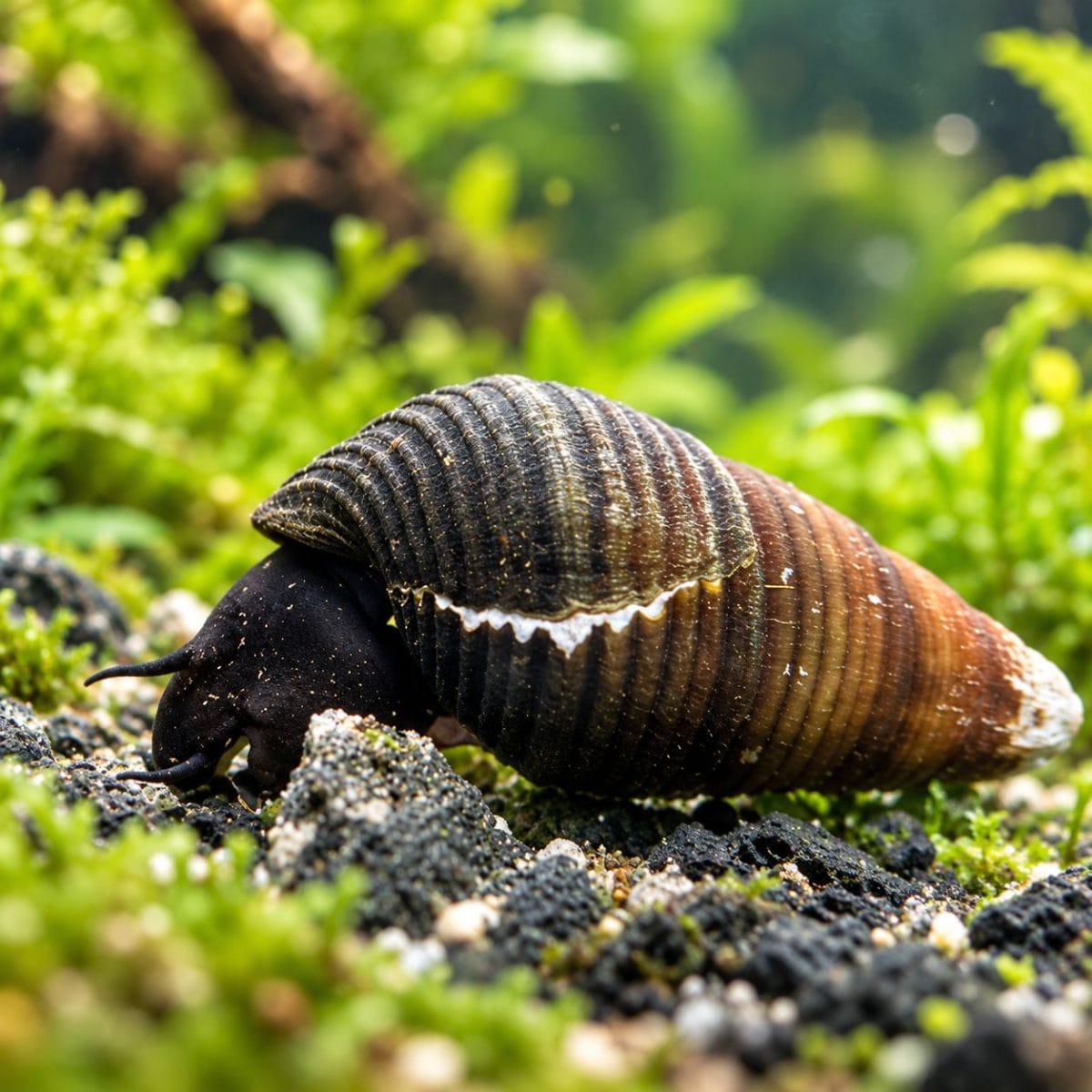
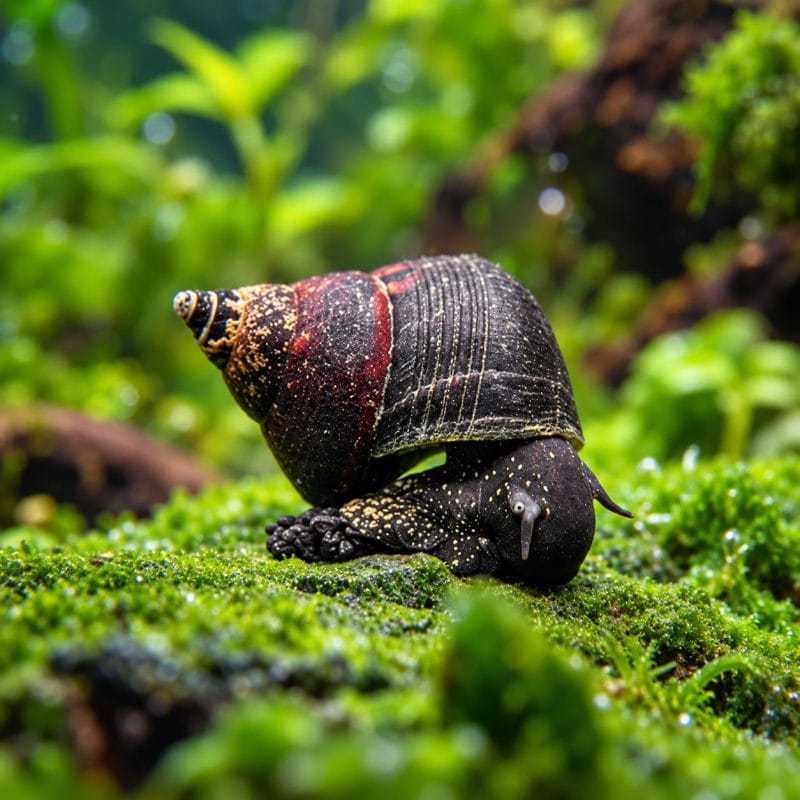
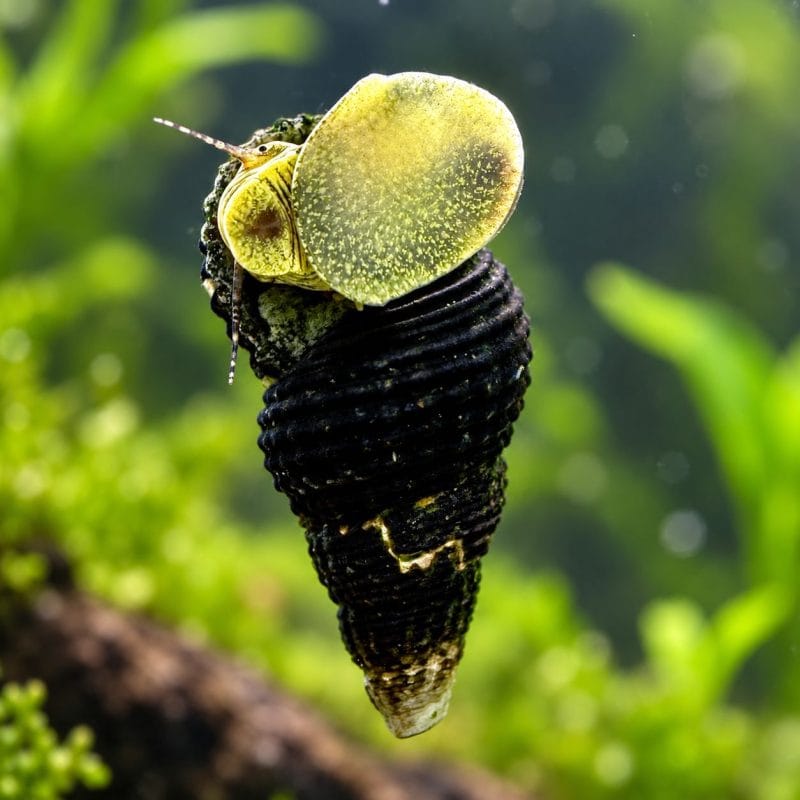
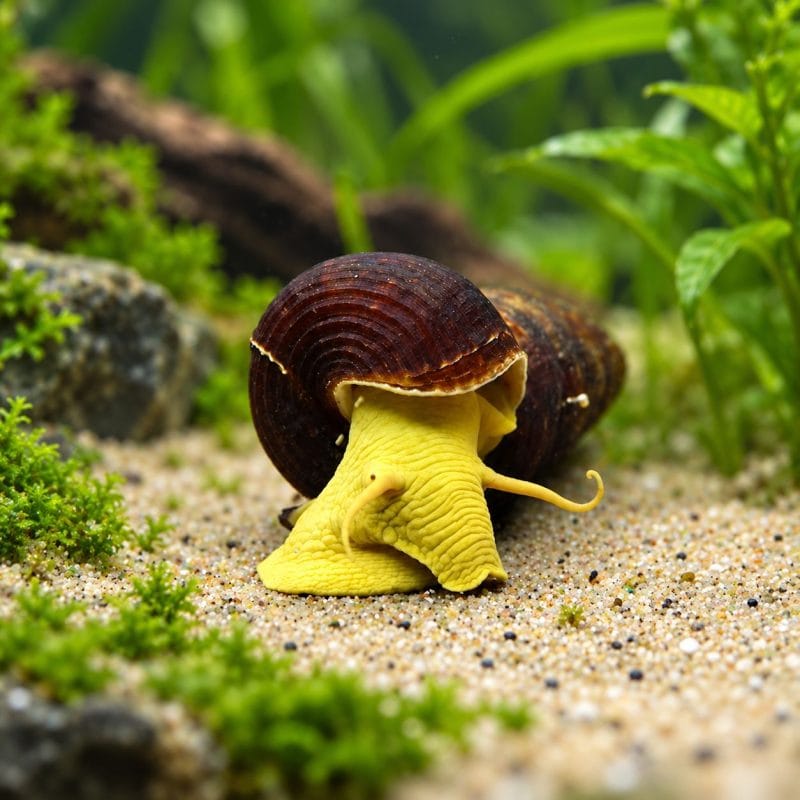
The Black Dov rabbit snail is a tank-bred Sulawesi rabbit snail, Tylomelania sp., and it’s a good buy only if you already run a warm, alkaline Sulawesi tank that has grown in. If your tank holds 79-86°F (26-30°C) and pH 7.5-8.5 with a visible film on the rock, it fits. If it doesn’t, fix the water first and order later.
Black Dov is a trade name, not a species. No species name has been confirmed for this line, so we list it as Tylomelania sp. It’s tank-bred by Shrimp Aquatics, not collected from the wild.
Is a Black Dov rabbit snail right for your tank?
Yes, if you already keep a stable Sulawesi tank. We rate the snail itself as moderate, because it’s hardier than the Sulawesi shrimp that share its water. The tank is the demanding part. It needs the same warm, mineral-rich, alkaline water as those shrimp, so this isn’t an easier way into Sulawesi keeping, and it isn’t a snail for a beginner or a new tank.
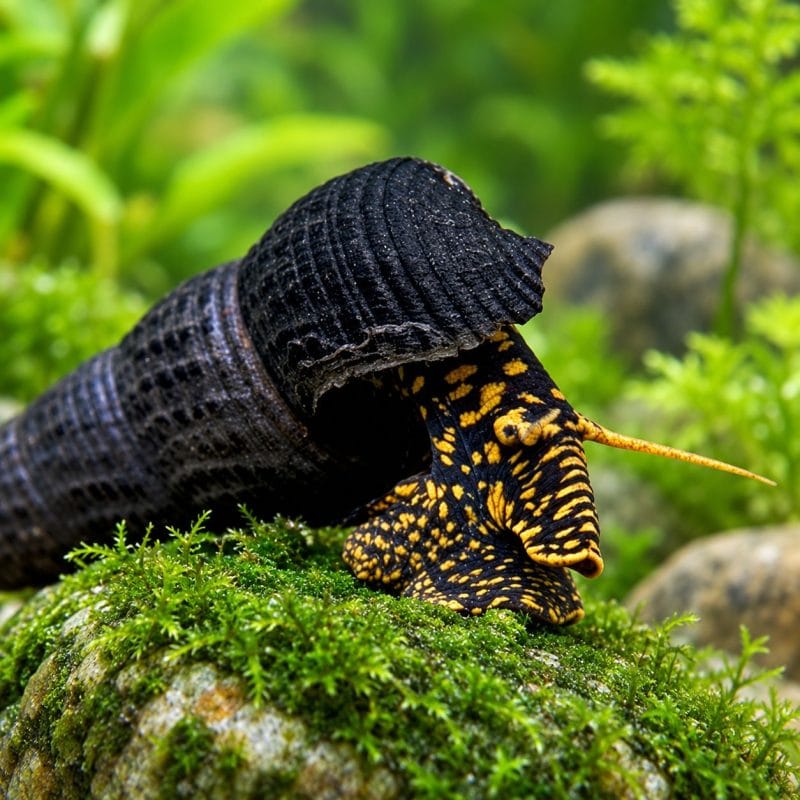
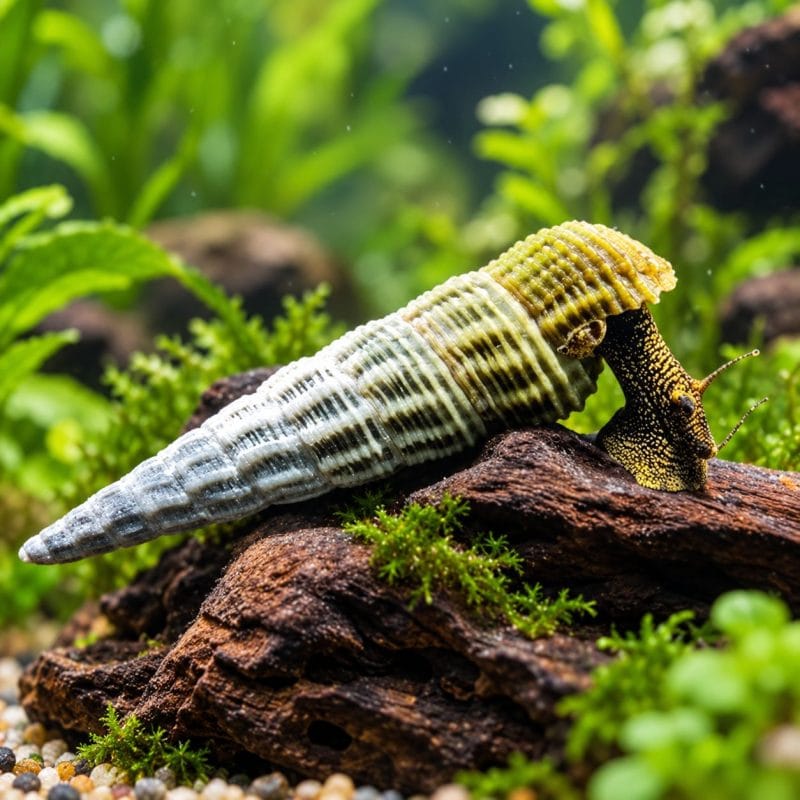
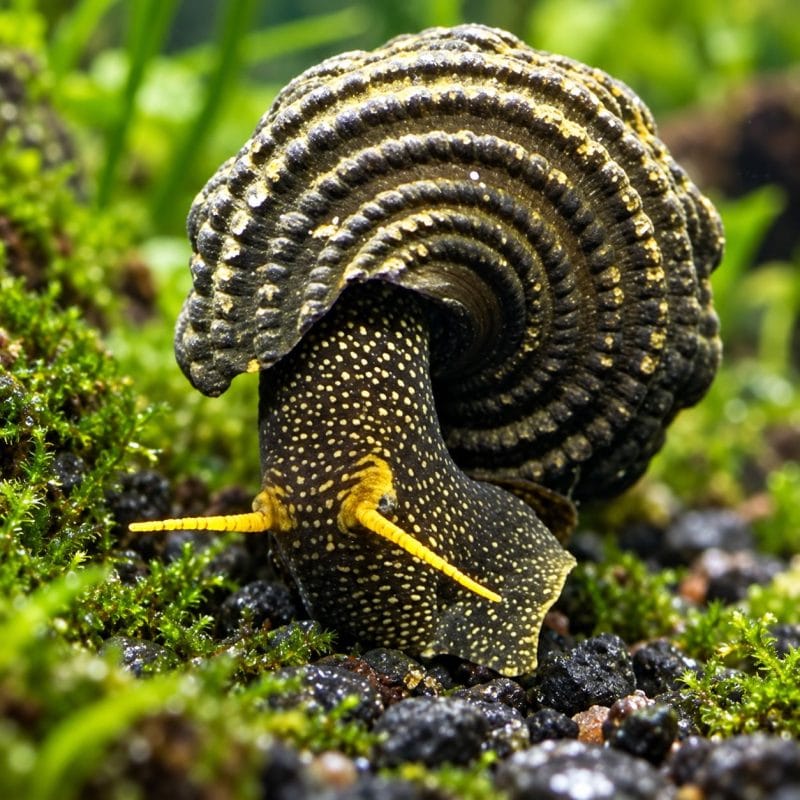
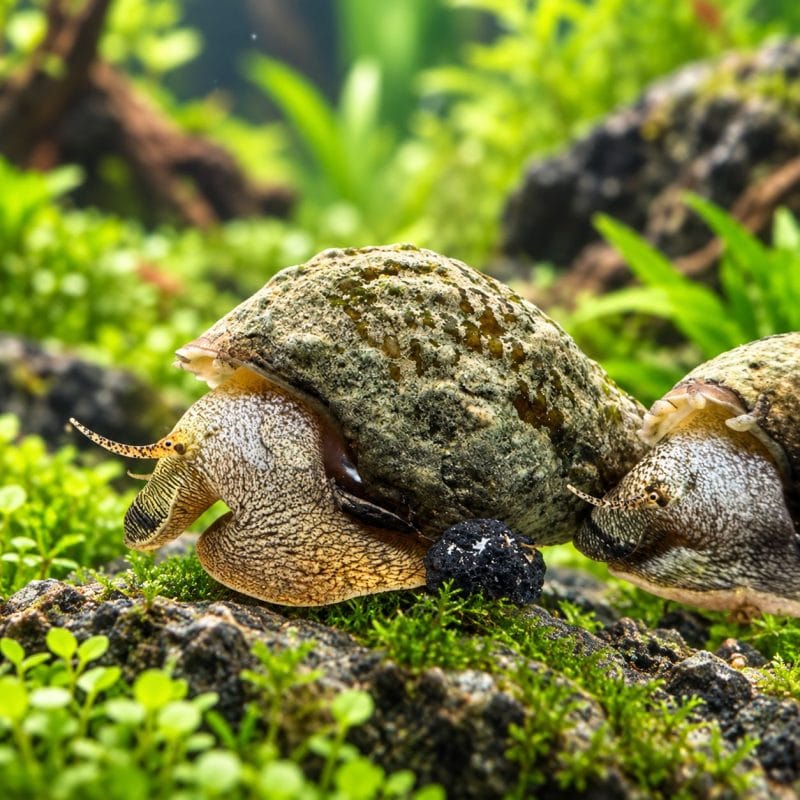
Don’t buy it to fix an algae problem, either. It grazes the soft film of algae and biofilm on rock and glass, and Sulawesi Keepers notes that filamentous green algae aren’t a natural food for these snails. If you’re weighing it against our other Sulawesi snail lines, they all need the same water, so the choice comes down to the look you want.
Water to hold steady before a Black Dov rabbit snail arrives
Keep your tank inside the numbers below. They’re the range we keep to for our Sulawesi shrimp, and the snails live in that same water, because no published source gives a separate aquarium range for rabbit snails.
| Temperature | 79-86°F (26-30°C) |
|---|---|
| pH | 7.5-8.5 |
| GH | 4-8 dGH |
| KH | 3-6 dKH |
| TDS | 150-250 ppm |
| Nitrate | Aim for under 10 ppm |
| Substrate | Inert sand or gravel and rock, no pH-lowering soil |
Steady matters as much as the numbers. Avoid fast swings in temperature, pH, hardness or TDS, and don’t let KH drift down, since soft, acidic water wears snail shells in general.
Test before you order
Measure temperature, pH, GH, KH and TDS in the tank the snail will live in, not in your tap water. Not sure your numbers fit? Email contact@shrimpaquatics.com with your pH, GH, KH, TDS, temperature, tank size, cycle status and current livestock before you check out.
Check your tank is mature enough for a Black Dov rabbit snail
This is the check most buyers skip. Prepared food can’t stand in for a grown-in tank, so run down this list before you order.
- The tank is fully cycled: ammonia 0 and nitrite 0, with an established biological filter. A date on the calendar doesn’t prove it.
- You can see a film of algae and biofilm on the rock and glass.
- Temperature, pH, GH, KH and TDS have held steady inside the range above.
- The substrate and hardscape are inert.
- There’s no copper in the tank, your water or any medication you plan to use.
- There’s grazing left over once your shrimp and other snails are counted, because a rabbit snail adds to the grazing load.
Which tankmates work with a Black Dov rabbit snail?
Sulawesi shrimp are the natural partners. They live in the same water and graze the same film, so the thing to watch is whether the tank grows enough film for everyone.
Neocaridina don’t belong here. Neocaridina are kept at 65-78°F (18-26°C) and this tank starts at 79°F, so the two temperature ranges don’t overlap. Bee and Taiwan Bee shrimp need soft, acidic water and don’t fit either. Never add assassin snails, which prey on other snails.
Feeding a Black Dov rabbit snail on arrival day and after
Follow the instructions that come with your order when the snail arrives, because packing and transit decide the right method. Don’t pour the shipping water into your tank.
Expect it to stay shut in its shell for a while after it goes in. That’s normal for a new arrival, so leave it be and let it come out on its own.
After that, the tank does most of the feeding. The snail grazes the film on rock and glass, and extra food can’t make up for a tank that hasn’t grown that film yet. What a given rabbit snail accepts beyond grazing hasn’t been recorded, so we won’t hand you a menu of vegetables or pellets as a requirement. If you do offer prepared food, a safe default is a small amount, with anything uneaten lifted out the same day.
If this is your first rabbit snail, read our full guide to Sulawesi rabbit snail care before the order goes in; it covers shell wear, plants and tank layout in more depth.


There are no reviews yet.