
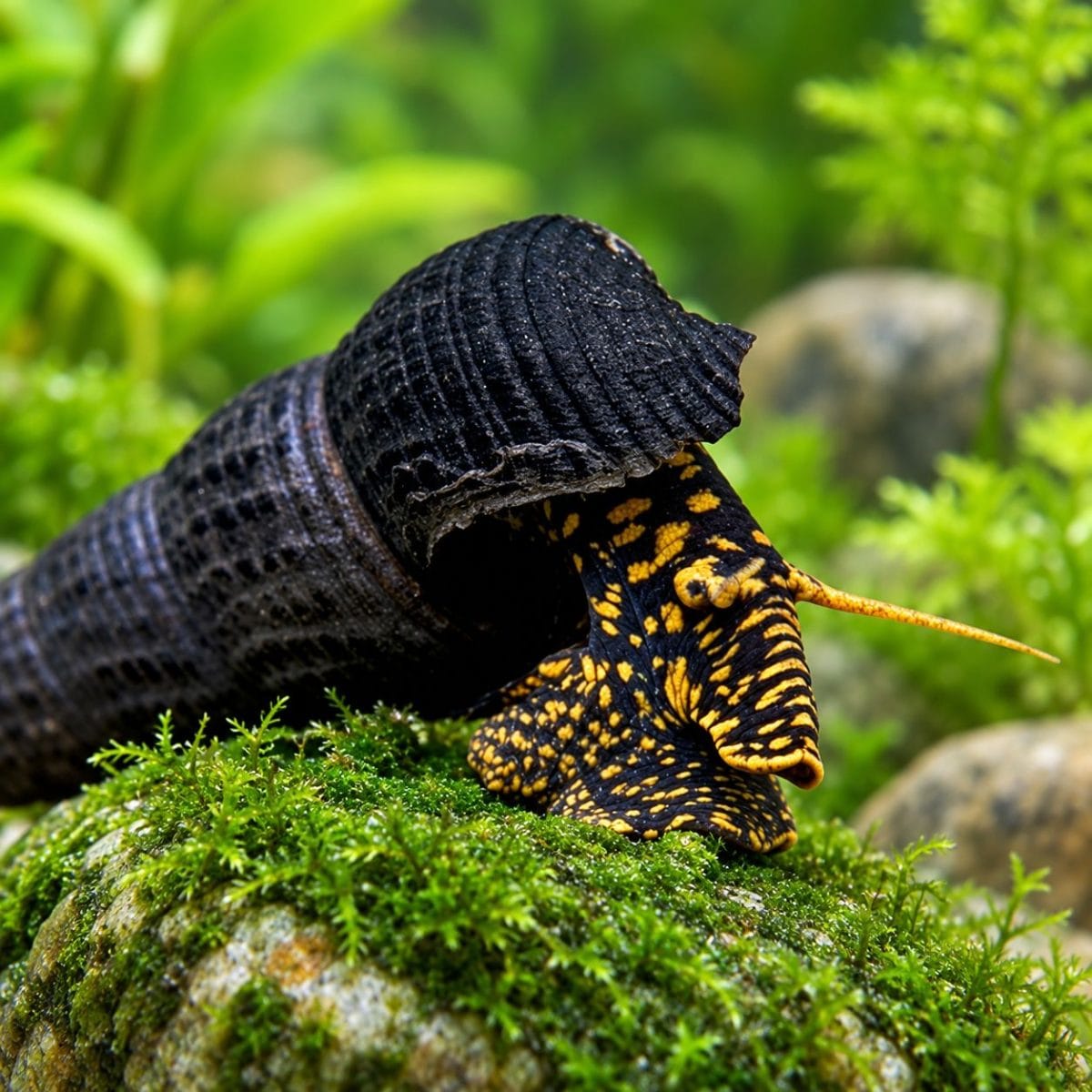
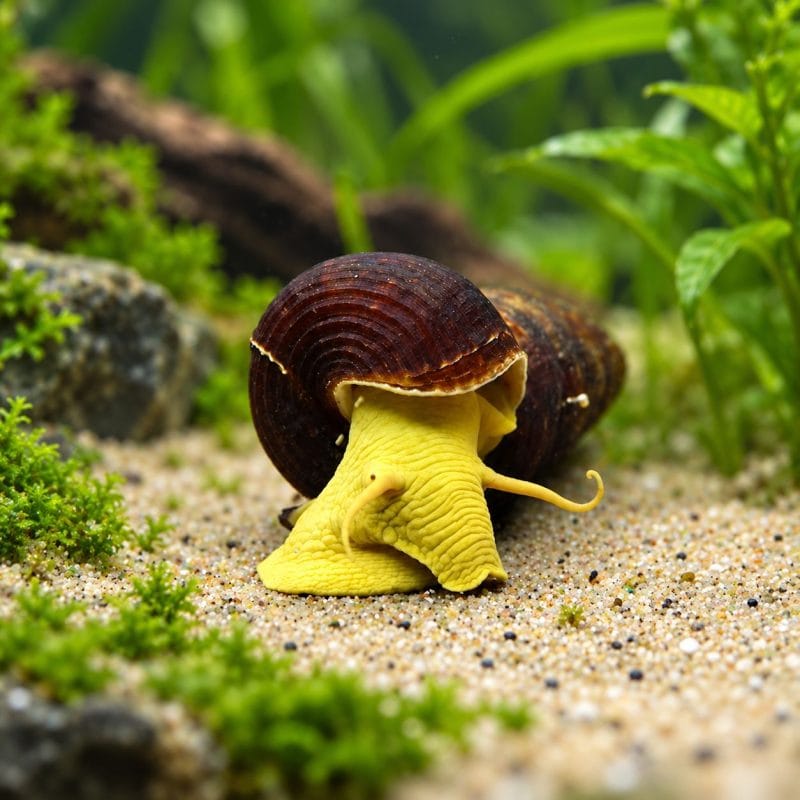
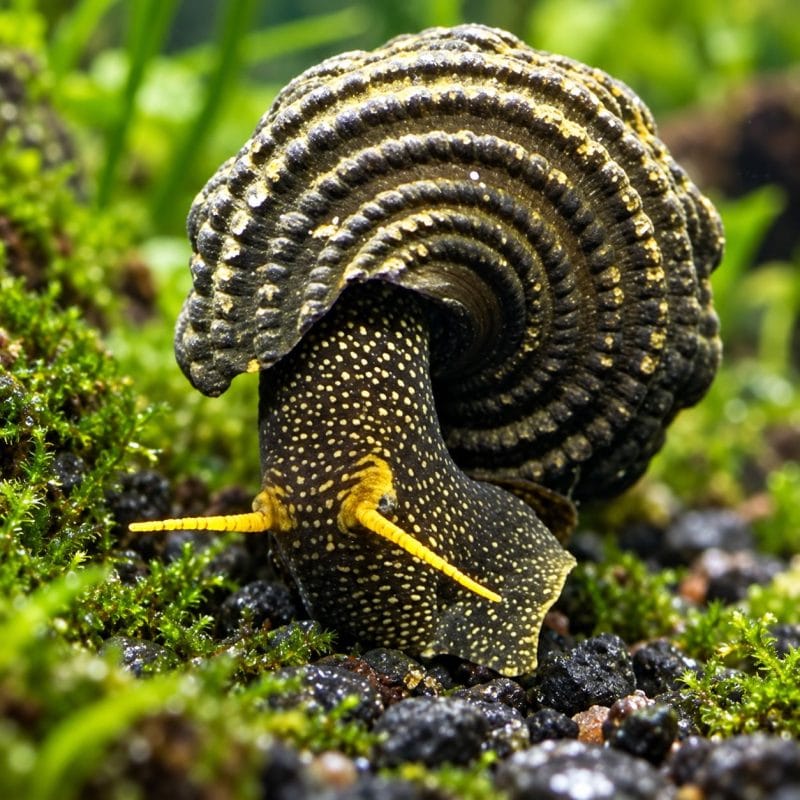
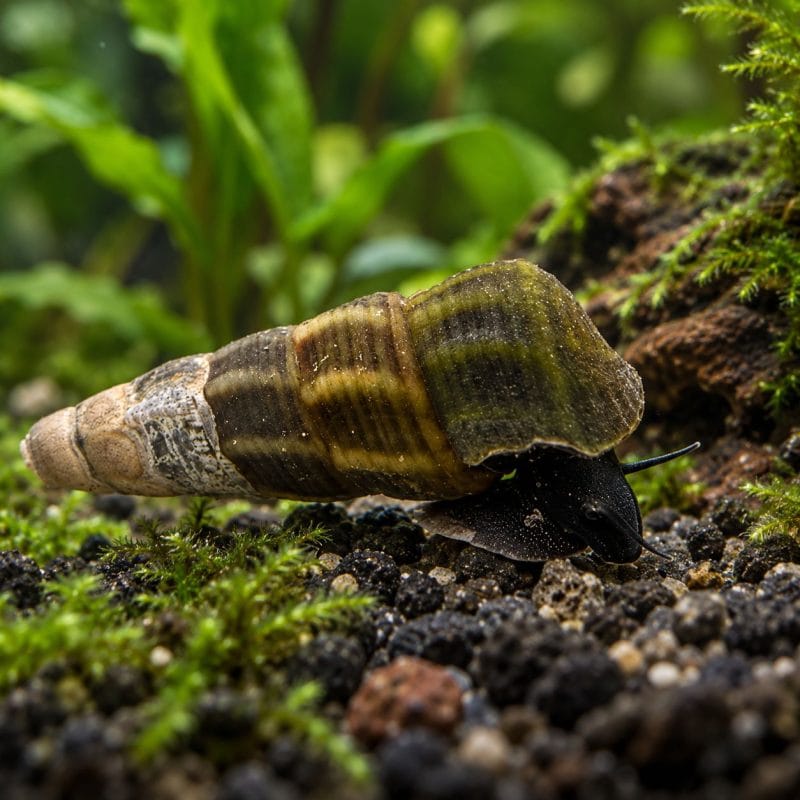
The Golden Spotted Rabbit Snail is a Sulawesi rabbit snail, Tylomelania sp., tank-bred by Shrimp Aquatics. It needs the same warm, alkaline, mineral-rich and fully mature water as Sulawesi shrimp, so it’s the right buy only if your tank already holds those numbers steady.
What you get with a Golden Spotted Rabbit Snail from Shrimp Aquatics
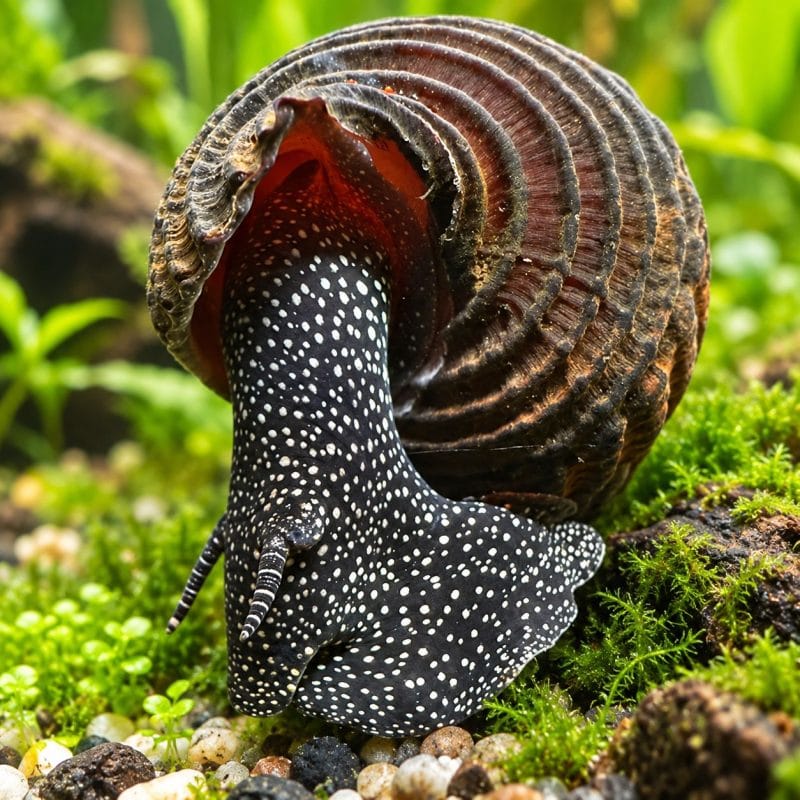
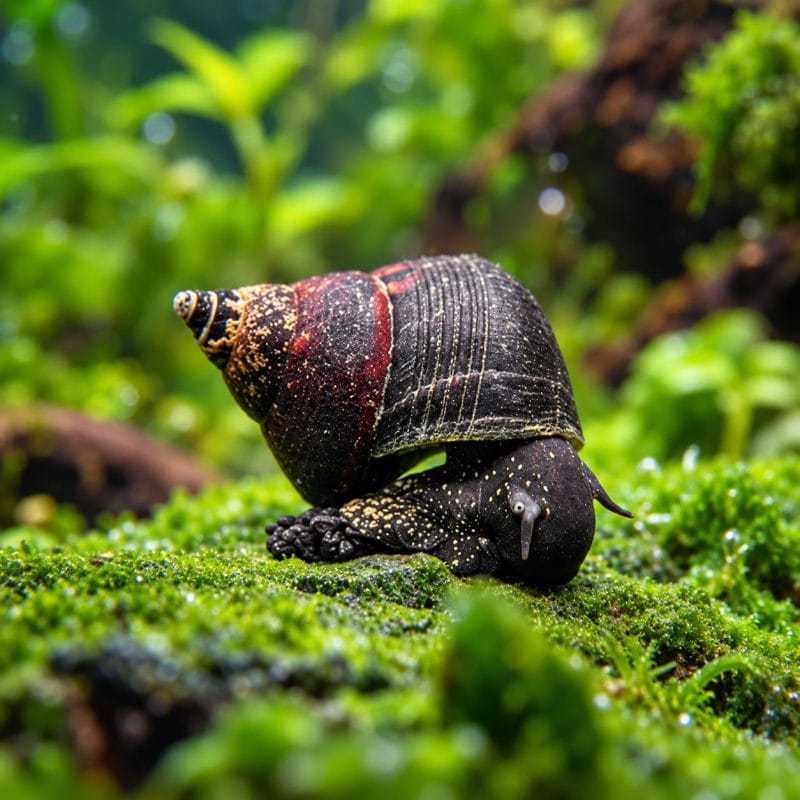
The name comes from the gold spotting on its dark head and foot. We list it as Tylomelania sp. because no species name has been confirmed for this line, and we won’t guess one. It’s a separate line from our Yellow Rabbit Sulawesi Snail, with the same water needs.
Every snail is bred by Shrimp Aquatics, not collected from the wild, and ships from Vietnam. We don’t promise breeding, sex or the number of young from any order.
At Shrimp Aquatics, our Golden Spotted rabbit snails share water with our Sulawesi shrimp, and most of those systems currently run at TDS 150 ppm, GH 6-7 dGH and pH 7.5. That’s the water your snail leaves, so the closer your tank sits to it inside the ranges below, the smaller the change it faces when it arrives.
Water to hold steady before a Golden Spotted Rabbit Snail arrives
Is this snail hard to keep? We rate the snail itself moderate, because it’s hardier than the Sulawesi shrimp it lives with. The tank is the demanding part: it needs a warm, alkaline, mineral-rich Sulawesi system that stays stable month after month, and the snail is no way around that. Don’t treat it as an easier way into Sulawesi keeping. Every tank-bred Sulawesi snail we list lives in this same water, so the numbers below apply whichever line you choose.
| Difficulty | Moderate snail, advanced tank |
|---|---|
| Temperature | 79-86°F (26-30°C) |
| pH | 7.5-8.5 |
| GH | 4-8 dGH |
| KH | 3-6 dKH |
| TDS | 150-250 ppm |
| Nitrate | Under 10 ppm |
| Substrate | Inert, with no active pH-lowering soil |
Test your water before you order
Measure temperature, pH, GH, KH and TDS over at least a week, not once. If any value sits outside the table or keeps drifting, fix that first. Not sure where you stand? Email contact@shrimpaquatics.com with your pH, GH/KH, TDS, temperature, tank size, cycle status and current livestock, and we’ll give you our honest view of whether the tank is ready.
Is your Sulawesi tank mature enough for this rabbit snail?
A young tank can pass every test and still have nothing for a snail to graze. Tick each line before you check out.
- Ammonia and nitrite read 0 and the biological filter is established, whatever the calendar says.
- Temperature, pH, GH, KH and TDS have stayed inside the table for weeks, not days.
- A visible film of algae and biofilm covers the rock and glass.
- The substrate and hardscape are inert.
- Your grazing load has room to spare, because a snail this size counts toward it.
Which tankmates can share water with a Golden Spotted Rabbit Snail?
Sulawesi shrimp are the natural fit, since they live in the same water and graze the same film. With them, the thing to watch is grazing space: the rock and glass have to grow enough film for every animal in the tank.
Keep assassin snails out entirely, because they prey on other snails. Bee and Taiwan Bee shrimp need soft, acidic water, so they can’t share this tank. Neocaridina don’t fit either: we keep them up to 78°F (26°C), and this tank starts at 79°F (26°C), so the temperatures don’t overlap. Never dose copper or copper-based medications here.
What about plants? No published record shows rabbit snails eating living plants, or leaving them alone. We’d treat soft-leaved plants as at risk and choose hardy epiphytes tied to rock.
Settling a new Golden Spotted Rabbit Snail into your grazing tank
Follow the acclimation instructions packed with your order, and don’t pour the shipping water into your tank. A new snail may stay withdrawn in its shell for a while after arrival, so give it time. Keep the lights low and skip feeding on the first day.
After that, the film on your rock and glass is the main food. Prepared food can top it up, but it can’t make up for a tank that hasn’t grown that film yet. Remove anything uneaten the same day so it doesn’t break down in warm water.


There are no reviews yet.