
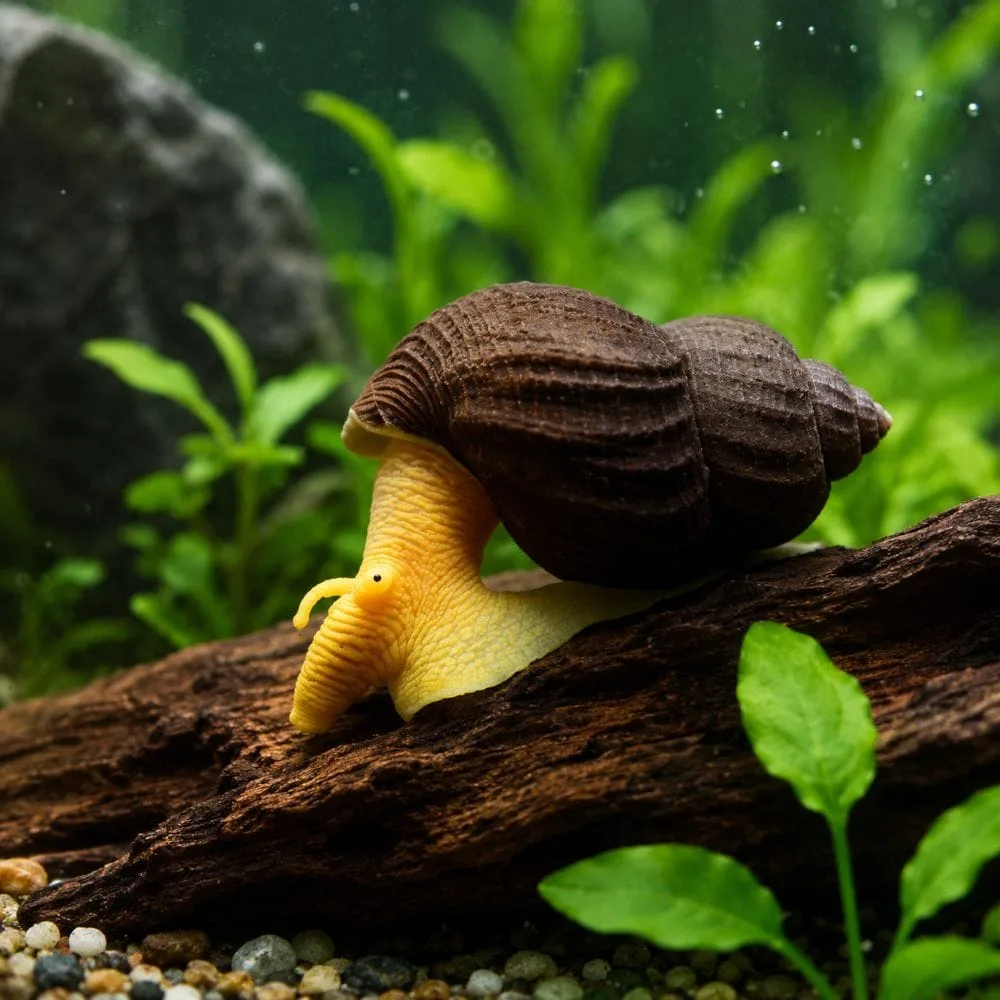
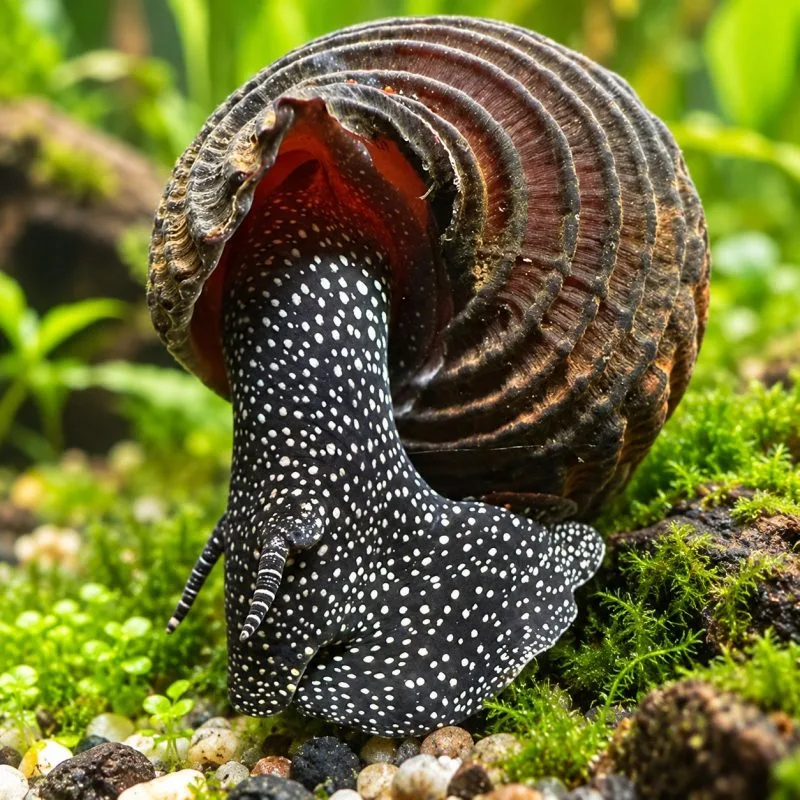
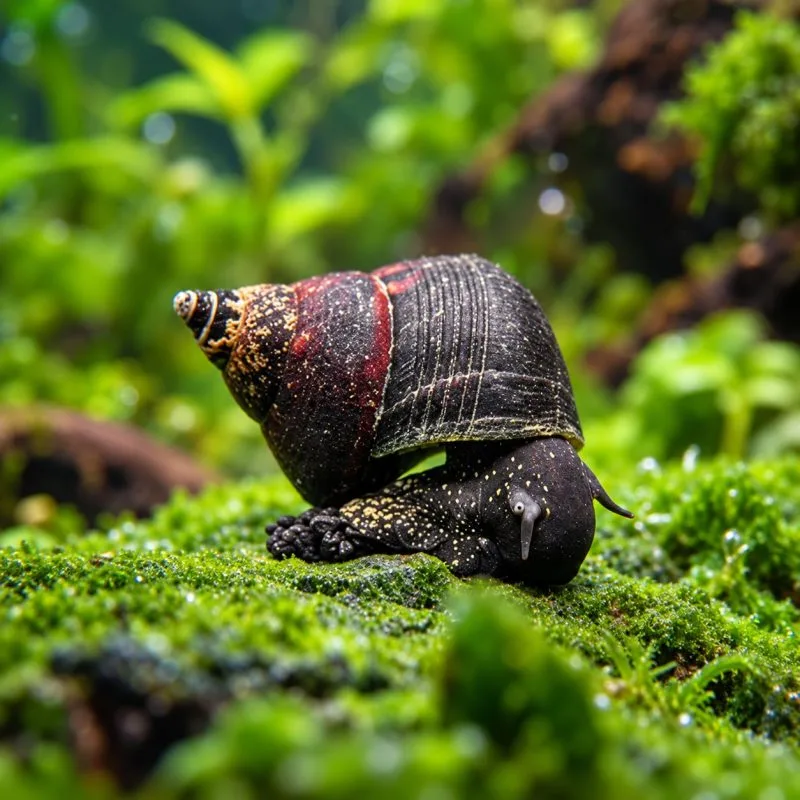
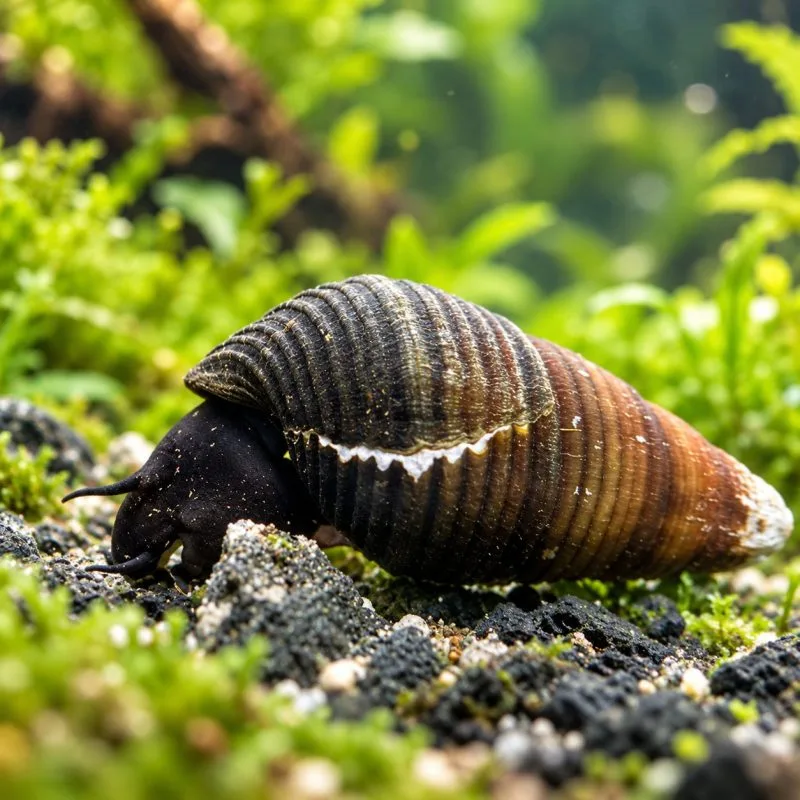
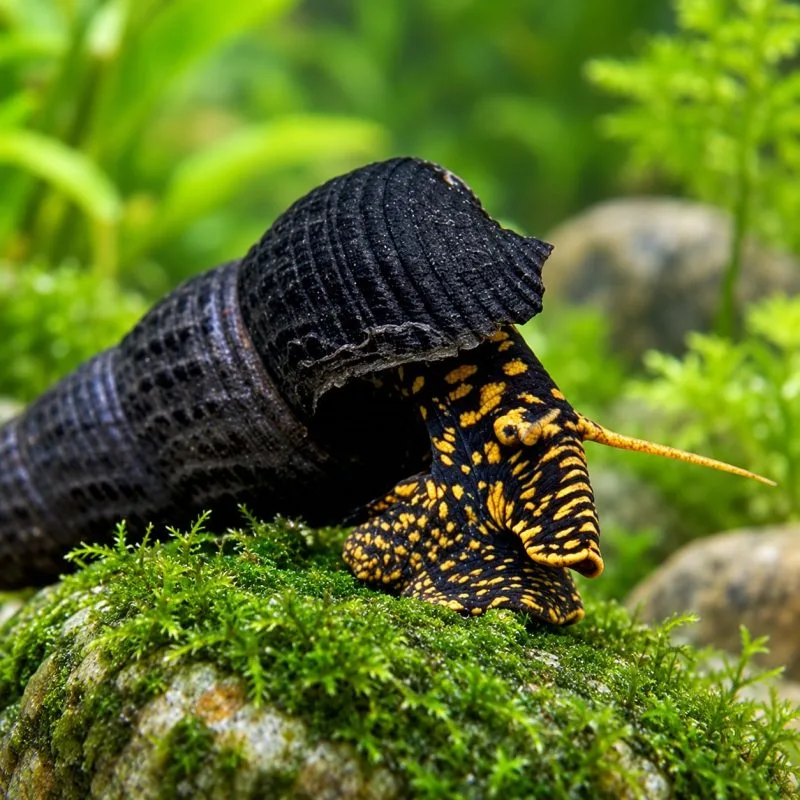
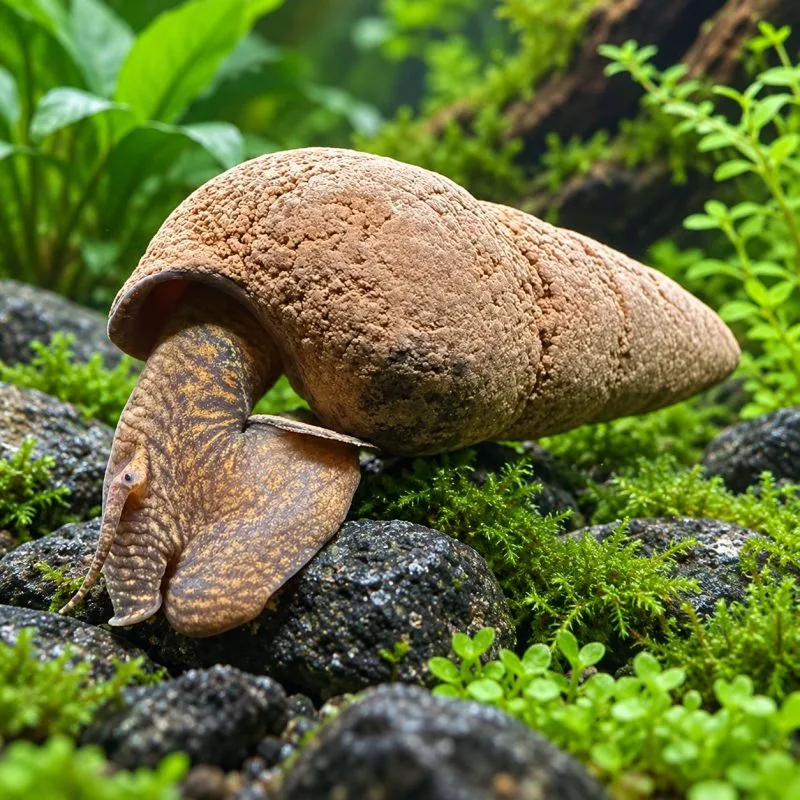
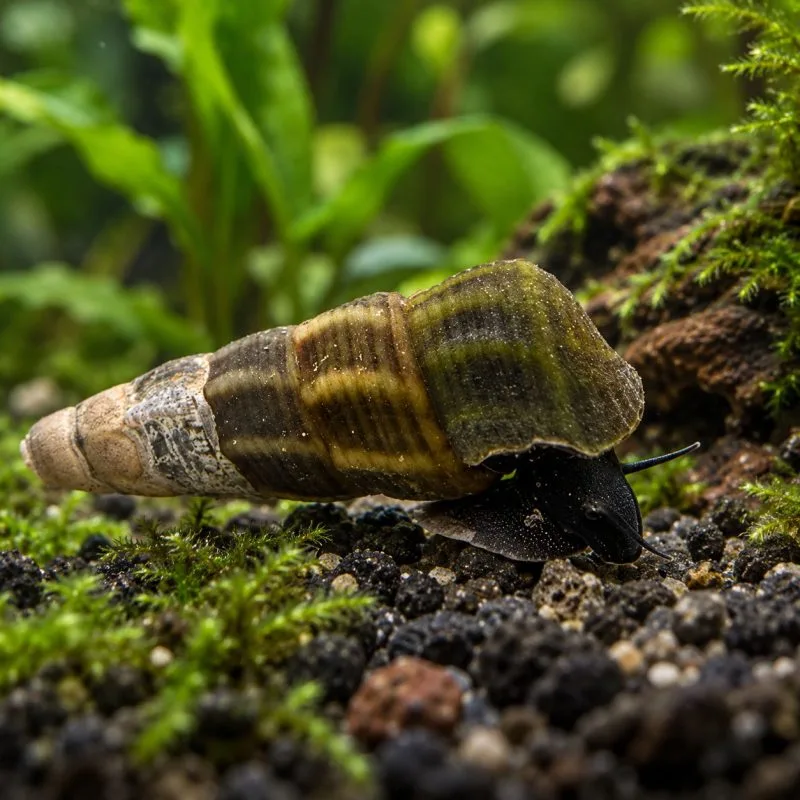
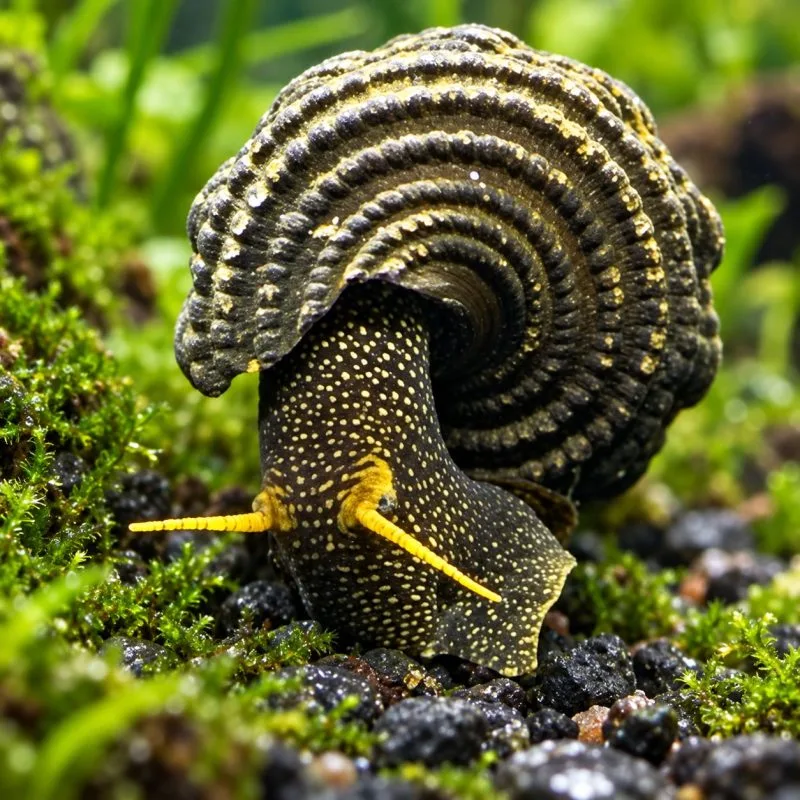
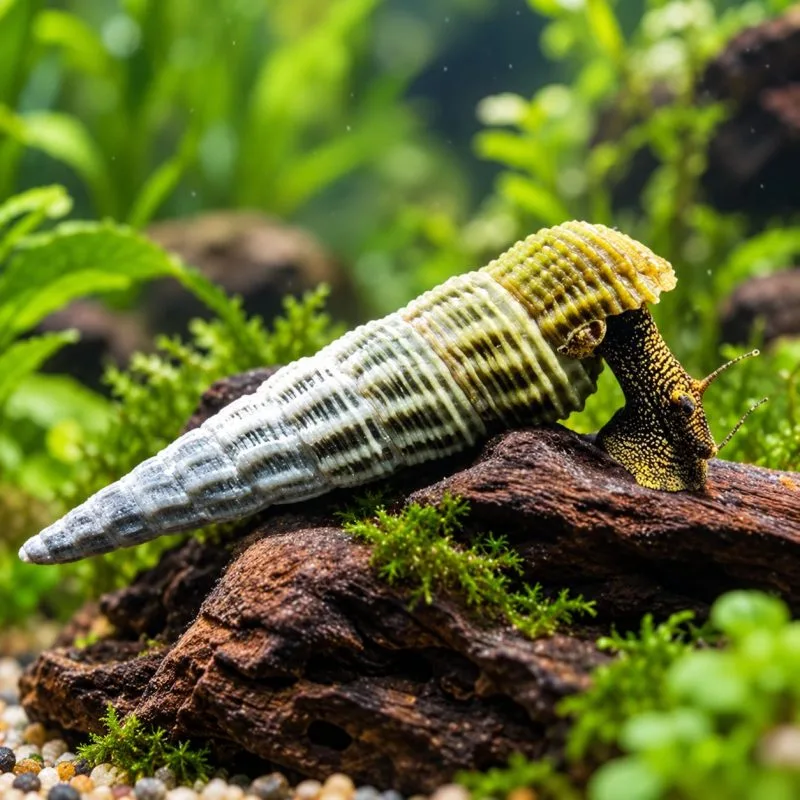
The Yellow Rabbit Sulawesi Snail is a rabbit snail of the genus Tylomelania, bred by Shrimp Aquatics and not collected from the wild. It is a large, slow moving grazer with a long shell and a yellow body, and it is one of the few snails that wants the same warm, alkaline, mineral rich water as Sulawesi shrimp. That makes it a natural companion for a Sulawesi tank and a poor fit for a cool or soft water community tank.
Check your tank against the water a Yellow Rabbit snail shares with Sulawesi shrimp
We keep this snail in the same water as our Sulawesi shrimp. If your tank already runs there, it is a candidate. If you are planning a snail only tank, build it to the same targets rather than to a general community range, because the shell depends on the minerals in the water.
| Temperature | 79-86°F (26-30°C) |
|---|---|
| pH | 7.5-8.5 |
| Minerals | Remineralized RO water in the Sulawesi group range, GH 4-8 dGH and KH 3-6 dKH |
| TDS | 150-250 ppm |
| Nitrate | Keep under 10 ppm |
| Substrate | Inert substrate and hardscape, no active pH lowering soil |
At Shrimp Aquatics, most of our Sulawesi systems currently run at TDS 150 ppm, GH 6-7 dGH and pH 7.5. We start those systems with RO water rather than tap water, then use Sulawesi Mineral 7.5 to prepare the water for our current tank targets before livestock are introduced, and we test the finished pH, GH and TDS before the water goes into a tank.
Soft, acidic water is the wrong direction for this animal on two counts: it is outside the range the snail is kept in, and low mineral availability or an unsuitable pH can contribute to shell erosion in aquarium snails. There is no single hardness number that protects every species, so the practical rule is to hold the tank inside the range above and to keep KH in a Sulawesi tank from drifting, since KH is what holds the pH up.
A Yellow Rabbit snail grazes the same biofilm layer as the shrimp, and it clears it faster
Rabbit snails feed on what grows on the surfaces of the tank, and what a given species accepts beyond that varies, so watch the animal rather than a feeding chart. In our Sulawesi systems, mature algae and biofilm do most of the feeding, and prepared food is a small supplement that we remove if it is left. A snail this size grazes a lot of surface, so count it into the grazing load of the tank instead of treating it as free cleanup.
- Add the snail only to a mature tank with a visible film of algae and biofilm on rock and glass.
- If the surfaces are being stripped bare, offer a small amount of prepared food and remove what is left within a day.
- Keep ammonia and nitrite at 0; decaying food in warm alkaline water is a faster problem here than in a cool tank.
- Do not add the snail to clean up a new tank; there is nothing for it to eat yet.
Which tankmates can share a Yellow Rabbit snail tank
Sulawesi shrimp are the obvious companions: the water is the same and both graze the same layer, so the only question is whether the tank grows enough biofilm for all of them. Assassin snails prey on other snails and do not belong in the same tank. Fish that would go into a Sulawesi tank at all should be chosen for the shrimp first; a fish that is safe with adult shrimp is not a threat to a snail this size.
We have no verified record of which plants this snail leaves alone. If you keep plants in the tank, treat soft leaved species as at risk and use hardy epiphytes attached to rock, which is the plant choice that suits a Sulawesi tank anyway.
Copper and medications
Copper and some fish medications can harm snails and shrimp. Read the ingredients of anything you add to the tank, including plant fertilizers and algae treatments, and never treat a tank holding this snail with a copper based product.
Breeding Yellow Rabbit snails is slow, and that is normal
Rabbit snails are live bearing: the female broods her young internally and releases fully formed juveniles rather than laying eggs. No published study gives the number of young per release or the interval between them, and we have not yet recorded breeding in our own tanks, so do not read a quiet tank as a problem. We do not promise breeding, sex or the number of young from any order.
How many Yellow Rabbit snails to order and how to settle them in
One or two are enough for most Sulawesi tanks, judged by the grazing surface available rather than by tank volume. If you want a breeding group, order a small group and let it grow. Follow the instructions packed with your order. For a sealed bag after a long transit, the current Shrimp Aquatics shipment protocol is to float the bag to equalize temperature, then move the animal into the tank without adding the shipping water. A rabbit snail may stay withdrawn in its shell for a while after arrival; give it a day in dim light before you judge it.
Before you order
Email contact@shrimpaquatics.com with your pH, GH, KH, TDS, temperature, tank size, cycle status and current livestock if you are not sure the tank fits. The full Sulawesi shrimp care parameters apply to this snail as well, so that page is the one to check your tank against.

There are no reviews yet.