
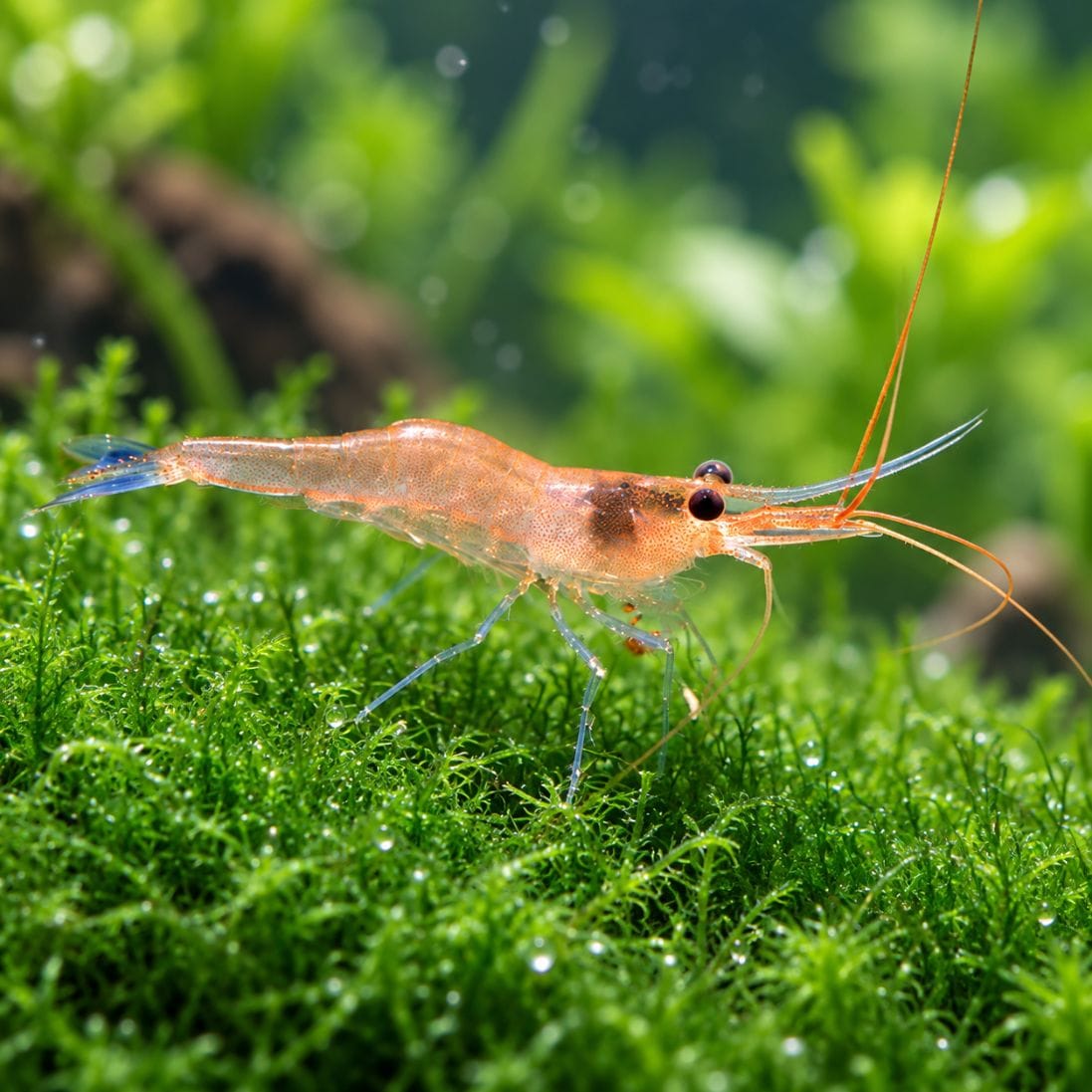
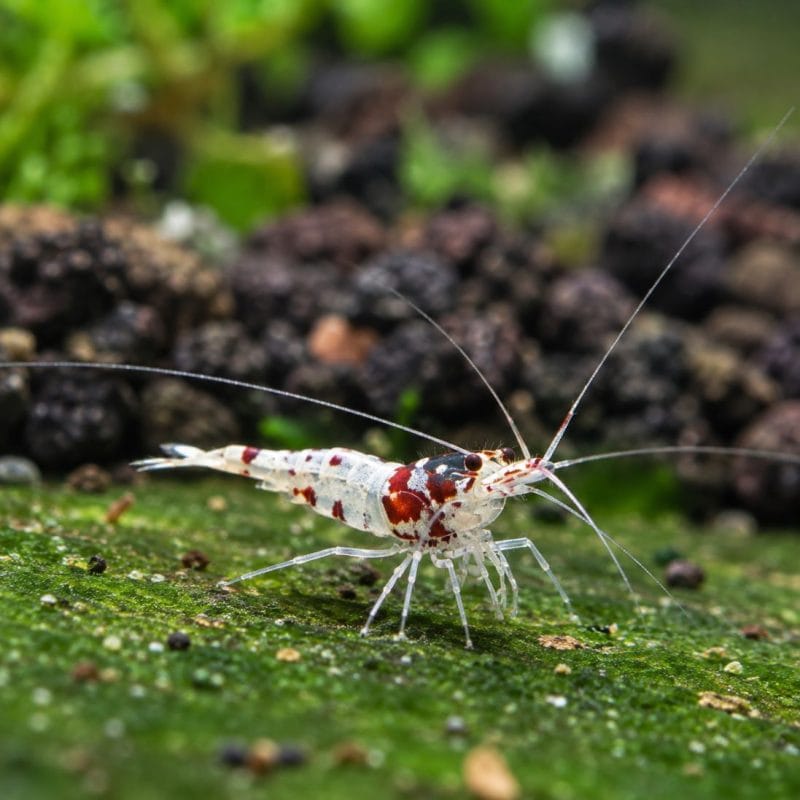
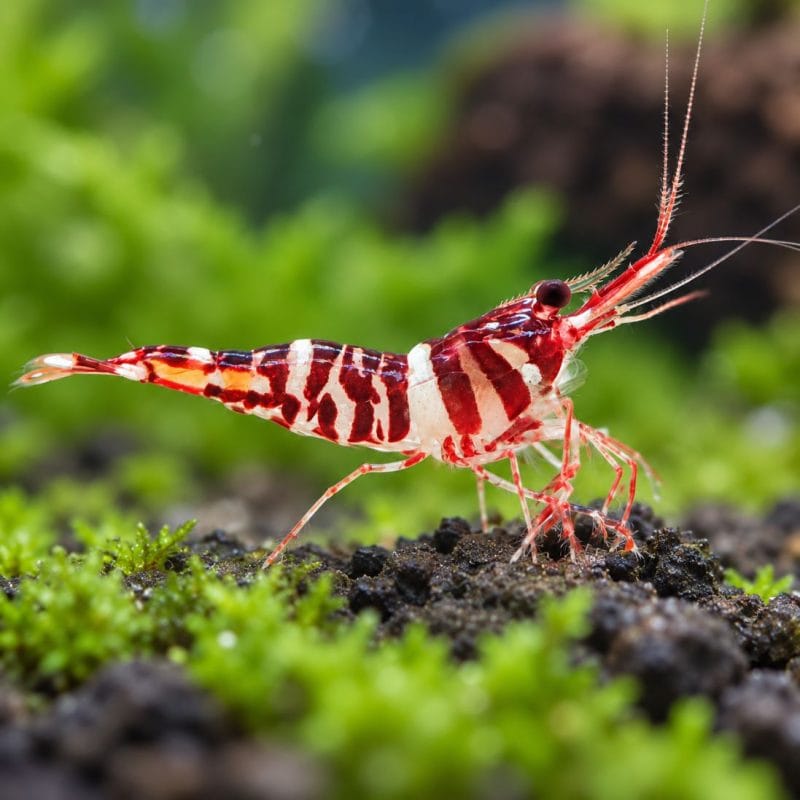
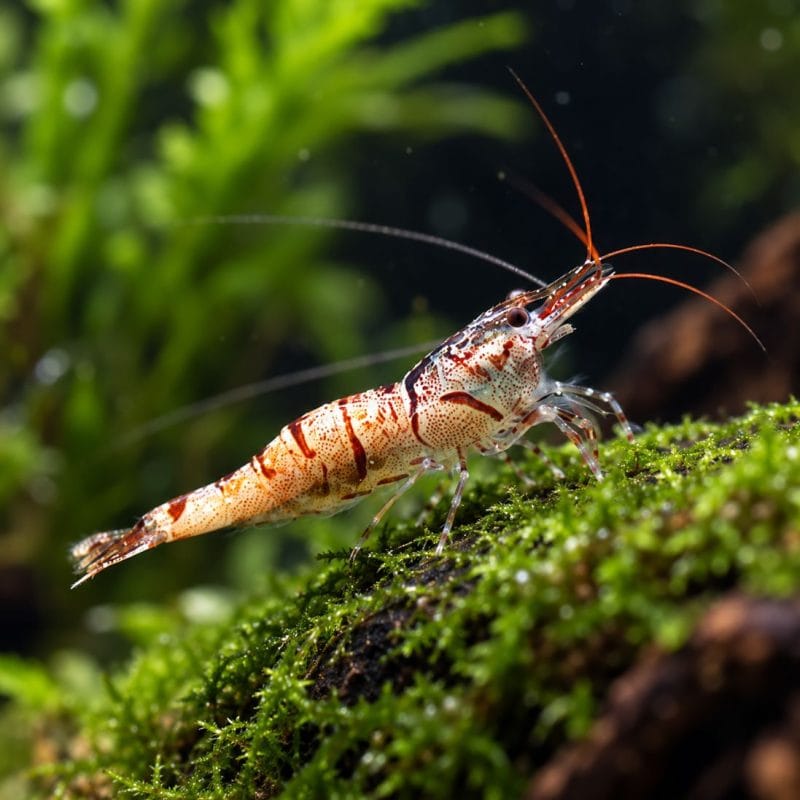
The Sulawesi Blue Leg Poso (Caridina caerulea) comes from Lake Poso in Sulawesi: cobalt walking legs, a blue rostrum and red antennae over a near clear body. It’s an advanced to expert shrimp, so the honest question isn’t whether you want one. It’s whether your tank already holds warm, alkaline, steady water.
What Arrives When You Order Blue Leg Poso Shrimp
Every Blue Leg Poso we send out is bred by Shrimp Aquatics, not collected from the wild. You’re buying a shrimp that has only ever known aquarium water, which matters here because the water it has known is the water you’ll need to match.
At Shrimp Aquatics, most of our Sulawesi systems currently run at TDS 150 ppm, GH 6-7 dGH and pH 7.5. The closer your tank sits to that on arrival day, the smaller the change these shrimp have to absorb in one move. If your tank sits higher in the alkaline band, that’s fine, but don’t chase your numbers to meet ours the day the box lands.
The Water Blue Leg Poso Shrimp Need
These are Sulawesi lake shrimp, so they want warm water that stays mildly alkaline and mineral poor. Here is the range we keep every Sulawesi lake species we sell inside.
| Difficulty | Advanced to expert |
|---|---|
| Temperature | 79-86°F (26-30°C) |
| pH | 7.5-8.5 |
| GH | 4-8 dGH |
| KH | 3-6 dKH |
| TDS | 150-250 ppm |
| Nitrate | Keep it under 10 ppm |
| Substrate | Inert sand and rock, never a pH lowering soil |
| Tank | Mature and stable, with grazing surfaces already grown in |
Steady beats perfect. A tank that holds pH 7.8 all month is safer than one that touches 8.0 on Sunday and 7.4 on Thursday, and KH is what stops that slide. Mix and test your replacement water outside the tank before it ever goes in, the way Sulawesi shrimp care parameters sets out.
Is Your Tank Ready for Blue Leg Poso Shrimp?
Run through this before you order, not after the shrimp are in the bag.
- Ammonia and nitrite read 0 on your own test kit, today.
- Rock and glass carry visible biofilm and brown diatom film the shrimp can graze.
- Temperature holds inside 79-86°F (26-30°C) overnight, not just in the afternoon.
- KH sits at 3-6 dKH, so pH doesn’t drift while you sleep.
- Hardscape and substrate are inert, and you know what every rock in there is.
- Nothing already in the tank needs cooler or softer water.
Test your water before you order
If you haven’t measured KH and TDS in the past week, measure them now. A brand new tank that reads 0 ammonia is cycled, but it isn’t yet mature, and a bare surface gives a grazing shrimp nothing to eat between feedings. If your readings sit outside the table above, email us at contact@shrimpaquatics.com with your numbers and tank size before you buy.
Which Tankmates Suit a Blue Leg Poso Tank
The safest tank is a species tank. After that, the animals that fit are the ones from the same warm alkaline water: rabbit snails and our other Sulawesi shrimp lines. Bee and crystal Caridina are the common mistake, and the answer there is no. They want cool, soft, acidic water, and a setting that suits both groups suits neither.
Fish are the other question we get. Any fish comfortable at this temperature will still take shrimplets when it finds them, so a peaceful fish can quietly stop a colony from growing. Watch grazing pressure too: every extra grazer, snail included, eats the same biofilm your shrimp live on.
What Blue Leg Poso Shrimp Eat
Most of their food should already be in the tank. Mature biofilm, diatoms and the soft algae growing on rock and glass are what these shrimp graze all day, which is why we ask about tank maturity before anything else. Prepared shrimp food is a supplement on top of that, offered in small amounts, and the usual rule is to lift anything uneaten within a couple of hours. Warm water is less forgiving of leftovers than a cool tank is.
Not every Sulawesi shrimp takes prepared food with the same interest, and some largely ignore it. In a tank with plenty to graze that’s normal, and it isn’t a reason to add more.
How to Settle Blue Leg Poso Shrimp on Arrival Day
Follow the instructions packed with your order first, because packing method and transit time change the right call. Our current method is to equalize temperature with the transport bag still sealed, then move the shrimp across without adding any shipping water to your aquarium.
Keep the lights off for the rest of the day and skip feeding until tomorrow. They’ll spend the first hours finding the rockwork, and that’s what you want to see. If a bag arrives open, leaking or cold, photograph it and contact us before you do anything else.







There are no reviews yet.