
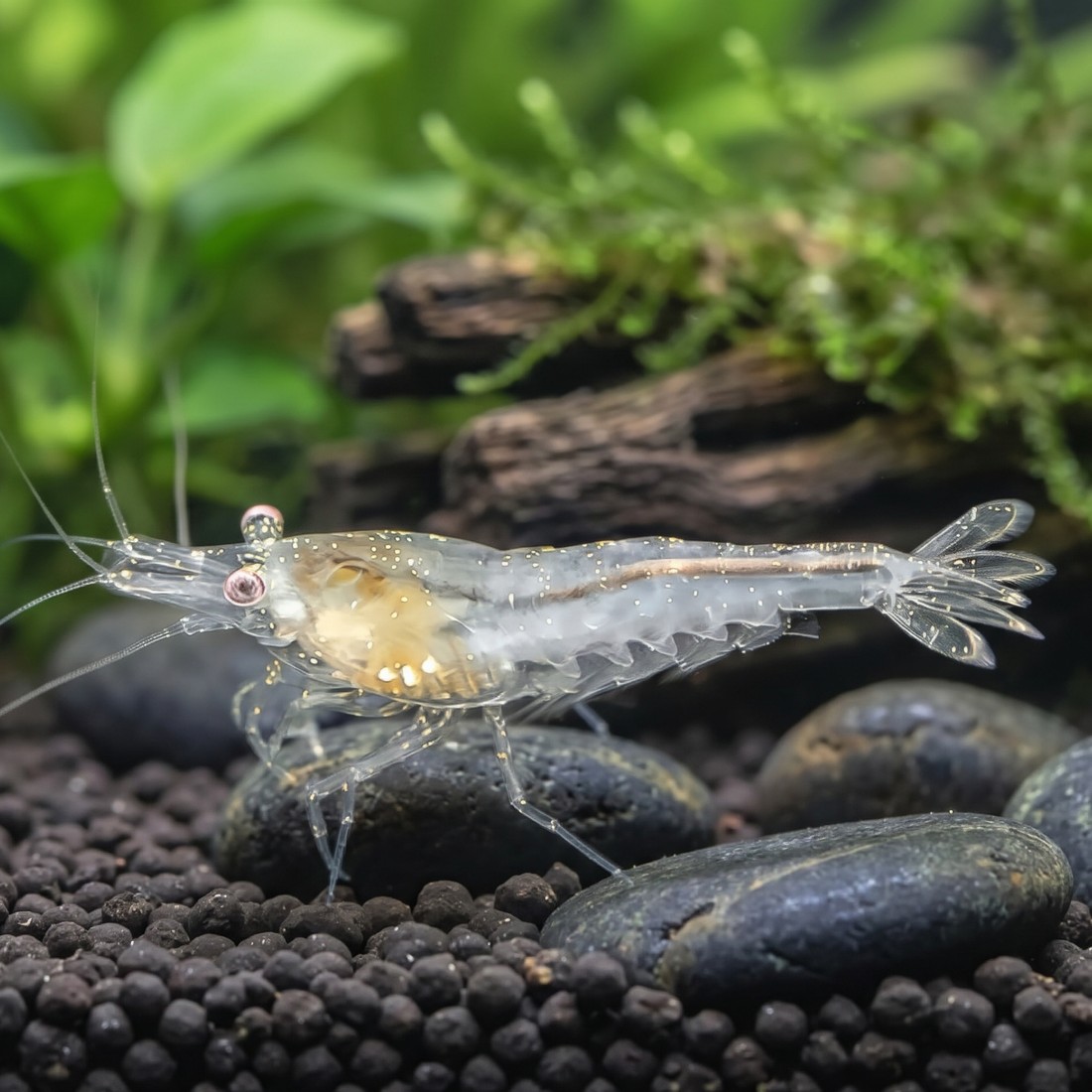
Snowball is an opaque white line of Neocaridina zhangjiajiensis. It takes the same care as the other Neocaridina color lines, so the main thing it asks of you is a cycled tank whose numbers stay put.
What do Snowball shrimp look like when they arrive?
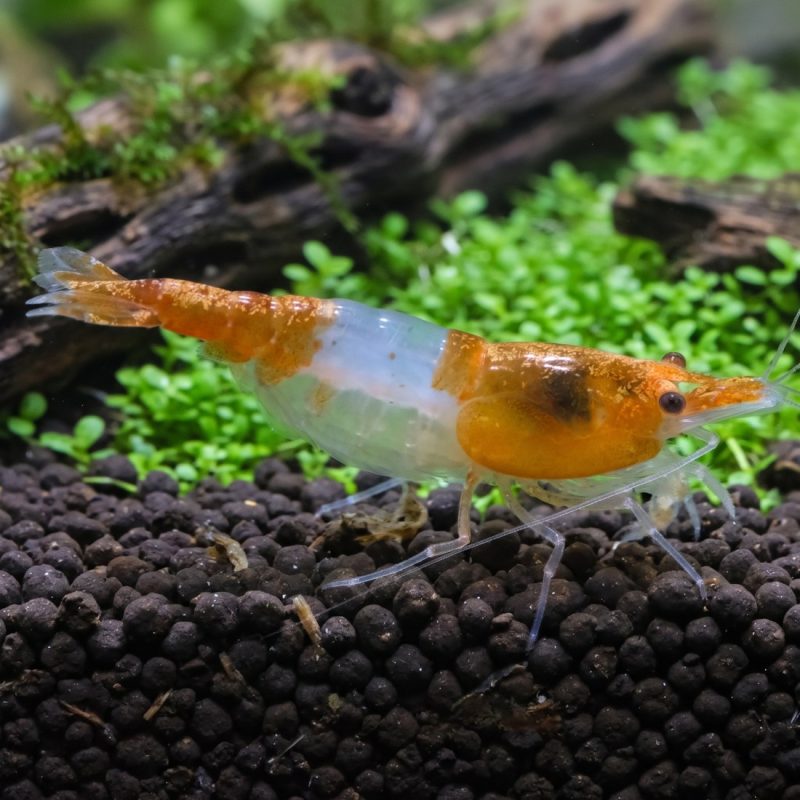
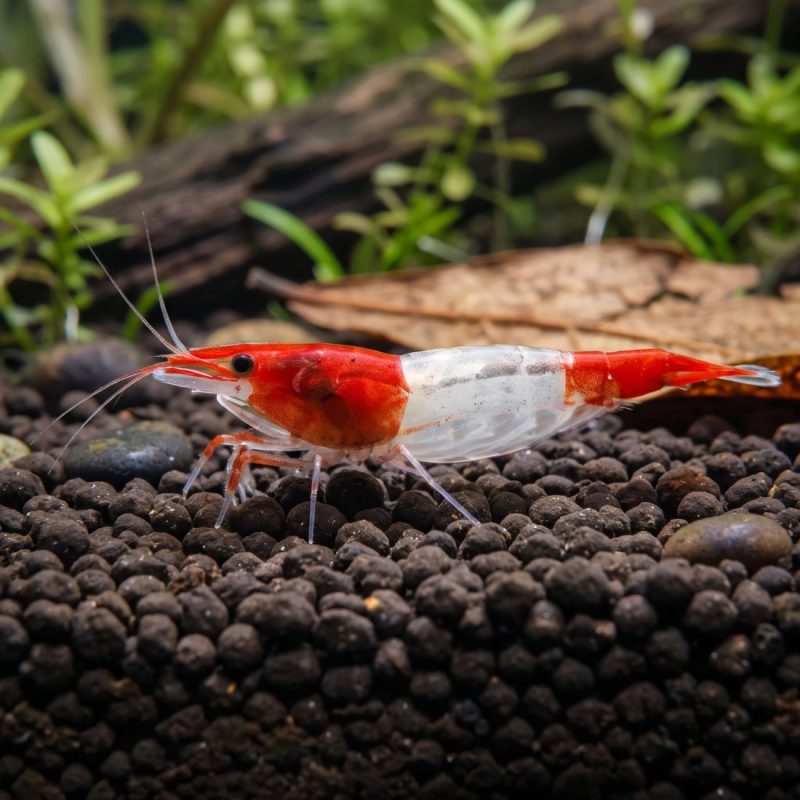
Our Snowball are already an opaque white at the size we ship. Across the line we sell, Snowball look nearly the same white from one shrimp to the next.
In our tanks, female Snowball are a more solid white than the males. Females carry white eggs, like small snowballs, which is where the name comes from. Snowball that come out off-color, clear, brownish or patchy, are taken out of the line we sell.
What sits under them changes the look as well. In our tanks, Snowball stand out whiter over a dark substrate.
Does your water already suit Snowball shrimp?
Check the water first. Snowball share one range with the other Neocaridina color lines, shown below. The tank that suits them holds those numbers week after week; one that only touches them on a good day isn’t ready yet.
| Difficulty | Often beginner-friendly in a stable, suitable tank |
|---|---|
| Temperature | 72-77°F (22-25°C) |
| pH | 6.8-7.6 |
| GH | 6-10 dGH |
| KH | 2-5 dKH |
| Tank for a small colony | About 5 gal (19 L) or larger; stability matters more than the nominal minimum |
| Diet | Biofilm and algae plus appropriate supplemental foods |
| Behavior | Peaceful |
Treat these numbers as a guide, not a pass-fail test. Neocaridina are easy shrimp, and a tank that sits a little outside one of them can still work, as long as it isn’t far off.
Test your water before you order
Measure temperature, pH, GH and KH now, while you still have time to fix what you find. Is one value well away from the table? Move it back a little at a time over several days, and let the tank settle before you place the order. A fast swing in pH or hardness is harder on shrimp than the value you started with. Want a second opinion on your numbers? Email contact@shrimpaquatics.com with your pH, GH, KH, temperature, tank size, whether the tank is cycled and what already lives in it.
What you receive from our Snowball tanks
At Shrimp Aquatics, our Snowball are bred and raised in our own tanks in Vietnam, not collected from the wild, and stock ships from Vietnam. The shrimp we ship are juveniles to young adults, 0.75-1 inch (1.9-2.5 cm) long. Adults reach about 1-1.25 inch (2.5-3.2 cm), and in our tanks Neocaridina live about 1-2 years.
We don’t sort our Neocaridina into color grades; each line is sold as a single line. That means we can’t promise how solid the white will be on any one shrimp in an order. For orders where the shrimp are large enough to be sexed reliably, we pack more females than males. Smaller juveniles can’t be sexed reliably, so no ratio applies to them, or to an order of a single shrimp.
Prepare the tank before your Snowball shrimp arrive
- Ammonia and nitrite both read zero on your own test kit, and the filter has run long enough to hold them there. A cycled tank is something you measure, not something you count off on a calendar.
- Temperature, pH, GH and KH have read the same on several separate days. A single good result doesn’t show you a stable tank.
- Tap water, if you use it, is dechlorinated and tested by you. It varies too much between towns for anyone to call it safe without seeing your numbers. Neocaridina are easy shrimp, but our advice is still RO water with minerals added back: tap water differs from one area to the next, and RO makes the numbers easier to control.
- The colony has food waiting from the first hour: established plants, rock or wood that has been in the water a while, or leaf litter, all carrying the biofilm and algae new shrimp graze on.
- Check the formulation of anything you’ve dosed recently: copper and some fish medications can harm shrimp, so read the full ingredient list, not just the front of the bottle.
- Shrimplets can’t be pulled into the filter: the intake is covered with a guard, or the filter is a sponge. Our advice is a sponge filter, which gives the tank plenty of oxygen without a strong current.
Which tankmates put a Snowball colony at risk
Snowball have no way to defend themselves, so what matters with any tankmate is whether it will eat them. Small tetras and rasboras are often peaceful, but many eat shrimplets. Small Corydoras may coexist in some larger, well-planted tanks, but they can eat shrimplets and compete with the colony for food on the bottom. Otocinclus are a generally lower risk to adults, though they are delicate fish that need a mature tank with plenty to graze. We don’t call bettas, larger fish or cichlids shrimp safe; with them, losing shrimp is a real risk. Whatever fish you choose, check first that it lives in the same temperature and water chemistry as the table above. Snails need checking too: assassin snails hunt other snails, so look up the species before you add one.
Can you keep Snowball with red cherry or other color lines?
Only if you don’t mind losing the white. Snowball cross with other Neocaridina lines, red cherry and Blue Dream included, and the young from those crosses lose their color and turn clear, so we don’t promise color stability in a mixed tank. At Shrimp Aquatics, we keep each Neocaridina color line in its own tank. Kept on their own, most of the young hold the color: in our tanks, most Snowball young keep the white of their parents. If you plan to add more Neocaridina shrimp to this aquarium later, pick one color line and keep to it.
What to do on the day your Snowball shrimp arrive
Follow the instructions packed with your order first, because packing method, transit duration and species all change what’s right that day. Shrimp Aquatics’ current shipment protocol, for eligible long distance orders arriving in a sealed transport bag, is to equalize temperature and then transfer the shrimp across without adding shipping water to the aquarium. Never pour transport water into your tank. If a bag has opened or leaked, or anything differs from the instructions supplied, email contact@shrimpaquatics.com before transferring them.
Don’t judge their color on the first day, either. After a move to a new tank, our Snowball look paler and more see-through for a few days before their white comes back.
Feeding a new Snowball colony
In an established tank, new shrimp graze biofilm and algae off the glass, plants and hardscape alongside the food you add. At Shrimp Aquatics, we feed our Neocaridina pellet food made for fish and shrimp. Offer a little at first and take out whatever is left later, so uneaten food doesn’t become extra waste in a tank that wasn’t carrying it before.

There are no reviews yet.