
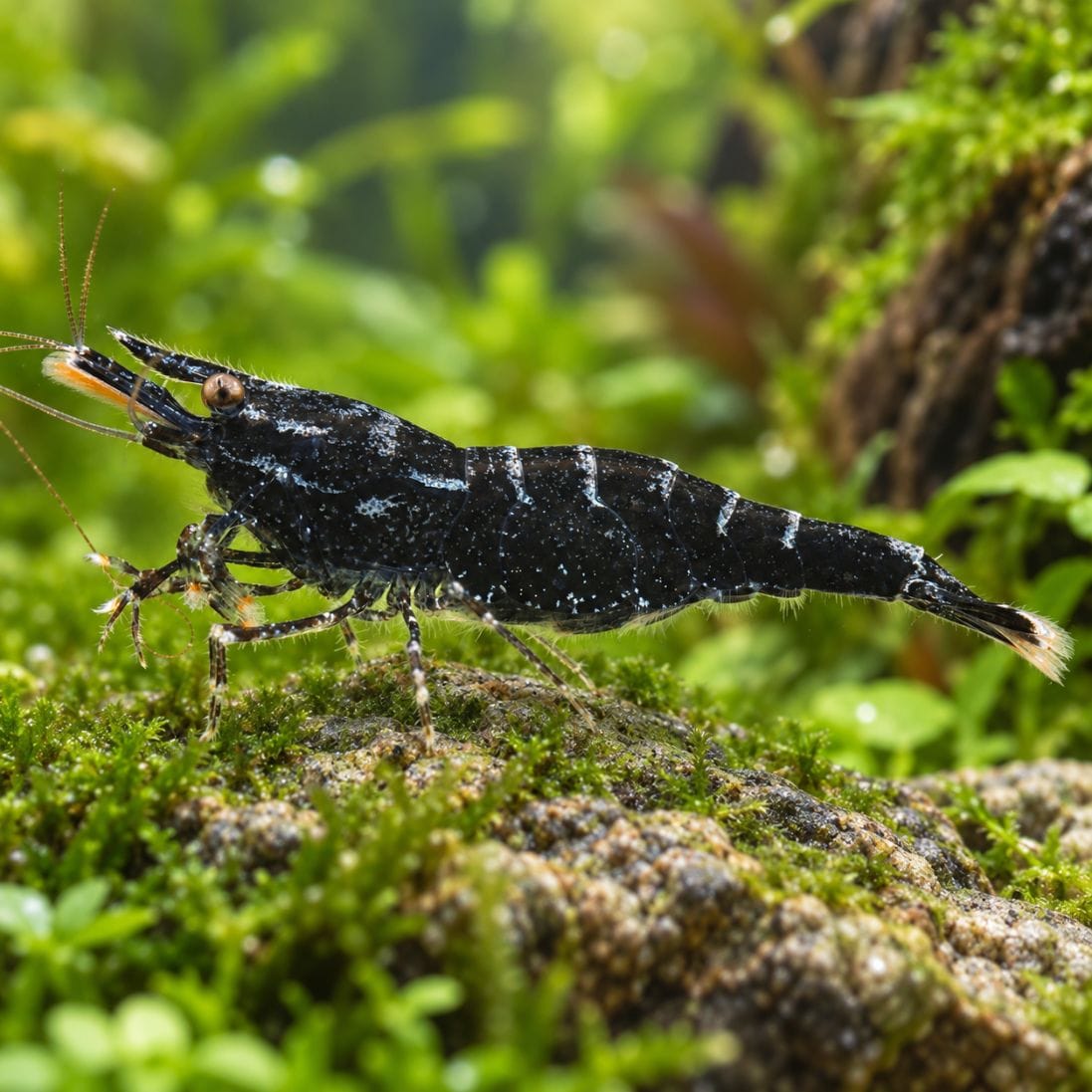
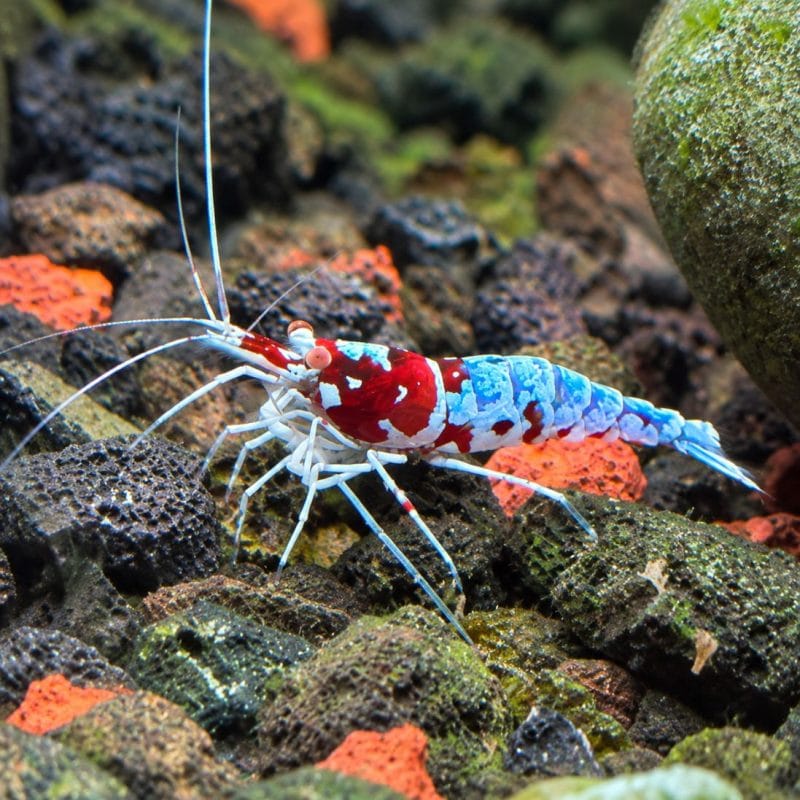
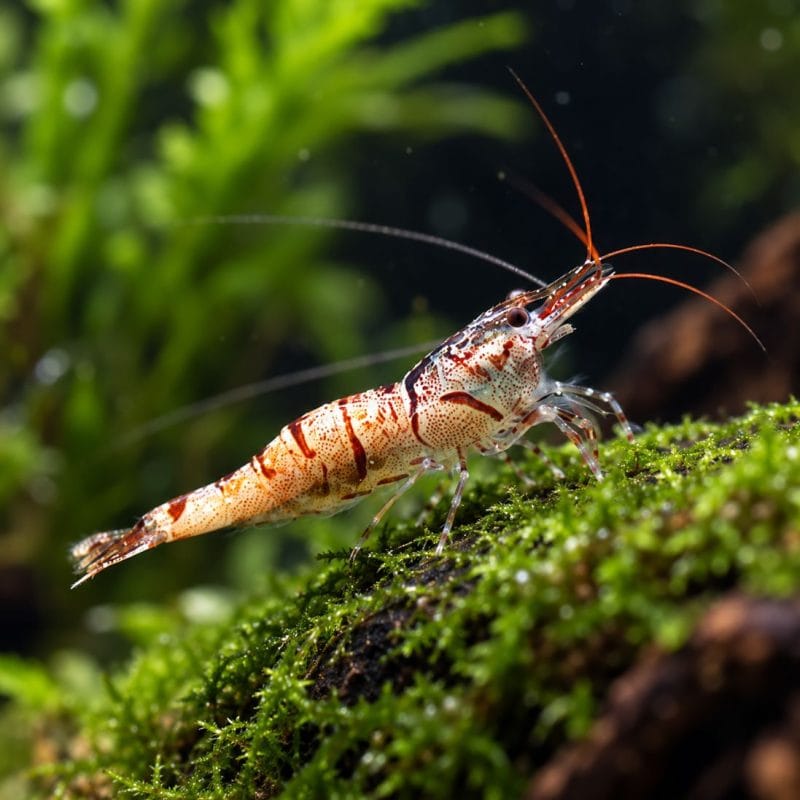
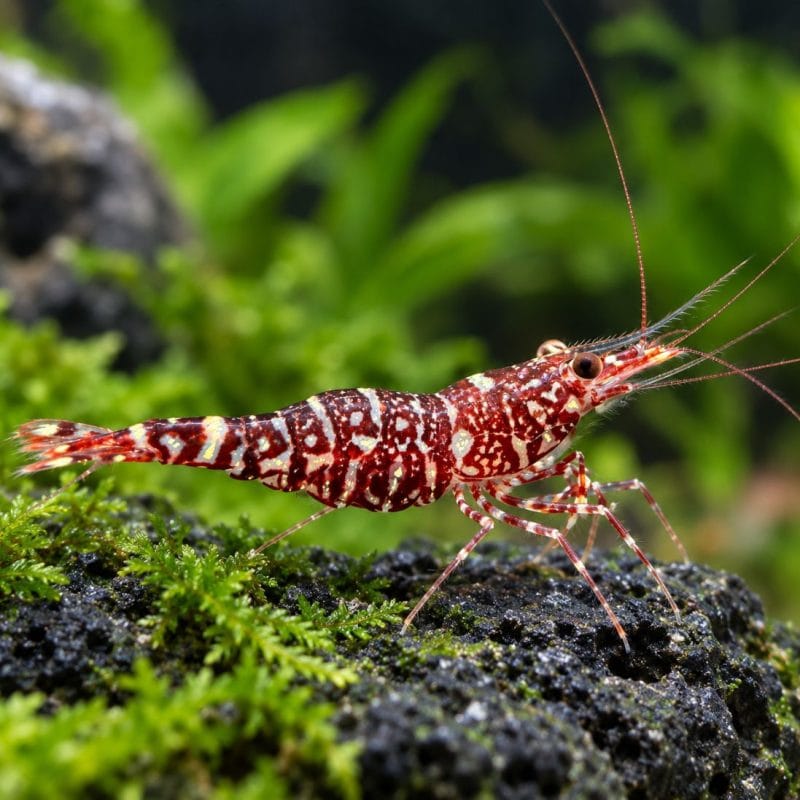
The Sulawesi Six Banded, Caridina holthuisi, is a small dark shrimp carrying pale bands across the abdomen, from the Malili lakes of Sulawesi, Indonesia. Ours are tank-bred by Shrimp Aquatics and never collected from the wild. It’s an advanced to expert animal, and the tank decides the outcome far more than the shrimp does. Banding and base color vary from one shrimp to the next, so we don’t promise a particular look.
Which water do Six Banded shrimp need?
The same warm, alkaline water as every Sulawesi lake species we sell. These are the numbers we keep to, and they’re what to measure your own tank against before you order.
| Difficulty | Advanced to expert |
|---|---|
| Temperature | 79-86°F (26-30°C) |
| pH | 7.5-8.5 |
| GH | 4-8 dGH |
| KH | 3-6 dKH |
| TDS | 150-250 ppm |
| Ammonia and nitrite | 0, always |
| Nitrate | Under 10 ppm |
| Diet | Biofilm, diatoms and algae, with occasional prepared food |
| Behavior | Peaceful and often shy |
At Shrimp Aquatics, most of our Sulawesi systems currently run at TDS 150 ppm, GH 6-7 dGH and pH 7.5. Landing your tank near that on arrival day is gentler than moving the shrimp to the far end of the range, so it’s worth knowing what they are leaving behind.
Steady beats perfect here. Mix replacement water outside the tank, test it before it goes in, and change habits slowly rather than in one evening. The targets and the stability habits behind them sit in our Sulawesi shrimp care parameters guide.
Test your own water before you order
If your pH reads under 7.5, or KH slides between water changes, that’s a water build to sort out first. RO water rebuilt with a Sulawesi mineral salt is the normal route, and it’s far easier to build that water in a bucket than to correct it in a stocked tank.
Is your tank mature enough to take them?
Cycled and mature are not the same thing. These shrimp graze all day, so they need surfaces that already have something growing on them.
- Ammonia and nitrite read 0, with an established biological filter.
- The tank has run warm and stable for weeks rather than days, and holds pH and KH between changes.
- Rock and glass carry visible biofilm and diatom growth instead of bare surfaces.
- Substrate and hardscape are inert, so nothing in the tank pulls pH down.
- Heating you trust, plus gentle flow with strong aeration at shrimp level.
If one of those isn’t true yet, wait. A new colony never gets easier by going in early.
What can share a tank with Six Banded shrimp?
Anything that wants the same warm alkaline water and doesn’t hunt. Sulawesi rabbit snails fit, and so do other Sulawesi shrimp lines. Neocaridina can work, but only at Sulawesi temperature, which is warmer than most cherry colonies are kept. Bee and Crystal Caridina don’t fit at all, because their soft acidic water is the opposite of this. Most fish are a poor idea, and a fish sold as shrimp safe will still eat shrimplets. Whatever you add, count grazing surface as well as bioload; two grazing species on one rock pile is competition for the same food.
If you’re still choosing between lines, the rest of our tank-bred Sulawesi shrimp want this same water, so the tank you build now will suit any of them.
How much feeding does a grazing colony need?
Less than you’d think. Biofilm and algae do most of the feeding, and prepared food is occasional rather than daily. A safe default is a small amount once a week or so, with anything uneaten lifted out the same day. In warm alkaline water leftovers break down quickly and push ammonia up, and that slow rise is what thins a colony out. Feed light and let the rock tell you when more is useful.
What happens on arrival day?
Follow the instructions that come with your order first, because packing method, transit time and species all change the answer. Shrimp Aquatics’ current shipment practice is to equalize temperature with the bag sealed, then transfer the shrimp across without letting shipping water into your aquarium. Keep the lights low, skip feeding for the first day and leave them to settle. Our advice is to put your effort into the tank rather than into the unpacking, because that’s where the first week is usually decided.






There are no reviews yet.