
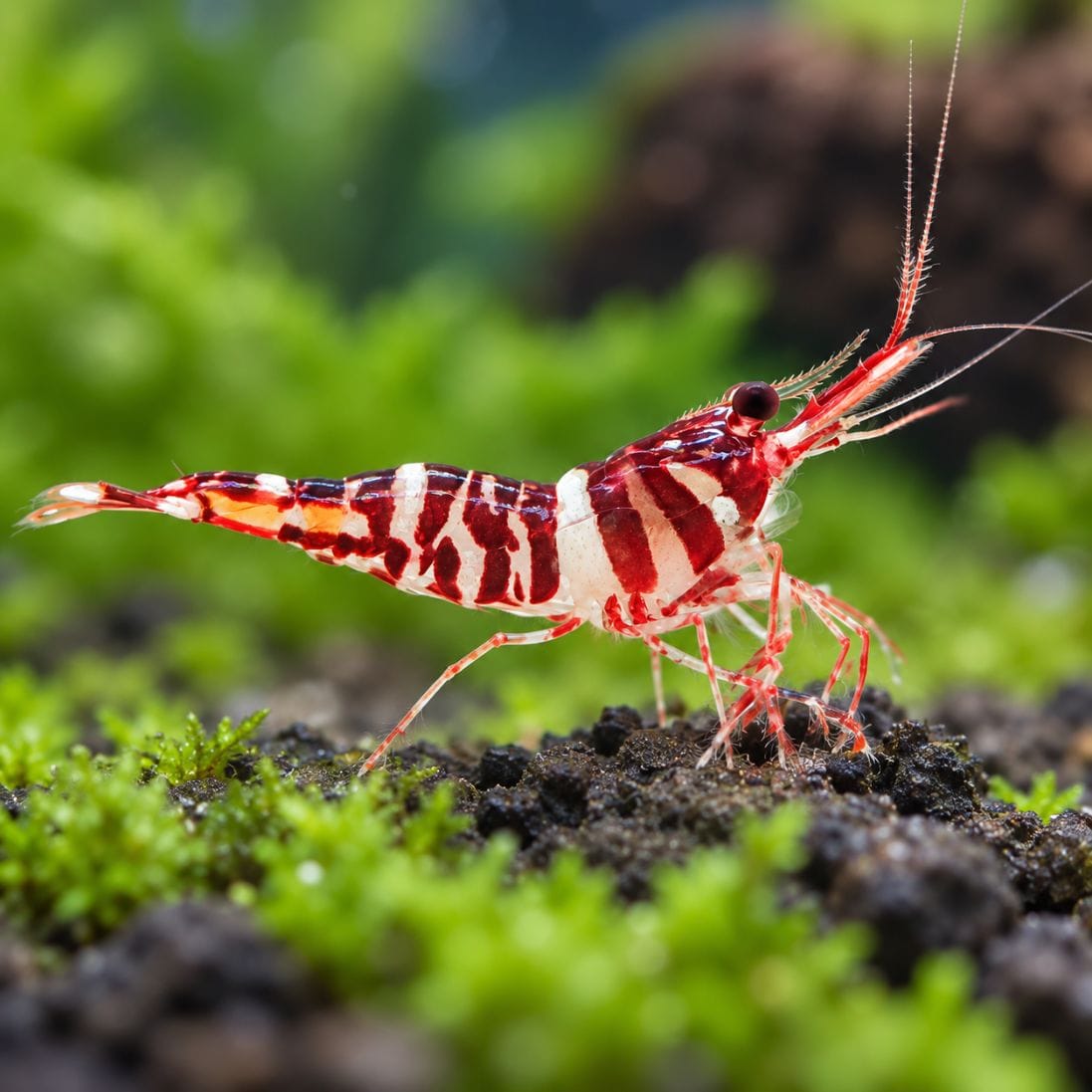
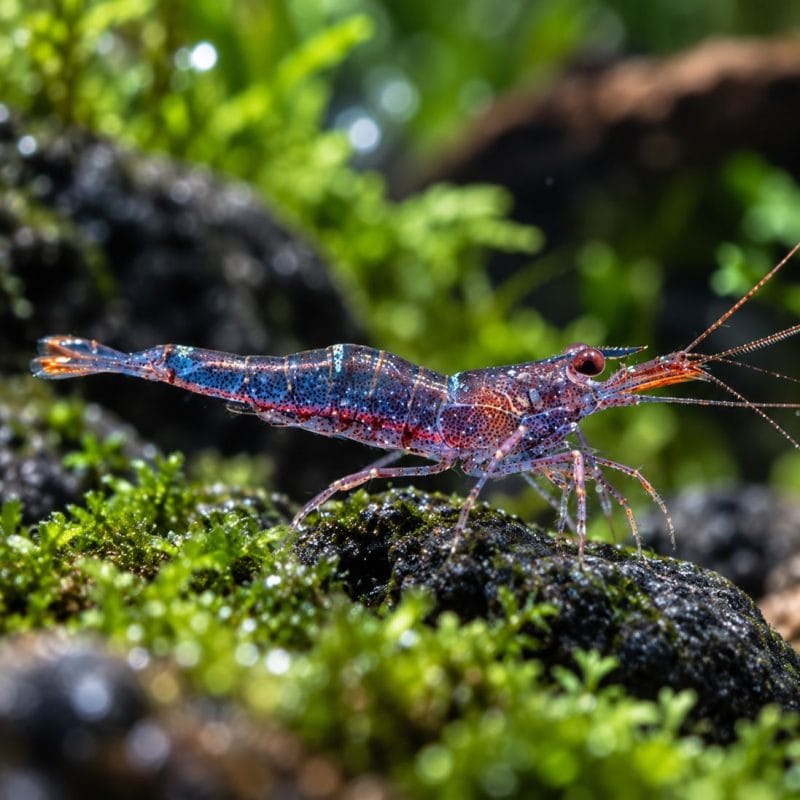
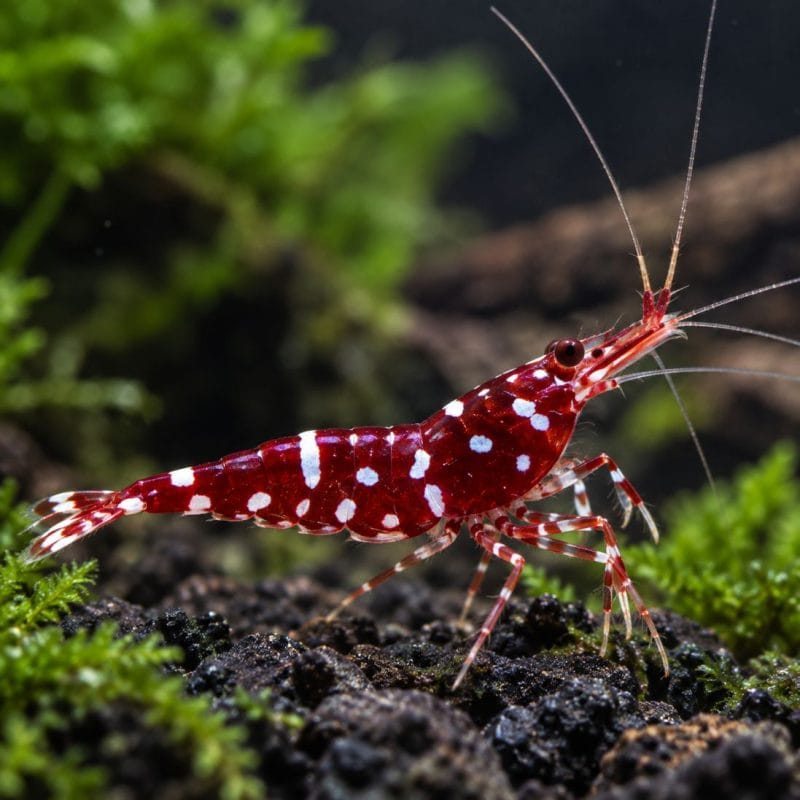
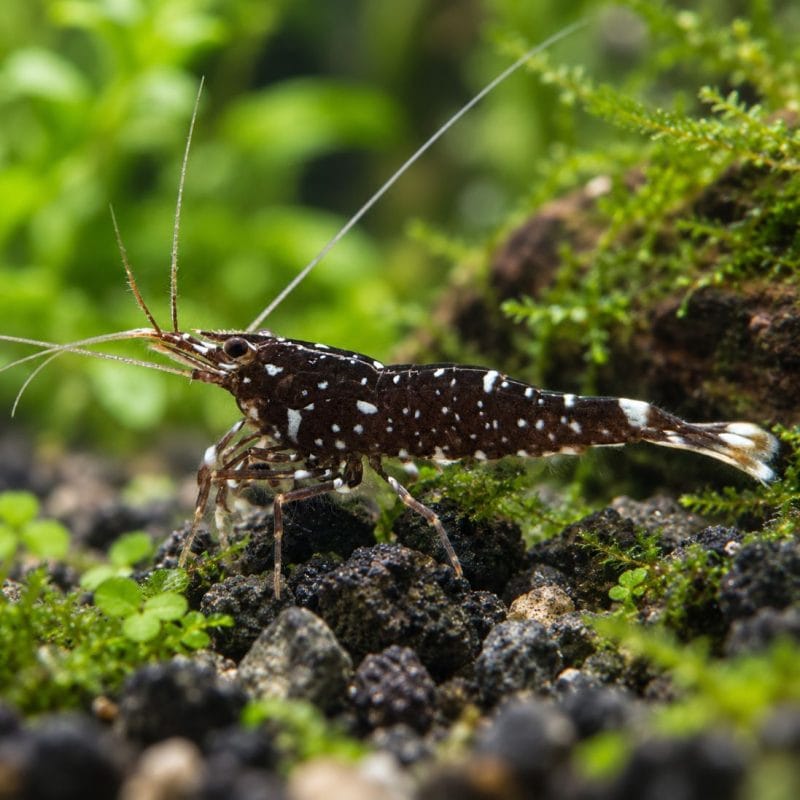
The Sulawesi Tigri is a red shrimp crossed by vertical white bands, and it’s an advanced to expert animal. If your tank isn’t warm, alkaline and already grazed over with biofilm, this isn’t the shrimp to start on. Here’s what we ship, and what your water needs to be doing first.
Which shrimp the Sulawesi Tigri actually is
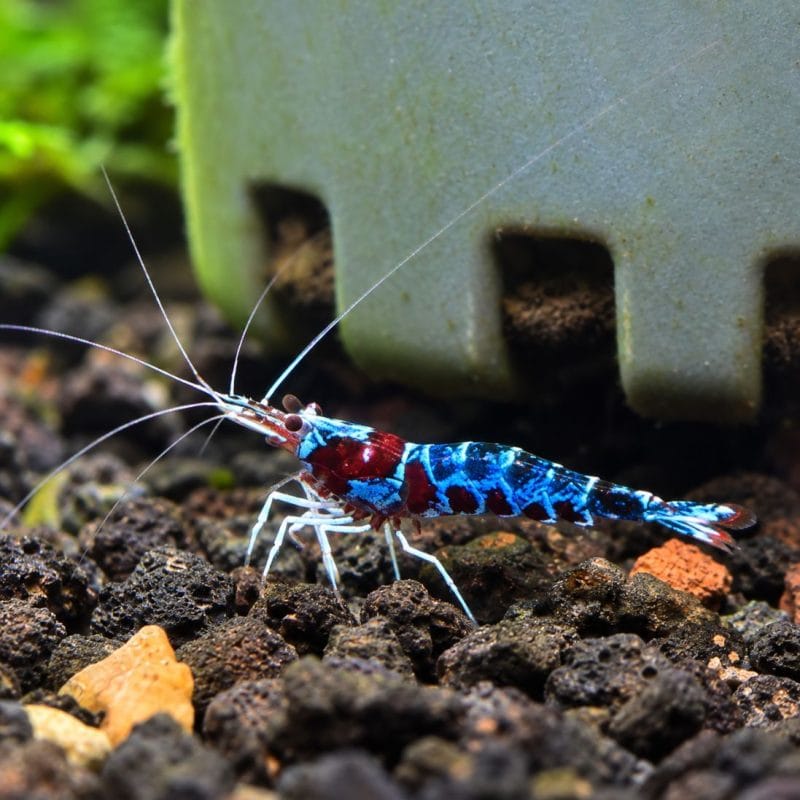
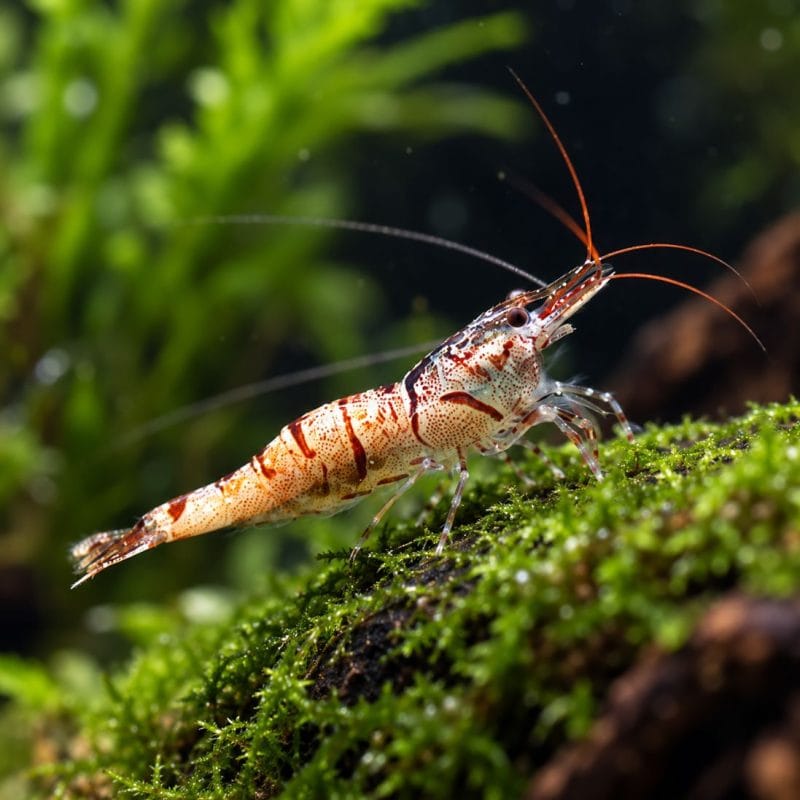
Sold as Sulawesi Tigri, Red Tiger Sulawesi and Towuti Red Tiger, it’s written in print as Caridina sp. “tigri”, and the quotation marks do real work: the shrimp hasn’t been formally described yet, which is why the trade names wander. It comes from Lake Towuti, in the Malili lake system of South Sulawesi. Ours are tank-bred by Shrimp Aquatics, not collected from the wild. Our Sulawesi shrimp all want the same warm alkaline water, so the line you pick changes the look and not the setup.
The water a Tigri needs before you order
These are the numbers we keep to for every Sulawesi lake species we sell. Treat them as a band to hold steady, not a target to chase.
| Difficulty | Advanced to expert |
|---|---|
| Temperature | 79-86°F (26-30°C) |
| pH | 7.5-8.5 |
| GH | 4-8 dGH |
| KH | 3-6 dKH |
| TDS | 150-250 ppm |
| Ammonia and nitrite | 0 ppm |
| Nitrate | Hold it under 10 ppm |
| Substrate | Inert substrate and hardscape, no active pH lowering soil |
| Diet | Biofilm, diatoms and algae on established grazing surfaces |
| Behavior | Peaceful and often shy |
At Shrimp Aquatics, most of our Sulawesi systems currently run at TDS 150 ppm, GH 6-7 dGH and pH 7.5. The smaller the gap between our water and yours, the smaller the change these shrimp have to survive on arrival day. Build yours from RO plus a Sulawesi mineral, mix and test it outside the tank, and holding Sulawesi water parameters steady afterwards is most of the work.
Test before you buy, not after
A tank sitting outside this band, or drifting inside it, is the risk we’d want ruled out before you order rather than after. If you’re unsure, send us your pH, GH, KH, TDS, temperature, tank size and how long it has been running at contact@shrimpaquatics.com before you order.
Is your tank ready for Tigri shrimp?
- Ammonia and nitrite read 0 on your own test kit, on a filter that has carried a load for weeks.
- Temperature holds one set point inside 79-86°F (26-30°C) day and night.
- KH sits at 3-6 dKH, from water remineralized outside the tank rather than dosed into it.
- Substrate and rock are inert. Bee shrimp soil pulls pH down and has no place here.
- Rock and glass carry a visible film, because grazing surfaces are the food supply and a bare tank has none.
- Flow is gentle at shrimp level, but the water stays well oxygenated.
- You top off evaporation with pure RO, so TDS doesn’t climb week after week.
If two of those are still a no, wait. Nothing you feed or dose makes up for a tank that isn’t mature, and a Tigri colony is slow to rebuild once half of it is gone.
Who you can keep with a Tigri colony
One species per tank is the honest answer. Keep Tigri away from Harlequin shrimp above all, since breeders have reported the two crossing and producing fertile young, and Sulawesi shrimp crossbreeding has been reported between other lake species that never meet in the wild either. Rabbit snails sit on the same warm alkaline water and are a reasonable companion if you count their waste and their grazing. Bee and Crystal Caridina are out, since their water is cooler and acidic and no setting suits both. Most small fish take shrimplets even when they ignore adults, so in a tank you’re hoping to breed, we wouldn’t add any.
Feeding a Tigri colony in a mature tank
Mature biofilm, aufwuchs and algae do most of the feeding here, which is why the grazing surface matters more than what’s in your food jar. Prepared food is a small, occasional extra, and a safe default is to offer a little and lift anything uneaten within a few minutes. We won’t tell you these shrimp never touch prepared food, because acceptance varies by species and system. But leftovers cost you more at 86°F (30°C) than in a cool bee shrimp tank: everything breaks down faster, and the waste is more toxic in alkaline water.
What to do on the day your shrimp arrive
Have the tank ready before the parcel is. For eligible long distance orders, Shrimp Aquatics’ current shipment protocol is to equalize temperature with the transport bag sealed, then transfer the shrimp without adding shipping water to your aquarium. Follow the instructions packed with your order, since transit time and packing can change the call, and never pour transport water into the tank. Then leave them alone: lights low, no food on the first day, and no water change for a week or two. Shy is normal at first.





There are no reviews yet.