
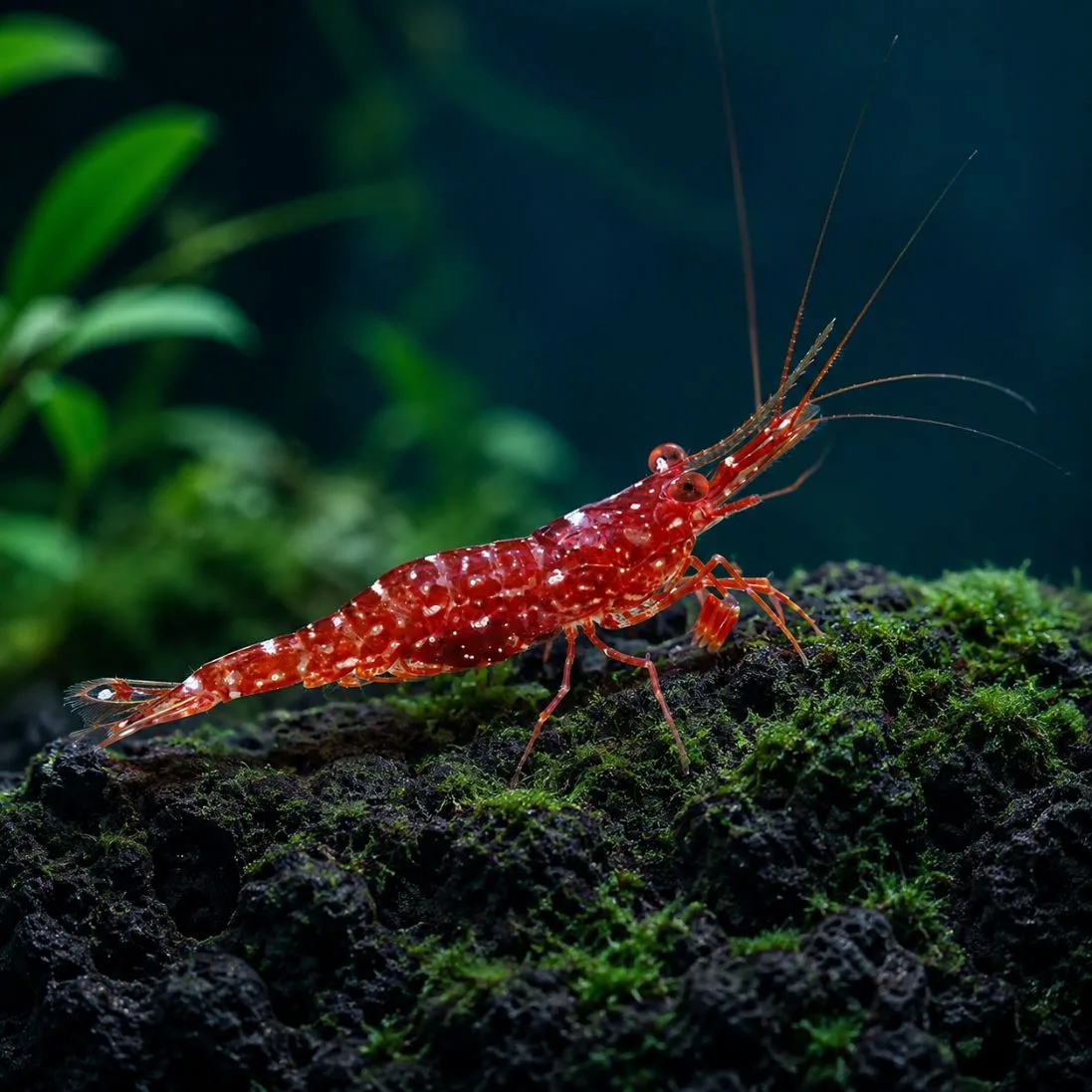
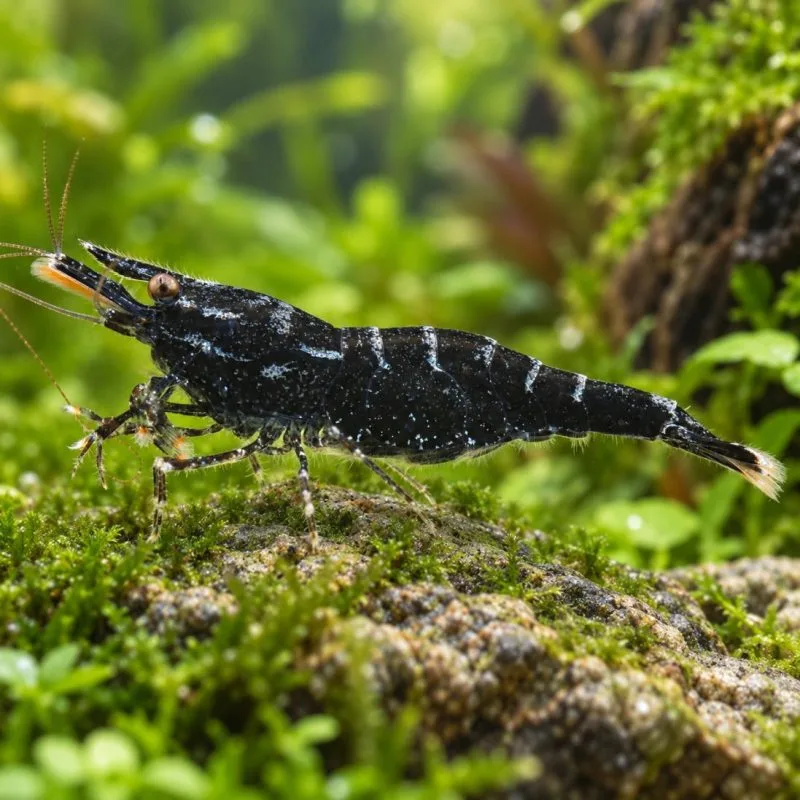
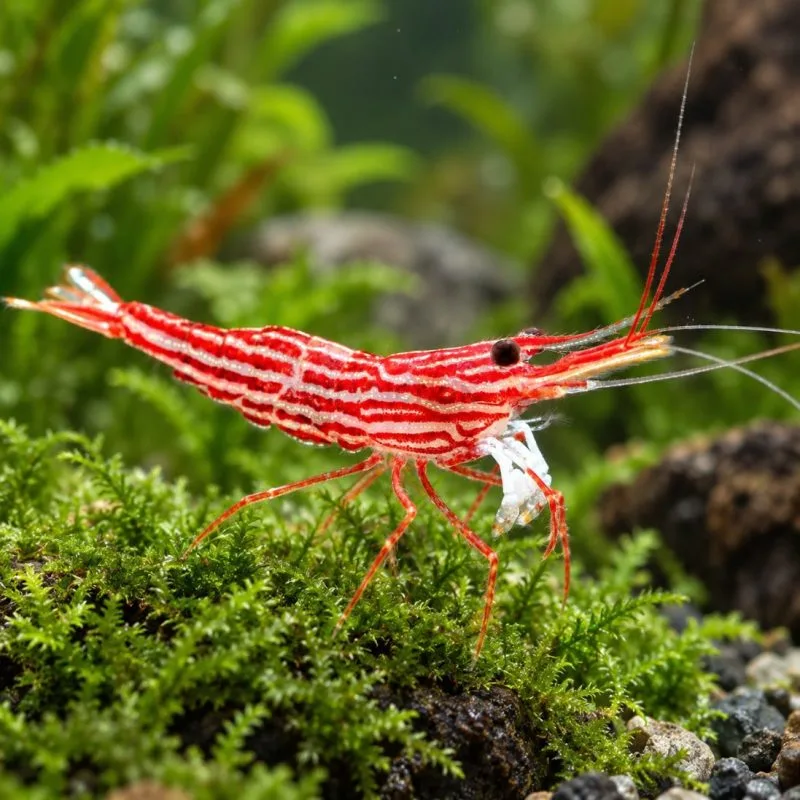
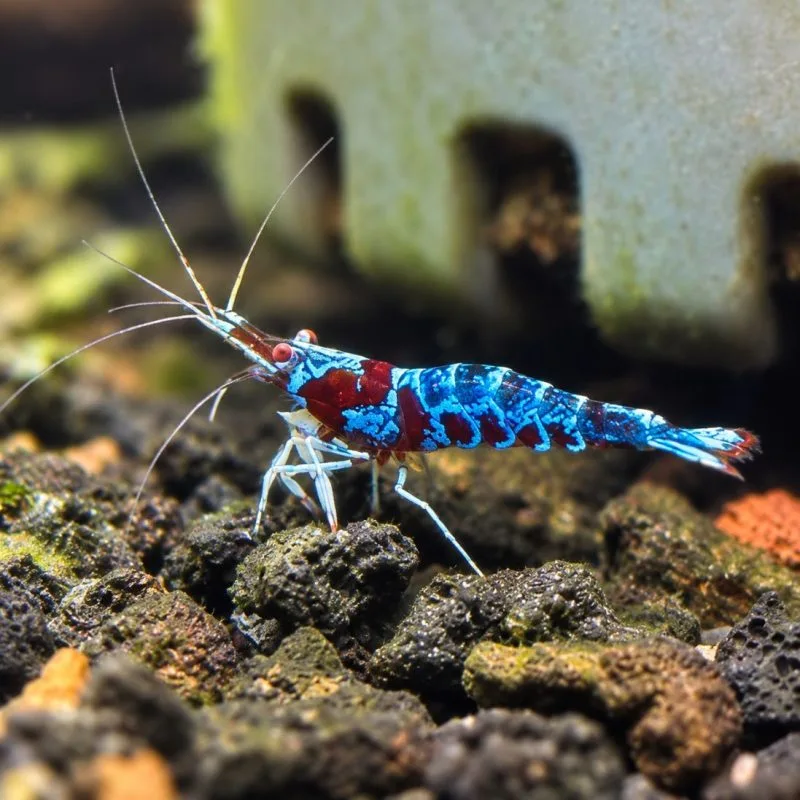
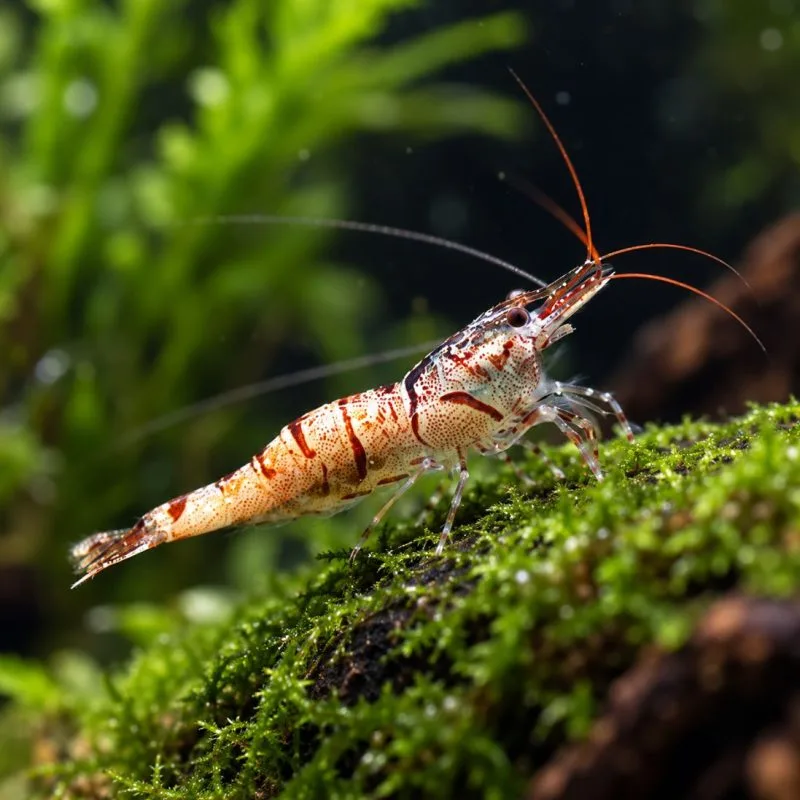
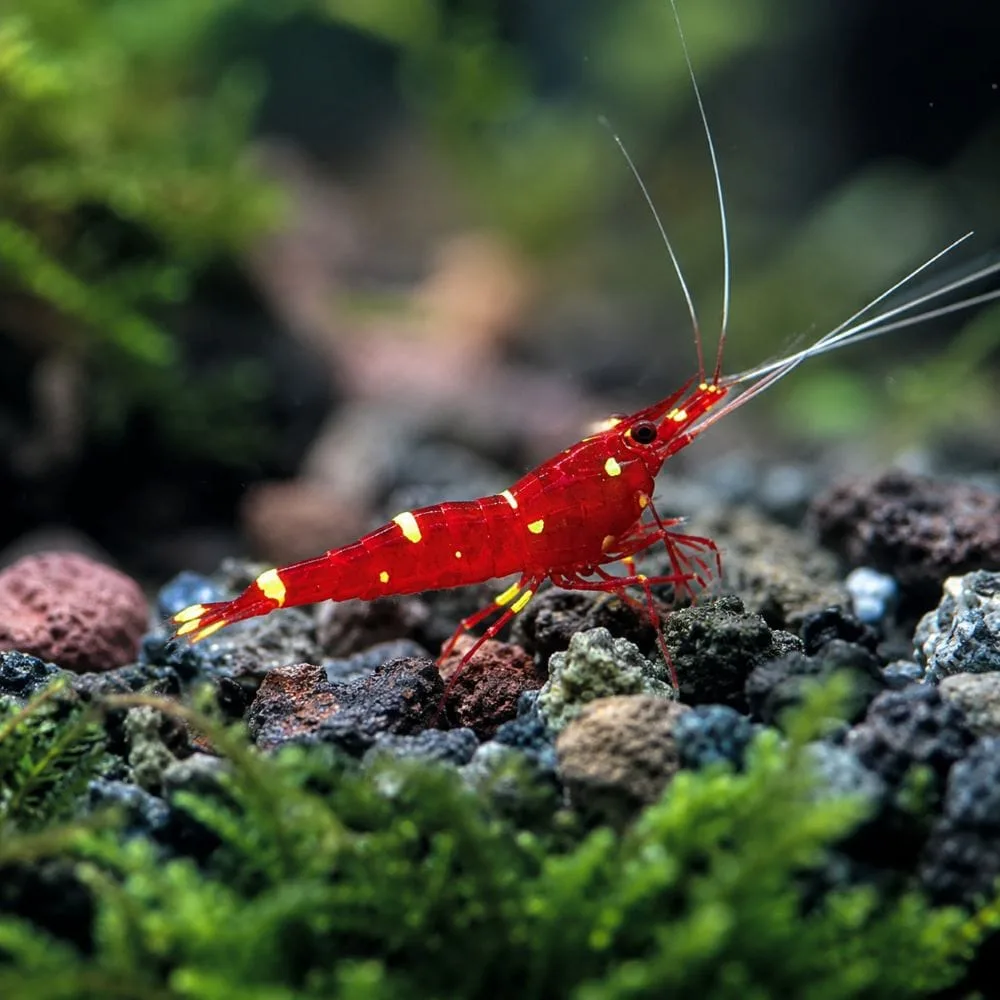
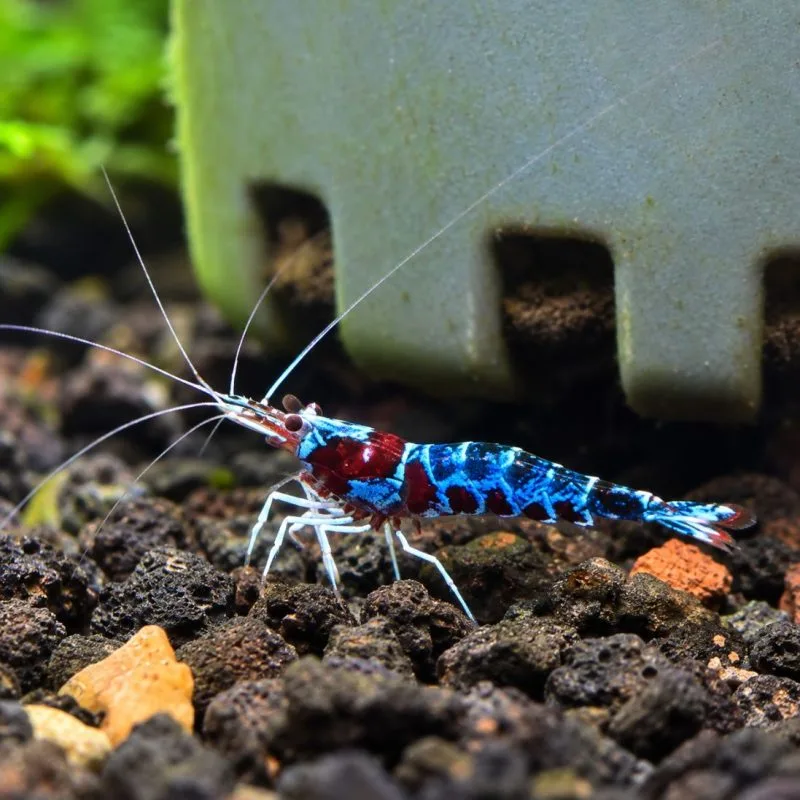
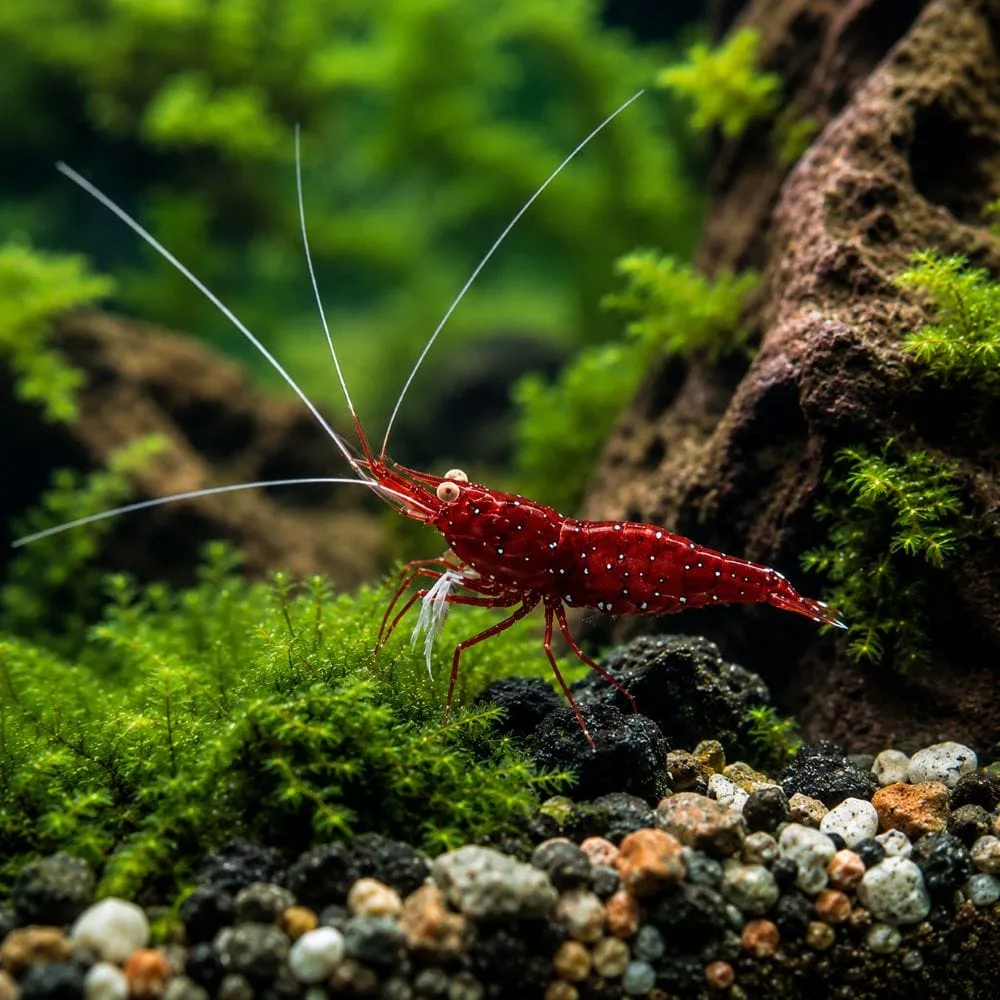
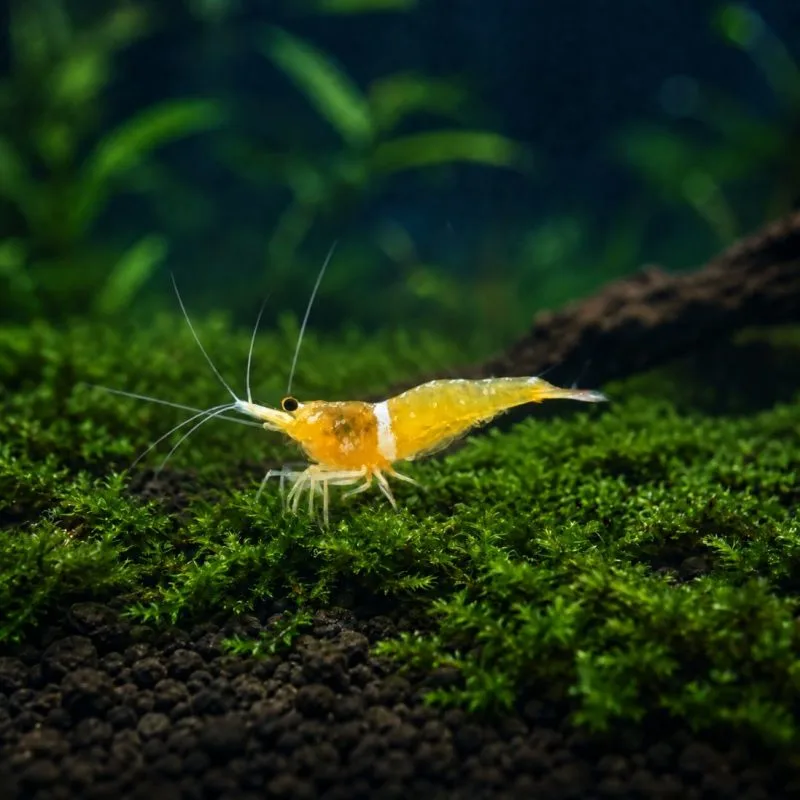
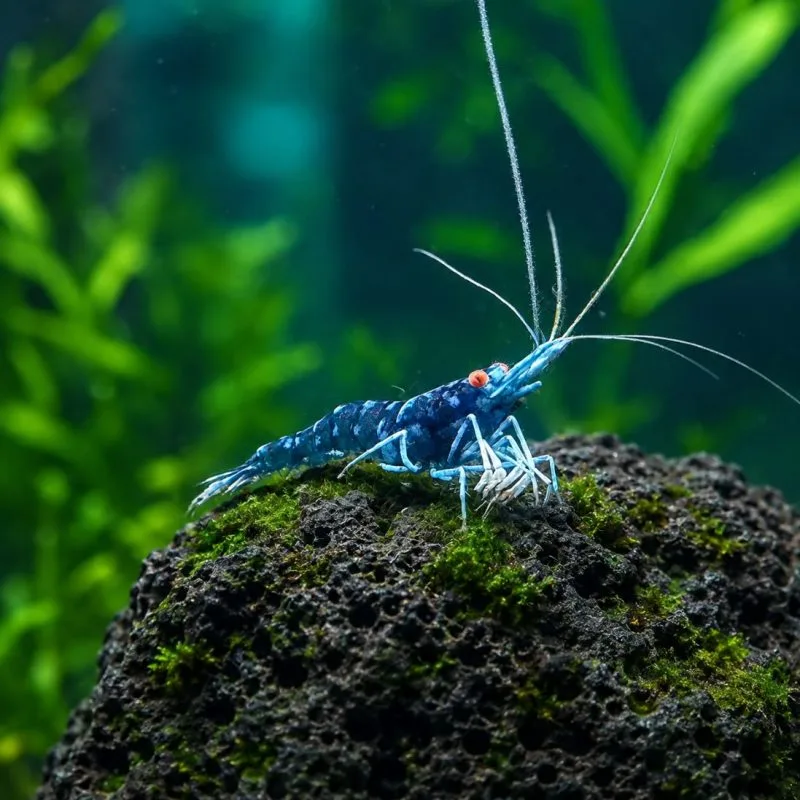
The Sulawesi Red Orchid is a rock dwelling shrimp from Lake Towuti in the Malili lake system on Sulawesi, described as Caridina glaubrechti in 2009. It is an advanced to expert line rather than a first shrimp: it needs warm, alkaline, mineral stable water and a tank that has been running long enough to grow its own food. Stock sold here is tank-bred by Shrimp Aquatics, not collected from the wild.
Does your water already sit where Red Orchid needs it?
This is the question that decides whether the order is a good idea, so answer it before anything else. Red Orchid is kept in warm, hard, alkaline water, which is the opposite of the soft acidic contract used for Bee and Crystal shrimp. Test your own tank and compare it with the typical range below rather than assuming your tap water is close.
| Care level | Advanced to expert |
|---|---|
| Temperature | 79-86°F (26-30°C) |
| pH | 7.5-8.5 |
| GH | 4-8 dGH |
| KH | 3-6 dKH |
| TDS | 150-250 ppm |
| Nitrate | Under 10 ppm |
| Substrate | Inert substrate and hardscape |
| Behavior | Peaceful and often shy |
| Diet | Biofilm, aufwuchs and algae, with prepared shrimp food as a supplement |
If your tap water is soft or acidic, reaching those numbers means preparing water from RO and a Sulawesi mineral rather than dosing what comes out of the tap, and holding it there week after week. That is a setup decision to settle before the shrimp arrive, not after. A tank that holds steady inside that range is easier on this species than one that swings between water changes.
At Shrimp Aquatics, most of our Sulawesi systems currently run at TDS 150 ppm, GH 6-7 dGH and pH 7.5. The closer your own tank sits to those numbers, the less there is for the shrimp to absorb on arrival, so it is worth closing an obvious gap before you order rather than trying to move a stocked tank afterwards.
Why a Red Orchid tank has to be mature before the shrimp arrive
A fully cycled tank is the baseline: ammonia 0, nitrite 0 and an established biological filter. A calendar alone does not prove a tank is cycled, so test rather than count weeks. Beyond cycling, this species needs a tank that has grown a grazing surface. Mature biofilm, aufwuchs and algae on rock and glass are the important food resources here, and an immature system cannot be corrected by feeding more. Prepared shrimp food has a place as a supplement, but acceptance varies with the species, the system and the food itself, so treat it as an extra and remove what is not eaten.
Substrate matters more than it looks
Use an inert substrate and inert hardscape. The active buffering soils sold for Bee and Crystal shrimp are designed to pull pH down, which works directly against the water this shrimp is kept in.
Who can share a tank with Red Orchid
Anything you add has to overlap with Red Orchid on temperature, water chemistry, behavior, space and feeding opportunity, and few common community animals do all five at 79-86°F (26-30°C) and pH 7.5-8.5. Fish described as generally shrimp safe can still take shrimplets and sometimes adults, so a breeding colony and a fish population are competing goals in the same tank. Snails and other grazers also compete for the biofilm this shrimp lives on, so count them in your stocking rather than treating them as free.
Keeping Red Orchid beside other Sulawesi lines
Sulawesi Keepers, a nonprofit working on these species, reports from keeper observation that Sulawesi shrimp species can interbreed in aquaria, with a low chance for any given pairing, and recommends keeping species in separate tanks. If you already keep another Sulawesi line and want both, plan a second tank rather than one mixed colony.
What to check when your Red Orchid shrimp arrive
- Have the tank at the temperature and chemistry you intend to keep, tested on the day the box is due, not adjusted around the shrimp afterwards.
- Follow the acclimation instructions packed with your order, because packing method, transit time and species all change what is right for that shipment.
- Do not add the transport water to your aquarium.
- Give them rock cover and a quiet first week. This line is peaceful and often shy, and how much it shows itself varies with the environment.
When a different shrimp fits your tank better than Red Orchid
If your tank is only a few weeks old, if you are not set up to make and store remineralized water, or if you cannot hold the warm end of the range through a cold month, a different animal will give you a better result and the shrimp a better life. There is no version of this species that suits a young tank. If your water fits but you would rather start with something less demanding, the other tank-bred Sulawesi shrimp lines run on the same water, so the setup you build now still carries over.
If you are unsure, email contact@shrimpaquatics.com with your pH, GH, KH, TDS, temperature, tank size, cycle status and current livestock, and we will tell you plainly whether Red Orchid is a sensible fit or whether you should wait.

There are no reviews yet.