
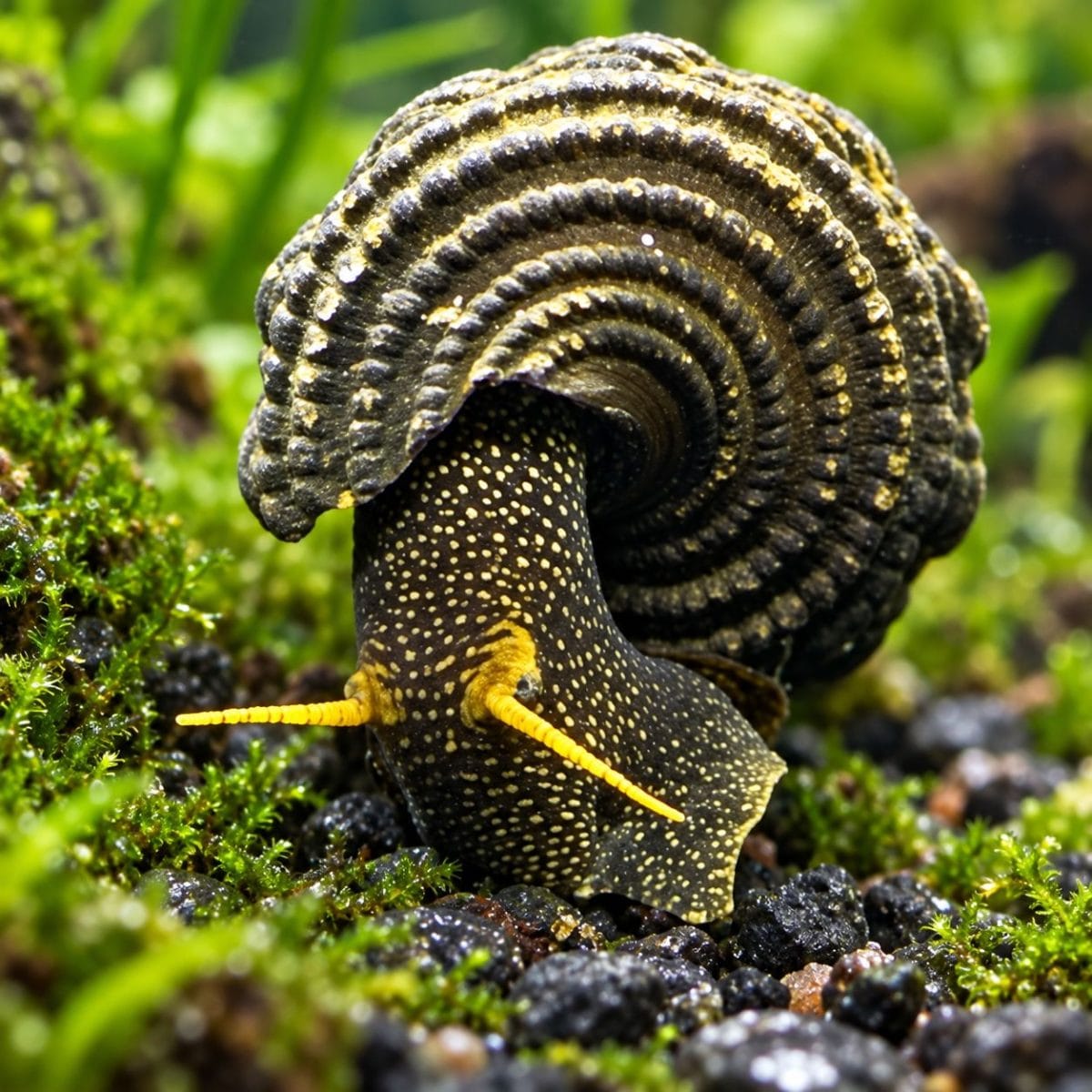
The Yellow Antenna Rabbit Snail is a Tylomelania sp. rabbit snail for a warm, alkaline Sulawesi tank held at 79-86°F (26-30°C) and pH 7.5-8.5. If your tank already keeps Sulawesi shrimp and shows a visible film of algae on the rock, it’s a candidate. If it’s a cool or soft-water community tank, it isn’t.
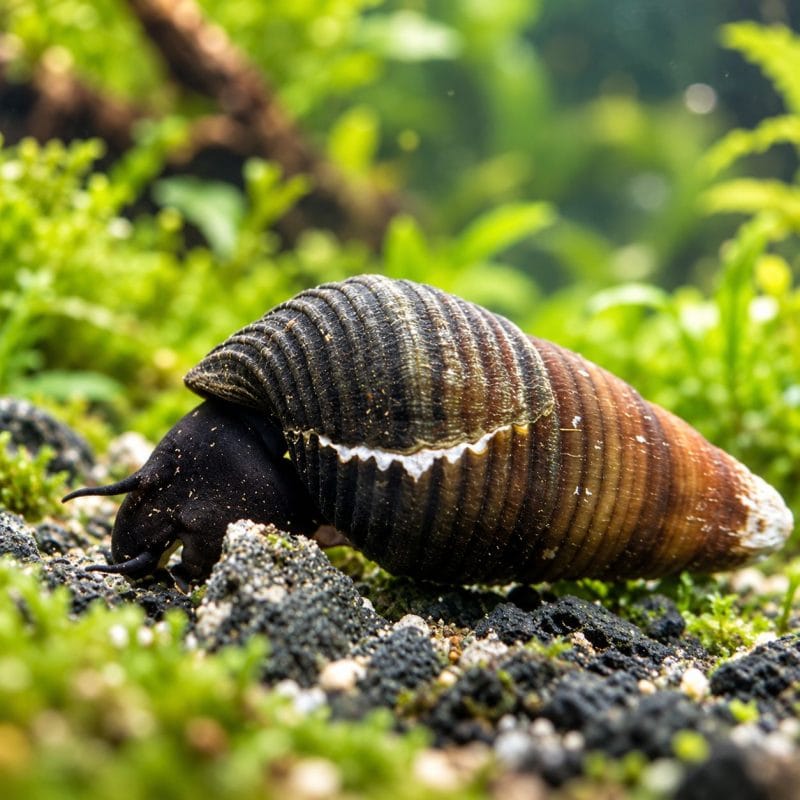
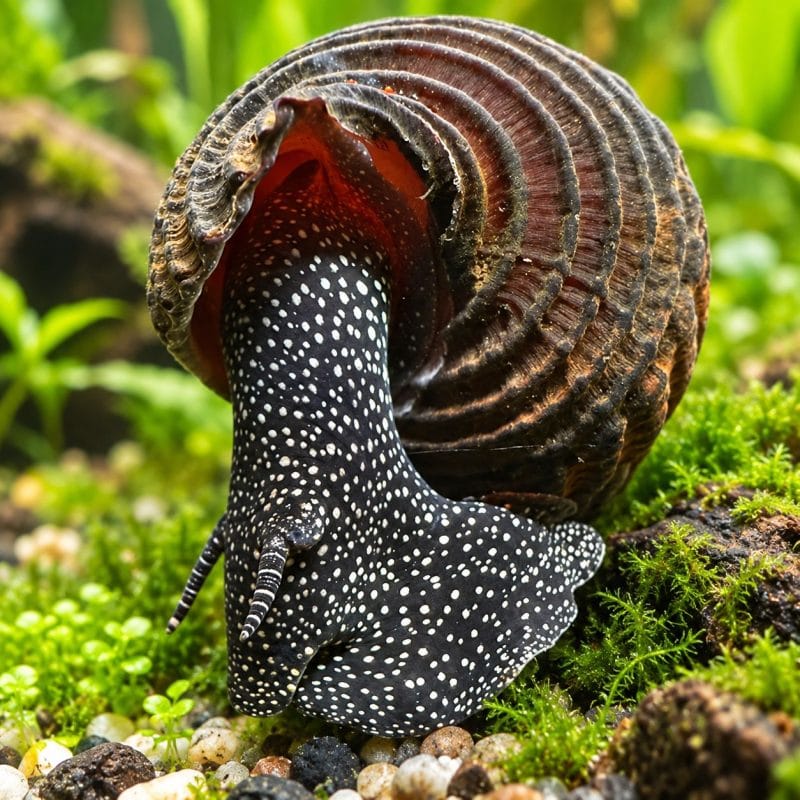
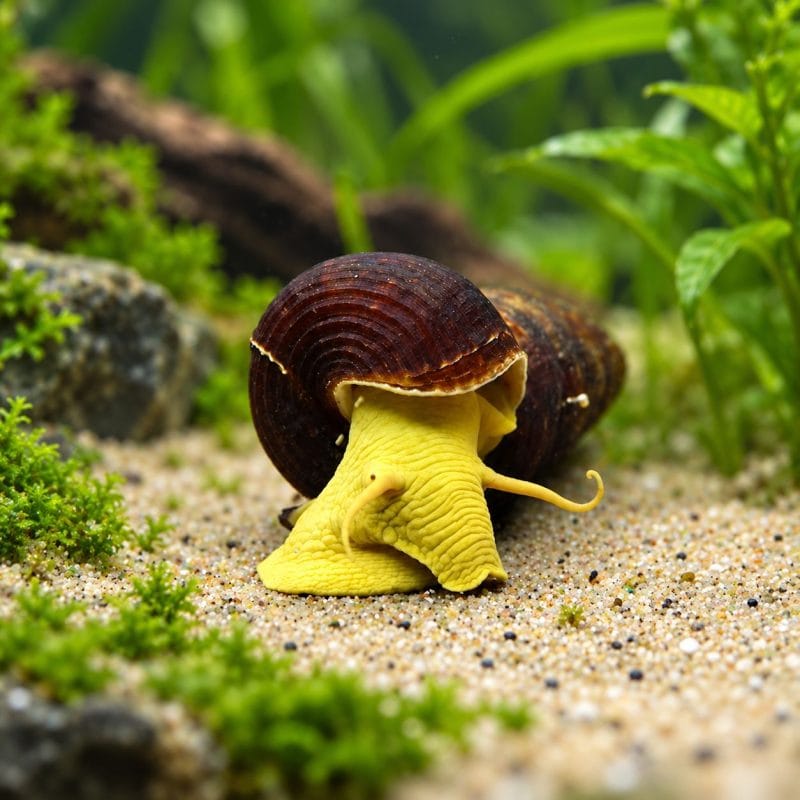
You’ll know it at a glance: a dark, ribbed shell over a black body flecked with cream to yellow dots, with bright yellow tentacles and snout. It’s tank-bred by Shrimp Aquatics. We sell it as Tylomelania sp. and don’t attach a species name, because none is confirmed for this line.
Does your tank run the water a Yellow Antenna snail needs?
Only if it sits in the same warm, hard, alkaline range as a Sulawesi shrimp tank. The snail itself is moderate to keep. The water is the demanding part, and there’s no looser range for snails.
| Temperature | 79-86°F (26-30°C) |
|---|---|
| pH | 7.5-8.5 |
| GH | 4-8 dGH |
| KH | 3-6 dKH |
| TDS | 150-250 ppm |
| Nitrate | Under 10 ppm |
| Substrate | Inert substrate and hardscape, no active pH-lowering soil |
Test your water before you order
Read pH, GH, KH and TDS with a kit. Don’t guess from your tap. Soft or acidic water works against a snail’s shell, and KH is what holds the pH up between water changes.
Check these before you add a Yellow Antenna snail
- The tank is fully cycled, with ammonia and nitrite at 0.
- Rock and glass carry a visible film of algae and biofilm. A snail this size grazes a lot of it.
- No copper or copper-based medication has gone into the tank.
- There are no assassin snails in it.
- You’ve counted the snail into the grazing load alongside any shrimp.
That makes it a poor first step into Sulawesi keeping. A tank that’s only just finished cycling isn’t ready for one, and every snail you add eats into the same film, so plan your rabbit snail tank size and hardscape before you order several.
Which tankmates can share a Yellow Antenna snail tank?
Sulawesi shrimp, yes. They share the water and the grazing layer, so what limits the pairing is whether the film can feed all of them. Neocaridina, no: the temperature ranges don’t overlap at any point. Bee and Crystal Caridina need different water altogether.
Plants are an open question. Nothing published shows rabbit snails eating living plants, and nothing shows them leaving plants alone. We’d treat soft-leaved species as at risk and tie hardy epiphytes to rock, which suits this water anyway.
What does a Yellow Antenna snail eat?
It grazes the algae and biofilm growing on hard surfaces, and that film is its main food. You don’t need a menu of vegetables or pellets, and supplemental food never makes up for a tank that hasn’t matured. Don’t buy it as an algae eater either: Sulawesi Keepers reports that filamentous green algae aren’t a natural food for these snails.
If the surfaces start looking stripped, offer a small amount of prepared food and lift what’s left within a few hours.
Settling a Yellow Antenna snail in after shipping
Follow the instructions packed with your order. For a sealed bag after a long transit, the current Shrimp Aquatics shipment protocol is to float the bag to even out the temperature, then move the snail into the tank without adding the shipping water. Expect it to stay withdrawn in its shell for a while. Keep the light low and give it a day before you judge it.
Rabbit snails are live-bearing: the female carries her young and releases them already shelled. We don’t promise breeding, sex or the number of young from any order. Prefer a different look in the same water? Every one of our Sulawesi snail lines needs the tank described above.


There are no reviews yet.