
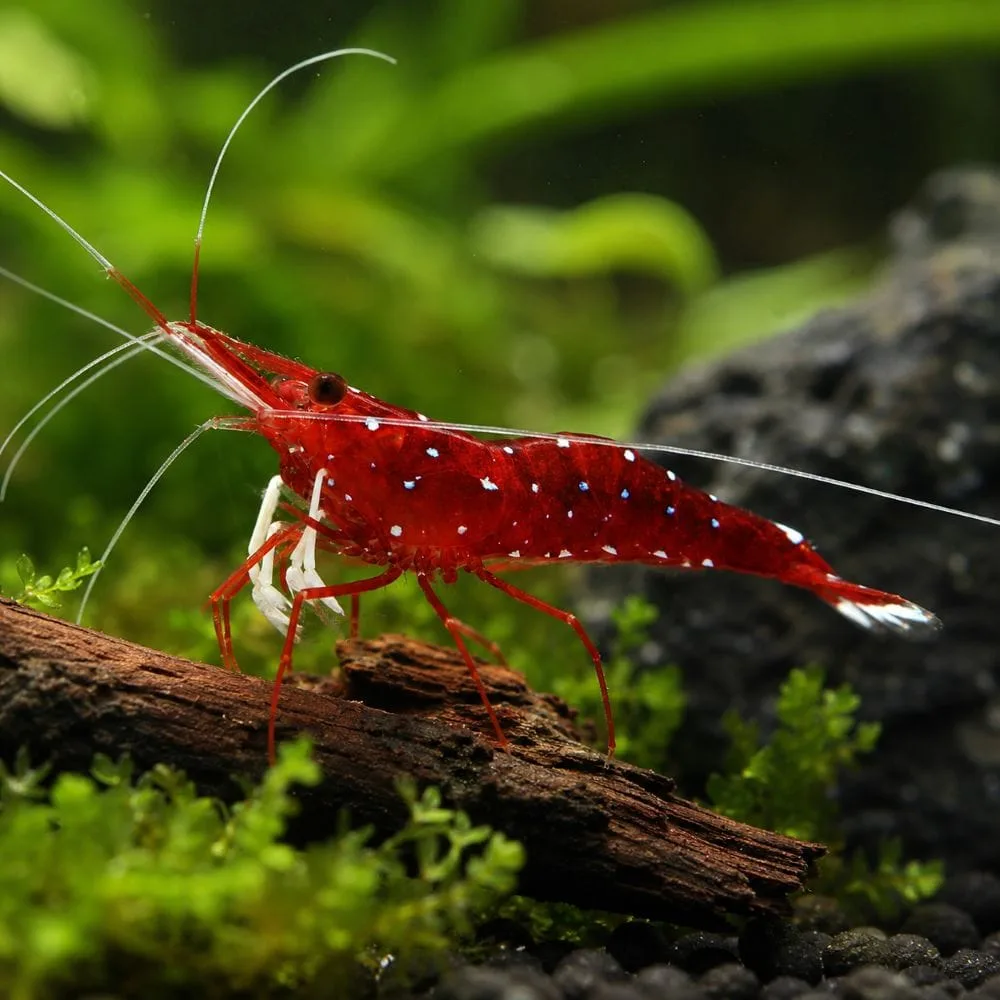
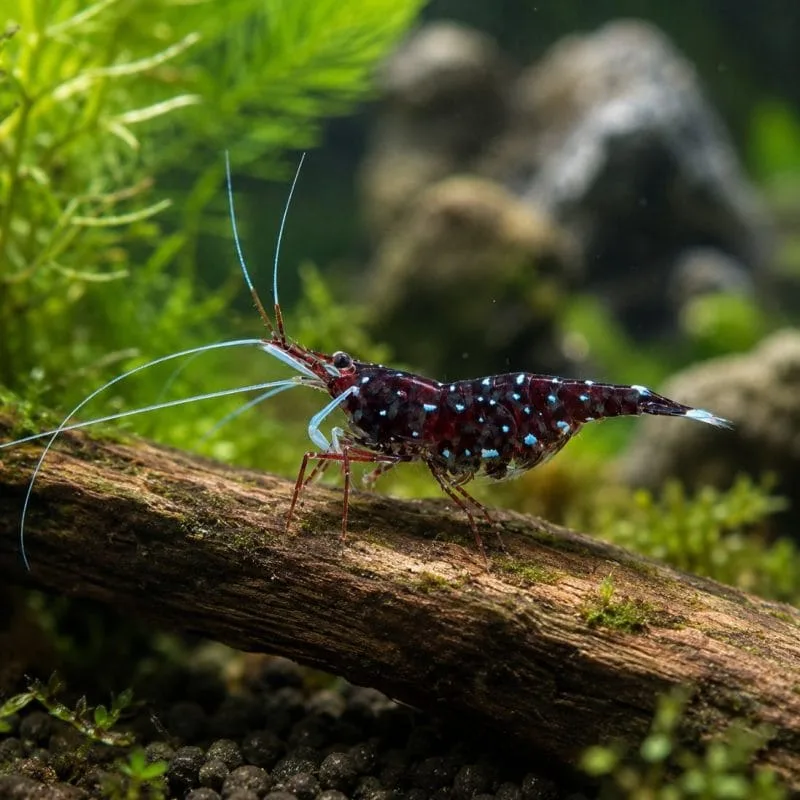
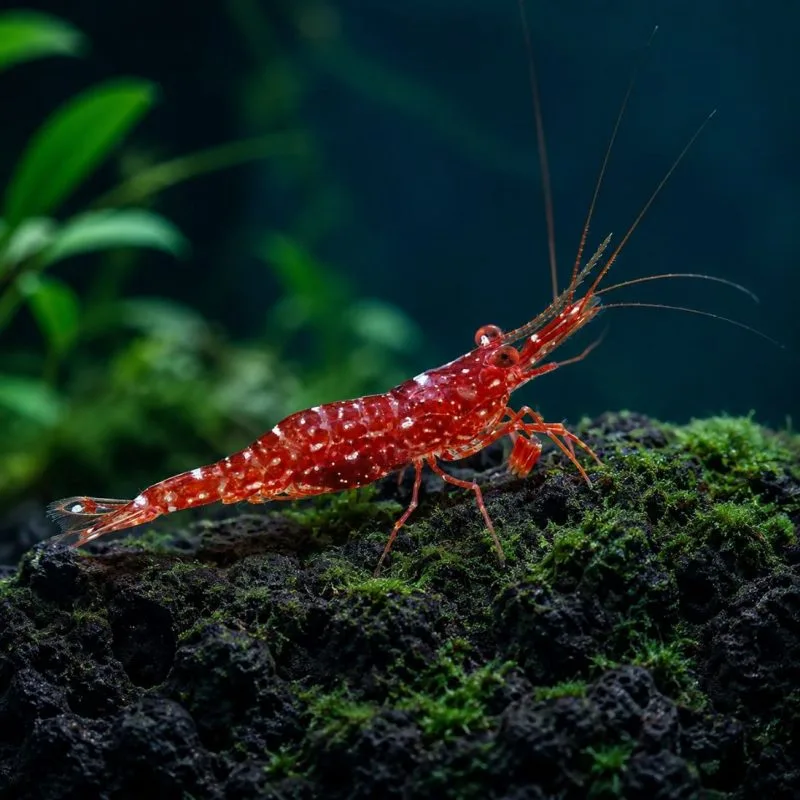
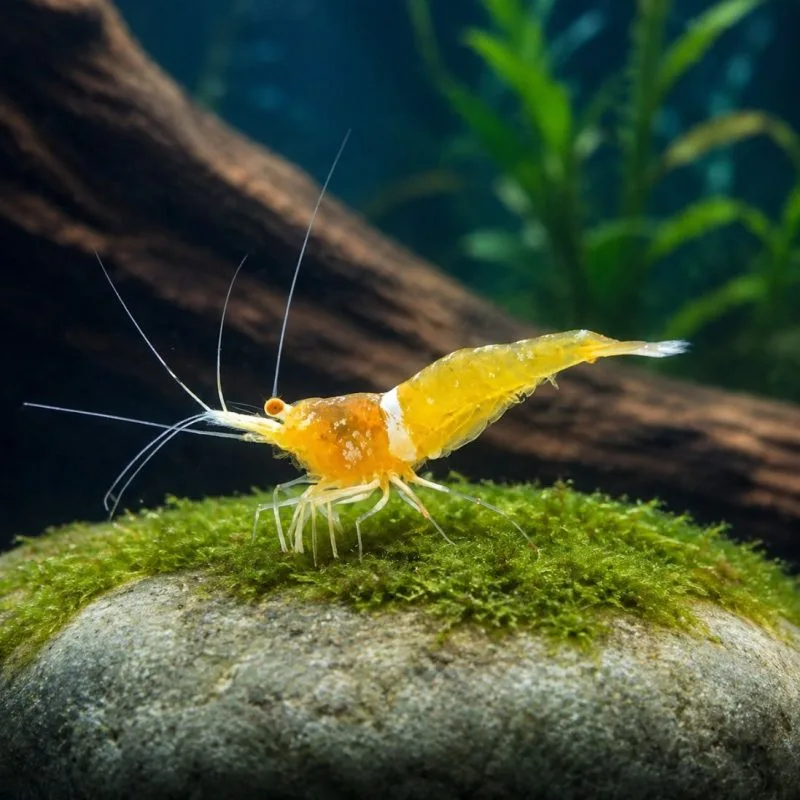
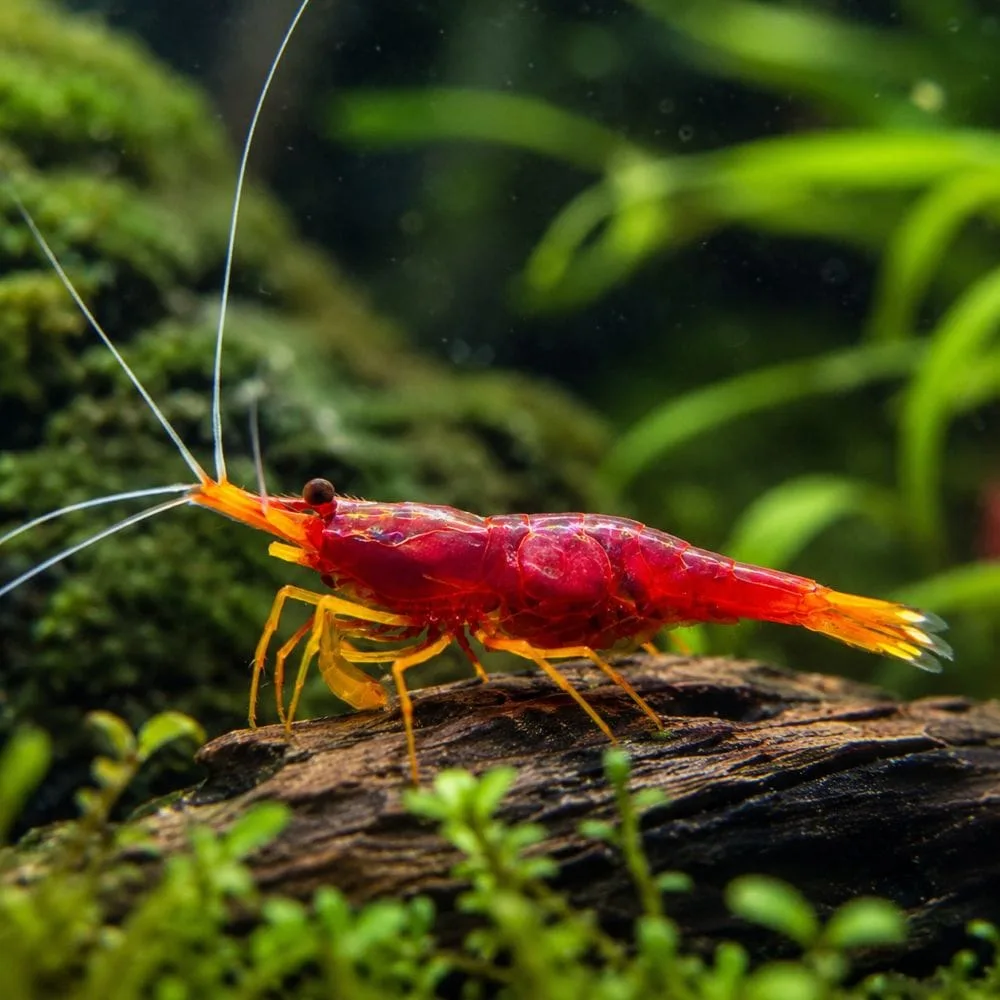
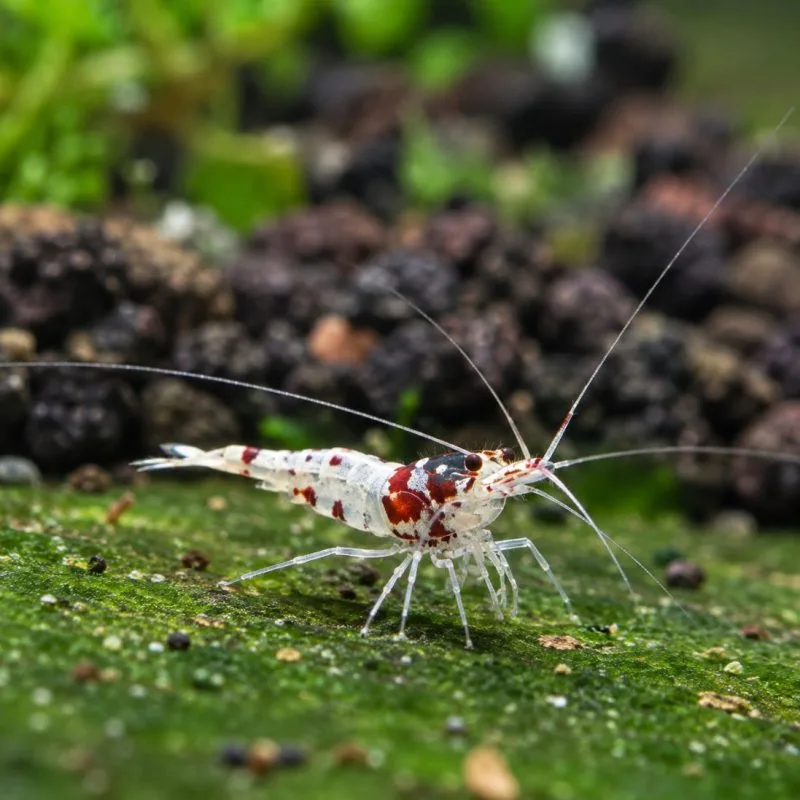
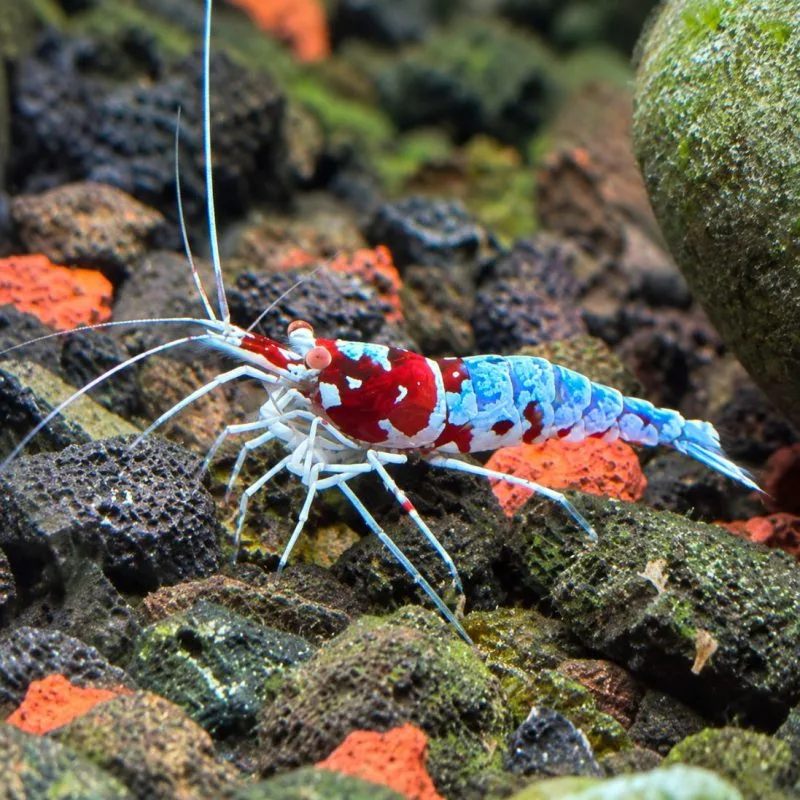
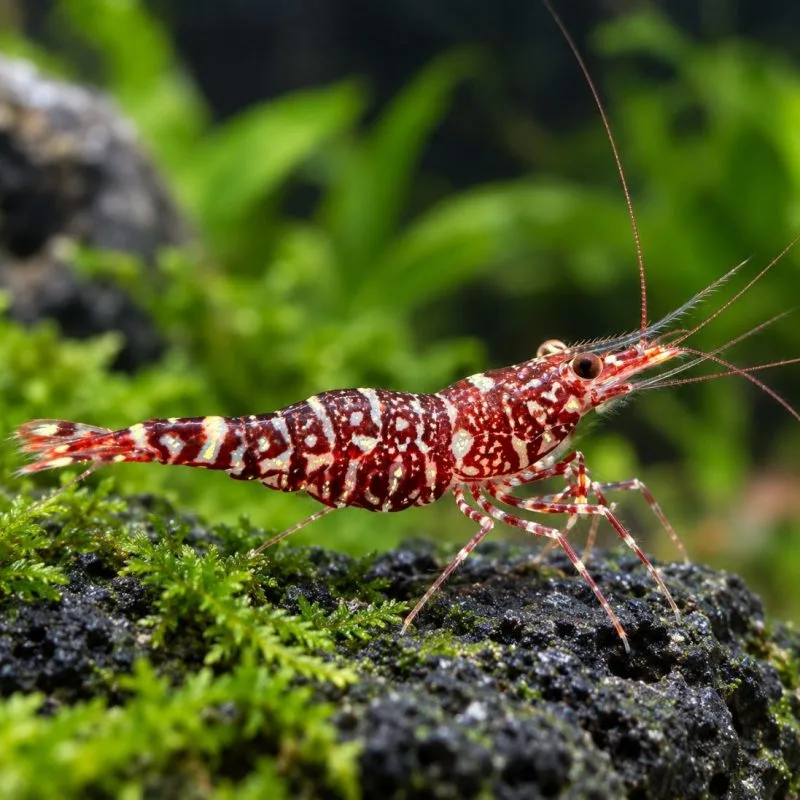
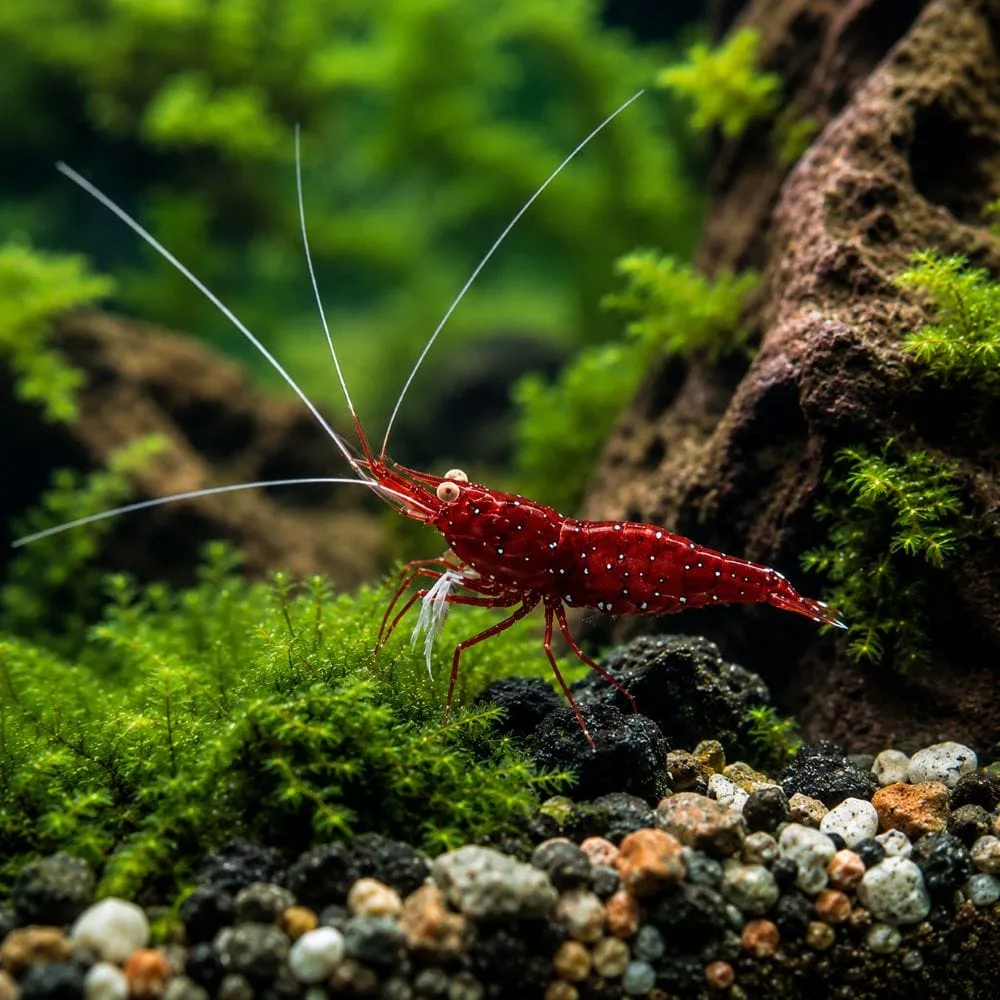
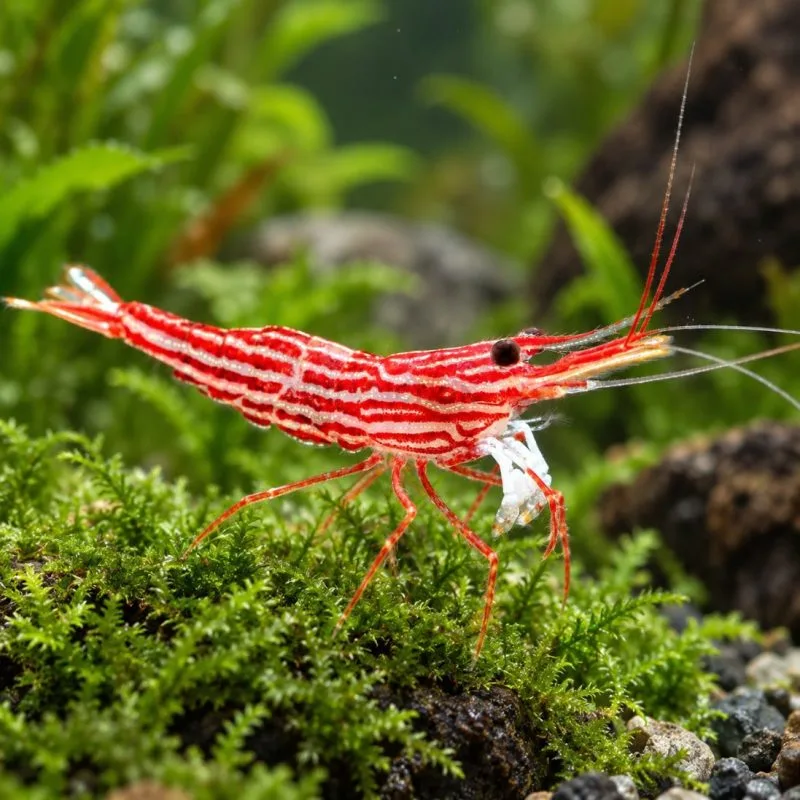
The White Sock is a color line of the cardinal shrimp, Caridina dennerli, from the Malili lakes of Sulawesi: a deep red body with fine white speckling and bright white front legs. It’s advanced to expert livestock, and it won’t settle into a tank that’s still new. Build the warm, alkaline, grown-over tank first and order second.
What you get when you order Sulawesi White Sock
Every White Sock we sell is tank-bred by Shrimp Aquatics. None are taken from the lakes. The speckling and the brightness of the white legs vary from one shrimp to the next, so we don’t promise an exact look for any single animal.
Two of our listings share this name. Our Orange Eyes White Sock is the same species with orange eyes, and both need the same water. If you’re still deciding which Sulawesi shrimp suits your setup, the Sulawesi shrimp beginner’s guide walks through the tank these lake species expect.
Water targets a White Sock tank has to hold
The numbers below cover every Sulawesi lake species in our shop. Hitting them once is the easy part. Keeping them there between water changes is what the shrimp actually notice.
| Care level | Advanced to expert |
|---|---|
| Temperature | 79-86°F (26-30°C) |
| pH | 7.5-8.5 |
| GH | 4-8 dGH |
| KH | 3-6 dKH |
| TDS | 150-250 ppm |
| Nitrate | Under 10 ppm |
| Substrate and rock | Inert materials only |
| Diet | Biofilm and algae, plus occasional prepared food |
| Behavior | Peaceful and often shy |
At Shrimp Aquatics, most of our Sulawesi systems currently run at TDS 150 ppm, GH 6-7 dGH and pH 7.5. A tank sitting near those values gives your White Sock the smallest change on arrival.
Test the aquarium, not the bucket
Take your pH, KH, GH and TDS readings from water already in the tank. A KH below 3 dKH is the reading to fix before you buy.
Can your tank take White Sock shrimp today?
A cycled filter means waste is being handled. It doesn’t mean there’s food on the rock, and White Sock spend most of the day grazing. Go down this list with your own test kit and a flashlight:
- Ammonia 0, nitrite 0 and nitrate under 10 ppm
- A thin, visible film of biofilm and soft algae on rock and glass
- Inert substrate, with no active soil that lowers pH or KH
- A heater holding 79-86°F (26-30°C), checked on a separate thermometer
- RO water and a Sulawesi mineral stocked for top-offs and changes
- Rockwork with gaps and overhangs for shy shrimp to hide in
- A tank that’s merely old, with bare rock and no grazing film
Which tank mates suit White Sock shrimp?
The safest company is other warm, alkaline Sulawesi livestock. Rabbit snails (Tylomelania) come from the same lakes and live happily on the same rock, though they add waste, so count them in your stocking. Bee and Crystal shrimp can’t share this water because they need it soft and acidic.
What about Neocaridina? We wouldn’t add them by default. They’re normally kept cooler than White Sock need, and a breeding colony competes for the same film on the rock. Most fish will eat shrimplets.
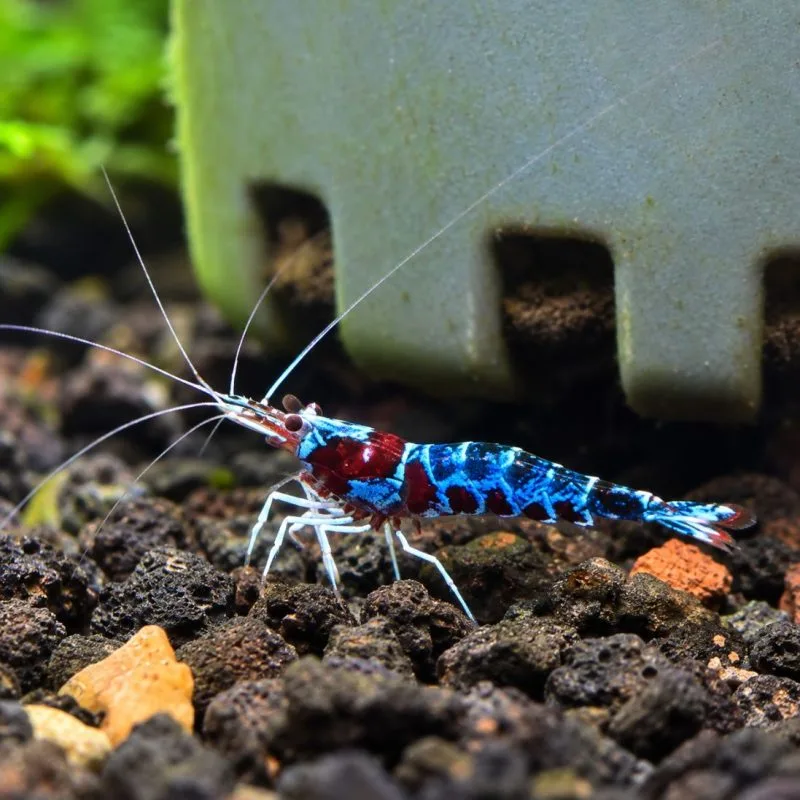
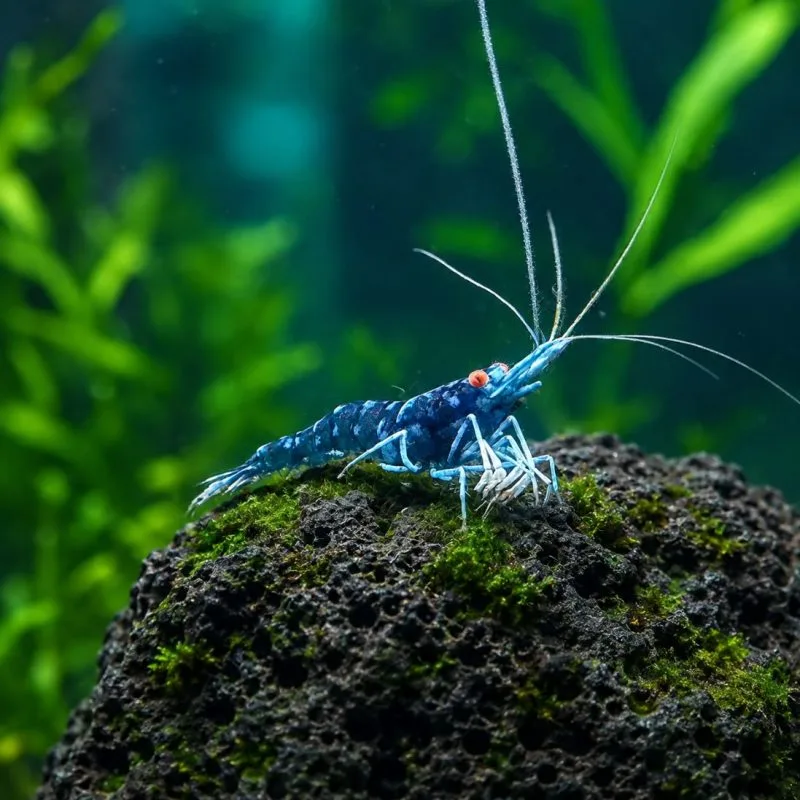
Mixing lines is the other decision to make before you order. In our Sulawesi systems we treat White Sock, Blue Ghost, Yellow Ghost and Oiran as lines that may cross when kept together. If you plan to keep more than one of our Sulawesi shrimp lines, give each one its own tank.
Feeding White Sock shrimp after they arrive
Follow the instructions packed with your order first, since packing method and transit time can change the right approach. For a sealed bag after a long trip, Shrimp Aquatics’ current shipment protocol is to float the bag to match temperature, then net the shrimp into the tank without adding the shipping water. Leave the lights off for the rest of the day and skip feeding.
In our Sulawesi systems, mature algae and biofilm do most of the feeding. We offer prepared food about once a week and take out whatever’s left, partly because many of these shrimp show limited interest in it and partly because food left in warm water breaks down into ammonia. For the first two weeks, let the group graze and keep water changes small and matched. Prepared food can’t make up for a tank without that film.
Not sure your numbers are close enough? Email contact@shrimpaquatics.com with your pH, KH, GH, TDS, temperature, tank size and how long the tank has been running, and we’ll tell you whether to order now or wait.

There are no reviews yet.