
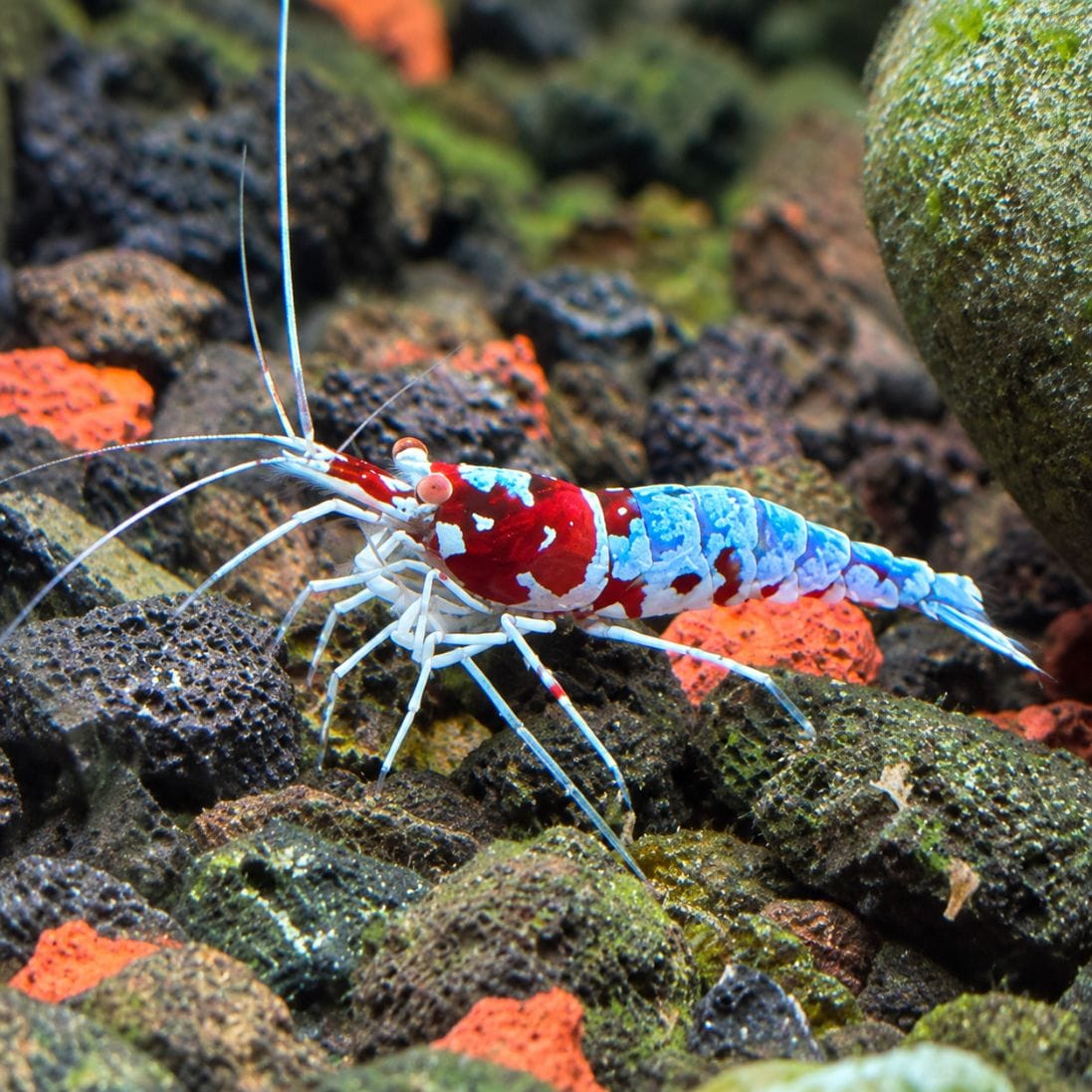
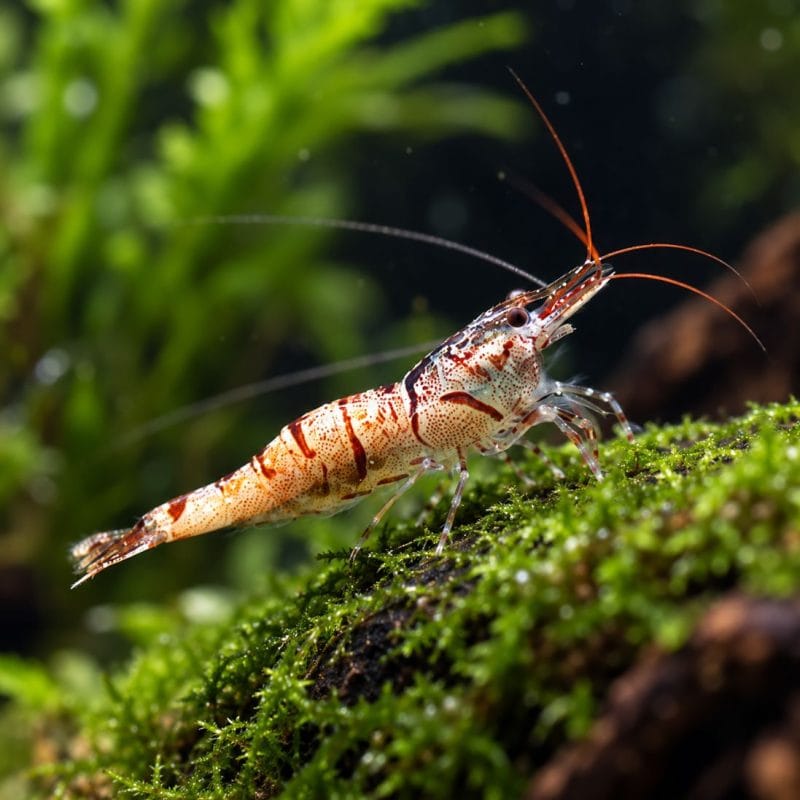
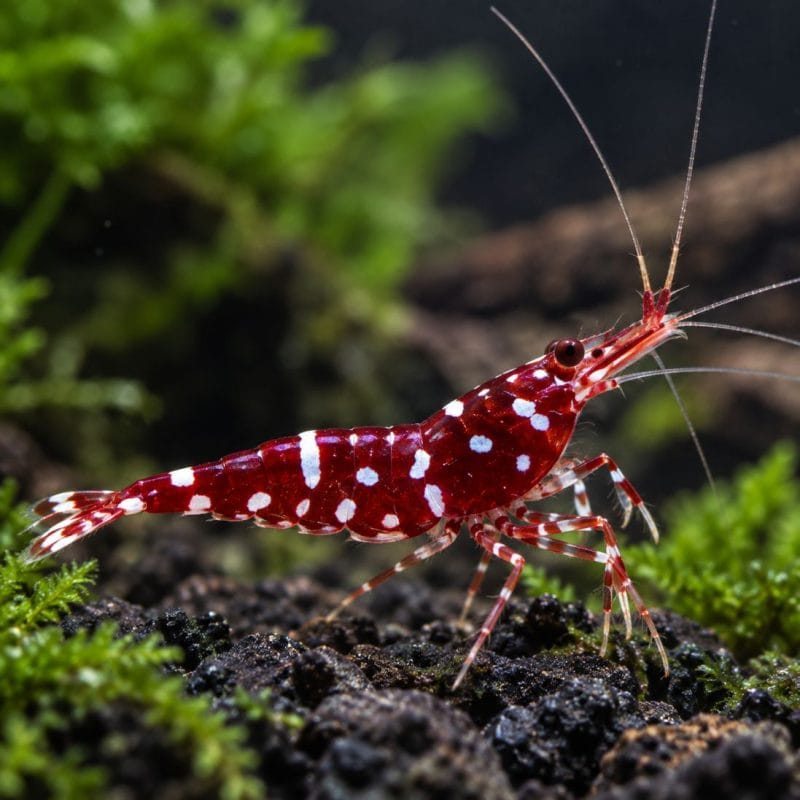
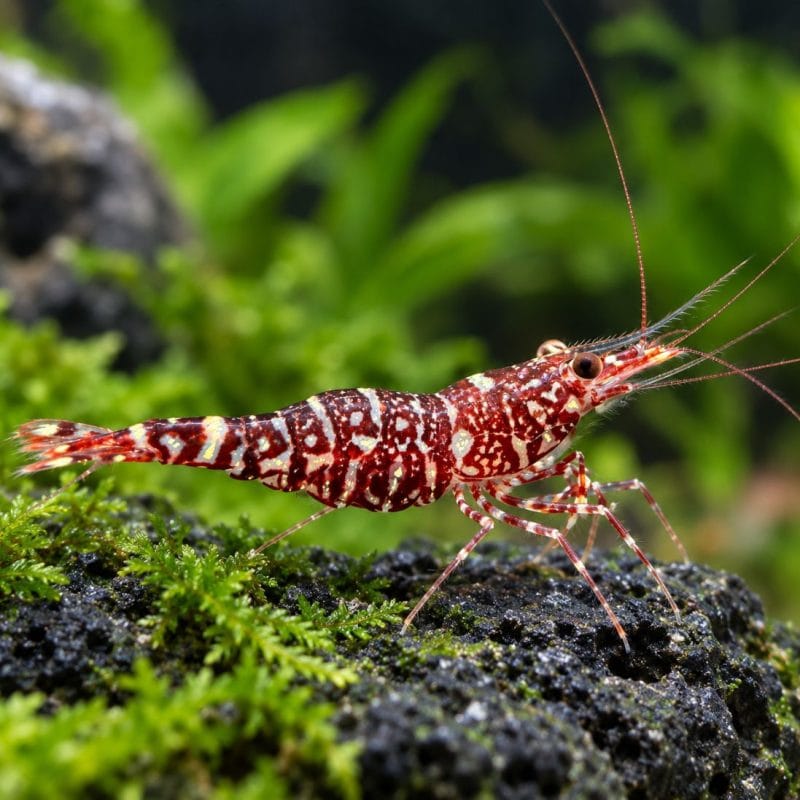
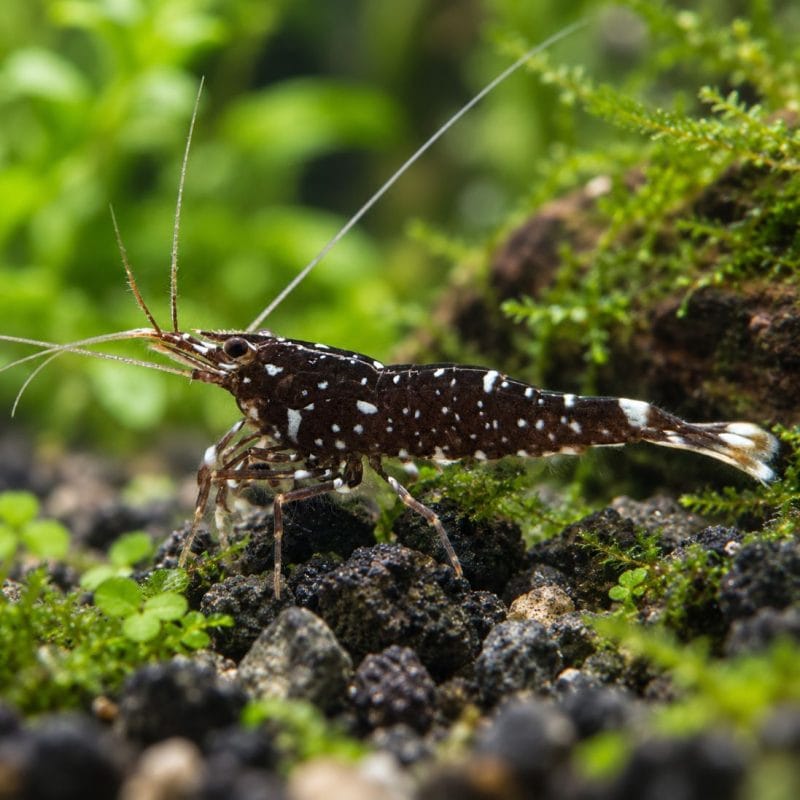
The Orange Eyes Oiran is a color line of the cardinal shrimp, Caridina dennerli, from the Malili lakes of Sulawesi. It carries the heavy white and pale blue mottling of the Oiran pattern, white front legs and tail fan, and orange eyes in place of the usual black. It’s also an advanced to expert animal. If your tank isn’t already warm, alkaline and grazed over, get the tank right first and order the shrimp later.
What you are actually buying with an Orange Eyes Oiran
Every one we ship is tank-bred by Shrimp Aquatics, not collected from the wild. The Oiran pattern spreads white out across the walking legs and the whole tail fan, and the orange eye is what separates this line from our standard Oiran. How dense that white sits varies between individuals, so we won’t promise a coverage level on any shrimp we send you. Several names in this catalog are color lines of one species rather than separate species, which matters before you mix them, and the types of Sulawesi shrimp guide sorts out which is which.
Check your tank against the water these shrimp need
These are the numbers we keep to for every Sulawesi lake species we sell, and this line is no exception. Warm and alkaline is the easy part. Holding it steady is the work.
| Care level | Advanced to expert |
|---|---|
| Temperature | 79-86°F (26-30°C) |
| pH | 7.5-8.5 |
| GH | 4-8 dGH |
| KH | 3-6 dKH |
| TDS | 150-250 ppm |
| Nitrate | Keep under 10 ppm |
| Substrate and hardscape | Inert only |
| Diet | Biofilm, diatoms and algae, with occasional prepared food |
| Behavior | Peaceful and often shy |
At Shrimp Aquatics, most of our Sulawesi systems currently run at TDS 150 ppm, GH 6-7 dGH and pH 7.5. Sit near that and your shrimp move into water they already recognize, which leaves you less to correct in the first week.
Test before you order
Take your own pH, KH, GH and TDS readings from the tank itself, not from the salt label or a batch you mixed last month. If your KH is under 3 dKH, sort that out before the shrimp are on their way.
A cycled tank and a tank ready for an Oiran are not the same thing
Plenty of tanks pass a cycle test and still starve a new Sulawesi group. What these shrimp graze on all day is the film that grows over rock and glass, and that takes longer to arrive than the bacteria do. Before you order, we’d want to see all of this:
- Ammonia and nitrite both reading 0 on your own test kit, with nitrate low
- Visible green algae and biofilm over the rock and glass, not bare new surfaces
- Inert rock and substrate, so nothing in the tank is working against your KH
- A heater and thermometer that hold one set point instead of swinging overnight
- RO water and a Sulawesi mineral on the shelf for top-offs and water changes
- Shaded crevices in the rockwork, because a shy shrimp that can hide is a shrimp you actually see
- Don’t stock on the calendar. Weeks passed is not a readiness check.
Who can share a tank with an Orange Eyes Oiran?
The short list is other warm, alkaline Sulawesi livestock. Rabbit snails (Tylomelania) suit the same water and the same rock, as long as you count their waste in your stocking. Bee and Taiwan Bee Caridina don’t belong here: their soft, acidic water and this water have almost nothing in common, and a setting halfway between the two fails both. Fish are the harder call, because even a peaceful, well matched fish will eat shrimplets. Our other tank-bred Sulawesi shrimp lines live in the same water, so mixing them is possible, but we’d keep this one as the only C. dennerli line in the tank if you want it staying true to type.
Settle a new Oiran group before you start feeding it
Follow the instructions that come with your order first, because packing method, transit time and species all change the right call. Shrimp Aquatics’ current shipment protocol is to equalize temperature with the transport bag still sealed, then move the shrimp across without letting any shipping water into your aquarium. Keep the light low that day and skip food entirely. For the first couple of weeks, leave them to graze and do nothing but gentle, matched water changes. After that, a small pinch of prepared food once a week is plenty for most tanks, and you lift whatever is still sitting on the rock a few minutes later. If your own readings fall outside the range above, email contact@shrimpaquatics.com with your pH, KH, GH, TDS, temperature, tank size and how long the tank has been running, and we’ll tell you honestly whether to order now or wait.





There are no reviews yet.