
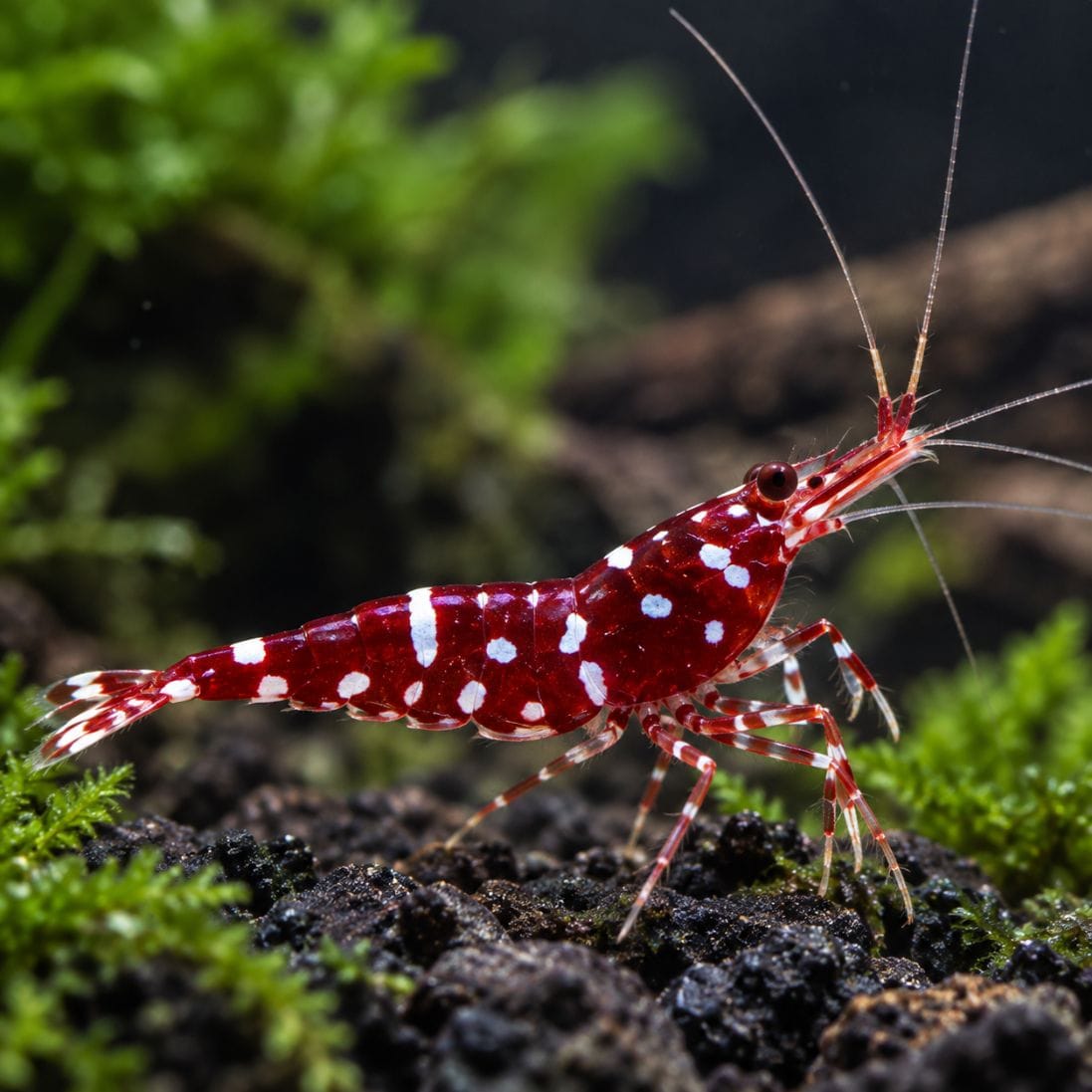
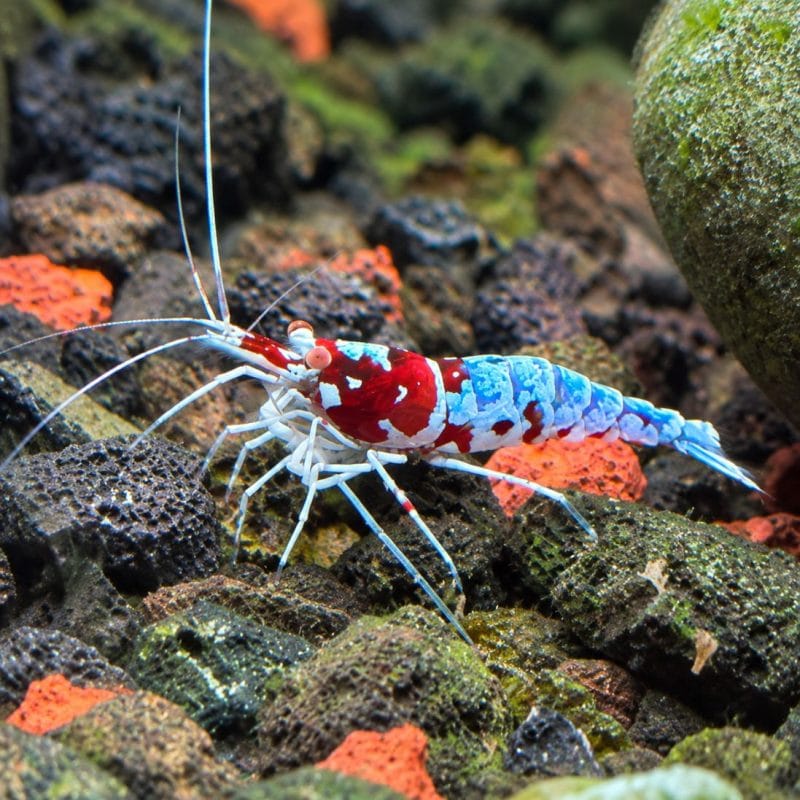
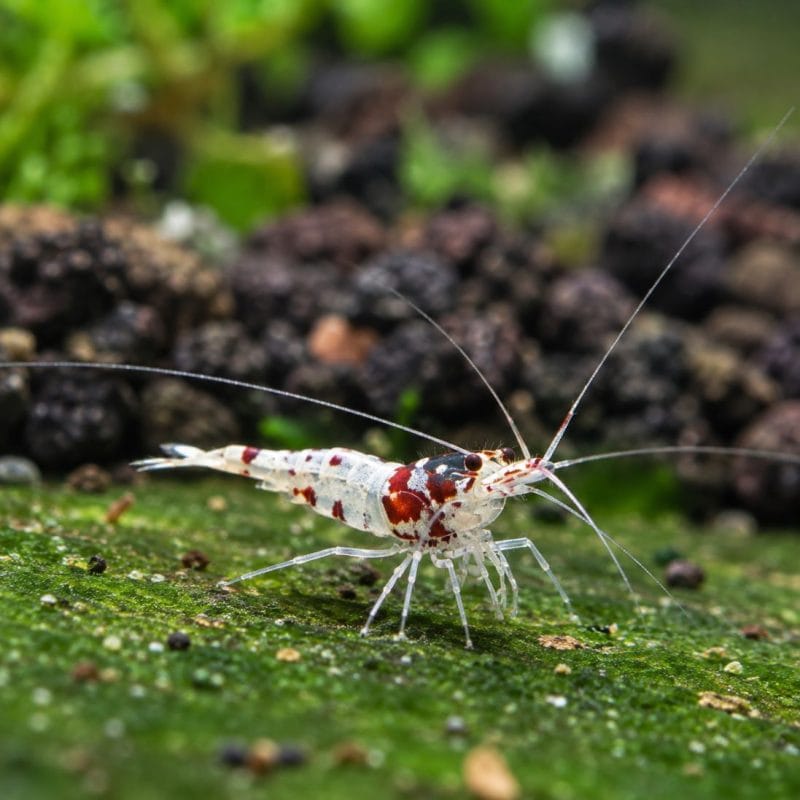
The Three Spot Red is a Sulawesi lake shrimp with a deep wine red body and three chalk white spots down its side. It’s tank-bred by Shrimp Aquatics, and it needs warm, alkaline, mineral-light water that already holds steady. If your tank isn’t running at those numbers yet, build the water first and order the shrimp later.
What the Three Spot Red is and which names it trades under
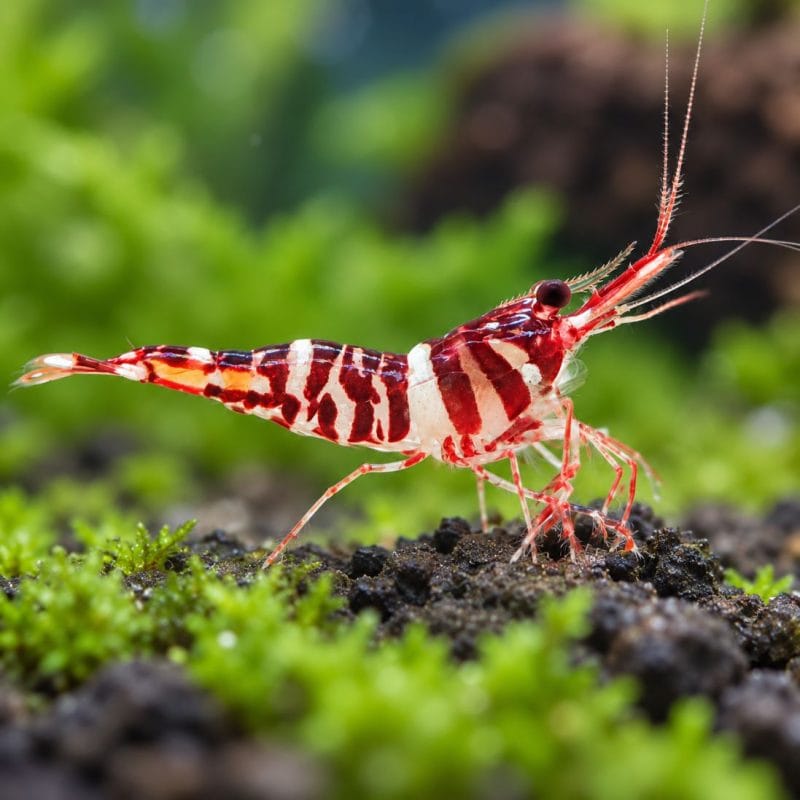
You’ll see this shrimp sold as the Three Spot Red, the Three Spot Red Bee and sometimes the Three Spot White. In the hobby it’s listed as Caridina cf. spinata, which is a way of saying it resembles Caridina spinata without having been confirmed as that species. The name Caridina trimaculatus turns up on export lists too, but it’s a trade label rather than a described species, so don’t expect it to match a scientific index. Like the rest of our Sulawesi shrimp, it belongs to the ancient lake systems of central Sulawesi in Indonesia. The animals we ship are bred here, not collected from those lakes.
The warm alkaline water a Three Spot Red needs
This is the part that decides whether the order goes well. These shrimp sit at the opposite end of the chart from bee shrimp: warm rather than cool, alkaline rather than acidic, and mineral-light rather than soft water over an active soil. Here’s the range we keep to.
| Difficulty | Advanced to expert |
|---|---|
| Temperature | 79-86°F (26-30°C) |
| pH | 7.5-8.5 |
| GH | 4-8 dGH |
| KH | 3-6 dKH |
| TDS | 150-250 ppm |
| Ammonia and nitrite | 0 ppm |
| Nitrate | Under 10 ppm |
| Diet | Biofilm, diatoms and algae, with occasional prepared food |
| Behavior | Peaceful and often shy |
At Shrimp Aquatics, most of our Sulawesi systems currently run at TDS 150 ppm, GH 6-7 dGH and pH 7.5. Yours doesn’t have to match that exactly. Holding Sulawesi shrimp water parameters steady somewhere inside the band is worth far more than landing on one perfect number, because every correction you make after the shrimp arrive is itself a shock.
Test the week before you order
Take temperature, pH, GH, KH and TDS yourself rather than trusting what the tank read last month. If a number sits outside the band, correct it slowly and order once it has stayed put for a couple of weeks.
Is your tank ready for Three Spot Red shrimp?
Cycled and mature aren’t the same thing. These shrimp graze film off rock all day, and a clean new tank has nothing on it for them to eat. Run through this before you add to cart.
- Ammonia and nitrite read 0, and nitrate stays under 10 ppm.
- The tank has been running warm and alkaline for weeks, not days.
- Rock and glass carry a visible film of algae and diatoms.
- Substrate and hardscape are inert, so nothing is pulling pH down.
- A heater holds one steady setting inside 79-86°F (26-30°C).
- Evaporation is topped off with pure RO water, so TDS doesn’t creep upward.
- An active soil made for bee shrimp is in the tank. That strips KH and drags pH below the band.
What can share a tank with Three Spot Reds
A species tank is the honest answer, and it’s what we’d set up. Other Sulawesi lake shrimp and Sulawesi rabbit snails fit, because they want the same warm alkaline water, as long as there’s grazing surface and filtration to spare. Bee, Crystal and Taiwan Bee Caridina don’t fit at all, and a setting halfway between the two groups serves neither. Fish are the harder call. A small peaceful species that tolerates this temperature is generally lower risk with adult shrimp, but it isn’t safe for shrimplets, and it grazes the same surfaces your colony depends on. If you want the colony to grow, leave the fish out.
How much to feed a Three Spot Red colony
Mature biofilm does most of the feeding here, so prepared food is occasional rather than daily. The usual rule is a small pinch of a powdered or vegetable based food once a week or so, dropped near the rock and lifted out once the shrimp have finished with it. Warm alkaline water punishes leftovers faster than a cool tank does, so when you’re unsure, feed less.
What arrival day looks like for your Three Spot Reds
On arrival day, follow the instructions packed with your order, because transit time and packing method can change the right call. Shrimp Aquatics’ current shipment protocol equalizes temperature with the bag still sealed, then transfers the shrimp across without adding shipping water to your tank. Keep the lights off, skip feeding until the next day, and leave the new colony alone while it finds the rock.




There are no reviews yet.