
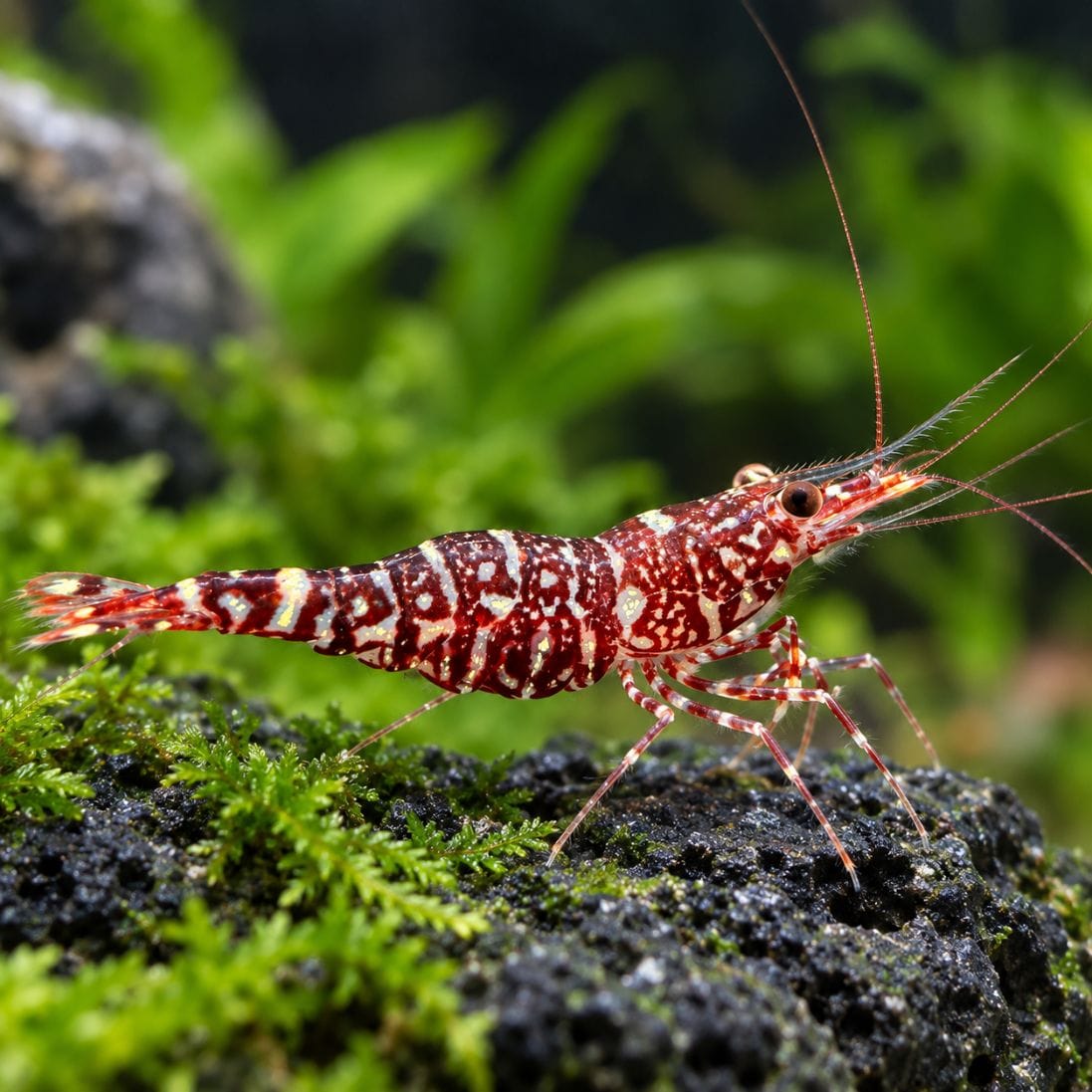
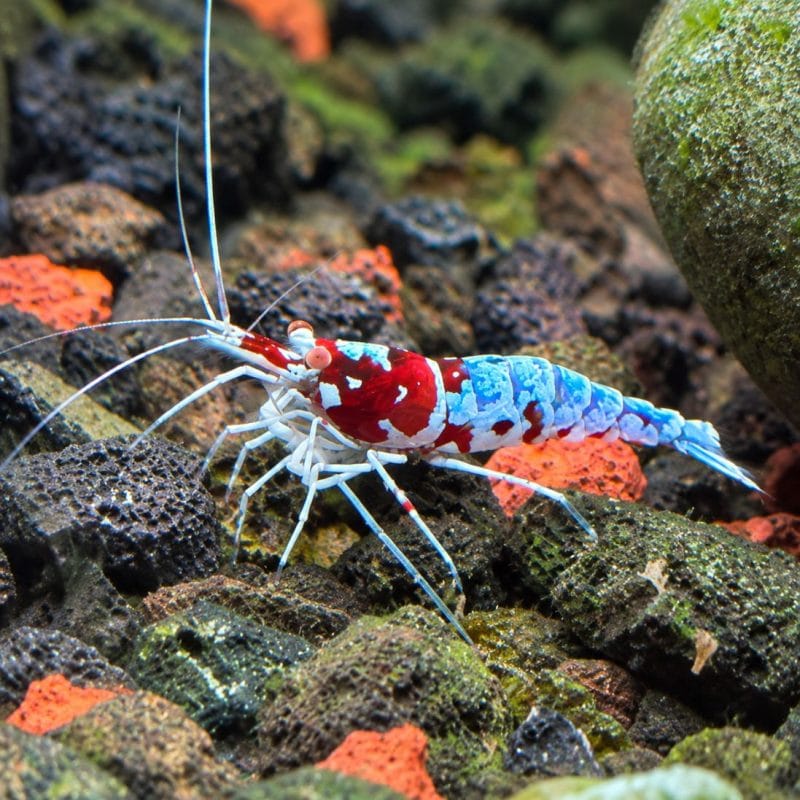
The Sulawesi Zebra Orchid is Caridina Glaubrechti, a lake shrimp from Lake Poso in Sulawesi, tank-bred by Shrimp Aquatics and not collected from the wild. It’s an advanced animal, and not in a vague way: it needs water held warm and alkaline, and a tank that has been running long enough to feed a grazer all day.
Check your tank against the Zebra Orchid water range before you order
This is the range we keep to for every Sulawesi lake species we sell. Test your own tank, on your own kit, before this shrimp goes in a cart. If your readings sit outside it today, the shrimp isn’t the first thing to change.
| Difficulty | Advanced |
|---|---|
| Temperature | 79-86°F (26-30°C) |
| pH | 7.5-8.5 |
| GH | 4-8 dGH |
| KH | 3-6 dKH |
| TDS | 150-250 ppm |
| Nitrate | Under 10 ppm |
| Ammonia and nitrite | 0 ppm |
| Substrate | Inert substrate and hardscape |
Two of these need watching between water changes. Top off with pure RO water only, or TDS climbs as the tank evaporates, and test KH as well as pH, because pH on its own won’t tell you the buffer is still there. Reading the Sulawesi water parameters as one set helps here, since moving any of them moves the others.
At Shrimp Aquatics, most of our Sulawesi systems currently run at TDS 150 ppm, GH 6-7 dGH and pH 7.5. That’s the lower half of the range above, so a tank sitting at pH 8.3 is asking these shrimp to move up rather than down. Get your own readings steady for a few days before they arrive instead of adjusting anything on arrival day.
Test before you order
Test strips read KH too coarsely for this band. A liquid KH test and a TDS meter are what most keepers use here, and the reading that matters comes from the tank, not from the bucket you mixed last week.
Is your Sulawesi tank mature enough for a Zebra Orchid?
Cycled and mature aren’t the same thing. A Zebra Orchid grazes almost constantly, and what it grazes is the film on rock and glass. A tank that finished cycling last week has the bacteria but it doesn’t have the food yet. Before you order, walk through this:
- Ammonia and nitrite read 0, with an established biological filter.
- Temperature holds inside 79-86°F (26-30°C) without swinging between day and night.
- KH sits at 3-6 dKH and hasn’t slipped since your last water change.
- Inert rock and substrate, with visible film on the stone and the glass.
- No active soil meant for bee shrimp, and no bare new tank still waiting on its first algae.
If one line fails, wait. We’d rather you ordered a month later than lost the colony in week two. Once the tank does check out, you can compare the rest of our tank-bred Sulawesi shrimp and decide how many lines to start with.
Which tankmates suit a warm alkaline Zebra Orchid tank?
Most shrimp you already own won’t fit. Bee and Crystal Caridina want soft, acidic water, and there’s no middle setting that serves both groups. Neocaridina can live at Sulawesi temperature, but 79-86°F (26-30°C) sits above their own typical 65-78°F (18-26°C), and they graze the same surfaces, so a few of them is a very different decision from a breeding colony. Sulawesi rabbit snails share the same warm alkaline water, and there the real limits are waste load and how much film they strip off the rock.
Fish are the harder no. Most will take shrimplets, and the few that rarely do still add waste to a tank whose animals depend on clean, oxygen-rich water. If you want fish, give them their own tank.
Feeding a Zebra Orchid without fouling warm water
The rock does most of the feeding. Prepared food is a supplement, and leftovers cost you more here than in a cherry tank, because warm water breaks food down quickly and the target above is nitrate under 10 ppm. A small amount of powdered or biofilm-style food once or twice a week, with anything uneaten lifted after a few minutes, is the usual rule. Underfeeding is the safer error. Don’t assume the shrimp will refuse prepared food either, since interest varies by tank and by what you offer.
Settling your Zebra Orchid shrimp on arrival day
Follow the instructions packed with your order first, because packing method, transit time and species all change the call. Shrimp Aquatics’ current shipment protocol is to equalize temperature with the bag still sealed, then move the shrimp across without letting shipping water into your tank. Keep the lights off and skip feeding that first day, then leave them to settle apart from your normal checks. If a bag arrives open, leaking or badly off temperature, email contact@shrimpaquatics.com before you transfer anything.






There are no reviews yet.