
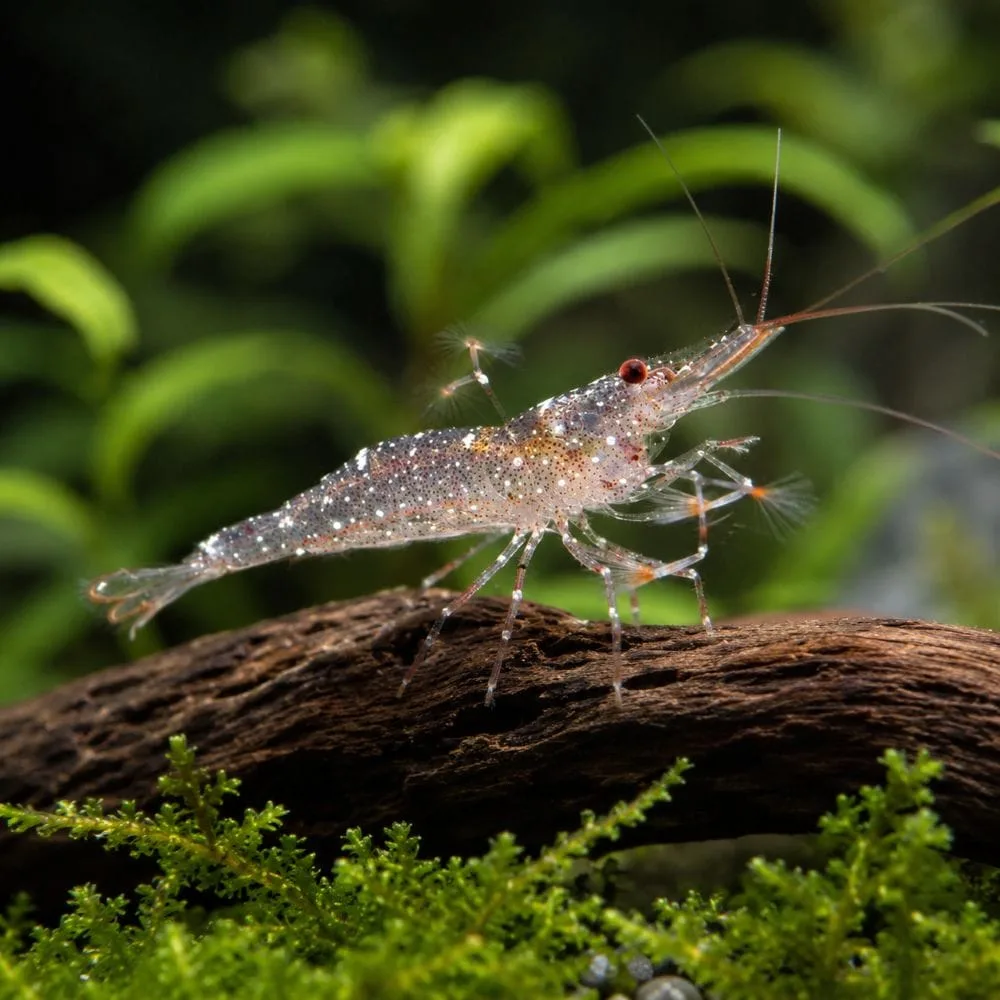
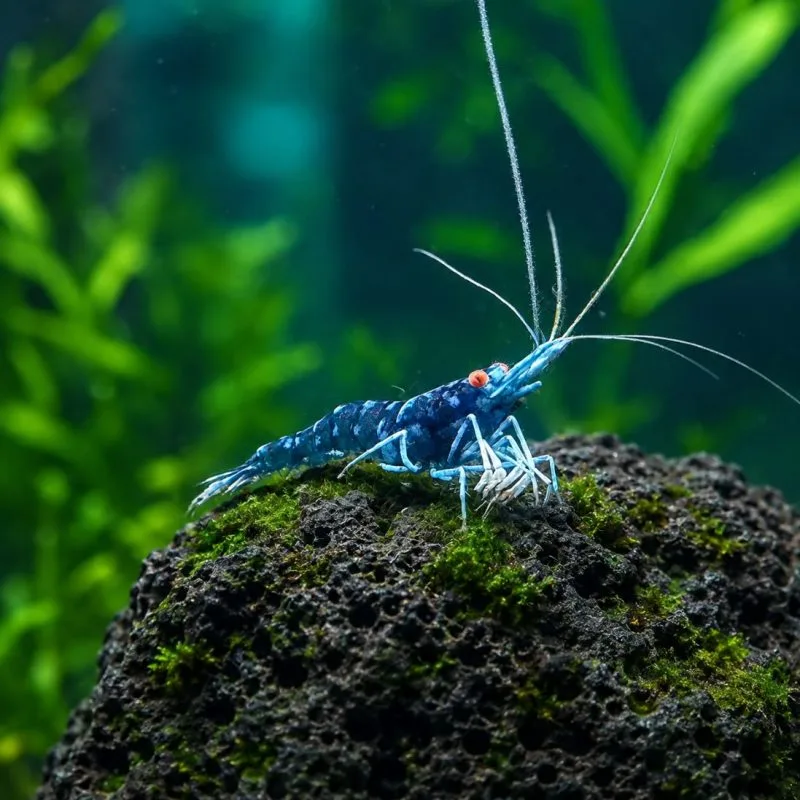
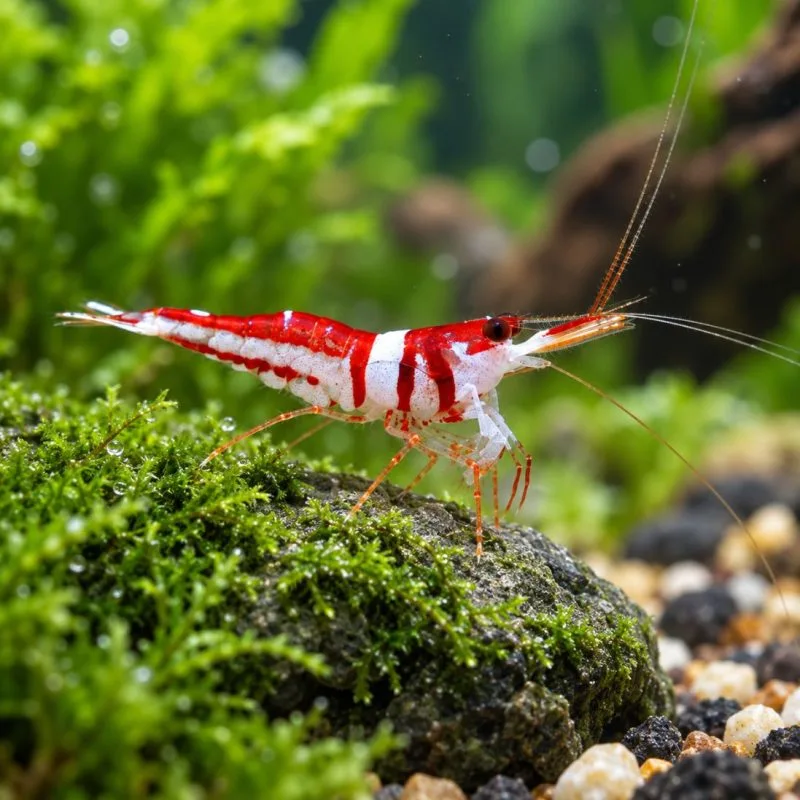
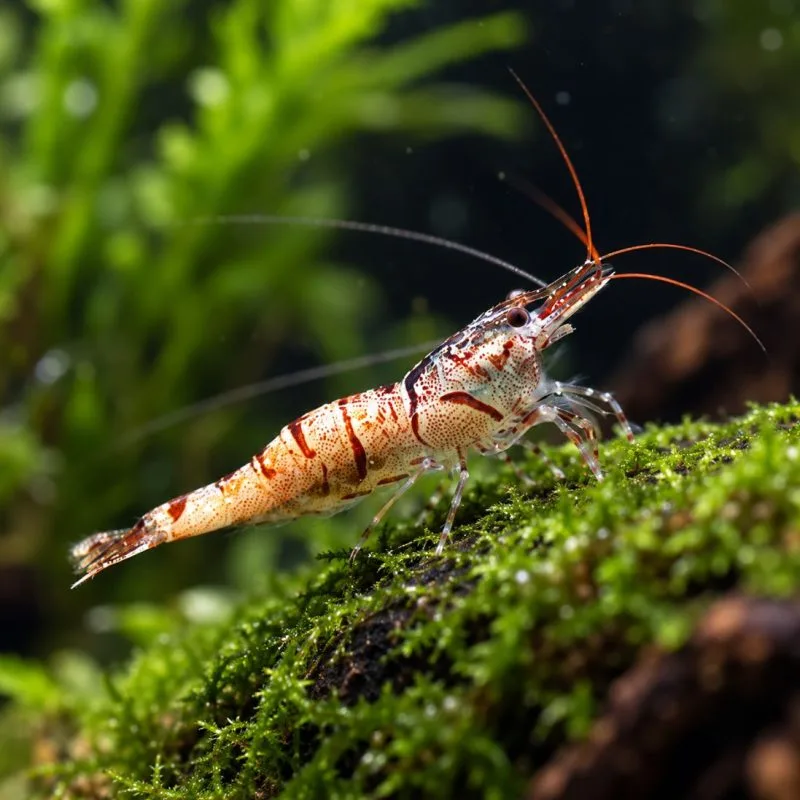
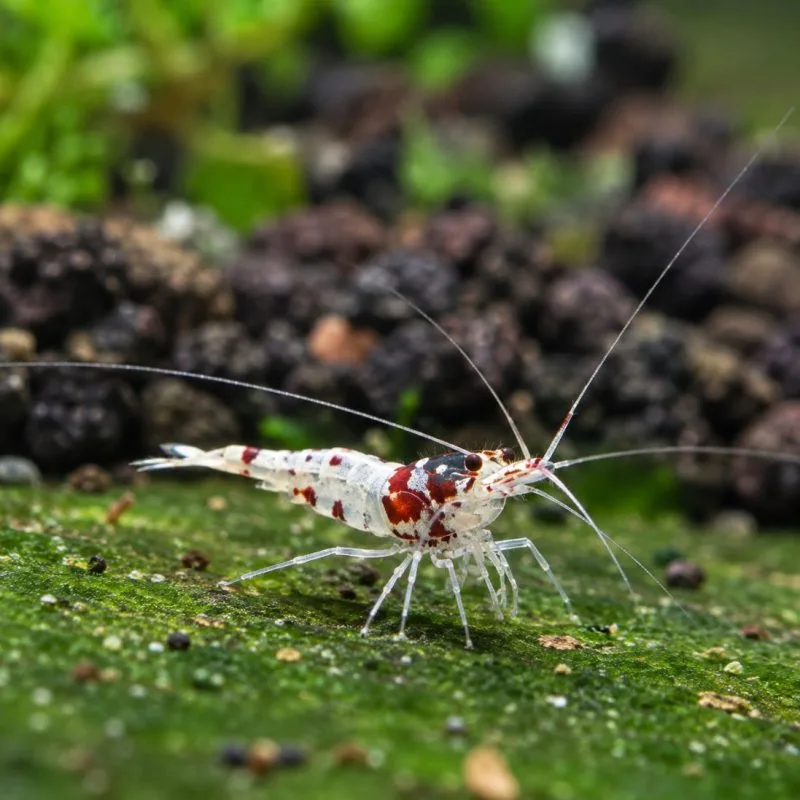
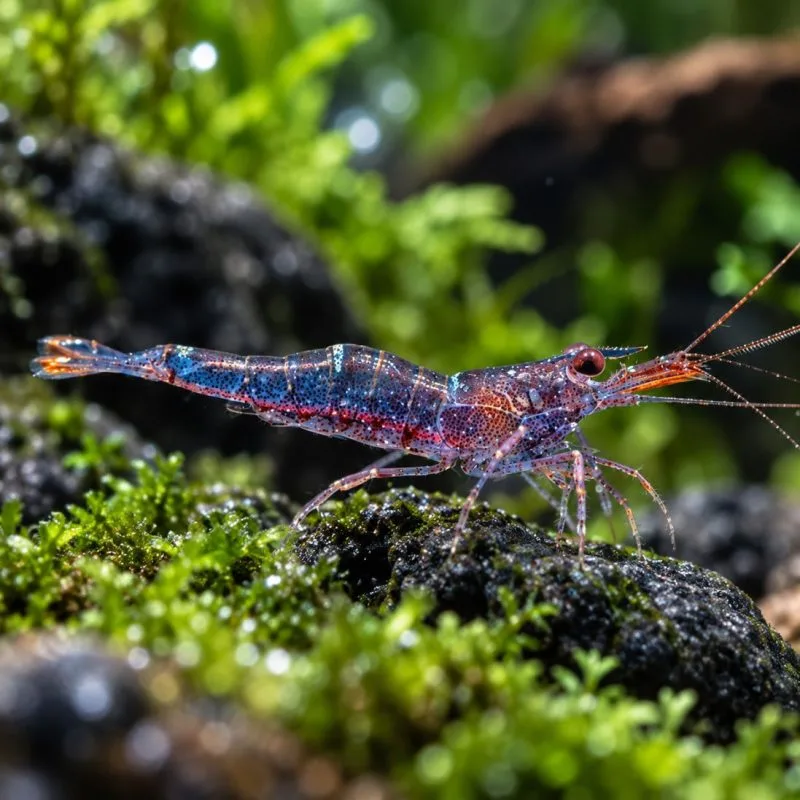
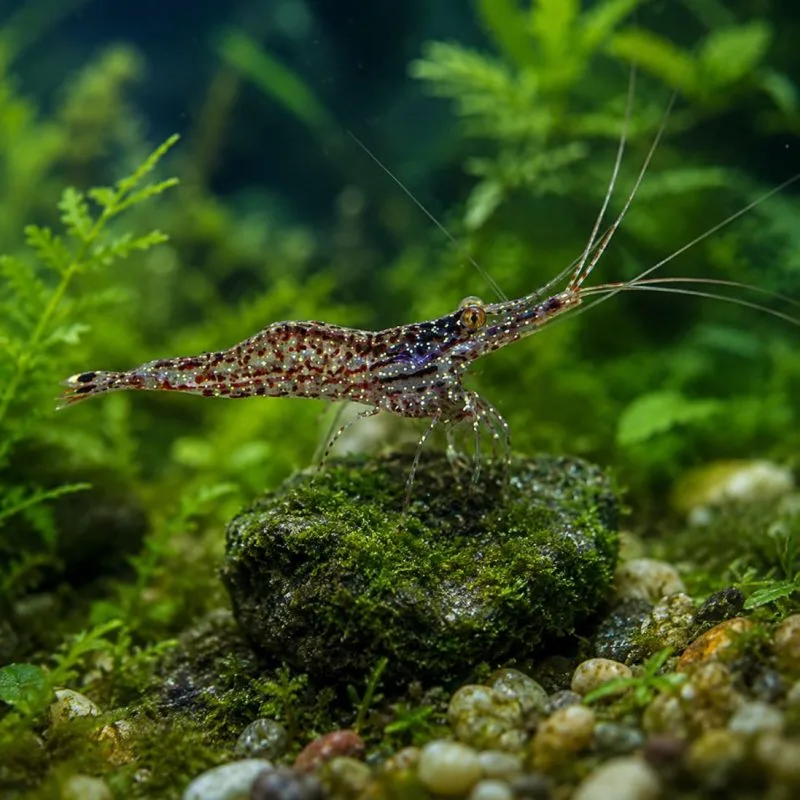
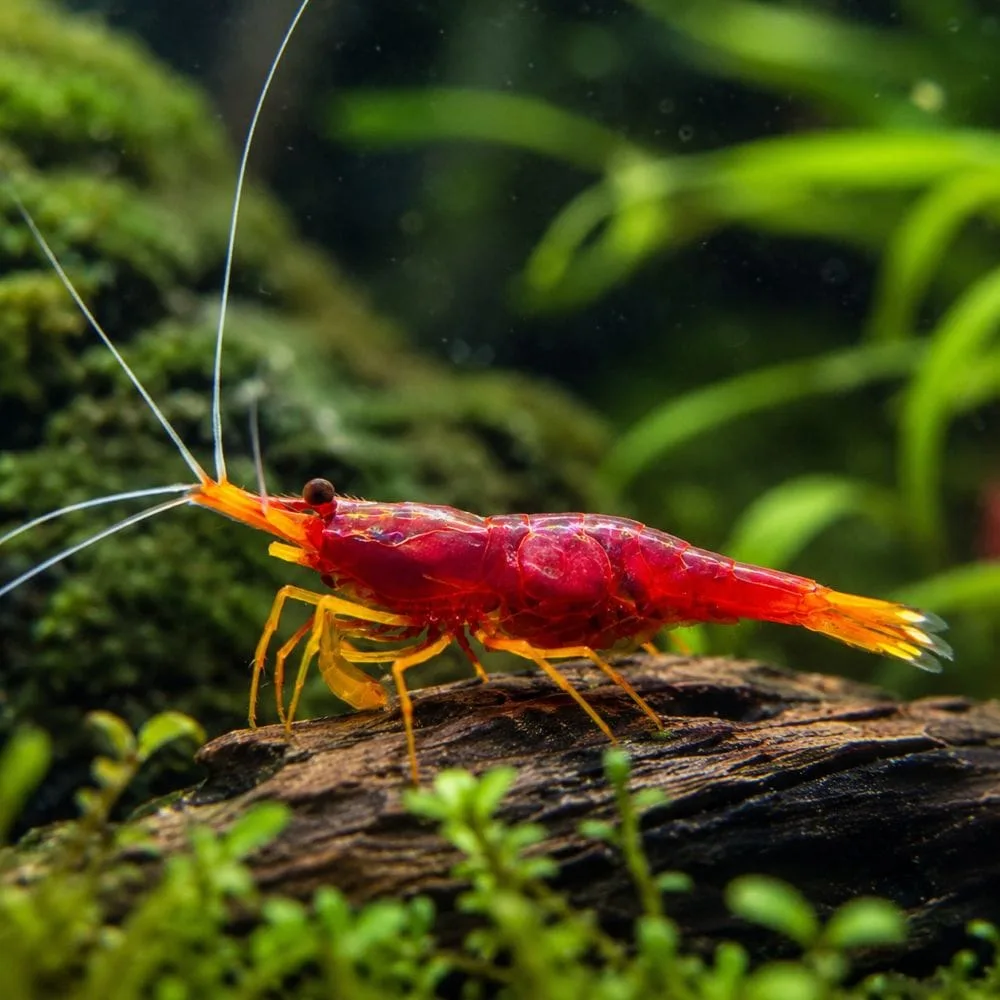
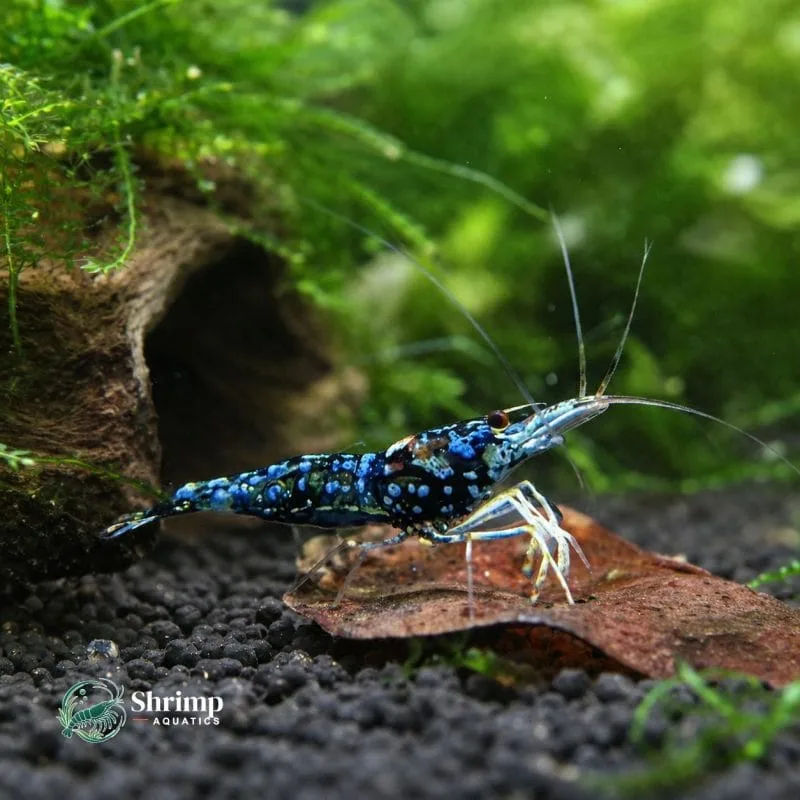
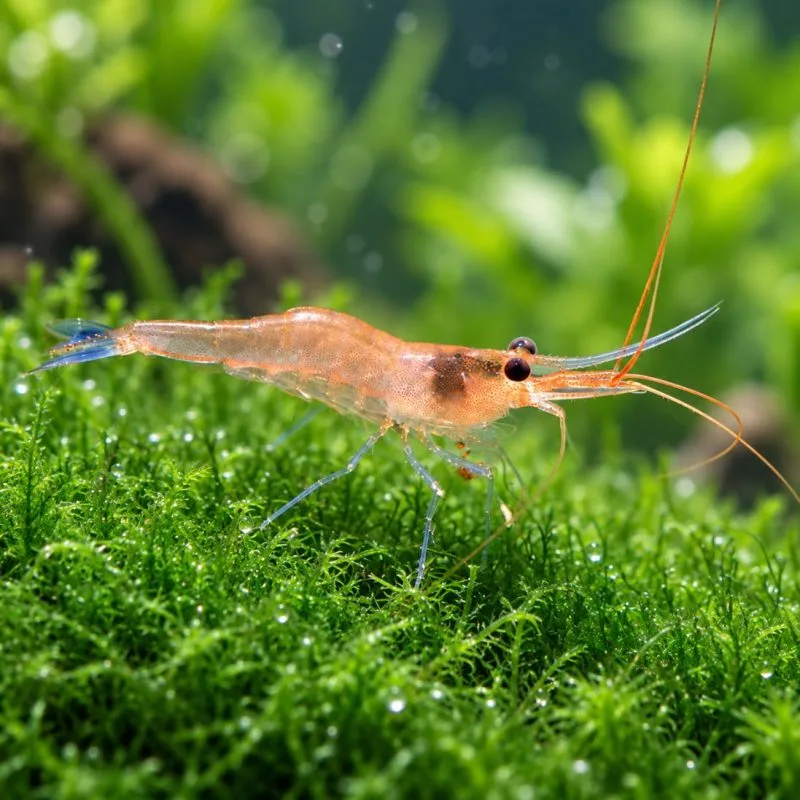
Sulawesi Pink Boxer is a tank-bred Sulawesi lake Caridina, bred by Shrimp Aquatics and not collected from the wild. The pink to light red banding gives the line its name, and so does the way the front appendages work the grazing surface in quick repeated movements. It is a smaller, busier shrimp than the Cardinal type lines, and it needs exactly the same warm, alkaline, mature tank.
Check your tank against Pink Boxer water targets before you order
This line is kept inside the same group range as every Sulawesi shrimp we sell. A tank already running there is a candidate. A tank that needs to be moved into range is a project to finish before ordering.
| Temperature | 79-86°F (26-30°C) |
|---|---|
| pH | 7.5-8.5 |
| GH | 4-8 dGH |
| KH | 3-6 dKH |
| TDS | 150-250 ppm |
| Nitrate | Under 10 ppm |
| Substrate | Inert substrate and hardscape, no active pH lowering soil |
At Shrimp Aquatics, most of our Sulawesi systems currently run at TDS 150 ppm, GH 6-7 dGH and pH 7.5. We start those systems with RO water rather than tap water, then use Sulawesi Mineral 7.5 to prepare the water for our current tank targets before shrimp are introduced, and we test the finished pH, GH and TDS before the water goes into a tank.
RO water and a Sulawesi mineral salt are the normal route to this water, and the finished values still have to be tested rather than assumed from a dose. A Crystal or Bee Caridina tank is not a starting point for this line; it is a different setup with opposite chemistry.
Pink Boxer needs a mature grazing layer, not just the right numbers
The feeding movement that names this shrimp is grazing, and it needs a surface worth grazing. In our Sulawesi systems, mature algae and biofilm do most of the feeding. We normally offer prepared food only about once a week and remove leftovers, because many of the shrimp in these systems show limited interest in it and because food that sits in warm water adds organic waste and can raise ammonia, nitrite and nitrate as it breaks down.
We wait for 0 ammonia and nitrite, stable temperature and chemistry, an established biological filter and visible grazing surfaces before stocking. With a powdered bacterial starter our normal minimum is 3-4 weeks; with a liquid or live culture the same checkpoint may arrive in 2-3 weeks. The calendar does not decide when shrimp go in.
- Ammonia and nitrite read 0 on two tests a few days apart.
- Temperature, pH, KH and TDS have held for at least a week without correction.
- Rock and glass carry a visible film of algae and biofilm.
- Do not order to a tank that was set up this month, however good the numbers look.
Which tankmates and Sulawesi lines can share a Pink Boxer tank
Bee and Taiwan Bee Caridina are incompatible with this water. Sulawesi snails share the range and the grazing surfaces and are the usual companions; count them into the grazing load. Keep flow gentle at shrimp level.
We have no crossing record for Pink Boxer against the other lines in our range. If you want the line kept as it arrived, give it its own tank.
How many Pink Boxer shrimp to order for a colony
Order a group rather than a pair, because a single loss should not end the project. When we can sex the shrimp with reasonable confidence, we usually build a Sulawesi breeding group with either 2 males to 8 females or 3 males to 7 females, to reduce mating pressure on newly molted females. We do not promise the sex or sex ratio of shipped stock unless that exact stock has been verified.
Before you order
Email contact@shrimpaquatics.com with your pH, GH, KH, TDS, temperature, tank size, cycle status and current livestock if you are not sure the tank fits. We would rather tell you to wait than ship into a tank that is not ready.
Settling a Pink Boxer order into your tank on arrival
Follow the instructions packed with your order. For a sealed bag after a long transit, the current Shrimp Aquatics shipment protocol is to float the bag to equalize temperature, then net the shrimp into the tank without adding the shipping water. Packing method, transit time and species can change the right method, so the sheet in the box takes precedence over this page. Keep the lights off for the first 24 hours and expect the shrimp to hide before they graze in the open.

There are no reviews yet.