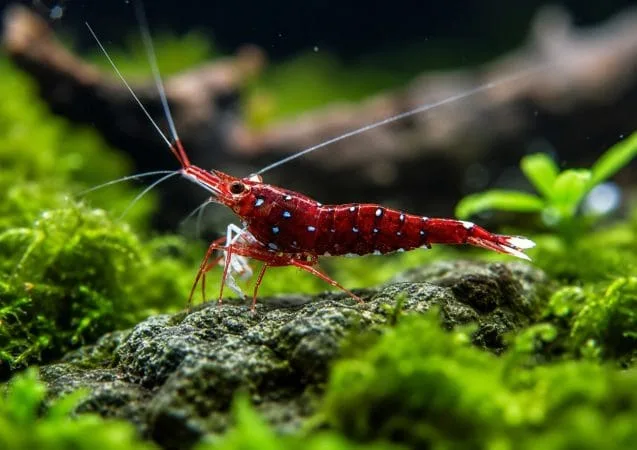
You’ve fallen for Sulawesi shrimp and you’re planning your first tank for them. You can make it work as a beginner, but only with a hardier Lake Poso or Lake Matano line, warm alkaline water built from remineralized RO, and a tank that’s fully matured before a single shrimp goes in. These are a group of Caridina species from a cluster of ancient lakes on the Indonesian island of Sulawesi, some of the most striking freshwater invertebrates in the hobby and some of the least forgiving, and they need their warm, alkaline, mineral-specific water held rock steady. This guide is honest about the difficulty, then walks you down a realistic path: pick a hardier starter line, build a stable warm alkaline tank, mature it patiently, and add shrimp only when the system is ready.
What Sulawesi Shrimp Are, and Why They Are an Advanced to Expert Group
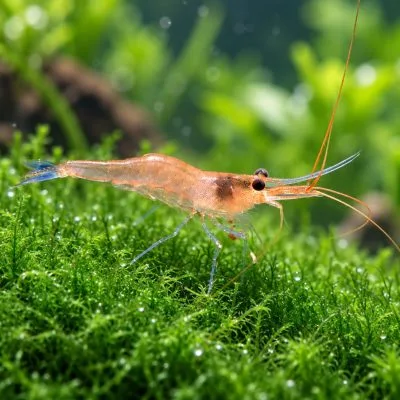
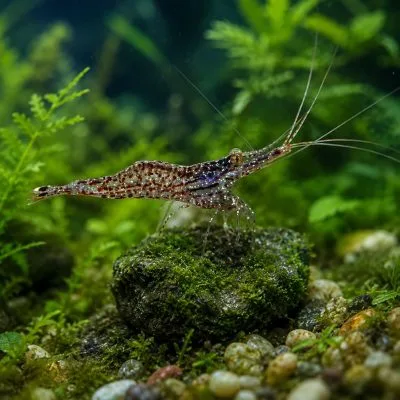
“Sulawesi shrimp” is a trade name for dozens of dwarf Caridina species that live only in the lakes of Sulawesi, Indonesia. They’re prized for vivid reds, whites and patterned shells, but they break most of the rules that make Neocaridina (Cherry shrimp, for example) beginner-friendly. Where Cherries are happy in cool, soft, slightly acidic water, Sulawesi shrimp need it warm, hard-buffered and alkaline, and they depend on a mature film of algae and biofilm for food. A small mistake that a Cherry colony would shrug off can wipe out a Sulawesi tank.
Treat this group as advanced to expert, because that’s the realistic difficulty. Beginners can still succeed if they respect three things: stable water chemistry, a fully matured tank and a sensible starter species. Can your water, budget and patience support remineralized RO water and a maturing period of several weeks? If not, a hardy Neocaridina colony is a better and kinder first project.
Where Sulawesi Shrimp Come From: Ancient Lakes That Shaped Their Needs
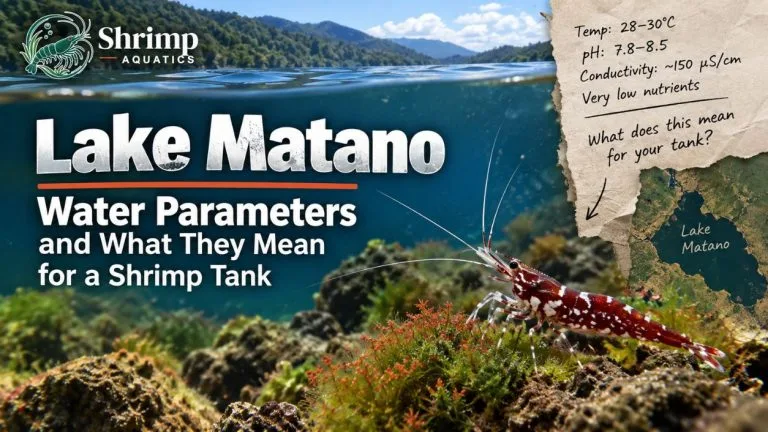
Most aquarium Sulawesi shrimp belong to a species flock that evolved in the ancient Malili lake system, which includes Lakes Matano, Mahalona and Towuti, plus the separate Lake Poso. These are old, stable, low-nutrient lakes. The shrimp diversified there into many endemic species that graze biofilm, diatoms and algae from hard surfaces such as rock and wood.1 That origin explains every care decision that follows. The water is naturally warm and alkaline, the shrimp are grazers that don’t scavenge heavy protein, and stability matters more than any single “perfect” number.
Start With Lake Poso and Lake Matano Sulawesi Lines Before Lake Towuti Species
Start with a species from Lake Poso or Lake Matano, because as a rough guide they tolerate a slightly wider margin than the Lake Towuti specialists. Not every Sulawesi shrimp is equally demanding, and choosing the right first species is the single biggest factor in whether a beginner’s first Sulawesi tank survives. If you want a first species from that short list, start with the best Sulawesi shrimp for beginners.
| Shrimp | Lake origin | Relative difficulty for a first Sulawesi tank |
|---|---|---|
| Blue Leg (Caridina caerulea) | Lake Poso | Among the more forgiving and outgoing; a good first choice |
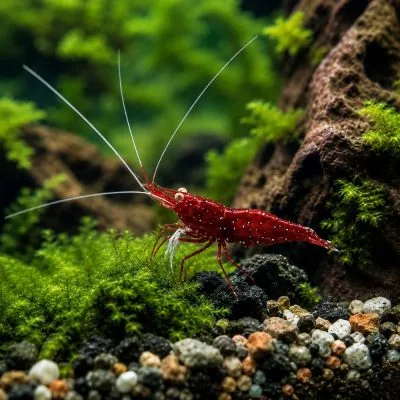
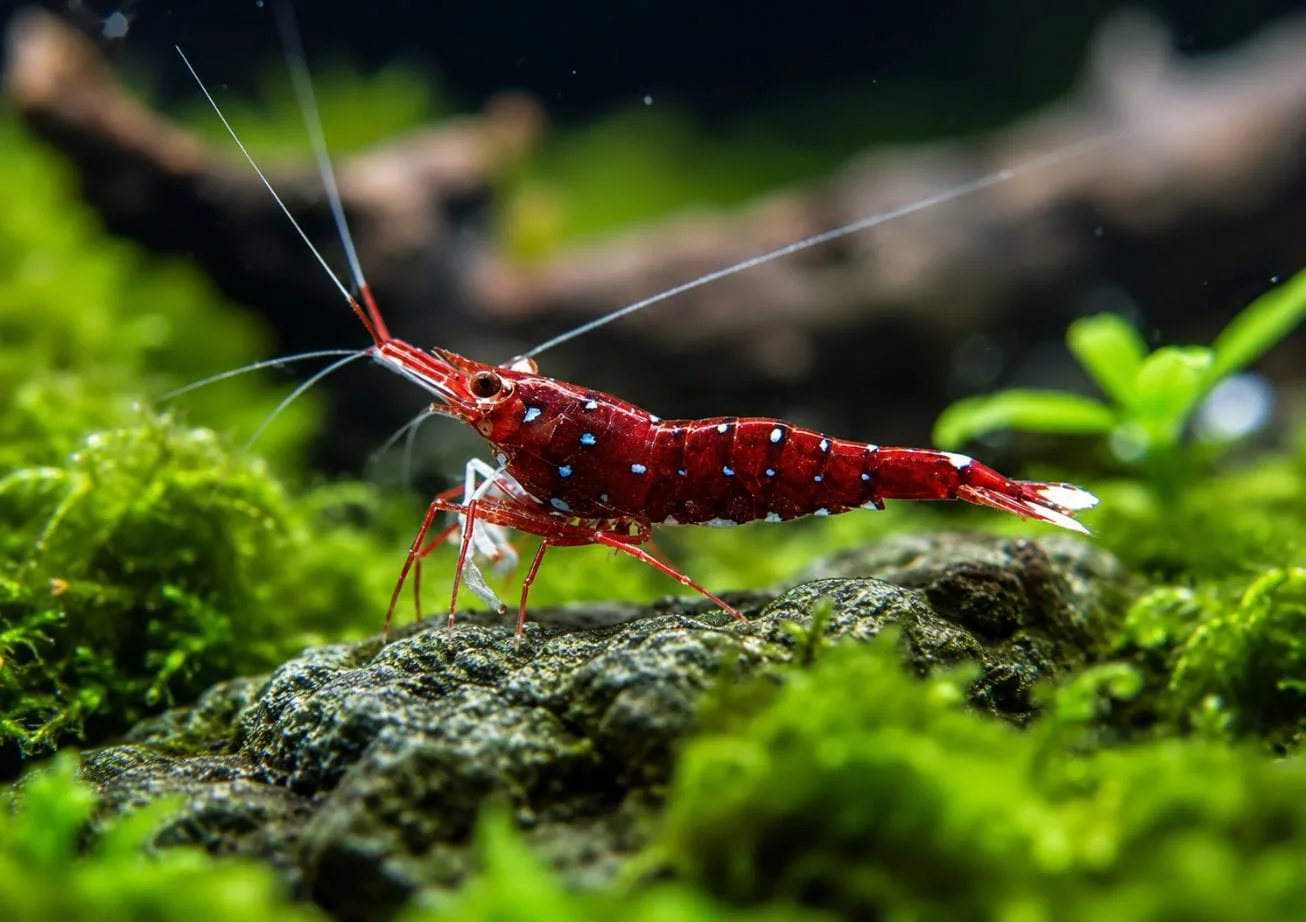
| Cardinal, also sold as White Sock (Caridina dennerli) | Lake Matano | The classic Sulawesi shrimp; demanding but breeds well once the tank is stable |
| White Orchid (Caridina poso) | Lake Poso | Similar to Cardinal in demands; reasonable early choice |
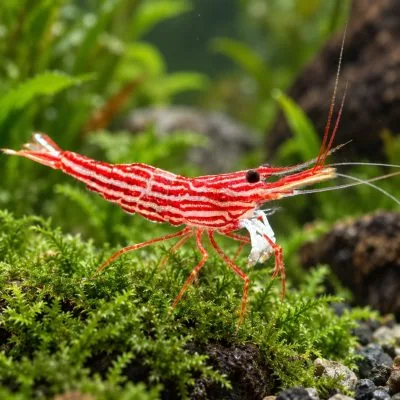
| Harlequin (Caridina woltereckae), Red Line (Caridina striata), Red Orchid | Lake Towuti | Expert only; very sensitive and slow to establish long term |
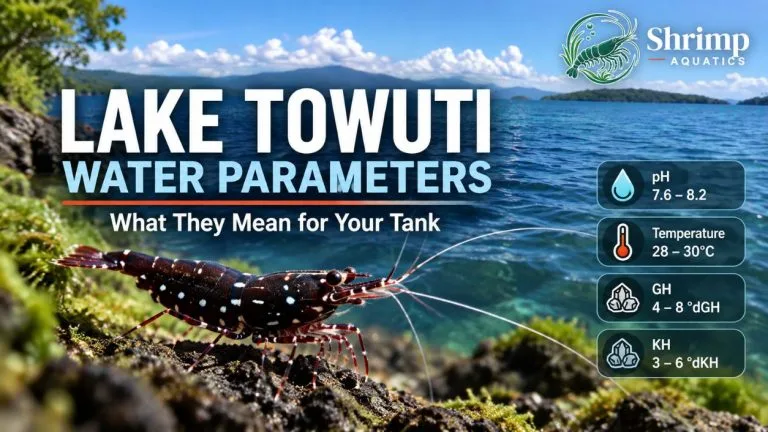
The Lake Towuti species are the most striking of the lot, and they know it. They’re fussy about exact mineral balance and adapt poorly to aquarium life. Keepers usually hold them at the top of the alkaline range, some a little higher, up to about pH 8.5, using a Sulawesi mineral mix made for those lakes. Leave them until you’ve kept a Poso or Matano line healthy and breeding for several months.
Before you buy
Have the tank running, matured and holding stable parameters before you order shrimp. These aren’t animals to add to a tank you set up the same week.
Before you choose a line, be honest about whether Sulawesi shrimp are easy to care for in your situation, because the answer depends more on your water source and patience than on the shrimp.
Most of the types of Sulawesi shrimp on offer are trade names for a handful of lake species, and the line you pick changes the price far more than the water you’ll need.
If you want the line most likely to forgive a first mistake, the easiest Sulawesi shrimp comparison weighs the published rankings against what has actually been measured.
Build Warm, Alkaline Sulawesi Shrimp Water From Remineralized RO
Start from reverse osmosis (RO) water with a TDS near 0 and add a dedicated Sulawesi mineral back in, because that’s the only reliable way to build the warm, alkaline, mineral-specific water these shrimp need. This is the make-or-break section. Untreated tap water is unpredictable. Even where it’s alkaline, it can carry chlorine, chloramine, heavy metals and shifting seasonal minerals that slowly poison a sensitive colony. So start clean, then build exactly the water you want.
| Parameter | Range for the group |
|---|---|
| Difficulty | Advanced to expert |
| Temperature | 79-86°F (26-30°C) |
| pH | 7.5-8.5 |
| GH | 4-8 dGH |
| KH | 3-6 dKH |
| TDS | 150-250 ppm |
| Ammonia and nitrite | 0 ppm, at all times |
| Nitrate | Aim for under 10 ppm |
| Substrate | Inert only, no active pH-lowering soil |
| Behavior | Peaceful, often shy |
These are typical ranges for the group. They’re useful for setting up and for catching obvious errors, not a promise that any animal will survive at the edges. Aim for the middle of each range and, above all, hold it steady. A stable reading inside the range always beats chasing a “perfect” number and causing swings. Mix new water with your Sulawesi mineral a few days ahead so it fully dissolves and settles, match its temperature to the tank, and change water in small amounts.
Mineral mixes and dissolving
Sulawesi mineral products are commonly sold in different strengths, and the higher-alkalinity versions can be slow and cloudy to dissolve. Follow the product’s own instructions, let the water clear and stabilize before use, and verify GH, KH and TDS with test kits.
The full Sulawesi shrimp care parameters, with the reasoning behind each number, live on one page, so this section only covers what a first tank needs to hit.
Of the three hardness numbers, KH and alkalinity in a Sulawesi tank is the one that quietly drifts and takes pH with it, so test it even when GH looks fine.
Coming from Crystal or Bee keeping? Expect the opposite habits: Caridina vs Sulawesi shrimp differ on almost every water decision, not only on temperature.
The reason Sulawesi shrimp need RO water is that tap water carries minerals and residues you can’t take back out once they’re in the tank.
Whether you mix that RO with Sulawesi Mineral 7.5 or 8.5 depends on the pH your setup can hold steady, not on which number looks better.
Equip a Sulawesi Tank for Warm, Oxygen-Rich, Chemically Steady Water
Go for a 10 gallon (about 38 L) tank or bigger, because a larger tank is easier to keep stable. The extra water buffers the temperature and chemistry swings that would be fatal in a nano. Every hardware choice serves one goal: warm, oxygen-rich, chemically steady water with plenty of grazing surface.
- Use inert substrate only, such as clean black lava sand, crushed lava rock or pool filter sand, in a thin layer that’s easy to keep clean.
- Don’t use an active, pH-buffering aquasoil made for Bee or Crystal shrimp. It lowers pH and strips the minerals a Sulawesi tank depends on, which can crash the system.
- Build the hardscape from inert, rough-textured rock so biofilm and algae can colonize it and the shrimp get caves and shaded hiding spots.
- Filter gently. A sponge filter run from an air pump is the standard choice; it’s safe for shrimplets and adds oxygen. If you use a canister or hang-on-back filter, guard the intake against tiny shrimp.
- Keep surface movement high. Warm water holds less oxygen, so point the return to ripple the surface without blasting the shrimp.
Give the heater extra thought, because a stuck heater is a common way to lose a whole tank. Use a reliable, correctly sized heater, and consider running it through a separate thermostat controller as a safety cutoff. Cross-check the temperature with a second thermometer. Keep the tank out of direct sun and away from cold drafts or air conditioning that could pull it below range.
Holding 79-86°F (26-30°C) all year isn’t optional, which is why Sulawesi shrimp need a heater with a guard and, ideally, a controller.
Warm water holds less oxygen, so decide early whether your tank runs on an air stone or a filter for Sulawesi shrimp, and keep the flow gentle at shrimp level either way.
The short list of essential Sulawesi shrimp aquarium supplies is smaller than most beginners expect, and none of it can stand in for a mature tank.
Plants are optional here, and most fail in warm alkaline water; read why before you add aquatic plants to a Sulawesi shrimp tank.
Choosing a filter for Sulawesi shrimp is mostly about protecting shrimplets and keeping the flow gentle, not about capacity.
Maturing a Biofilm-Rich Sulawesi Tank Before You Add Shrimp
Wait until the tank is mature, not just cycled, because confusing the two is the most expensive beginner mistake there is. Cycling means the biological filter can turn ammonia and nitrite into nitrate, with both reading 0. Maturity means the tank has also grown a living carpet of biofilm, diatoms and algae on its rock and glass, which is the food these grazers actually live on. A spotless, freshly cycled tank can starve Sulawesi shrimp even when the water tests perfectly.
Once shrimp are in, keep Sulawesi shrimp water changes small and matched to the tank, because a mismatched change is exactly the shock you were trying to avoid.
Plan to run the tank for several weeks after cycling so those grazing surfaces can develop. Many keepers deliberately encourage algae during this window with longer lighting and shrimp-specific bacterial or biofilm powders. Once growth is established, they settle into a normal 8 to 10 hour photoperiod. We know an empty tank is dull to look at for weeks, but patience here is the cheapest insurance you can buy.
Adding Your First Sulawesi Shrimp Without Shocking Them
When the tank is mature and stable, introduce the shrimp slowly. Shipping or shop water can be far from your tank in both temperature and TDS, so acclimate gradually: match temperature first, then ease the water chemistry across over a period of time. If your shrimp arrive from Shrimp Aquatics, follow the specific instructions included with that order, since the right method depends on how the shrimp were packed and how long they were in transit. Expect new arrivals to hide at first. They’ll come out to graze once they feel settled.
Feeding a Sulawesi Grazing Colony Without Fouling the Water
In a properly matured tank, the biofilm and algae on the hardscape do most of the feeding. Sulawesi shrimp are built to pick at these surfaces all day, so a green, well-grazed tank is doing its job. Their reliance on mature biofilm and algae is real, but how readily they take prepared food varies by species, system and the food itself. Don’t assume they’ll either ignore every supplement or eagerly take it.
Most of what Sulawesi shrimp eat is already growing on the rock, so prepared food stays a small supplement and leftovers come out.
When you do supplement, go small and careful. At these temperatures leftover food breaks down fast and can trigger an ammonia spike that harms the whole tank overnight. Favor finely powdered shrimp or vegetable-based foods and botanical leaves, which feed the microfauna the shrimp graze on, and offer only what the colony clears quickly. Overfeeding, not underfeeding, is the more common killer here.
Copper and medications
Copper and some fish medications are dangerous to shrimp. Check the exact ingredients of anything you add, and never treat a Sulawesi tank with a copper-based product.
Which Tankmates Can Share Warm, Alkaline Sulawesi Shrimp Water?
The safest setup is a species-only tank, or a Sulawesi biotope shared only with animals that need the same warm, alkaline water. Most fish are a poor match. Even small, gentle species can stress shy shrimp into hiding and eat shrimplets, and their care needs rarely overlap cleanly with these conditions.
The one widely recommended companion is the Sulawesi rabbit snail (Tylomelania species), which comes from the same lakes and thrives in the same water. It grazes detritus and helps turn over the thin substrate. Bee and Taiwan Bee Caridina share the genus, but they’re a different soft, acidic care group and shouldn’t go into a Sulawesi tank.
About keeping Neocaridina with Sulawesi shrimp
In some of our Sulawesi systems, we keep about five Neocaridina and have observed the Sulawesi shrimp remain more visible, or retreat less, when people approach the tank. That’s what we’ve seen in our own tanks, and it still needs temperature overlap, enough grazing surface and stocking room for both groups. Warm, alkaline Sulawesi water sits outside a Neocaridina’s comfortable range and can shorten their lives, and extra shrimp compete for the same grazing surfaces. It isn’t a beginner recommendation.
Catch Sulawesi Shrimp Trouble Early by Testing the Water Before You Dose
Test and stabilize the water before you dose anything, because most Sulawesi problems trace back to water instability, not a specific disease. Check ammonia and nitrite (both should read 0), temperature, and GH, KH and TDS. Then think about anything that recently changed or entered the tank.
The common health problems in Sulawesi shrimp almost always come back to water, which is why the checks start with ammonia and stability.
Losing one or two a day is a different problem from a sudden wipeout. If your Sulawesi shrimp are dying gradually, work through the diagnostic order one change at a time.
One failure worth recognizing early is a failed molt, sometimes called the “white ring of death,” which shows as a pale gap or split at the joint between the head section and the body. It usually reflects a mineral imbalance or a sudden shift in water chemistry that forced a bad molt, and it’s generally fatal for that shrimp once it appears. The useful response is correction, not treatment. Recheck your mineral mix, TDS and buffering, and restore stability so the rest of the colony molts cleanly. If losses continue in stable, in-range water, describe the exact signs to an experienced keeper or an aquatic vet before you guess at a medication.
- Adding shrimp to a tank that’s cycled but not yet matured with biofilm and algae.
- Using an active, pH-lowering aquasoil instead of inert substrate.
- Topping up evaporation with mineralized water instead of pure RO, which drives TDS and hardness upward over time.
- Overfeeding prepared food at warm temperatures and triggering an ammonia spike.
- Chasing a “perfect” number and causing swings instead of holding a stable value in range.
A word on evaporation. These tanks run warm, so water evaporates quickly and leaves its minerals behind. Top up with pure RO water (TDS near 0) to hold TDS and hardness steady. Keep routine water changes small and less frequent than in a typical community tank, and always temperature-match and pre-mix the replacement water.
Sourcing Captive-Bred Sulawesi Shrimp Responsibly
Buy captive-bred stock, because these shrimp are under pressure in the wild as well as demanding in the tank. Several Sulawesi species, including the Cardinal (Caridina dennerli), are assessed as Critically Endangered, threatened by pollution and nickel mining around their lakes and by introduced fish.2 That makes captive-bred stock both the practical and the responsible choice. Tank-bred shrimp are already adapted to aquarium life, and buying them doesn’t draw from fragile wild populations. Shrimp Aquatics livestock is bred in our own breeding tanks rather than collected from the wild. Buying captive-bred stock is the right call, though no single purchase should be described as saving a species.
There’s no trigger to pull for breeding: how to breed Sulawesi shrimp comes down mostly to tank readiness, sexing and group composition.
If a mature colony has stalled, the reasons Sulawesi shrimp stop breeding are usually mineral drift, harassment or an immature tank, and each has a different fix.
If you have the patience for remineralized RO water, a matured tank and a careful hand with feeding, a Sulawesi colony is one of the most rewarding projects in the hobby. Start with a hardier Poso or Matano line, get the water and maturity right first, and let the colony build from there.
Every Sulawesi shrimp line we sell is bred in our own tanks, and each product page states the water that line is kept in so you can check it against your own before ordering.
References
2 Sources
- Adaptive Radiation and Ecological Diversification of Sulawesi’s Ancient Lake Shrimps, von Rintelen et al., Evolution, 2010.
- Caridina dennerli, The IUCN Red List of Threatened Species, von Rintelen K., 2018, accessed 18 July 2026.