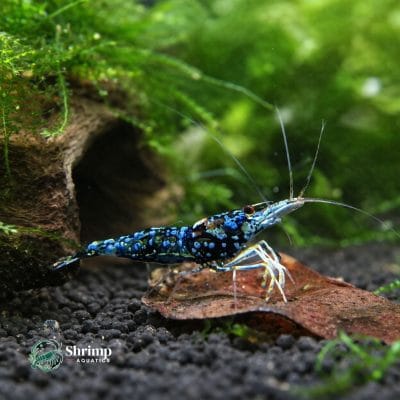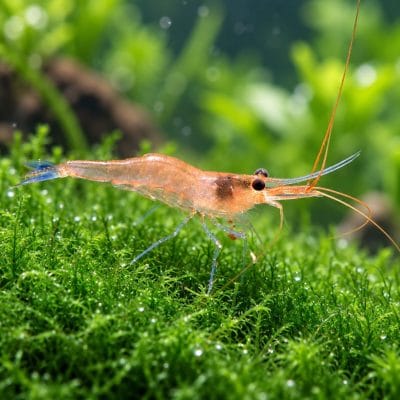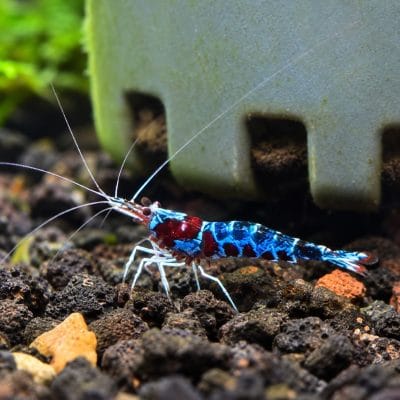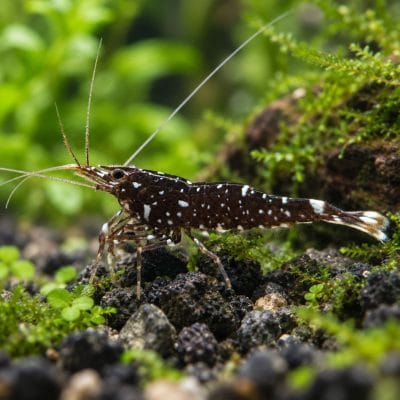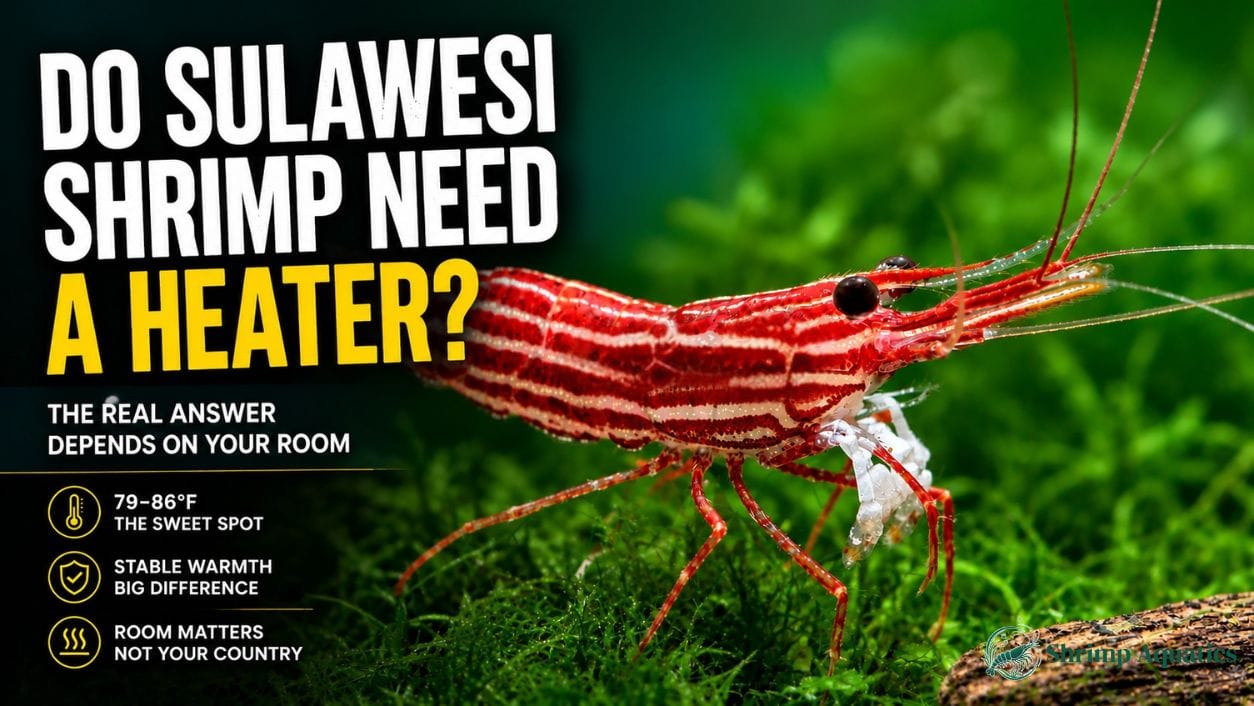

Most Sulawesi shrimp keepers do need a heater, but not all of them. Whether yours does depends on your room, not your region. These lake shrimp, the warm-water Caridina species from Sulawesi in Indonesia, need water held steadily at 79-86°F (26-30°C). If the coldest point in your day lets the tank drift below that, you need a heater. If your room holds the range on its own, you may not.
Why Sulawesi Shrimp Need Water Held at 79-86°F (26-30°C)
Sulawesi shrimp come from ancient, deep tropical lakes such as Lake Matano, where the water stays warm and remarkably steady all year, with only weak layering through the water column.1 They evolved with almost no seasonal temperature swing, so in captivity they handle sudden changes poorly. Stability matters as much as the number on the thermometer.
Temperature is one of five numbers in the Sulawesi shrimp care parameters, and it’s the one that moves fastest when a room or a heater fails.
Like all shrimp, they’re ectotherms, so their metabolism follows the water temperature. Held below their range they slow down, feed less and become easier to stress. The larger danger is a moving target: a tank that swings a few degrees each day is harder on these shrimp than one held a touch cool but rock steady. This is an advanced to expert group, and stable warmth is the foundation everything else rests on. Full water chemistry matters too, but this guide is about the heating decision; the pH, hardness and mineral targets live on each Shrimp Aquatics product’s Quick Reference in our Sulawesi shrimp collection.
| Shrimp group | Reference temperature range | Usual thermal approach |
|---|---|---|
| Sulawesi shrimp | 79-86°F (26-30°C) | Usually needs added heat; may need cooling in hot spells |
| Bee/Crystal Caridina | 60-72°F (15.5-22°C) | Usually kept cool; heaters generally not used |
This is why you can’t treat Sulawesi shrimp like Bee or Crystal shrimp. The two groups sit at opposite ends of the temperature scale, so a room that suits one will usually be wrong for the other.
Warm Water Holds Less Oxygen: Add Gentle Surface Movement to a Sulawesi Tank
Warmer water holds less dissolved oxygen than cooler water, and low or swinging oxygen levels stress aquatic animals, with the lowest readings usually just before dawn.2 Because a Sulawesi tank runs warm by design, give it gentle surface agitation from an air stone or a softly angled filter return so gas exchange keeps up. Aim for light movement at the surface without a strong current, since these shrimp prefer calm water.
Quick decision rule
Measure the coldest temperature your tank reaches, usually overnight or when heating or cooling cycles off. Compare that reading with 79°F (26°C). If the tank drops below it, you need a heater.
In a Cool Room, a Sulawesi Tank Below 79°F (26°C) Needs a Heater
If you’ve cool seasons, or you keep your home at a comfortable 68-72°F (20-22°C), your room sits well below the Sulawesi range. That’s fine for many other shrimp, but for Sulawesi shrimp it means the tank runs too cold without help. Here a reliable adjustable heater is standard equipment, not an optional extra.
Set the heater toward the middle of the range, around 80-82°F (27-28°C), and confirm the real water temperature with a separate thermometer. Because a stuck heater can overheat a small tank, many keepers add an independent thermostat controller that cuts power if the water climbs too high. In a cold room, insulating the back and sides of the tank also reduces how hard the heater has to work.
When a Sulawesi Tank in a Warm Room Can Skip the Heater
In a consistently warm room in an equatorial climate, with no air conditioning, the aquarium can sit inside the 79-86°F (26-30°C) range on its own, and a heater may be unnecessary. Water changes temperature slowly, so a stable warm room tends to keep a tank stable too. Don’t assume it, though. Confirm it by logging the tank temperature across a full day, overnight, and in the coolest part of the year before you decide to go without a heater.
In these rooms the real risk often flips from cold to heat. During hot spells the tank can climb toward or past 86°F (30°C), where oxygen falls and stress rises. A small clip-on fan aimed across the water surface can cool it by a degree or two through evaporation. Keep a thermometer in view so you catch drift in either direction early.
In an Air-Conditioned Room, Keep a Heater on Standby
The tropical advantage disappears the moment the tank shares a room with an air conditioner. Units set to 72-79°F (22-26°C) pull heat out of the room, and their on and off cycling drags the water up and down. That repeated swing is exactly what Sulawesi shrimp tolerate worst, even when the daytime room feels warm.
If the tank shares a room with AC
Run a low-watt adjustable heater set near the lower end of the range, around 79-80°F (26-27°C). It stays idle while the room is warm and switches on only when the air conditioner pulls the water down, holding a steady floor under the tank.
Choosing and Setting Up a Heater for a Sulawesi Shrimp Tank
Once you know you need a heater, size and install it for steady, safe warmth rather than raw power. A common starting point is roughly 1 to 2 watts per liter, so a typical 10 to 15 gallon Sulawesi tank often uses a 25 to 50 watt heater in a warm room, or a 50 to 100 watt heater in a cold one. Adjust for how cold your room actually gets.
- Use an adjustable heater sized to the tank and set it inside 79-86°F (26-30°C).
- Add an independent thermostat controller as a backup against a stuck heater overheating the tank.
- Keep a separate thermometer in the tank and read it daily at first to catch drift.
- Use a heater guard, or position the heater, so shrimp can’t rest against hot glass.
- Place the heater near flow from the filter or air stone so warmth spreads evenly.
- Don’t rely on the heater’s own dial as your only temperature reading.
- Don’t add cold replacement water; match it to the tank temperature before a water change.
With the right heater, a backup controller and a thermometer you actually watch, you can hold a Sulawesi tank in its range through cold nights, hot afternoons and an air conditioner cycling in the background. Steady warmth, more than any single number, is what keeps Sulawesi shrimp healthy.
A heater is the first piece of equipment in keeping Sulawesi shrimp that has to be right before the tank is even cycled.
References
2 Sources
- The biogeochemistry of tropical lakes: a case study from Lake Matano, Indonesia, Limnology and Oceanography (Crowe et al.), 2008. Accessed July 18, 2026.
- Dissolved Oxygen, U.S. Environmental Protection Agency (CADDIS), updated October 3, 2025. Accessed July 18, 2026.
Ready to get started?
Shop our Sulawesi Shrimp collection
27 products available · Live Arrival Guarantee