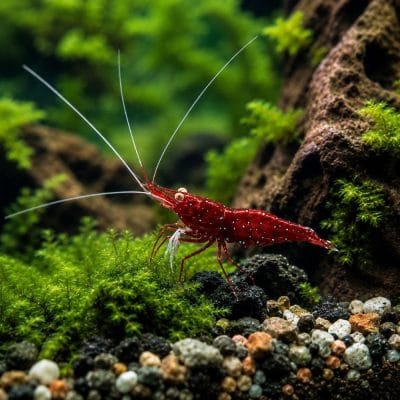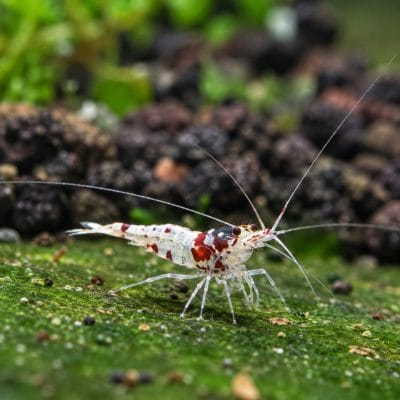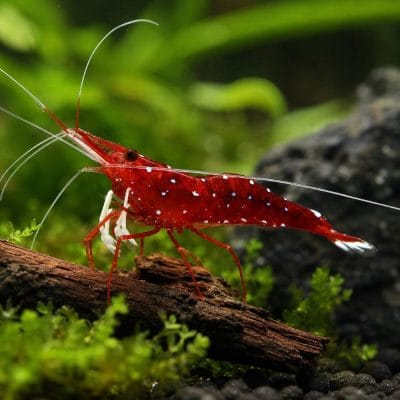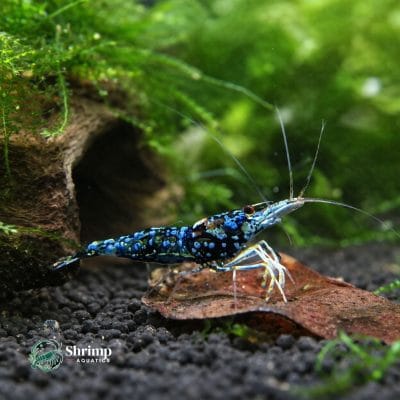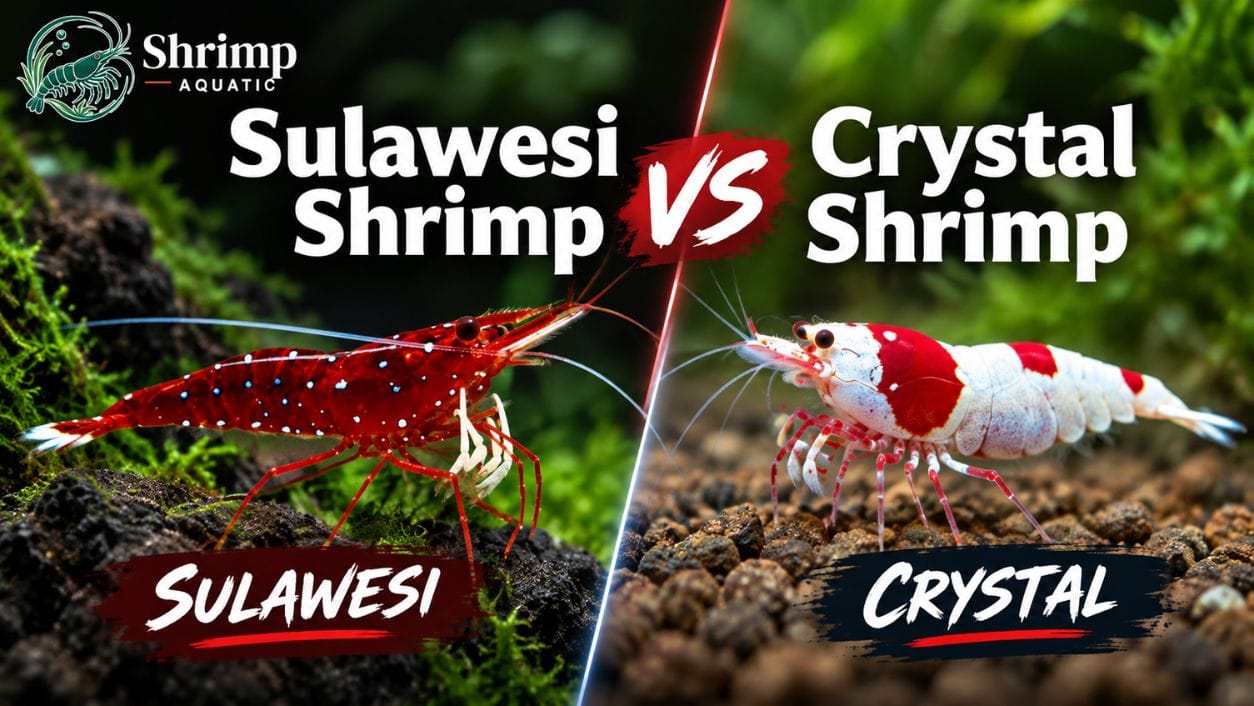
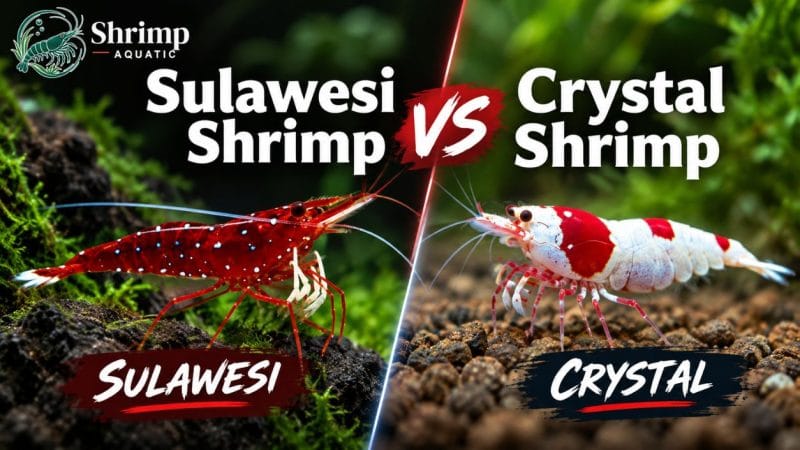
Crystal shrimp and Sulawesi shrimp are both Caridina. That’s where the resemblance stops. Crystal shrimp are kept cool, soft and acidic at 60-72°F (15.5-22°C) and pH 5.8-6.8. Sulawesi shrimp are kept warm and alkaline at 79-86°F (26-30°C) and pH 7.5-8.5. One tank cannot serve both, and a mature tank built for one of them cannot be converted to the other without stripping it back to glass. So the question isn’t which shrimp looks better in a photo. It’s which set of conditions your room, your source water and your routine can hold steady for a year.
Where Crystal and Sulawesi water ranges overlap, and the three that make one tank impossible
Put the two sets of numbers next to each other and the argument is over quickly.
| Parameter | Crystal shrimp (Caridina logemanni lines) | Sulawesi shrimp (lake Caridina) |
|---|---|---|
| Difficulty | Intermediate to advanced | Advanced to expert |
| Temperature | 60-72°F (15.5-22°C) | 79-86°F (26-30°C) |
| pH | 5.8-6.8 | 7.5-8.5 |
| GH | 4-6 dGH | 4-8 dGH |
| KH | 0-2 dKH | 3-6 dKH |
| TDS | 100-150 ppm | 150-250 ppm |
| Nitrate | Hold under 20 ppm | Hold under 10 ppm |
| Substrate | Buffering shrimp soil | Inert rock and sand only |
Three rows rule each other out completely. Temperature, pH and KH share no value at all. Each of those three is load bearing, not a preference, so there is nothing to negotiate.
TDS is the row people misread. The upper figure for one group is the lower figure for the other, so the two bands meet at a single point instead of sharing a stretch. A single point is not somewhere you can park a tank. The nitrate figures are targets we hold to, and the tighter Sulawesi one is there because warm alkaline water leaves less room for error.
That leaves GH as the only genuine overlap, 4-6 dGH sitting inside 4-8 dGH. It matters to both groups for the same reason. The calcium a shrimp puts into a new shell comes mostly from the water it is sitting in, not from its food or its stored reserves.1 But one shared row is not a shared tank. If you have been wondering whether a compromise setting could work, the answer is no, and what that middle setting costs each colony is worked through in keeping Sulawesi and Bee shrimp together.
Don’t split the difference
Setting the tank halfway between the two bands, somewhere warm and near neutral, doesn’t give you a tank that suits both groups. It gives you two colonies living outside their range at once, and neither of them gets what it needs.
Everything below is the day to day difference between the two setups. The wider picture of how the whole Bee and Crystal side lines up against Sulawesi sits in our Caridina and Sulawesi setups compared guide.
Can your room hold Crystal shrimp at 60-72°F or Sulawesi at 79-86°F all year?
Probably only one of the two, and your climate picks which. For most keepers this one question decides it, and it decides it before taste gets a vote. Ask what your tank water reads on the hottest week of your year with nothing plugged in. Then ask the same on the coldest.
Heating is the cheap, reliable direction. A heater with a separate controller is how most keepers hold 79-86°F (26-30°C), and it works in most rooms. The failure mode is one you can plan around. Cooling is the expensive, fragile direction. Holding 60-72°F (15.5-22°C) through a warm summer means fans that raise evaporation, or a chiller, or an air conditioned room you never switch off. If your home sits above the Crystal band indoors for months at a time, Crystal shrimp are the harder animal for you, whatever the difficulty labels say.
Warm water comes with its own bill. Cold water holds more dissolved oxygen than warm water does,2 so a Sulawesi tank needs real surface movement or an air stone running alongside the heater. That’s a running cost in noise and evaporation. Worth knowing before you buy.
Your room runs cool
If the tank sits in the low 60s°F on its own most of the year, Crystal shrimp are within reach. You’re mainly buying a small heater for winter. A Sulawesi tank in the same room will run its heater hard and swing whenever the building’s heating changes.
Your room runs warm
If the tank sits in the high 70s°F or above without help, you’re already most of the way to Sulawesi conditions. Getting that same room down into the Crystal band is the harder engineering problem, especially overnight and in a heatwave.
Why Sulawesi water takes days to mix and Crystal water takes seconds
Both groups are usually built on RO or DI water, so this isn’t a difference in principle. It’s a difference in how long you stand at the mixing bucket every time you need water.
A Crystal tank is remineralized with a shrimp mineral that adds hardness without carbonates. That’s why a crystal tank’s KH stays at 0-2 dKH, and why the buffering soil in the tank can hold pH down in the 5.8-6.8 band. Mixing takes a few minutes. The trade-off is that the soil is doing chemistry rather than just sitting there, so most keepers plan on replacing the bed at some point in the tank’s life.
A Sulawesi tank goes the other way. The rock and sand are inert and don’t touch the water, so the mineral has to deliver the whole result. Which mineral you pick changes your routine more than any other choice on this page. Sulawesi Mineral 7.5 dissolves almost completely within seconds and the water is ready to use immediately, buffering at around pH 7.5.3 Sulawesi Mineral 8.5 does not. The maker’s own instructions are to add carbon dioxide at roughly one bubble per second for about three to four days, then aerate the water with an air stone for at least three hours to drive the carbon dioxide back off.4 That’s a batch you start the better part of a week before you need it.
Weighing the two salts against each other is its own decision, and the pH each one lands on is set out in choosing between Sulawesi Mineral 7.5 and 8.5.
Feeding a Sulawesi tank looks nothing like feeding a Crystal tank
This is the part people don’t picture until they’ve kept both. For some keepers it’s the deciding difference.
Crystal shrimp come to food. Drop in a pellet or a piece of blanched vegetable and the colony gathers on it. That’s half the reason people keep them, because you get to interact with the tank. Sulawesi shrimp mostly don’t do that. They graze biofilm and diatoms off rock and glass all day, and prepared food is an occasional extra. It also means a Sulawesi tank has to be genuinely mature before anything goes in it. The grazing surface is the food supply, and it takes weeks to grow.
At Shrimp Aquatics, in our Sulawesi systems mature algae and biofilm do most of the feeding. We normally offer prepared food only about once a week and remove leftovers.
So if the daily ritual of feeding your shrimp is part of what you want from the hobby, that’s a real argument for Crystals. It isn’t a soft one.
What warm alkaline water does to a pellet you forgot
There’s a chemical reason a Sulawesi tank is fed lightly, and it’s the same reason its nitrate target is tighter. Ammonia in water sits in two forms, and only the un-ionized one is what actually poisons aquatic animals. The share in that toxic form rises about tenfold for every single pH unit. It rises roughly twofold for every 10 degrees Celsius of warming across the 0 to 30 degrees Celsius range.5 Warm and alkaline is exactly the corner of that relationship where a given ammonia reading does the most damage. The same forgotten pellet that a cool, acidic Crystal tank shrugs off is a genuinely worse event in a Sulawesi tank.
How fast Sulawesi and Crystal colonies build, and what nobody has measured
Expect to wait, and be suspicious of any page that tells you exactly how long.
Sulawesi shrimp are a species flock endemic to the ancient lakes of one Indonesian island, and the broods measured on wild females there are small. Cardinal shrimp, Caridina dennerli, carried 8-14 eggs across the seven egg carrying females examined in the group’s taxonomic revision. Across the whole flock the per species counts ran from 8 to as high as 80, most of them resting on only two to four females.6 Those are wild counts on tiny samples, not a forecast for your tank. They still set the scale. These are not animals that turn out forty shrimplets a month.
Growth is slower than most care sheets admit. The only measured growth data we can find for any of these shrimp is a 2025 rearing trial on Caridina dennerli. Animals starting at an average total length of 1.445 cm gained between 0.013 cm and 0.119 cm depending on the feed and shelter they were given, over trial periods of 30 and 37 days. Survival across the four treatments ran from 22.727% to 72.727%.7 Those are trial conditions, not a forecast. The survival spread in particular should not be read as what shipped or home kept stock does.
What the hobby hasn’t measured
We could not find an equivalent peer reviewed brood count or growth trial for the Crystal side. The figures that circulate for Crystal fecundity and colony growth are hobby consensus repeated between sites, not measurements. Treat “Crystals breed faster” as received wisdom rather than a number you can plan around.
A Crystal grade and a Sulawesi species are not the same purchase
When you buy a Crystal shrimp you are buying a bred pattern. The bee shrimp behind the Crystal lines was described as its own species, Caridina logemanni, in 2014, from specimens collected in hill streams in Guangdong Province and Hong Kong. The paper notes plainly that species in that group were already being sold as ornamental pet shrimp in the international aquarium trade.8 The white and red you are paying a grade for is the result of decades of selective breeding. It’s not what the wild animal looks like.
A Sulawesi shrimp is the opposite. The color, even on the most colorful Sulawesi shrimp, is the wild type, and it comes with a conservation history attached. Caridina dennerli was assessed in 2018 as Critically Endangered and tagged Possibly Extinct in the Wild, with international trade in the species recorded on the same assessment.9 That doesn’t make buying one wrong. It does make where they came from a question worth asking. Ours are tank-bred by Shrimp Aquatics rather than collected, and what those listings mean for a buyer is unpacked in our guide to endangered Sulawesi shrimp.
Choosing between Crystal and Sulawesi shrimp for the tank you actually have
Our advice, plainly: let the room choose. If your tank sits cool without help and you want a colony you feed and watch swarm, keep Crystal shrimp, and accept the soil bed as a consumable you’ll replace. If your tank sits warm without help, you’re patient, and you’re happy with a quieter tank you mostly leave alone, keep Sulawesi shrimp. Start those on the 7.5 mineral rather than the 8.5 until the routine is second nature.
And if neither of those describes you yet? Keep neither, and put a season into a Neocaridina colony first. That isn’t a consolation prize. It’s the cheapest way to find out whether you enjoy holding water steady.
Before you order either one, work through this list honestly.
- You have a year of temperature readings, or at least an honest guess at your hottest and coldest indoor week.
- Your tank is cycled with ammonia and nitrite reading zero. For a Sulawesi tank it also has visible grazing surfaces on the rock.
- You own a TDS meter and KH and GH tests, not just a pH pen.
- You can mix and store replacement water outside the tank, and for the 8.5 mineral you can start a batch days ahead.
- You are planning to move an existing tank from one group’s water to the other’s. Rebuild instead, or run a second tank.
When your readings hold inside one of the two columns above for a few weeks without you nudging them, you’re ready to stock that column. Our tank-bred Sulawesi shrimp lines are the warm alkaline half of that choice. If you’re still not sure which column your water sits closest to, send us your temperature, pH, GH, KH and TDS at contact@shrimpaquatics.com and we’ll tell you.
References
9 Sources
- Biomineralizations: insights and prospects from crustaceans, ZooKeys 176, 2012.
- Dissolved Oxygen and Water, U.S. Geological Survey Water Science School, updated August 24, 2026.
- Sulawesi Mineral 7,5, minerals and trace elements, SaltyShrimp, manufacturer product information page.
- Sulawesi Mineral 8,5, minerals and trace elements, SaltyShrimp, manufacturer product information page.
- Aquatic Life Ambient Water Quality Criteria for Ammonia, Freshwater, U.S. Environmental Protection Agency Office of Water, April 2013.
- Radiation of endemic species flocks in ancient lakes: systematic revision of the freshwater shrimp Caridina from the ancient lakes of Sulawesi, Indonesia, Raffles Bulletin of Zoology 57(2), 2009.
- Effect of Using Different Shelter and Feed Types on Growth and Survival Rate of Sulawesi Endemic Ornamental Shrimps (Caridina dennerli), Jurnal Ilmiah PLATAX 13(1), 2025, journal PDF.
- To “bee” or not to be, on some ornamental shrimp from Guangdong Province, Southern China and Hong Kong SAR, with descriptions of three new species, Zootaxa 3889(2), December 2014, abstract.
- Caridina dennerli, IUCN Red List assessment, IUCN Red List of Threatened Species, assessed 20 August 2018.
Ready to get started?
Shop our Sulawesi Shrimp collection
27 products available · Live Arrival Guarantee
Featured Sulawesi Shrimp
Sulawesi Orange Eyes White Sock
Caridina dennerli
Advanced · 79–86°F · pH 7.5–8.5
From $19.99View Product