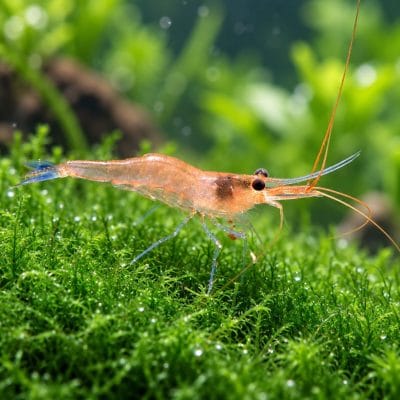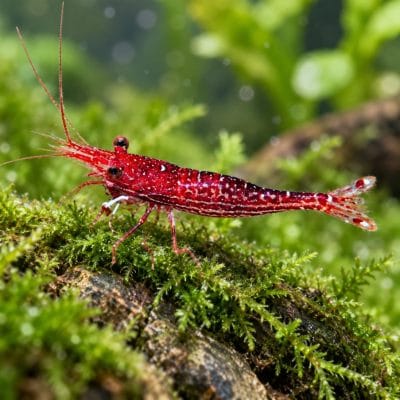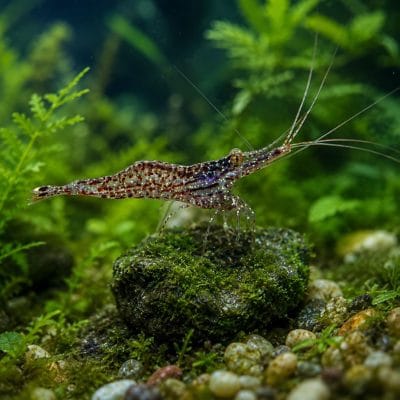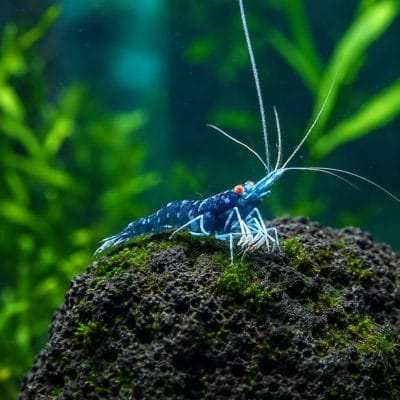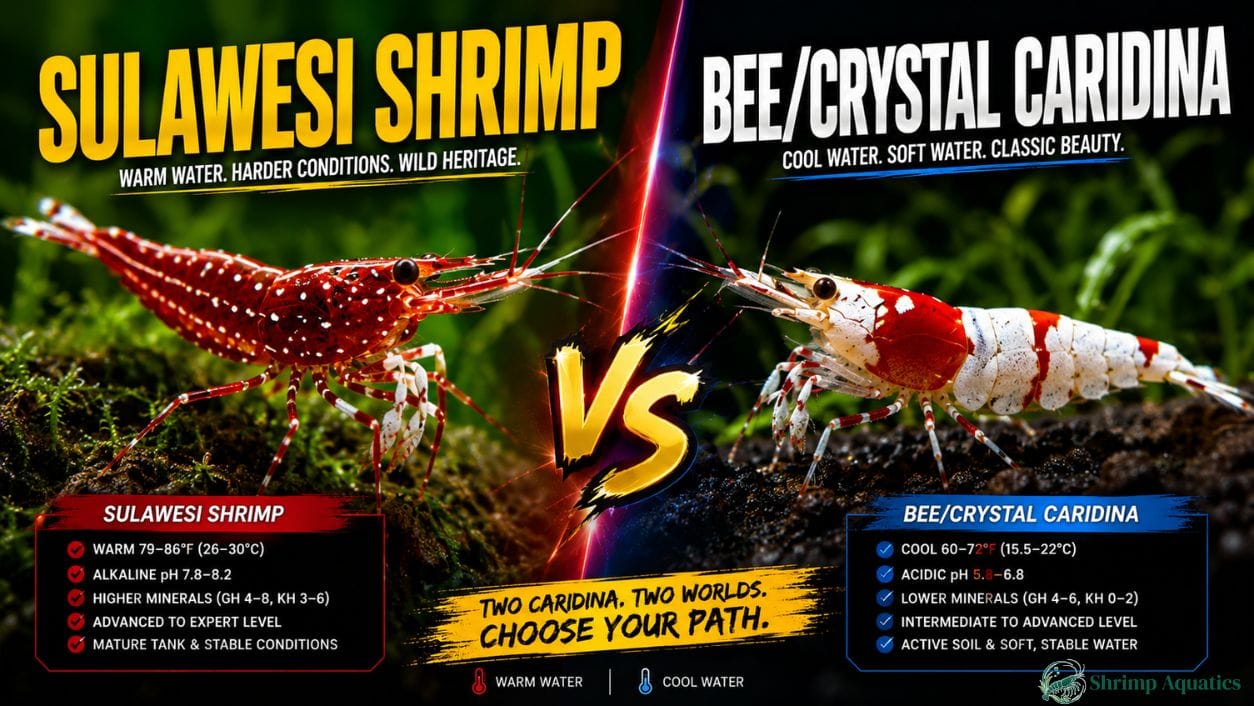

Bee/Crystal Caridina and Sulawesi shrimp are both members of the genus Caridina, yet they sit at opposite ends of freshwater shrimp keeping. Bee/Crystal lines (Crystal Red, Crystal Black, Bee and related soft-water shrimp) want cool, soft, acidic water. Sulawesi lake shrimp (Cardinal, White Orchid, Blue Leg and other Malili and Poso species) want warm, alkaline, mineral-balanced water and a very mature tank. This guide compares the two so you can match one to your actual water, equipment and experience, rather than assuming that keeping “Caridina” prepares you for both.
Bee/Crystal Caridina vs Sulawesi Shrimp Compared on Water, Temperature and Difficulty
The fastest way to see the gap is to line up the core parameters side by side. These are typical reference ranges for each group, not guarantees; always confirm the needs of the specific species or line you’re buying.
| Criterion | Bee/Crystal Caridina | Sulawesi shrimp |
|---|---|---|
| Difficulty | Intermediate to advanced | Advanced to expert |
| Temperature | 60-72°F (15.5-22°C) | 79-86°F (26-30°C) |
| pH | 5.8-6.8 | 7.5-8.5 |
| GH | 4-6 dGH | 4-8 dGH |
| KH | 0-2 dKH | 3-6 dKH |
| TDS | 100-150 ppm | 150-250 ppm |
| Nitrate | Keep low; aim for under 20 ppm | Keep low; aim for under 10 ppm |
| Substrate | Active, pH-lowering aquasoil | Inert substrate and hardscape |
| Diet basis | Biofilm plus prepared shrimp foods | Grazed biofilm and algae on mature surfaces |
Before you buy
Neither group is a beginner shrimp. Both need a fully cycled, stable aquarium with ammonia and nitrite at zero. Sulawesi shrimp in particular belong in a mature, established system, so plan the tank well before you plan the livestock.
The Sulawesi column is the group range from the Sulawesi shrimp care parameters page, which also explains why each number is where it is.
Why Bee/Crystal and Sulawesi Shrimp Need Opposite Water
The care split comes from where each group evolved. Bee/Crystal type shrimp are soft-water animals that do best in cool, mineral-poor, acidic conditions, which is why keepers build their tanks around low hardness and a pH below 7. Sulawesi shrimp took a completely different path. They’re an endemic species flock that radiated inside the ancient Malili lake system on Sulawesi, evolving from riverine ancestors into habitat specialists confined to those warm, alkaline, remarkably stable lakes.1 That long isolation is exactly why they tolerate so little change in the aquarium: they’re specialists, not generalists.
So the two groups aren’t “easy Caridina” and “hard Caridina” on one scale. They need two different kinds of water. A tank tuned for Bee/Crystal shrimp, soft and acidic, would be lethal to Sulawesi shrimp, and a warm alkaline Sulawesi tank would be equally wrong for Bee/Crystal. Understanding that’s the first real decision point.
Set Up Bee/Crystal Tanks on Active Soil and Sulawesi Tanks on Inert Hardscape
The setups aren’t variations on a theme; they use opposite equipment logic. Both usually start from RO or RO/DI water so you control the mineral content, but what you add next diverges completely.
Bee/Crystal setup
Remineralize RO water with a GH-only shrimp mineral to reach 4-6 dGH while keeping KH near zero, then use an active, pH-lowering aquasoil. The soil does the hard chemistry for you, holding the water soft and acidic between water changes for a year or more before it needs replacing.
Sulawesi setup
Remineralize RO water to an alkaline, mineral-balanced target and use only inert substrate and hardscape such as inert gravel, lava rock or coral-based media. Active aquasoil must be avoided here because it drives pH down, which collapses the alkaline conditions Sulawesi shrimp depend on.
This is why Sulawesi keeping feels heavier day to day. With Bee/Crystal shrimp, the buffering substrate absorbs most short-term swings. With Sulawesi shrimp, the substrate is deliberately inert, so every bit of chemical stability has to come from how carefully you mix and change water. Some Sulawesi keepers push the alkaline end higher, toward pH 8.5, for particular Lake Towuti species, but treat that as a species-specific choice, not a group-wide target.
How Heat and High pH Make Ammonia More Dangerous for Sulawesi Shrimp
Beyond the workload, there’s a water-chemistry reason Sulawesi shrimp are less forgiving. Ammonia in any tank exists in two forms: a relatively mild ammonium ion and un-ionized ammonia, the much more toxic form behind ammonia poisoning in Sulawesi shrimp. The share that takes the toxic un-ionized form rises as pH and temperature rise.2 A cool, acidic Bee/Crystal tank keeps most ammonia in the milder form, which gives you a real safety buffer if a snail dies or you overfeed slightly. A warm, alkaline Sulawesi tank does the opposite: the same amount of total ammonia leaves a far larger toxic fraction, so a lapse that a Bee/Crystal colony would shrug off can harm a Sulawesi colony quickly.
That single fact drives much of the extra effort Sulawesi shrimp demand: oversized, well-established biological filtration, restrained feeding, strong surface agitation for oxygen (warm water holds less), and patience about stocking. None of it replaces the basics. A fully cycled, stable tank with zero ammonia and zero nitrite is the floor for both groups; it simply matters even more when the chemistry offers less margin.
Bee/Crystal Shrimp Accept Prepared Food While Sulawesi Shrimp Graze Mature Biofilm
Feeding is where the maturity gap becomes obvious. Bee/Crystal shrimp are opportunistic feeders that readily accept prepared shrimp foods, blanched vegetables and biofilm, so a tank that has cycled over several weeks can usually support them. Sulawesi shrimp can eat vegetables too, but for them a blanched piece is a grazing surface rather than a meal, and in warm alkaline water it comes out after about two hours.
Sulawesi shrimp lean much more on continuous grazing of biofilm, algae and aufwuchs across mature surfaces, so their tanks are typically matured for months, not weeks, to build those grazing films before any shrimp go in. Acceptance of prepared foods varies by species, system and the individual animals, and freshly imported or wild-collected shrimp are often the most reluctant, so don’t assume prepared food alone will carry a young Sulawesi tank. Extra food can’t substitute for an immature system, and in warm alkaline water uneaten food breaks down fast and feeds exactly the ammonia problem described above.
Why Sulawesi Shrimp Handle Stress and Sudden Change Worse Than Bee/Crystal Shrimp
Both groups dislike sudden change, but Sulawesi shrimp are notably more sensitive to it. They’re prone to osmotic shock from abrupt shifts in mineral content, react strongly to rough handling and sudden light or movement, and can retreat into hardscape for long periods when disturbed. Practical acclimation for sensitive shrimp usually means going slow and matching the destination water’s temperature and mineral content carefully; the exact method depends on the species, the transit conditions and the state of the bag, so follow the instructions supplied with your specific order.
Origin matters too. Wild-collected Sulawesi shrimp tend to arrive under stress and adjust poorly, while shrimp bred in aquariums are already adapted to tank life and are usually easier to establish. Shrimp Aquatics stock is bred by Shrimp Aquatics rather than collected from the wild, which removes one of the harder variables from Sulawesi keeping, though the core demands of heat, alkalinity and stability still apply.
Difficulty Varies Within Each Group
Neither label is a single difficulty. Within each group there’s a real spread, which matters when you pick your first species.
Bee/Crystal range
- Tiger type shrimp, such as Orange Eye Blue Tiger, tend to be the most forgiving of the group and accept a slightly wider parameter window.
- Crystal Red and Crystal Black (Bee) shrimp are the classic soft-water lines and breed well once the tank is dialed in and stable.
- Taiwan Bee lines, such as Shadow and King Kong, come from intense selective breeding, are more sensitive and demand very clean, stable water to molt successfully.
Sulawesi range
- Malawa shrimp (Caridina pareparensis) are an easygoing outlier from lowland streams rather than the ancient lakes, and are far more tolerant than the lake species.
- Lake Poso species, such as Blue Leg and White Orchid, are often considered the most approachable of the true lake shrimp.
- Lake Matano and Lake Towuti species, such as the Cardinal and Harlequin shrimp, are the hardest, with the Harlequin’s specialized ecology putting it firmly in expert-only territory.
Within the Sulawesi side, the types of Sulawesi shrimp differ mainly in price and color, not in the water they need.
Should You Choose Bee/Crystal, Sulawesi Shrimp or Neither Yet?
Choose by your room, your water routine and your patience, because neither group wins outright. Match the group to your situation.
Choose Bee/Crystal if
Your room stays cool or you can keep the tank at 60-72°F (15.5-22°C) without a chiller running constantly, you’re comfortable with RO water plus a GH mineral and an active soil, and you want shrimp that take prepared foods and breed once conditions are stable.
Choose Sulawesi if
You can reliably hold 79-86°F (26-30°C) and steady alkaline water, you’re ready to mature a tank for months and feed with restraint, and you want a specialist project with less margin for error. Starting with a hardier lake species or captive-bred stock lowers the risk.
Choose neither yet if
Your tank is new, your parameters still drift, or you can’t yet hold a stable temperature and hardness. Get consistent with Neocaridina or a stable planted tank first, then step up to Bee/Crystal, and treat Sulawesi as a later goal once your routine is dependable.
If Sulawesi is the answer, start with the beginner guide to keeping Sulawesi shrimp before any shopping list.
Whichever side you land on, buy the group from a source that keeps it in the water described here: soft water Caridina shrimp lines and warm alkaline Sulawesi shrimp lines are bred and held in different systems for a reason.
References
2 Sources
- Adaptive Radiation and Ecological Diversification of Sulawesi’s Ancient Lake Shrimps, Von Rintelen et al., Evolution (journal), 2010.
- Aquatic Life Criteria: Ammonia, U.S. Environmental Protection Agency, accessed July 17, 2026.
Ready to get started?
Shop our Sulawesi Shrimp collection
27 products available · Live Arrival Guarantee
Featured Sulawesi Shrimp
Sulawesi Red Line Blue Dot
Caridina sp. "Red Line Blue Dot"
Advanced · 79–86°F · pH 7.5–8.5
From $15.99View Product