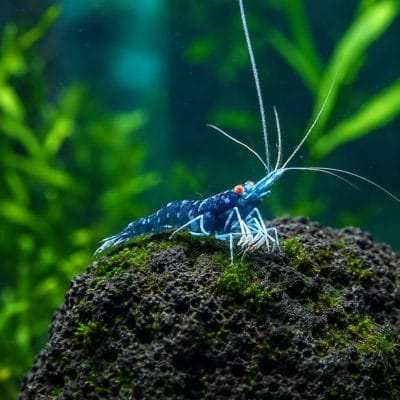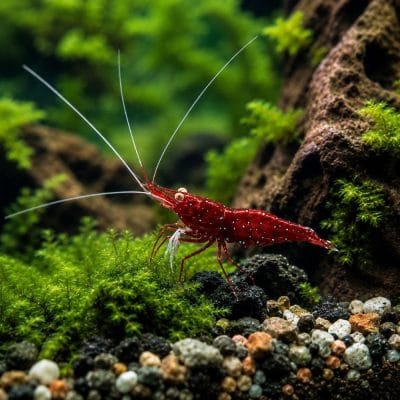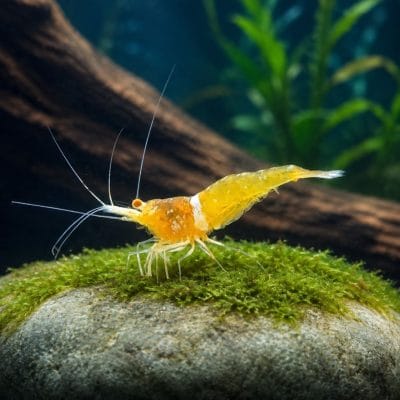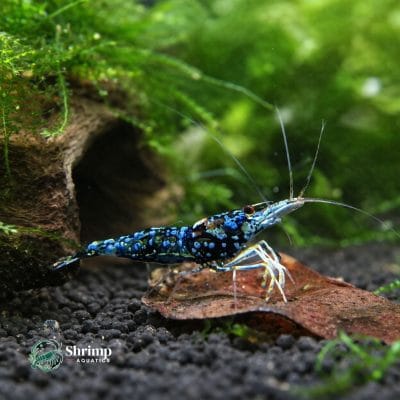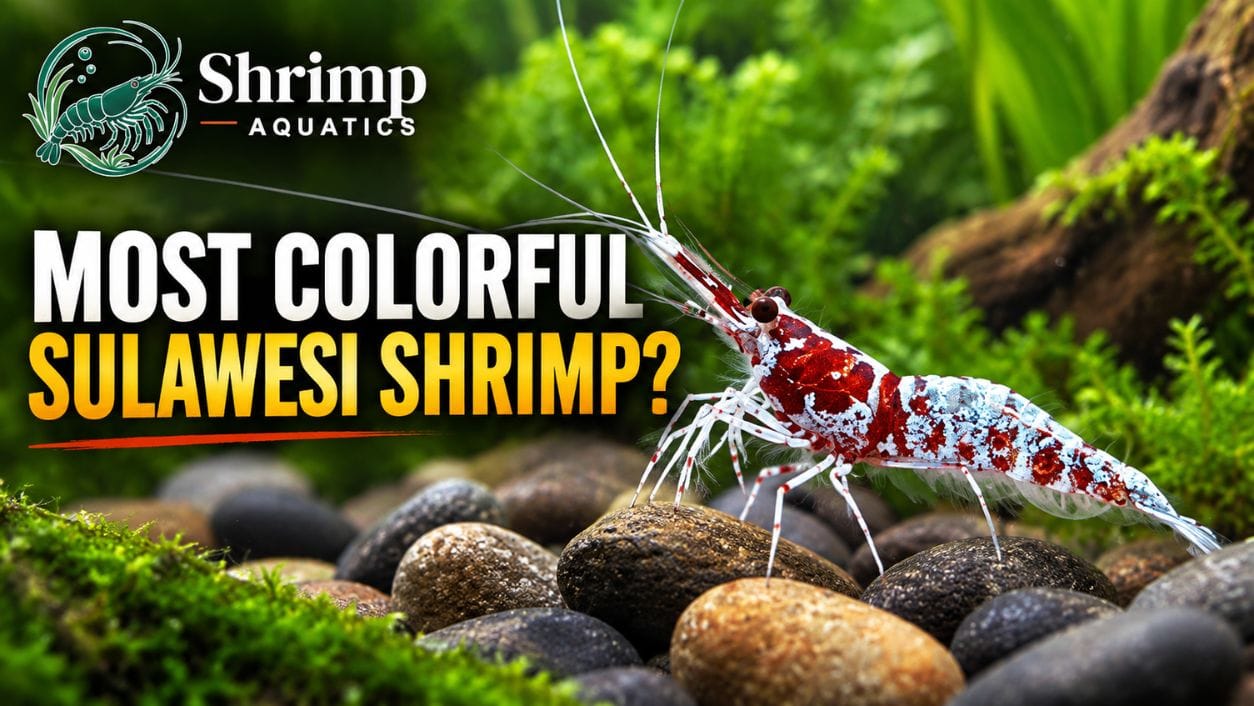
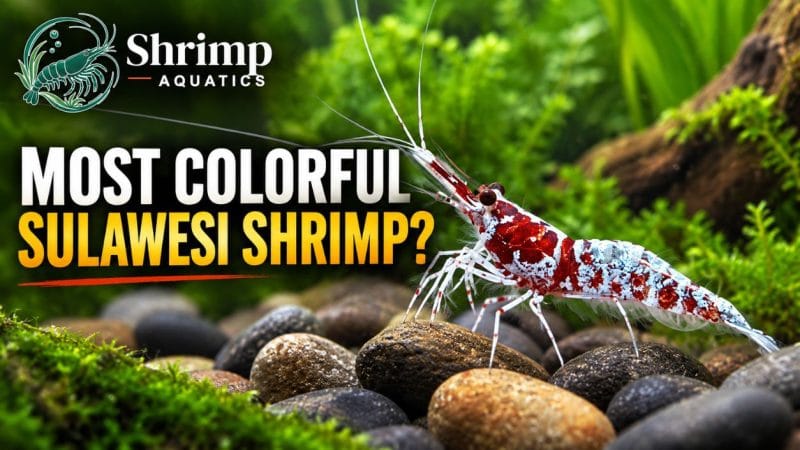
Pick the pattern you like best, then check it will still show in your tank. Nobody has ranked them. The 2009 revision that named most of these shrimp describes each species’ color pattern and then leaves it there, so “most colorful” is a judgment you make, not a figure you can look up.1 What you can do is read what each pattern actually is, and know which parts of it you’ll still be able to see in your own tank.
Has anyone actually ranked Sulawesi shrimp by color?
No. The closest thing to an authority here is the 2009 taxonomic revision of the Sulawesi lake Caridina, which recognised 15 species in the Malili lakes and six in Lake Poso. It says that a number of the lake species show unusual and flamboyant color patterns, and that those patterns are species specific. During sampling, most species could be told apart on color alone, juveniles included.1 That’s a long way from a ranking, and it’s as far as the evidence goes.
So when a care sheet tells you one species is the most colorful, it’s someone’s opinion with a price attached. We’d rather give you the descriptions and let you pick. One thing worth knowing before you read them: those descriptions were written from wild animals in their own lakes, not from shrimp that spent two days in a bag.
What each Sulawesi shrimp’s color pattern actually is
The 2009 taxonomic revision of the Sulawesi lake Caridina describes the color of six species the hobby actually sees. Those descriptions are below. The wording stays close to the original, because the original is the only version anyone wrote with the animal in front of them.1
| Species | Lake | Color pattern as described |
|---|---|---|
| Caridina dennerli | Matano | Body and most appendages dark red to purple, with several conspicuous white spots and one distinct white dot near the end of the abdomen; chela and carpus of the first and second legs bright white |
| Caridina woltereckae | Towuti | Large bodied, carrying the harlequin pattern the revision also gives C. spongicola, on rocks and only in Lake Towuti; no separate color paragraph appears for it in this paper |
| Caridina spinata | Towuti | Body crimson to deep red with orange or yellow appendages, often two to three yellow or orange transverse stripes and a few dots of the same color, antennules white |
| Caridina striata | Towuti | Body red with several lengthwise white stripes down the side, first and second legs partly conspicuously white |
| Caridina glaubrechti | Towuti | Brown with several white bands or patches all over the body, legs and tailfan included |
| Caridina caerulea | Poso | Appendages mainly bluish, with two conspicuous blue patches on each uropod of the tailfan |
Read those descriptions side by side and the honest summary is that three different animals win three different arguments. C. spinata is the only one described with red and yellow or orange on the same body. C. woltereckae carries the banded harlequin shrimp pattern, which puts the most separate blocks of color on one shrimp. C. dennerli is the one with the hardest contrast, a dark red body under white spots with two bright white front claws underneath it. Anyone weighing cardinal shrimp vs harlequin shrimp should also check which harlequin a listing means, because the harlequin shrimp sold in reef stores is a different animal.
Picking a Sulawesi shrimp when color is the reason you’re buying
Choose the kind of color you want first. The banded, white-gloved and red and yellow Sulawesi species don’t look alike across a room. A banded animal reads as pattern. A red animal with white gloves reads as motion, because the claws are what move while it grazes. A red and yellow animal reads as brightness.
Our pick
We’d pick C. dennerli, sold as the White Sock, Cardinal or one of its color lines, and we’d pick it for a practical reason rather than an aesthetic one. It’s the species behind most of the Sulawesi lines on our own stock list, which means you can buy it tank bred and add to the colony later. A Harlequin you cannot buy is not the most colorful shrimp in your tank.
There’s a second question behind the first one, and it’s the one that costs people money: is the name on the price list a species at all? On our own list, Blue Ghost, Yellow Ghost, Galaxy, Oiran and White Sock are all Caridina dennerli. Ask which species a name refers to before you pay for it, because plenty of the types of Sulawesi shrimp on a stock list are color lines wearing a trade name.
Why your shrimp may not look like the photo you bought from
Color in a shrimp is not paint. The pigment doing most of the work in a crustacean shell is astaxanthin, bound into proteins that can read as red, purple, blue, blue black or yellow. Animals don’t build carotenoids from nothing either. They take them up from what they eat.2 So what reaches your eye is a pattern the species is born with, shown through a shell that depends on the food, against whatever the animal is sitting on.
Background is the part keepers underestimate. In an eight week trial on cherry shrimp, pigmentation increased significantly as the background got darker. Shrimp fed astaxanthin were significantly more pigmented than those fed without it.3 That was Neocaridina in a controlled test, not a Sulawesi species in your living room. Treat it as the direction things move, not a result you’re promised. It still points the same way every experienced keeper points: dark rock, dark sand substrate, no bright quartz.
At Shrimp Aquatics, we commonly use Sula Sand Volcanic Rock in our Sulawesi systems because it is inert and has worked well in tanks where we need pH to remain steady. In our Blue Ghost, Yellow Ghost, White Ghost and Oiran systems, we’ve also seen color remain more consistent as the shrimp mature.
Settling in matters too. We wouldn’t judge a shrimp’s color on the day it arrives, or on the smallest animals in the bag. The usual rule is to leave a new colony alone for the first couple of weeks, apart from gentle water changes, and look at the color after that. If a settled colony that used to be dark fades over a few days instead, that’s a different problem, and the checks for Sulawesi shrimp losing color start with the water rather than the light.
Choosing on color never changes the water these shrimp need
No brightly colored Sulawesi shrimp is an easy one. Every lake species in the table sits in the same warm, alkaline, mineral poor water. Whichever pattern you picked, holding Sulawesi shrimp care parameters steady is most of the work in this tank.
| Difficulty | Advanced to expert |
|---|---|
| Temperature | 79-86°F (26-30°C) |
| pH | 7.5-8.5 |
| GH | 4-8 dGH |
| KH | 3-6 dKH |
| TDS | 150-250 ppm |
| Nitrate | Under 10 ppm |
| Substrate | Inert substrate and hardscape, never an acid buffering soil |
| Tank | Mature and stable, with grazing surfaces already grown in |
If your tank can’t hold that steadily, the color question is premature, and a brighter species will not survive the same mistake a duller one didn’t. When it can, the tank-bred Sulawesi shrimp lines we keep are all sold against those numbers, not a photograph.
What to confirm about a colorful Sulawesi line before you order it
Color is the one thing about a shrimp you can be sold and then not receive, because it depends on the shell, the food and what the animal is standing on. Before you order, get these answers.
- Which species the trade name refers to, in words, not just the line name on the label.
- Whether the shrimp are tank bred, and what water they’re being kept in right now.
- What size and age is shipping, since we wouldn’t judge a line’s color on its smallest animals.
- Whether the photograph shows the actual animals or a representative specimen.
- Do not buy on a photo taken over black sand if your own tank has pale gravel. You will not get that shrimp.
Get those five answered and the color you paid for is mostly the color you’ll see. Miss them, and you’ll spend the difference finding out which of the three arguments above you actually cared about.
References
3 Sources
- Radiation of endemic species flocks in ancient lakes: systematic revision of the freshwater shrimp Caridina from the ancient lakes of Sulawesi, Indonesia, with the description of eight new species, Raffles Bulletin of Zoology 57(2): 343-452, Lee Kong Chian Natural History Museum, 2009.
- Astaxanthin from Crustaceans and Their Byproducts: A Bioactive Metabolite Candidate for Therapeutic Application, Marine Drugs 20(3): 206, MDPI, 2022.
- Effect of Dietary Astaxanthin and Background Color on Pigmentation and Growth of Red Cherry Shrimp, Neocaridina heteropoda, Journal of Fisheries and Environment 38(1): 1-7, Kasetsart University, 2014.

Ready to get started?
Shop our Freshwater Shrimp collection
8 products available · Live Arrival Guarantee
Featured Sulawesi Shrimp
Sulawesi Orange Eyes White Sock
Caridina dennerli
Advanced · 79–86°F · pH 7.5–8.5
From $19.99View ProductSulawesi Orange Eyes Yellow Ghost
Caridina dennerli
Advanced · 79–86°F · pH 7.5–8.5
$120.00View Product