
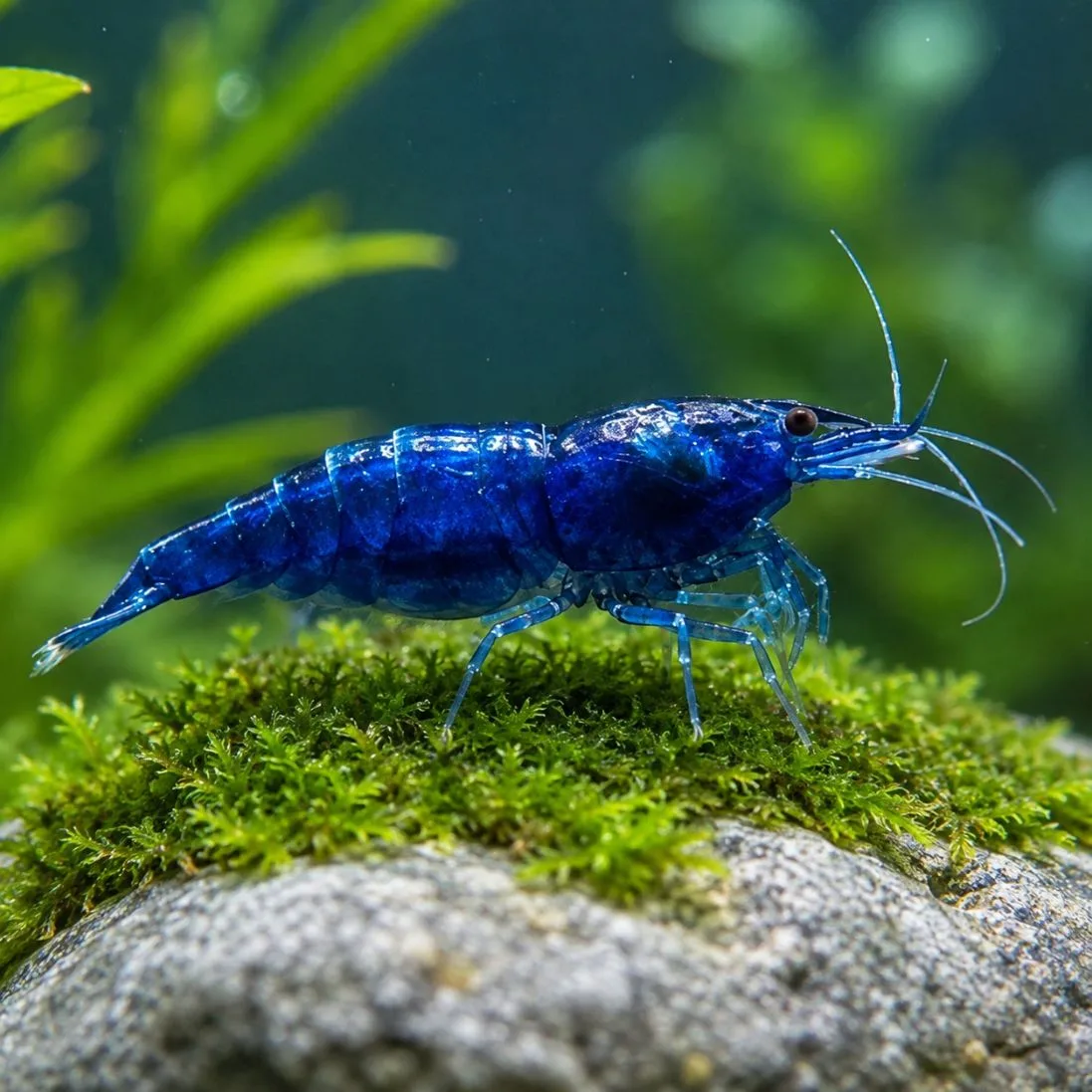
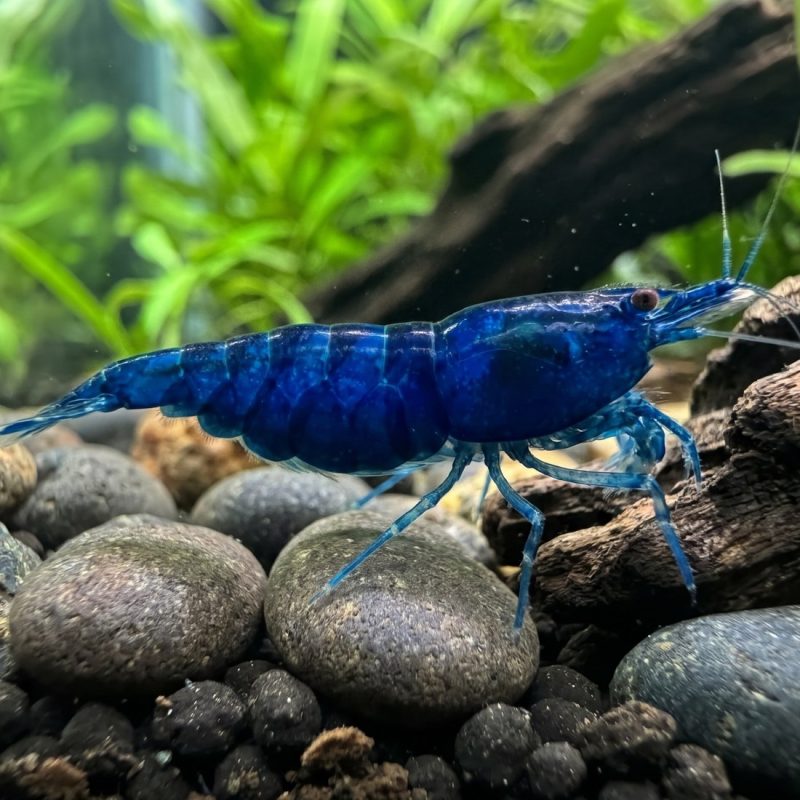
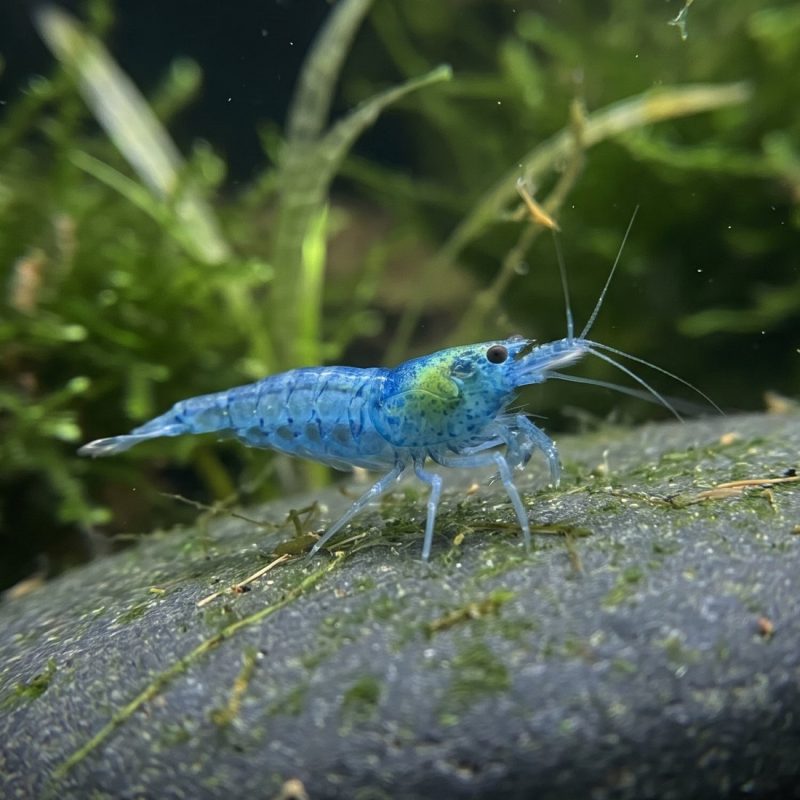
Blue Dream is a blue color line of Neocaridina davidi, the same species as the common cherry shrimp. It’s one of the easier freshwater shrimp to keep once the tank is cycled and steady, and a reasonable first shrimp for someone already running a stable aquarium.
Does your water already suit Blue Dream shrimp?
Water fit is the first decision. Blue Dream is kept in the same range as every other Neocaridina color line, shown below. Your tank has to hold these values steadily, not drift toward them.
| Difficulty | Often beginner-friendly in a stable, suitable tank |
|---|---|
| Temperature | 72-77°F (22-25°C) |
| pH | 6.8-7.6 |
| GH | 6-10 dGH |
| KH | 2-5 dKH |
| Tank for a small colony | About 5 gal (19 L) or larger; stability matters more than the nominal minimum |
| Diet | Biofilm and algae plus appropriate supplemental foods |
| Behavior | Peaceful |
Treat these numbers as a guide, not a pass-fail test. Neocaridina are easy shrimp, and a tank that sits a little outside one of them can still work, as long as it isn’t far off.
Test your water before you order
Measure temperature, pH, GH and KH now, not on the day the box lands. If a value sits far outside the range above, correct it gradually over several days and let the tank settle first, because a fast move in pH or hardness is itself the shock you want to avoid. If you’re unsure, email contact@shrimpaquatics.com with your pH, GH, KH, temperature, tank size, cycle status and current livestock.
What you receive from our Blue Dream tanks
At Shrimp Aquatics, our Blue Dream are bred and raised in our own tanks in Vietnam, not collected from the wild, and stock ships from Vietnam. The shrimp we ship are juveniles to young adults, 0.75-1 inch (1.9-2.5 cm) long. Adults reach about 1-1.25 inch (2.5-3.2 cm), and in our tanks Neocaridina live about 1-2 years.
We don’t sort our Neocaridina into color grades; each line is sold as a single line. Color depth varies between individuals in every Neocaridina line, so we don’t promise a depth of color for an order. For orders where the shrimp are large enough to be sexed reliably, we pack more females than males. Smaller juveniles can’t be sexed reliably, so no ratio applies to them, or to an order of a single shrimp.
Prepare the tank before your Blue Dream shrimp arrive
- The tank is fully cycled, with ammonia and nitrite both reading zero on your own test and a biological filter established enough to keep them there. A calendar alone doesn’t prove a cycle.
- Temperature, pH, GH and KH have held steady across several days, not just read correctly once.
- Tap water, if you use it, is dechlorinated and tested. Local supply varies too much for anyone to call it fine without your numbers.
- Grazing surfaces are established, such as mature plants, seasoned hardscape or leaf litter, so the colony has biofilm and algae to work on from day one.
- Check the formulation of anything you’ve dosed recently: copper and some fish medications can harm shrimp, so read the full ingredient list, not just the front of the bottle.
- If you want shrimplets to survive, the filter intake is guarded or you’re running a sponge filter.
Which tankmates put a Blue Dream colony at risk
Blue Dream shrimp are peaceful and defend nothing, so compatibility is really a question of what else will eat them. Small tetras and rasboras are often peaceful, but many eat shrimplets. Small Corydoras may coexist in some larger, well-planted tanks, but they can eat shrimplets and compete with the colony for food on the bottom. Otocinclus carry a generally lower risk with adult shrimp, though they’re sensitive and need a mature tank with grazing of their own. Bettas, larger fish and cichlids are a material predation risk and we don’t describe them as shrimp safe. Whatever a fish’s reputation, its temperature and water chemistry must overlap with the range above before compatibility is worth discussing. Assassin snails prey on other snails, so check the species rather than assuming every snail is safe.
Mixing Blue Dream with other Neocaridina color lines
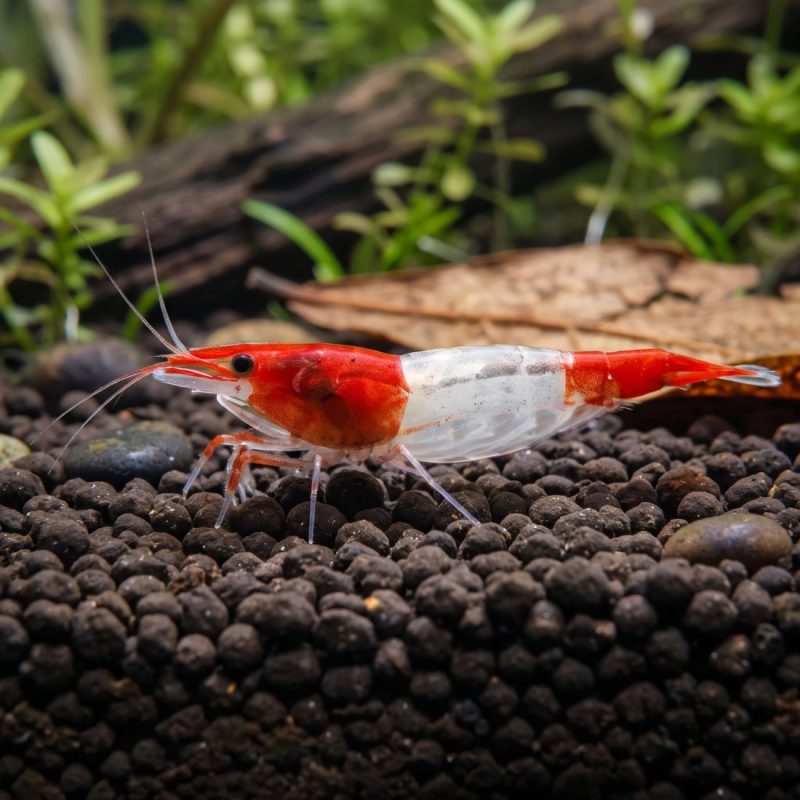
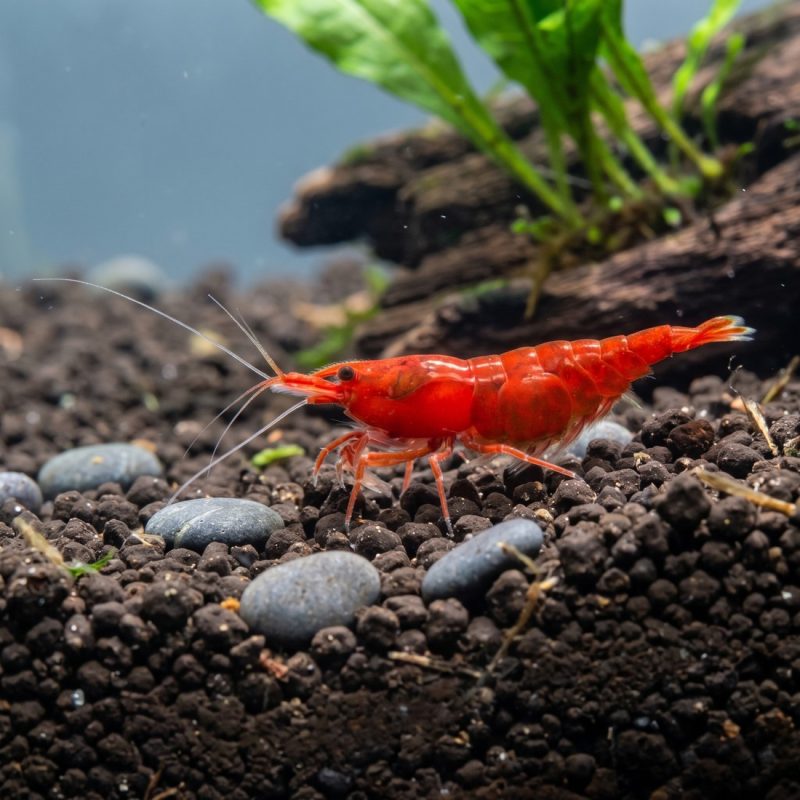
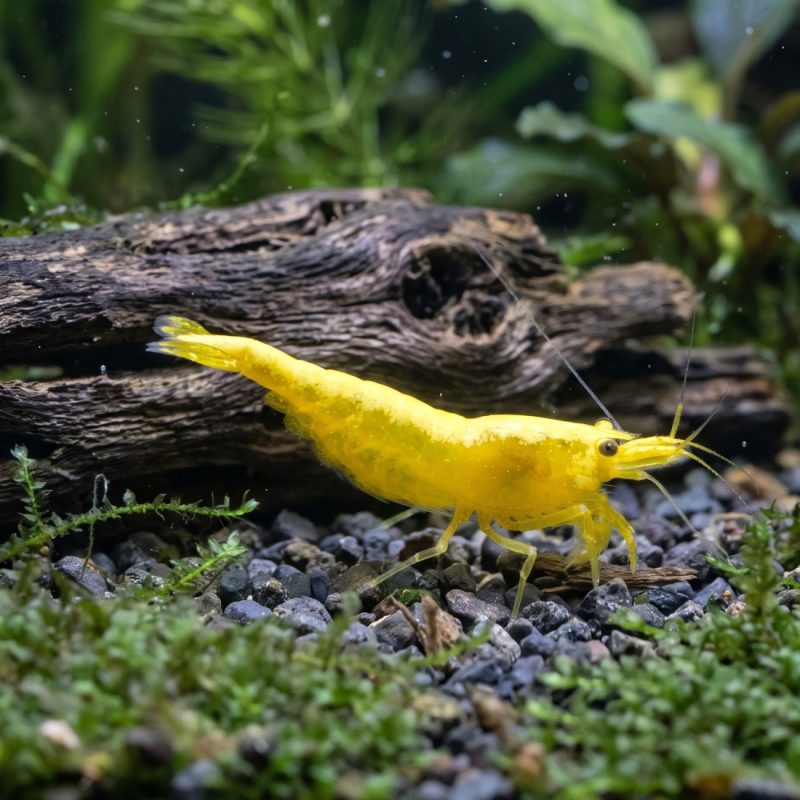
Blue Dream crosses with the other Neocaridina davidi color lines, and mixing them can produce wild type brown offspring, so we don’t promise color stability in a mixed tank. At Shrimp Aquatics, we keep each Neocaridina color line in its own tank. When lines share a tank, the young that come from crosses lose their color and turn clear. If you expect to add more Neocaridina shrimp to this aquarium later, choose one color line and stay with it.
What to do on the day your Blue Dream shrimp arrive
Follow the instructions packed with your order first, because packing method, transit duration and species all change what’s right that day. Shrimp Aquatics’ current shipment protocol, for eligible long distance orders arriving in a sealed transport bag, is to equalize temperature and then transfer the shrimp across without adding shipping water to the aquarium. Never pour transport water into your tank. If a bag has opened or leaked, or anything differs from the instructions supplied, email contact@shrimpaquatics.com before transferring them.
Feeding a new Blue Dream colony
In an established tank, new shrimp graze biofilm and algae off the glass, plants and hardscape alongside the food you add. Offer appropriate supplemental shrimp food sparingly at first and take out what’s left, so the tank isn’t carrying waste it wasn’t carrying before.

There are no reviews yet.