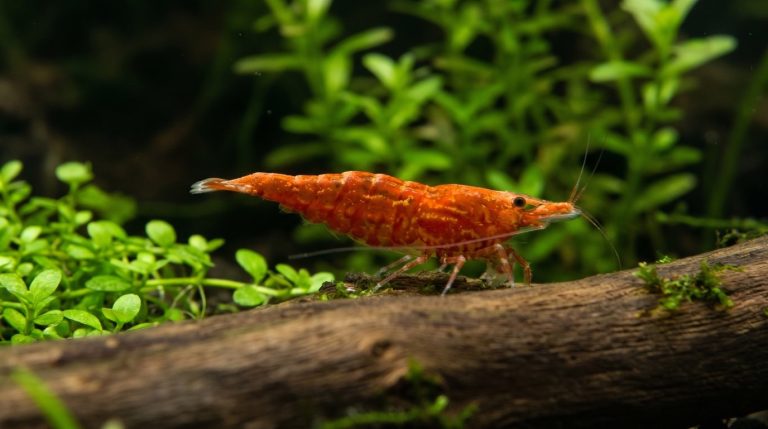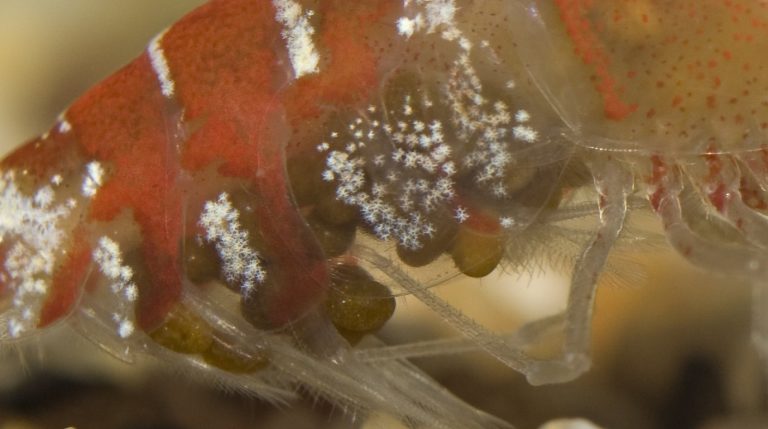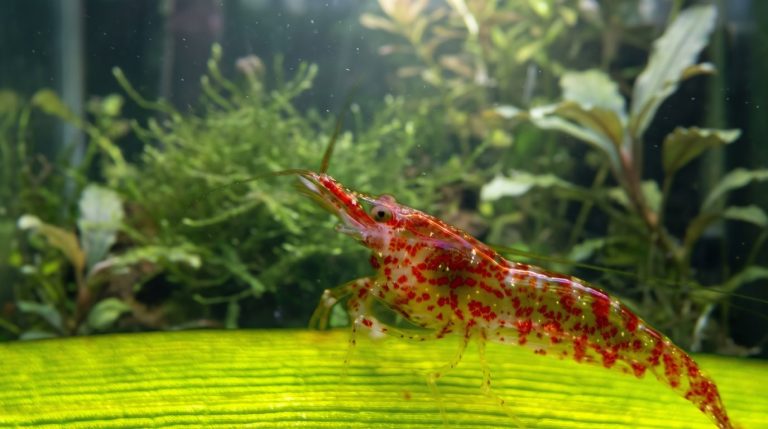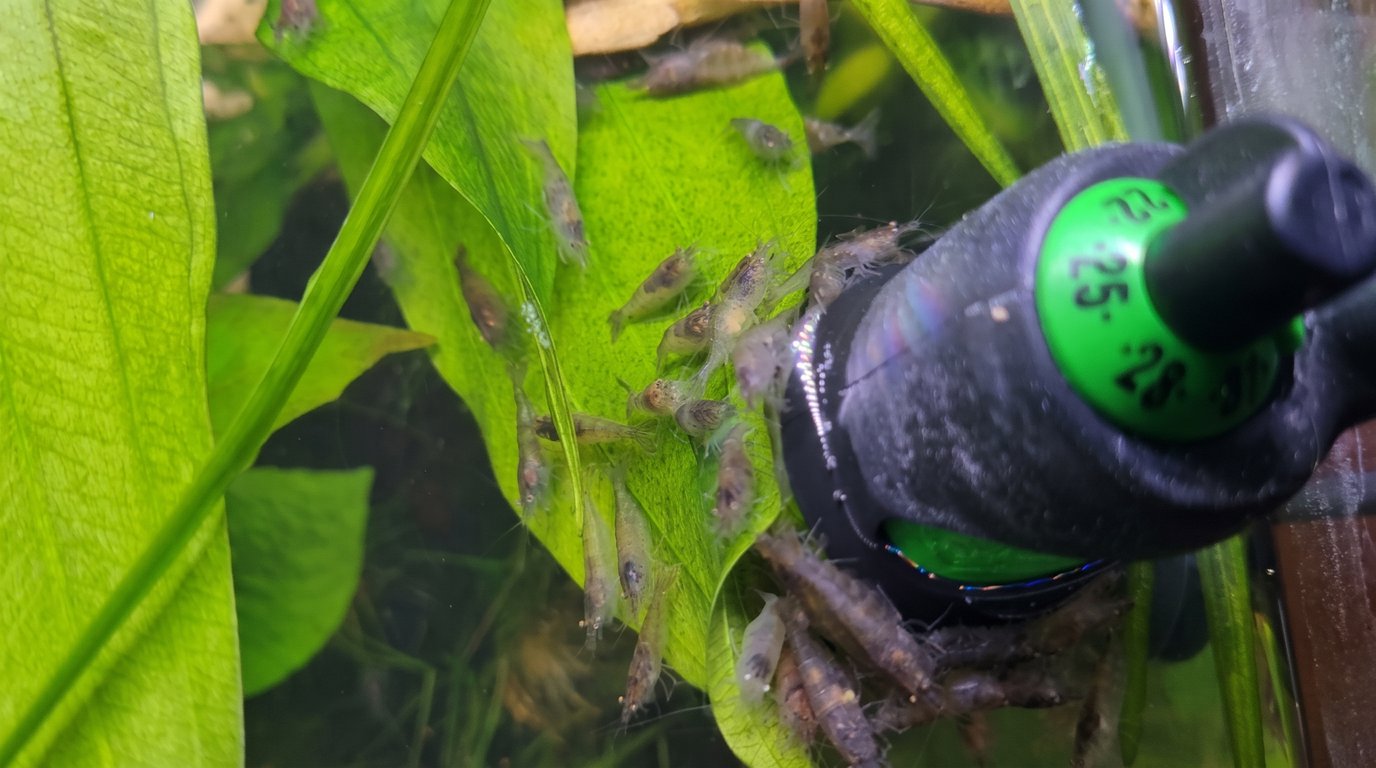
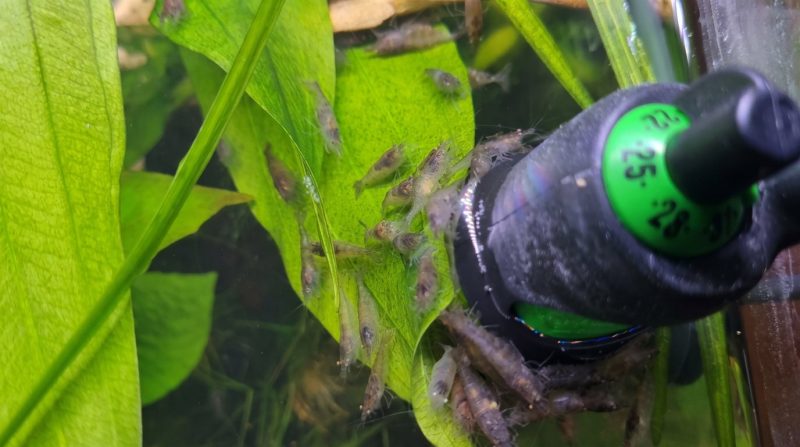
Keep Neocaridina shrimp at 72-77°F (22-25°C), and keep the water steady once it’s there. Cherry shrimp handle some warmth: in a 90-day lab study they grew, matured and bred at 82°F (28°C), but at 90°F (32°C) every female carrying eggs lost them.1 They also live in cooler rooms than most people expect. What cool water costs you is breeding speed. For most keepers, this part of Neocaridina shrimp care comes down to the room. Does your tank need a heater, and what do you do when summer pushes it up?
Why steady water matters more than the exact cherry shrimp temperature
A cherry shrimp tank that holds one temperature inside 72-77°F (22-25°C) is doing its job, whether it sits at 73°F or 76°F. What hurts shrimp is the water moving fast, so every change, up or down, should be a slow one.
Treat the range as a guide, not a pass-fail test. Neocaridina are easy shrimp, and a tank that sits a little outside it can still work, as long as it isn’t far off. Temperature works like the other Neocaridina shrimp water parameters. A reading just outside the range can work. A sudden jump to reach it is the bigger risk.
So how do you know where your tank sits? Put a thermometer in the water and read it at different times of day, because a room that feels comfortable can still let a small tank drift. The number on the thermometer, not the thermostat on the wall, is what your shrimp live in. Get the tank holding a steady temperature in the range before you add tank-bred Neocaridina shrimp.
Is 72 or 78 degrees okay for cherry shrimp?
Yes, 72°F is fine for cherry shrimp: it’s the bottom of the 72-77°F (22-25°C) range. If your tank sits there all year, there’s nothing to fix.
Is 78 degrees too hot? It’s one degree above the range. It’s also below the 82°F (28°C) at which cherry shrimp in a 90-day lab study grew, matured and bred, the best result of the three temperatures that study tested.1 A tank that reaches 78 on a warm afternoon doesn’t call for an emergency. Watch the thermometer to make sure it doesn’t keep climbing, and don’t heat the tank that warm on purpose.
Below 72°F is a different question, and it’s mostly about breeding.
How hot is too hot for Neocaridina shrimp?
For Neocaridina shrimp, heat becomes a problem for breeding well before it threatens the shrimp. In the 90-day study, most shrimp raised at 90°F (32°C) survived and grew. But every female that carried eggs at that temperature lost them, even though the eggs were fertilized.1 A second lab study raised females at 91°F (33°C), and none of them spawned in 200 days, going by the study’s abstract.2 So yes, real heat stops breeding.
What about the mid 80s? The next observation comes from our own tanks, and shrimp in another tank can respond differently. Shrimp Aquatics keeps a small group of Neocaridina in some of its Sulawesi shrimp tanks, which run as warm as 86°F (30°C). The shrimp live and breed there, in the same alkaline, mineral-rich water as the rabbit snails. That’s a small group sharing another animal’s tank. It’s no reason to keep a cherry shrimp colony that warm. At 86°F and a little above it, keepers’ own accounts disagree, with some describing breeding stopping or shrimp dying, so “hardy” never means “any heat”.
Warm water brings two other problems. It holds less dissolved oxygen than cool water.3 And the ratio of toxic un-ionized ammonia to the less harmful ammonium roughly doubles for each 18°F (10°C) rise, according to the EPA’s freshwater ammonia criteria.4 Heat and a dirty tank make a bad pair, so keep ammonia and nitrite at 0 all summer.
Can cherry shrimp live without a heater?
Yes, many cherry shrimp live without a heater, as long as the room keeps the tank near the range. Cherry shrimp are widely kept in unheated tanks at ordinary room temperatures, anywhere from about 60°F (16°C) up to 80°F (27°C). They live in those tanks, and many of them breed. What cooler water changes is how fast they breed, not whether they survive.
That doesn’t make a cold room as good as the range. If your tank spends the winter well below 72°F, a heater is how you get it back.
Do cherry shrimp need a heater to breed?
Not if your room holds the tank at 72-77°F (22-25°C). In a cooler room, breeding slows.
A lab study compared 68, 75 and 82°F (20, 24 and 28°C), and survival stayed above 90 percent at all three.5 In the coolest water, though, the females’ ovaries matured later, and fewer of them were carrying eggs by the end of the test, going by the study’s abstract.5 If you want the colony to grow, a heater that holds the tank in the range earns its place.
How cold can Neocaridina shrimp survive?
Cherry shrimp living wild in Europe have turned up in surprisingly cold water. In Hungary, researchers found a few shrimp in about 43°F (6°C) water in autumn and winter, in a brook more than half a mile below a warm thermal pond.6 In Germany, they’ve been collected from a stream warmed by a power plant’s cooling water.7 Both finds come from shrimp living near a source of warm water, and neither shows them breeding in the cold. Read them as how far a few wild shrimp have been found from the range, never as a temperature to keep a tank at.
How temperature changes cherry shrimp eggs, young and color
Warmer water shortens the wait for eggs to hatch. In the 90-day lab study, eggs took about 21 days to hatch at 75°F (24°C) and about 15 days at 82°F (28°C).1 That’s useful for knowing roughly when a berried female will drop her shrimplets. It’s no reason to turn the heater up, because the same study lost every clutch at 90°F (32°C). A longer wait in a cooler tank is a normal part of Neocaridina shrimp breeding, not a sign that something is wrong.
Can you get more females by changing the temperature? Not reliably. One lab study compared 68, 73 and 79°F (20, 23 and 26°C) and found more male young in the warmer water, with mostly males at 79°F.8 The 90-day study raised young at 75, 82 and 90°F (24, 28 and 32°C) and found the share of females was about the same at all three.1 With two studies pointing different ways, temperature isn’t a dependable way to steer the male-to-female mix in your colony.
Color holds steady across the usual temperatures. In the lab study at 68, 75 and 82°F (20, 24 and 28°C), female body color and carotenoid pigment content didn’t differ between temperatures, going by its abstract.5
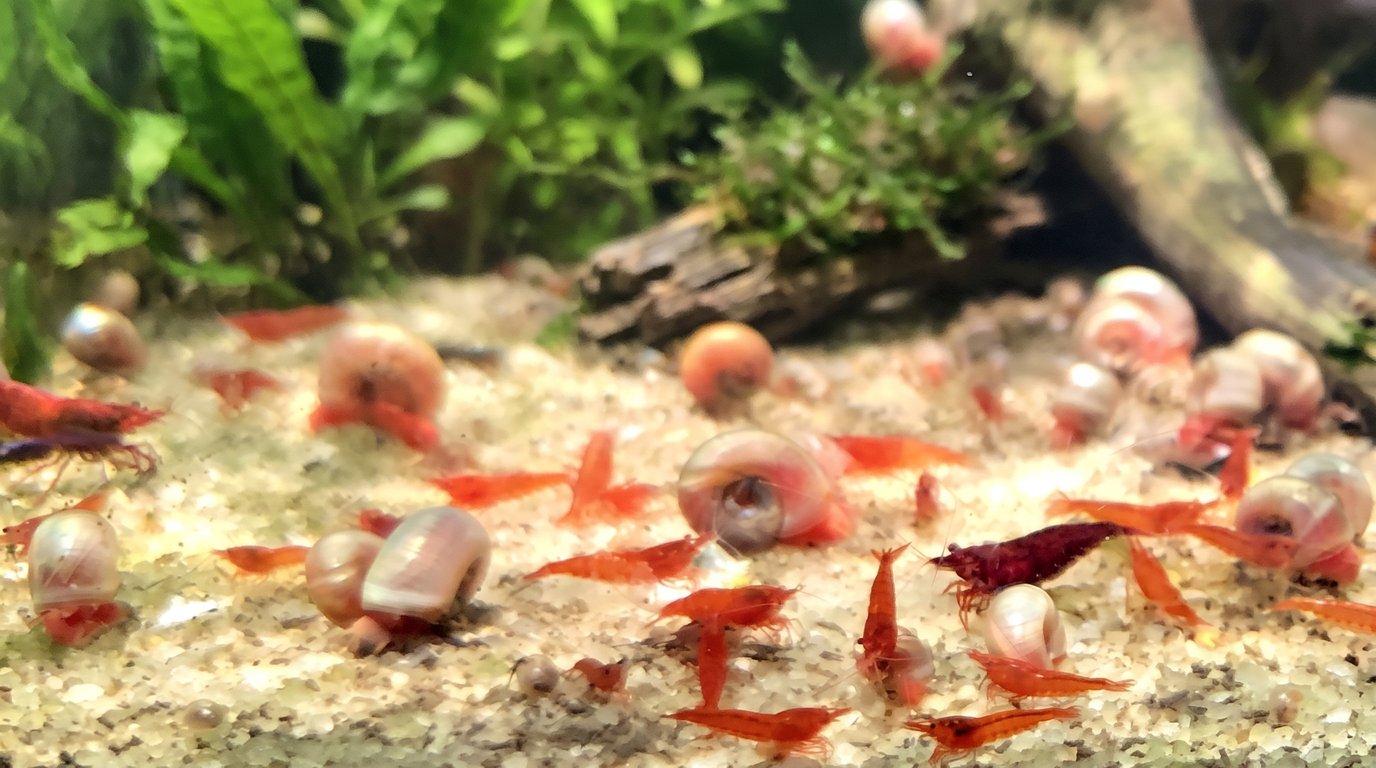
What about lifespan? No study has tied temperature to how long Neocaridina live, so keeping the tank cooler isn’t a proven way to make your shrimp live longer. Either way, cherry shrimp lifespan is short, so a colony keeps going by breeding, not by any one shrimp living longer.
How to choose and run a heater for a cherry shrimp tank
Pick a heater by your tank’s volume and by how far the water has to sit above the coldest your room gets. Manufacturers size them that way: one maker’s chart recommends more watts as the tank gets bigger and as the gap between the water and the coldest room temperature widens.9 If your room never pulls the tank below the range, you can skip the heater altogether.
Don’t trust the dial as a thermometer. One heater manual lists a dial that isn’t calibrated as a reason the water doesn’t reach the temperature you set.9 Read a separate thermometer instead. Checked every day, it also catches a heater that fails in either direction, too hot or too cold.
Heater manuals agree on a few habits worth keeping:
- Let a heater sit in the water for about 30 minutes before you switch it on, so its thermostat can settle to the water temperature.9
- Switch off and unplug the equipment before you put your hands in the tank.9
- Unplug the heater before every water change.10
- Keep the water above the heater’s minimum water line, and check after evaporation that it still is.11
- Let a heater cool after unplugging it before you take it out of the water.10
- Use a lid, which limits heat loss and helps the heater hold the temperature.10
A water change is the easiest way to give a heated tank a sudden drop. Bring the new water to the tank’s temperature before it goes in, so the change doesn’t move the thermometer.
What to do when a cherry shrimp tank gets too hot in summer
When the thermometer climbs above 77°F (25°C) and keeps going, start taking heat out of the cherry shrimp tank. Go by the reading in the water, not the date on the calendar. One tank can heat up in a heat wave while another, in a cooler room, never moves.
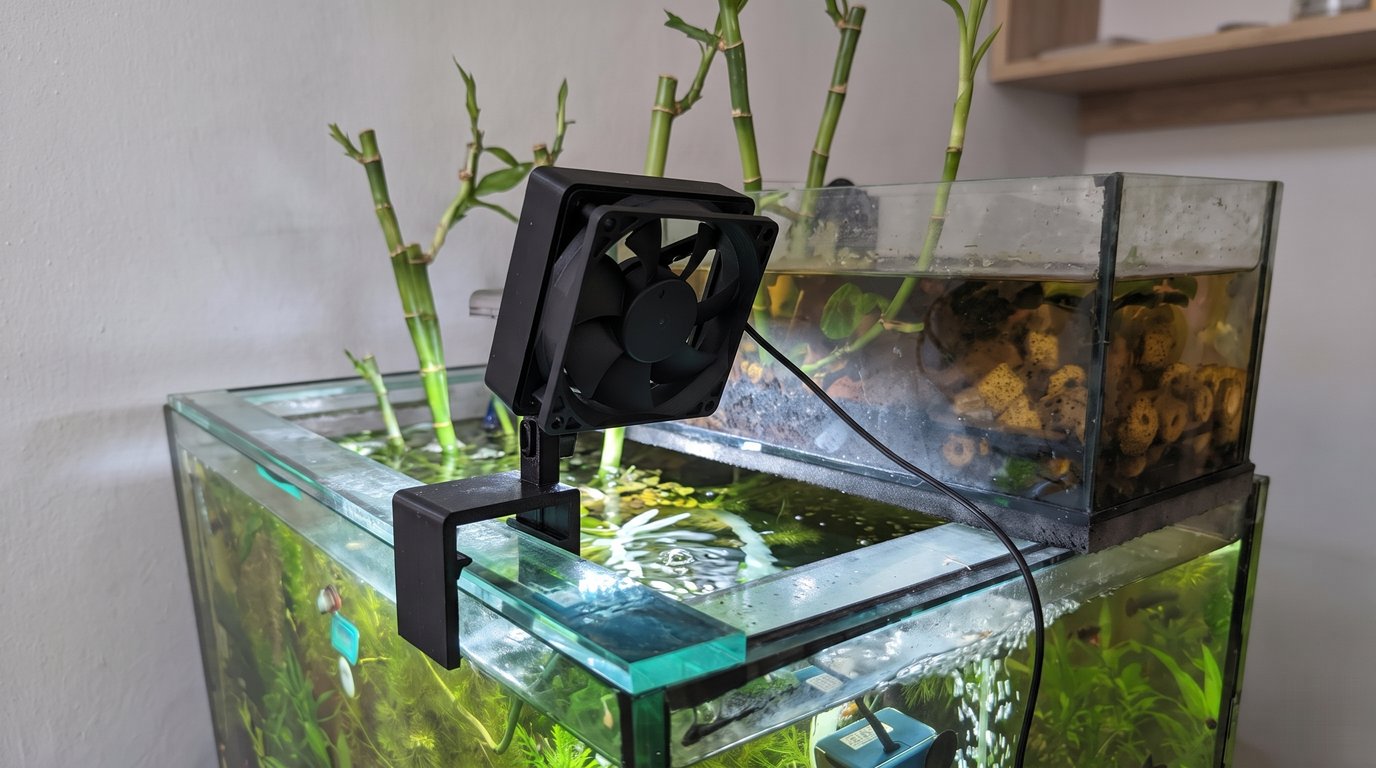
First, cut what adds heat. Turn the heater down or unplug it, and keep the tank out of direct sun. Then move air across the water. A fan blowing over the surface cools the tank by evaporation. One fan maker gives a drop of up to about 7°F (4°C) as its maximum, so treat that as a ceiling.12 More evaporation means the water level drops faster, so top the tank up with the same kind of water it already runs on, conditioned and at the tank’s temperature.
Bring the temperature down gradually. A sudden big drop is a stress of its own, even when it’s heading toward the range. The number to keep well away from is 90°F (32°C), where breeding failed in the lab.1
References
12 Sources
- Tropea, Stumpf and López Greco, Effect of Temperature on Biochemical Composition, Growth and Reproduction of the Ornamental Red Cherry Shrimp Neocaridina heteropoda heteropoda (Decapoda, Caridea), PLOS ONE 10(3): e0119468, 2015.
- Balina, Temperoni, López Greco and Tropea, Losing Reproduction: Effect of High Temperature on Female Biochemical Composition and Egg Quality in a Freshwater Crustacean with Direct Development, the Red Cherry Shrimp, Neocaridina davidi (Decapoda, Atyidae) (abstract), The Biological Bulletin 234(3): 139-151, 2018.
- Dissolved Oxygen and Water, U.S. Geological Survey, Water Science School.
- Aquatic Life Ambient Water Quality Criteria for Ammonia, Freshwater (2013), U.S. Environmental Protection Agency, Office of Water, April 2013.
- Tomas, Sganga, Battista and López Greco, Body coloration, carotenoid content, spermatophore quality and biochemical parameters by effect of temperature in the caridean shrimp Neocaridina davidi (Atyidae) (abstract), Acta Zoologica 102: 297-309, 2020.
- Weiperth and colleagues, Occurrence of non-native red cherry shrimp in European temperate waterbodies: a case study from Hungary, Knowledge and Management of Aquatic Ecosystems, 2019.
- Klotz and colleagues, Two Asian fresh water shrimp species found in a thermally polluted stream system in North Rhine-Westphalia, Germany, Aquatic Invasions 8(3): 333-339, 2013.
- Serezli, Atalar, Hamzacebi, Kurtoglu and Yandi, To what extent does temperature affect sex ratio in red cherry shrimp, Neocaridina davidi? (abstract), Fresenius Environmental Bulletin 26(12): 7575-7579, 2017.
- HeatUp 25, 50, 100, 150, 200, 300, 400 operating instructions, Oase GmbH.
- Precision submersible heater instructions (ML90648-901), United Pet Group (Marineland), 2013.
- Aqueon Pro Heaters Instruction Manual, Aqueon (Central Garden & Pet), August 2020.
- arctic breeze operation manual, AB Aqua Medic GmbH.