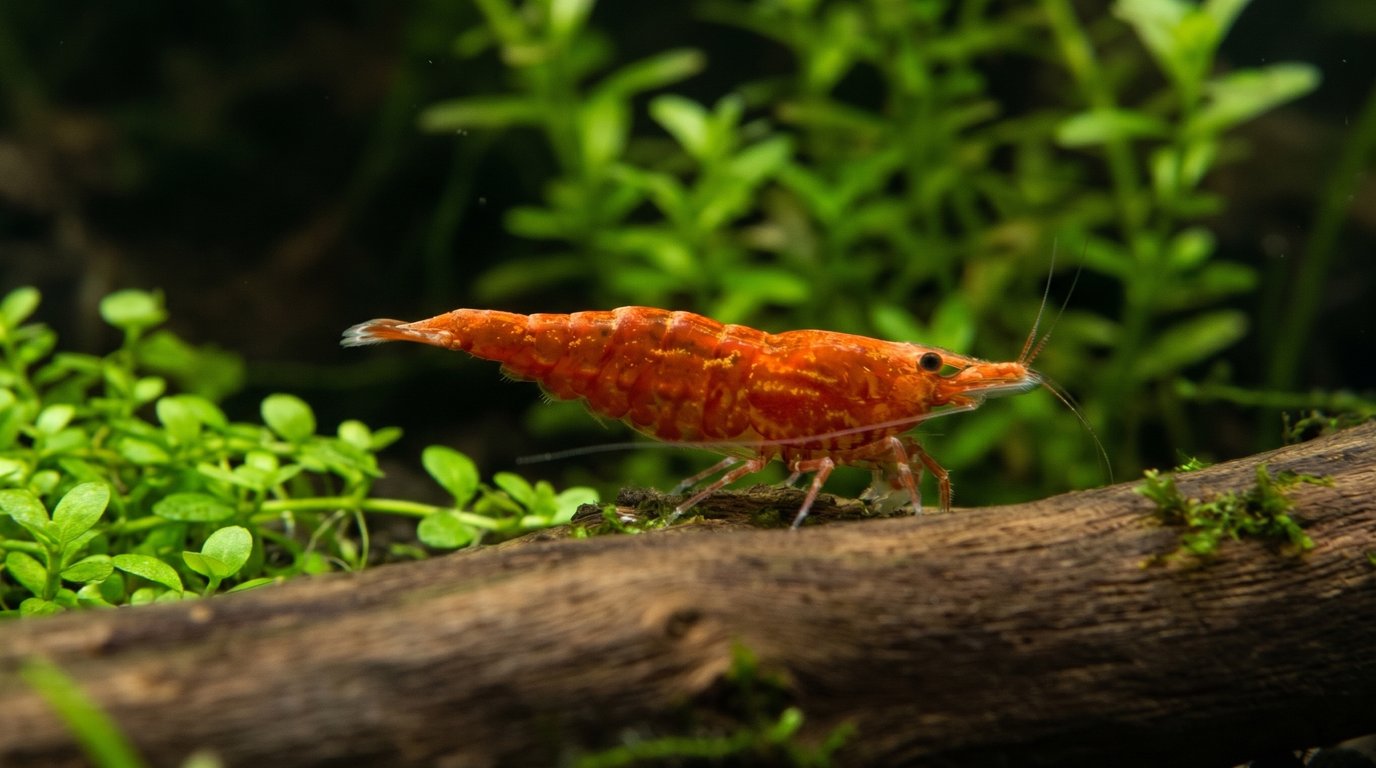
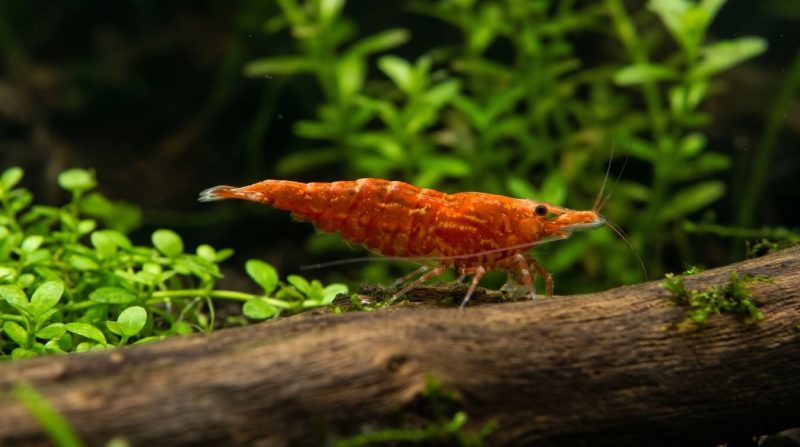
Neocaridina shrimp water parameters come down to six numbers: 72-77°F (22-25°C), pH 6.8-7.6, GH 6-10 dGH and KH 2-5 dKH, with ammonia and nitrite at 0. A steady tank matters more than an exact reading, so make every change slowly. None of this helps a tank that isn’t cycled yet, so in Neocaridina shrimp care the tank is cycled before any shrimp go in.
Which numbers should a cherry shrimp tank test at?
Test a cherry shrimp tank for six things: temperature, pH, GH, KH, ammonia and nitrite.
| Parameter | Range | What it does |
|---|---|---|
| Temperature | 72-77°F (22-25°C) | Sets growth and breeding, and how much oxygen the water holds |
| pH | 6.8-7.6 | Decides how much of any ammonia is in its toxic form |
| GH | 6-10 dGH | Calcium and magnesium; supplies the calcium for each new shell |
| KH | 2-5 dKH | Buffers the water so pH doesn’t swing |
| Ammonia | 0 | Waste that damages gills; any reading is too much |
| Nitrite | 0 | Made from ammonia by the filter bacteria; also damages gills |
Treat these numbers as a guide, not a pass-fail test. Neocaridina are easy shrimp, and a tank that sits a little outside one of them can still work, as long as it isn’t far off. Ammonia and nitrite get no leeway at all.
The right time to add tank-bred Neocaridina shrimp is after the tank is cycled and two or three tests in a row have come back inside the table.
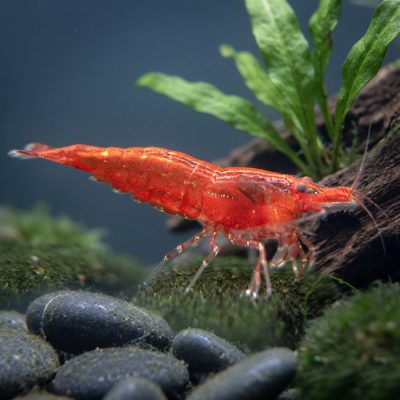
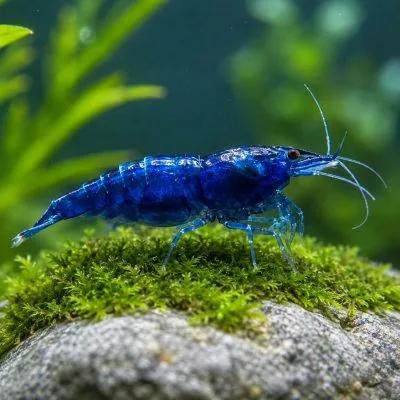
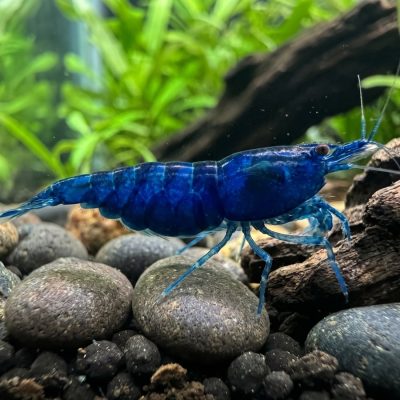
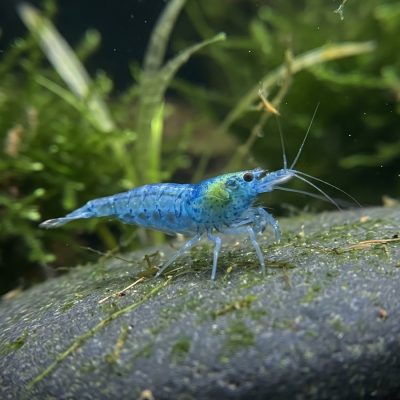
The same range fits every color line, from Sakura to Blue Dream, since the types of Neocaridina shrimp in the trade differ in color, not in the water they need.
Only temperature has breeding studies behind it. No published study sets a Neocaridina target for pH, GH or KH, so those three are a practical target range, not a laboratory optimum.
What temperature does the water need to be for cherry shrimp?
Keep the water for cherry shrimp at 72-77°F (22-25°C). They take some warmth above that: in a 90-day laboratory study, shrimp raised at 82°F (28°C) grew, reached maturity and bred.1 At 90°F (32°C) in the same study, every female that carried eggs lost them, even though the eggs were fertilized.1 A second study raised females at 91°F (33°C), and none of them carried eggs in 200 days.2
Breeding gives out before the shrimp do. In the first study, shrimp survived and grew at every temperature tested, up to 90°F (32°C), but it was only at 90°F that every clutch was lost.1 Eggs are the first thing heat costs you.
Warm water also holds less dissolved oxygen than cool water.3 That’s one more reason not to let a shrimp tank drift warm in summer. If it does, bring the cherry shrimp temperature back down slowly.
Temperature may also shape the young. A laboratory study compared 68, 73 and 79°F (20, 23 and 26°C). The offspring shifted toward males as the water got warmer, and those raised at 79°F (26°C) were mostly male.4 The same study saw more eggs and better survival at 79°F,4 so it’s no case for a cold tank. It’s one study, and 72-77°F is still the range to keep.
Is 7.8 or 8.2 pH too high for cherry shrimp?
Yes. The pH range for cherry shrimp is 6.8-7.6, so 7.8 and 8.2 both sit above it. Neither is a pH to aim for. The leeway in the table covers a reading a little outside the range, not one far outside it, and we wouldn’t call any reading above 7.6 safe.
Why does pH matter so much? Ammonia in water splits between the ammonium ion and un-ionized ammonia, and the un-ionized form is the one that does the harm. The ratio of un-ionized ammonia to ammonium rises tenfold for each full pH unit, and warmer water raises it as well.5 By our arithmetic from that rule, the same ammonia reading carries about four times as much of the toxic form at pH 8.2 as at pH 7.6.
That’s the practical point if your tap water is hard and high in pH: the higher it sits, the less room there is for any ammonia at all. If your tap water reads above the range, one way down is to cut it with remineralized RO water. Spread that over several water changes so the drop stays gradual.
What GH and KH do cherry shrimp need?
Cherry shrimp need GH at 6-10 dGH and KH at 2-5 dKH. GH measures hardness, mostly calcium and magnesium, while KH measures alkalinity, the bicarbonate and carbonate that buffer the water.6
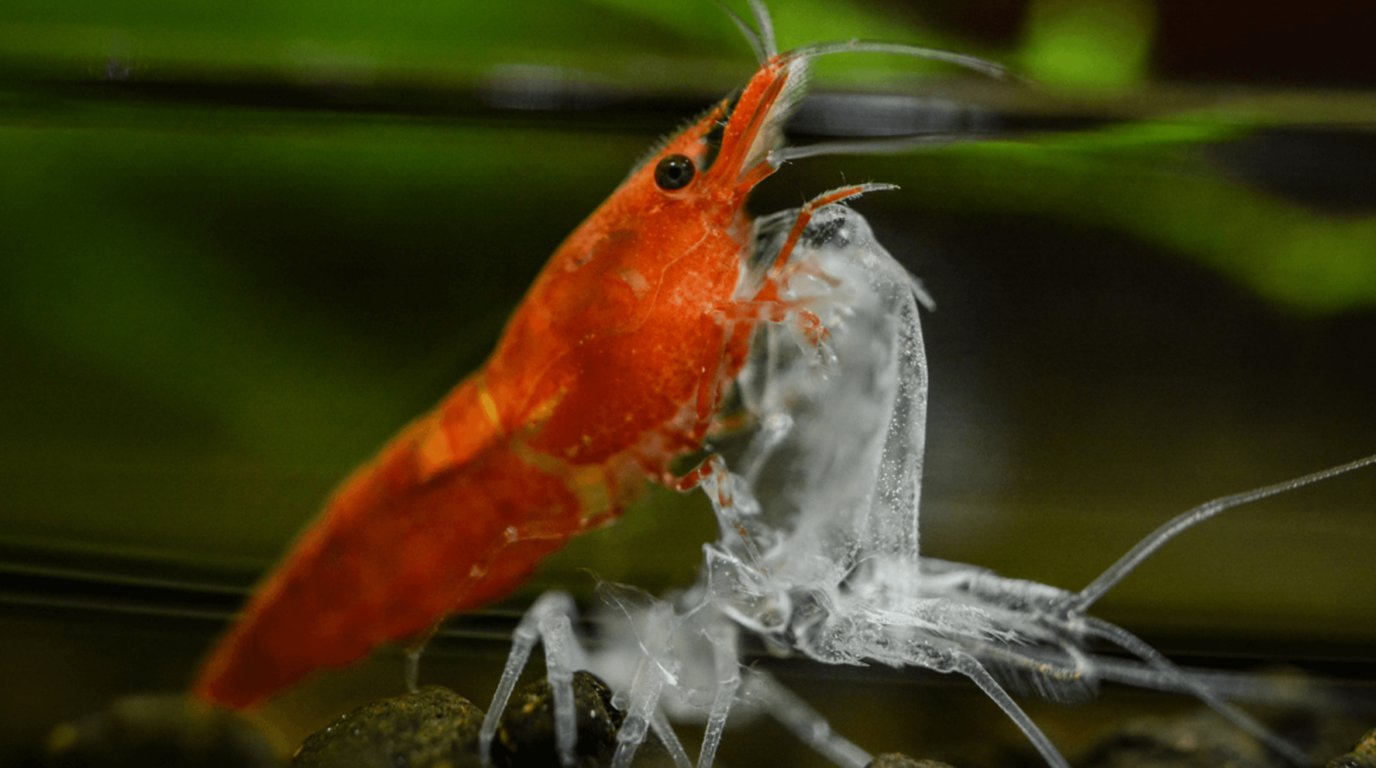
GH matters at molting, and cherry shrimp molt often. Adult male cherry shrimp in a laboratory culture at 73°F (23°C) shed about every 10 days.7 Each new shell takes calcium,6 and crustaceans that live in water take most of theirs in through the gills, so the calcium in your water reaches them directly.8 Holding GH inside 6-10 dGH keeps that calcium there. A GH booster or remineralizer puts it back into RO water, at the dose its own directions give.
KH does a different job. Alkalinity and hardness together form the buffer that limits how far pH moves as algae photosynthesize and animals and microbes breathe.6 The bacteria in your filter also use bicarbonate when they turn ammonia and nitrite into nitrate,6 so KH supports the cycle as well as the pH. With KH near the bottom of its range there’s little buffer left, so test more often and keep changes small.
Can you use tap water for Neocaridina shrimp?
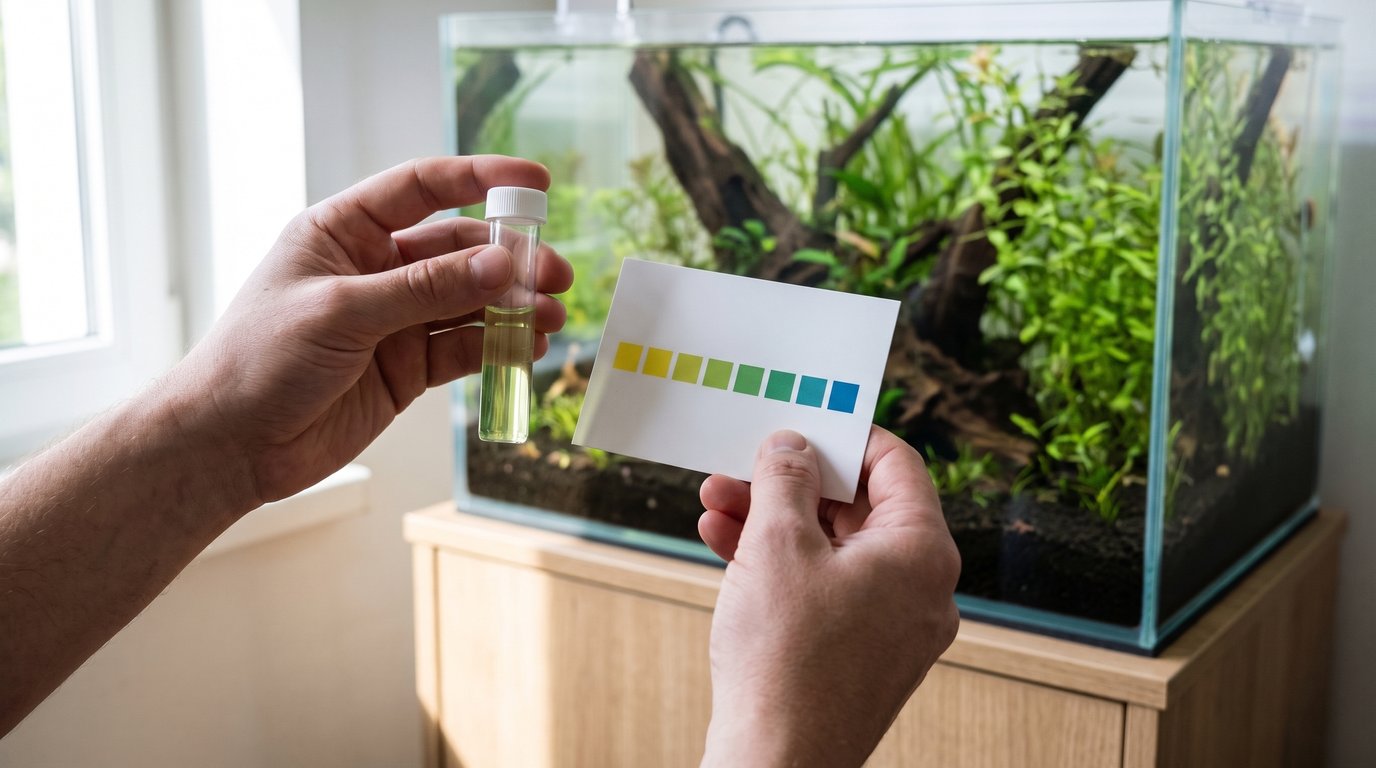
You can use tap water for Neocaridina shrimp if it tests inside the range and you’ve removed the chlorine or chloramine first. Test it before the shrimp arrive, so you know whether it needs anything at all.
Ask your water utility which one it uses, because the two behave differently. Chlorine leaves water that stands for a few days, but chloramine may take weeks to disappear, and boiling doesn’t remove it.9 Most carbon filters don’t remove it either, and it passes straight through an RO membrane.9
Use a water conditioner made to remove chloramine, and read the label, because a product sold for chlorine may or may not handle chloramine too.10 Breaking chloramine down releases ammonia, and a working biological filter helps deal with it.11 That’s another reason to start with a cycled tank and to test for ammonia after a change. If you check for chloramine yourself, use a total chlorine kit: a free chlorine test reads zero on chloraminated water that’s still toxic to fish.9 A cherry shrimp tank setup puts the conditioner in before the cycle, so the filter bacteria never meet chlorine or chloramine.
Even so, our advice is RO water with minerals added back, because tap water differs from one area to the next and RO makes the numbers easier to control. It’s a preference, not a requirement. Tap water that tests inside the range and is properly treated can work too, and on a chloraminated supply the RO water needs the same conditioner.
Top off evaporation with RO or distilled water, not tap water. When water evaporates, the dissolved minerals stay behind and concentrate in what’s left,12 and every refill with tap water adds a fresh load of minerals on top.
How do you keep Neocaridina water steady between tests?
Keep Neocaridina water steady by making every change slowly. A quick swing in temperature, pH or hardness stresses shrimp even when the new value is closer to the range. Correct a reading that’s slightly off over several water changes, not in one go.
Our advice is a 10% water change every two weeks, and skipping one does no harm as long as the water values stay stable. Bring the new water to the tank’s temperature and hardness before it goes in, so the change itself isn’t the shock.
Substrate is part of the same picture. Our advice is a substrate that keeps pH stable, or a soil made for planted tanks. Whichever you use, test the water after it goes in and keep the table as the target.
Write each reading down. A slow drift is easier to spot in a list of numbers than in the tank.
What poisons a Neocaridina shrimp tank?
Ammonia, nitrite and copper can each poison a Neocaridina shrimp tank, so keep ammonia and nitrite at 0 and keep copper out.
Why 0 and not just low? In a four-day test on juvenile cherry shrimp, gill damage grew as ammonia and nitrite went up. Nitrite at the concentrations tested, 0.25-1.25 mg/L, harmed the gills about as much as the highest ammonia levels did.13 That’s a doctoral thesis on young shrimp, but it points the same way as the rule: any ammonia or nitrite reading is a problem to fix that day.
Nitrate is where the cycle ends, and it builds up between water changes. Keep it low with the routine above.
Keep copper-based treatments out of a shrimp tank. They’re lethal to invertebrates, and many treatments made for fish are toxic to them as well.14 Read the ingredient list of anything you add, fish medicines included.
Copper also changes how cherry shrimp work inside. Held for 48 hours in water with about 0.16 mg/L of copper, the species, studied under its older name Neocaridina denticulata sinensis, showed 219 genes working differently, most of them tied to immunity and molting.15 That’s an effect seen in a laboratory, not a safe or lethal level, so treat any copper as too much. The water itself changes the risk too: pH, alkalinity and hardness all affect how available, and so how toxic, a metal like copper is.16
References
16 Sources
- Tropea, Stumpf and López Greco, Effect of Temperature on Biochemical Composition, Growth and Reproduction of the Ornamental Red Cherry Shrimp Neocaridina heteropoda heteropoda (Decapoda, Caridea), PLOS ONE 10(3): e0119468, 2015.
- Balina, Temperoni, López Greco and Tropea, Losing Reproduction: Effect of High Temperature on Female Biochemical Composition and Egg Quality in a Freshwater Crustacean with Direct Development, the Red Cherry Shrimp, Neocaridina davidi (Decapoda, Atyidae) (abstract), The Biological Bulletin 234(3): 139-151, 2018.
- Dissolved Oxygen and Water, U.S. Geological Survey, Water Science School, updated 2026.
- Serezli, Atalar, Hamzacebi, Kurtoglu and Yandi, To what extent does temperature affect sex ratio in red cherry shrimp, Neocaridina davidi? The scenario global warming to offspring sex ratio (abstract, author institution page), Fresenius Environmental Bulletin 26(12): 7575-7579, 2017.
- Aquatic Life Ambient Water Quality Criteria for Ammonia, Freshwater, U.S. Environmental Protection Agency, Office of Water, April 2013.
- Kubitza, Water quality impacts on health and performance of fish and shrimp, Part 2: pH, carbon dioxide, alkalinity, hardness and the water buffering system, Global Seafood Alliance, Responsible Seafood Advocate, 2025.
- Kelleher and Mykles, Characterization of the molt cycle of the cherry shrimp, Neocaridina davidi (meeting abstract), Society for Integrative and Comparative Biology.
- Wheatly, Calcium Homeostasis in Crustacea: The Evolving Role of Branchial, Renal, Digestive and Hypodermal Epithelia, Journal of Experimental Zoology 283(7): 620-640, 1999.
- Chloraminated Water & Your Pet Fish, Alameda County Water District, California.
- Monochloramine Information for Pet Stores and Fish Aquarium Owners, Tampa Bay Water, Florida.
- Facts About Chloramines, Pinellas County Government, Florida.
- Chloride, Salinity, and Dissolved Solids, U.S. Geological Survey, Water Resources Mission Area, 2019.
- Melo, Efeito de compostos nitrogenados no camarão Neocaridina davidi e na rã Aquarana catesbeiana (doctoral thesis, in Portuguese), Universidade Federal de Minas Gerais, 2023.
- Conway Holroyd, Spicer, Ellis and Turner, An ecophysiological approach to improving health outcomes of ornamental shrimp during aquarium trade and transportation, Conservation Physiology 14: coag046, 2026.
- Xing and colleagues, Transcriptome analysis of Neocaridina denticulate sinensis under copper exposure, Gene 764: 145098, 2021.
- Supplementary Training Materials for Aquatic Life Criteria, Copper, Background, U.S. Environmental Protection Agency, updated May 6, 2026.
Ready to get started?
Shop our Neocaridina Shrimp collection
15 products available · Live Arrival Guarantee