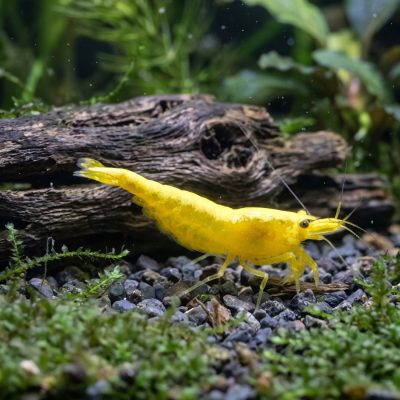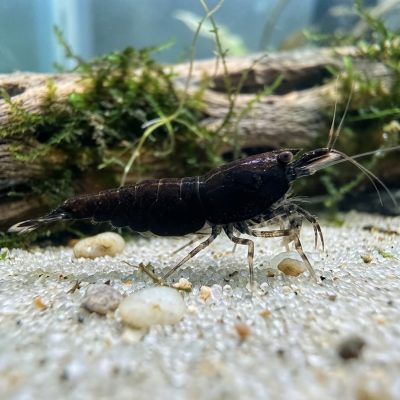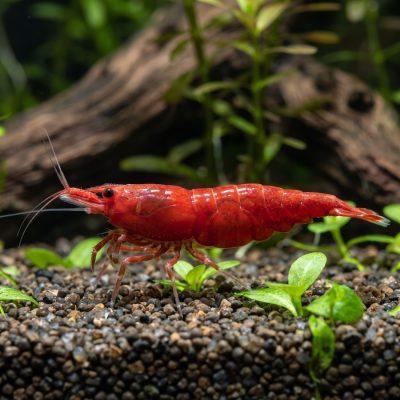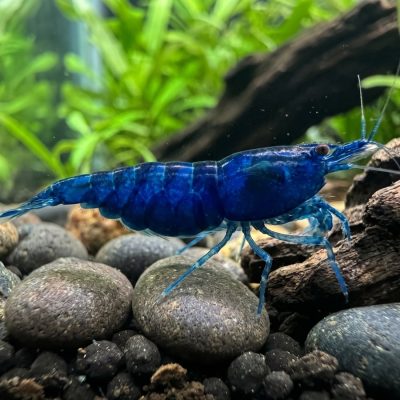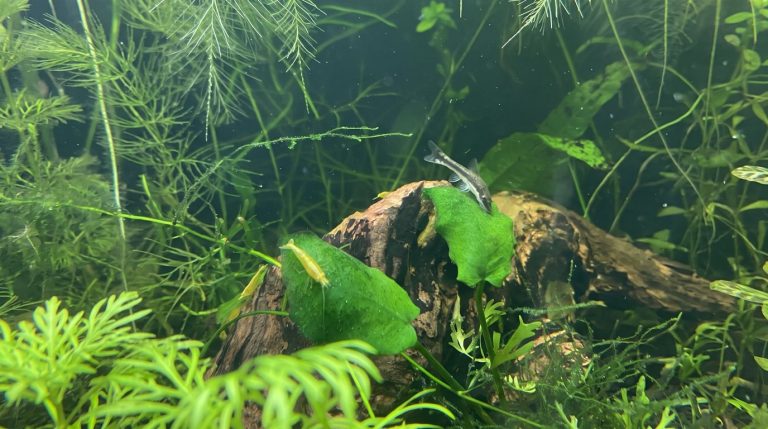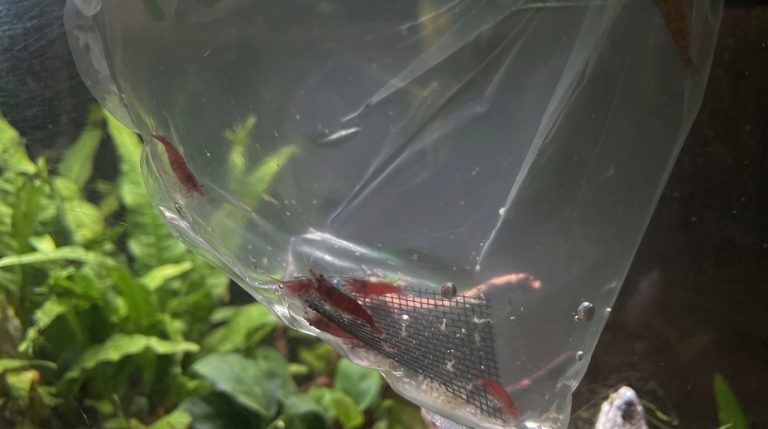
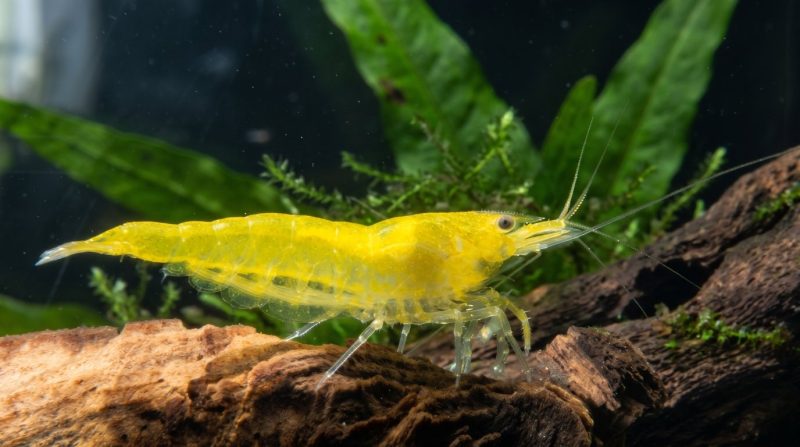
Neocaridina shrimp come in red, orange, yellow, green, blue, black and brown, plus patterned Rili lines. Nearly all of them are one species, Neocaridina davidi. Breeders made these lines over many generations from a wild shrimp that’s transparent or greenish-brown. They all take the same Neocaridina shrimp care, but lines kept together can give off-color young, so each line needs its own tank. Snowball, the white line, is the exception: it’s a separate species.
Types of Neocaridina shrimp by color
The main types of Neocaridina shrimp are grouped by color: red, orange, yellow, green, blue, black and brown, and the patterned Rili lines. The University of Florida lists red cherry shrimp, orange and yellow sakura, green jade, blue dream, blue velvet, blue jelly and the striped Rili among the common forms.1 Every line takes the same care, so the differences come down to looks: the adult color, how the young turn out and how each line compares with its neighbors. These descriptions come from the lines as we breed them, and the same name from another breeder can look a little different.
| Color family | Lines |
|---|---|
| Red | Red cherry, Sakura, Fire Red, Bloody Mary |
| Orange | Orange Pumpkin |
| Yellow | Yellow Golden Back |
| Green | Green Jade |
| Blue | Blue Dream, Blue Velvet, Blue Jelly, Blue Diamond |
| Black and brown | Black Rose, Chocolate |
| Rili patterns | Red Rili, Orange Rili, Carbon Rili |
| White, a separate species | Snowball |
Red cherry shrimp
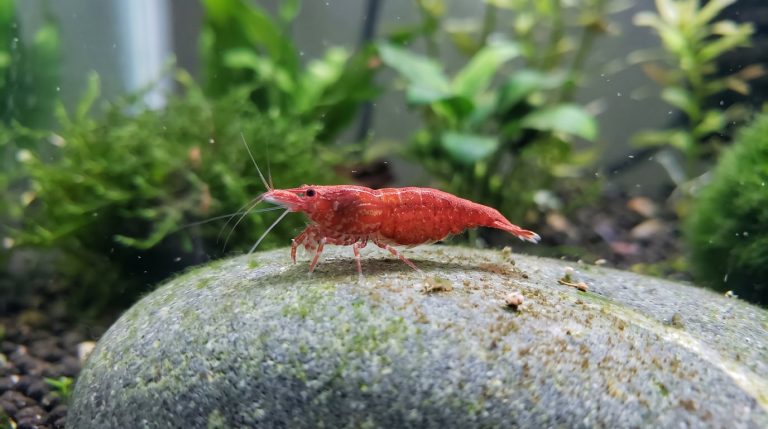
Red cherry is where the common name comes from. The University of Florida lists the red form as cherry shrimp, and that’s the name the whole species goes by.1 The other red lines differ in how much of the body the red covers and how deep it looks.
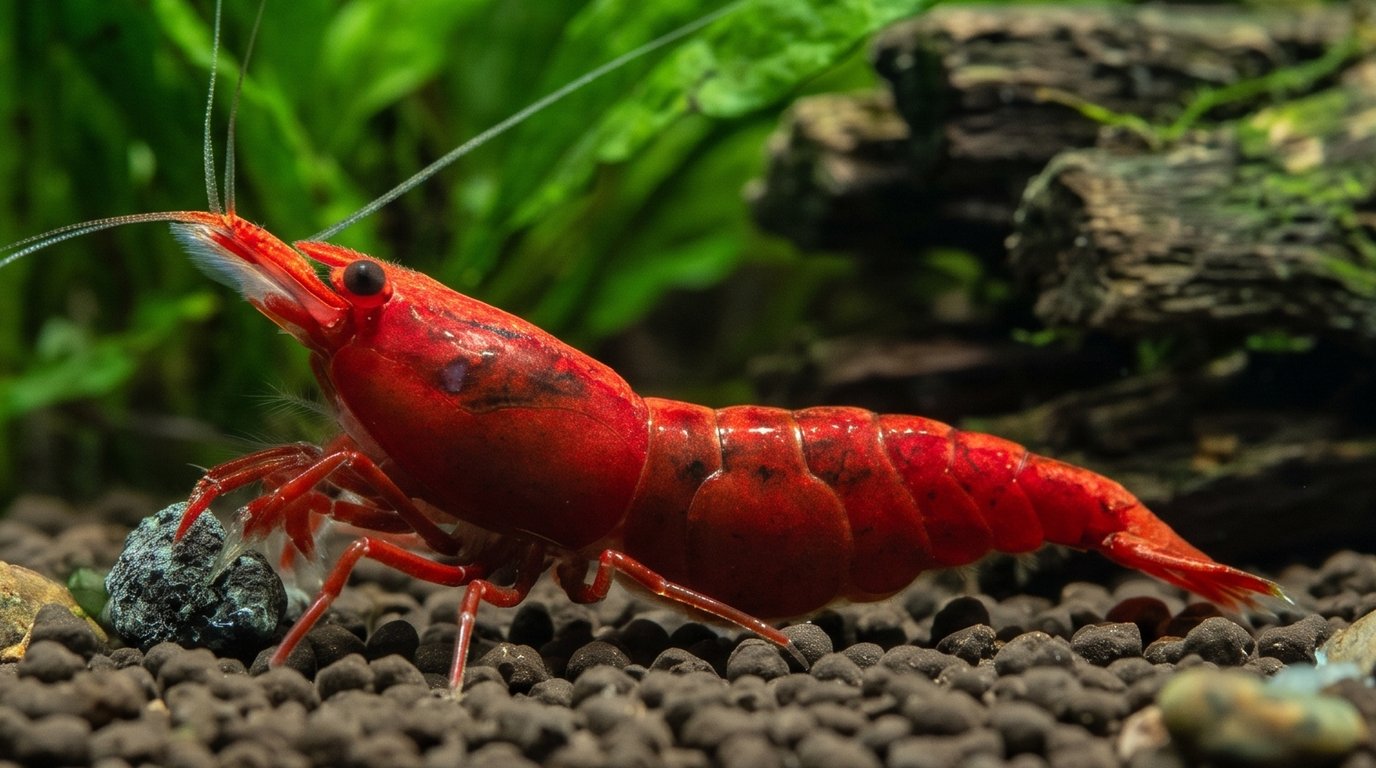
Sakura shrimp
Sakura are red over most of the body, with a few clear patches left, mainly along the lower body. They’re already red when young. The depth of red varies within the line, some shrimp deeper and some lighter, and females are a deeper red than males. Next to Fire Red, Sakura look lighter and still show those clear patches.
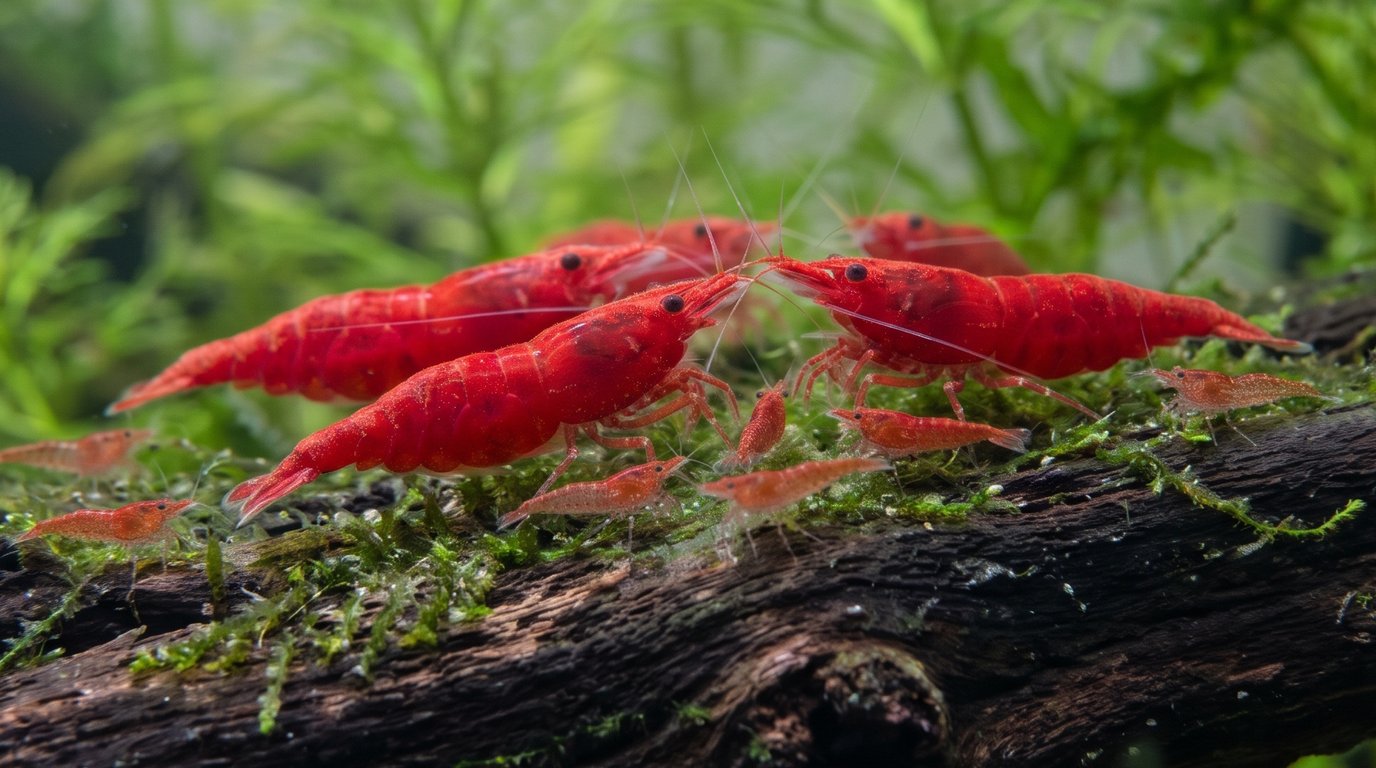
Fire Red shrimp
Fire Red are a solid red over the body, while the legs and the underside stay a little see-through. Young Fire Red are already a deep red, and grown shrimp look nearly the same red from one to the next. Females are a deeper red than males. Side by side, Fire Red are the more solid red next to Sakura and the brighter red next to Bloody Mary.
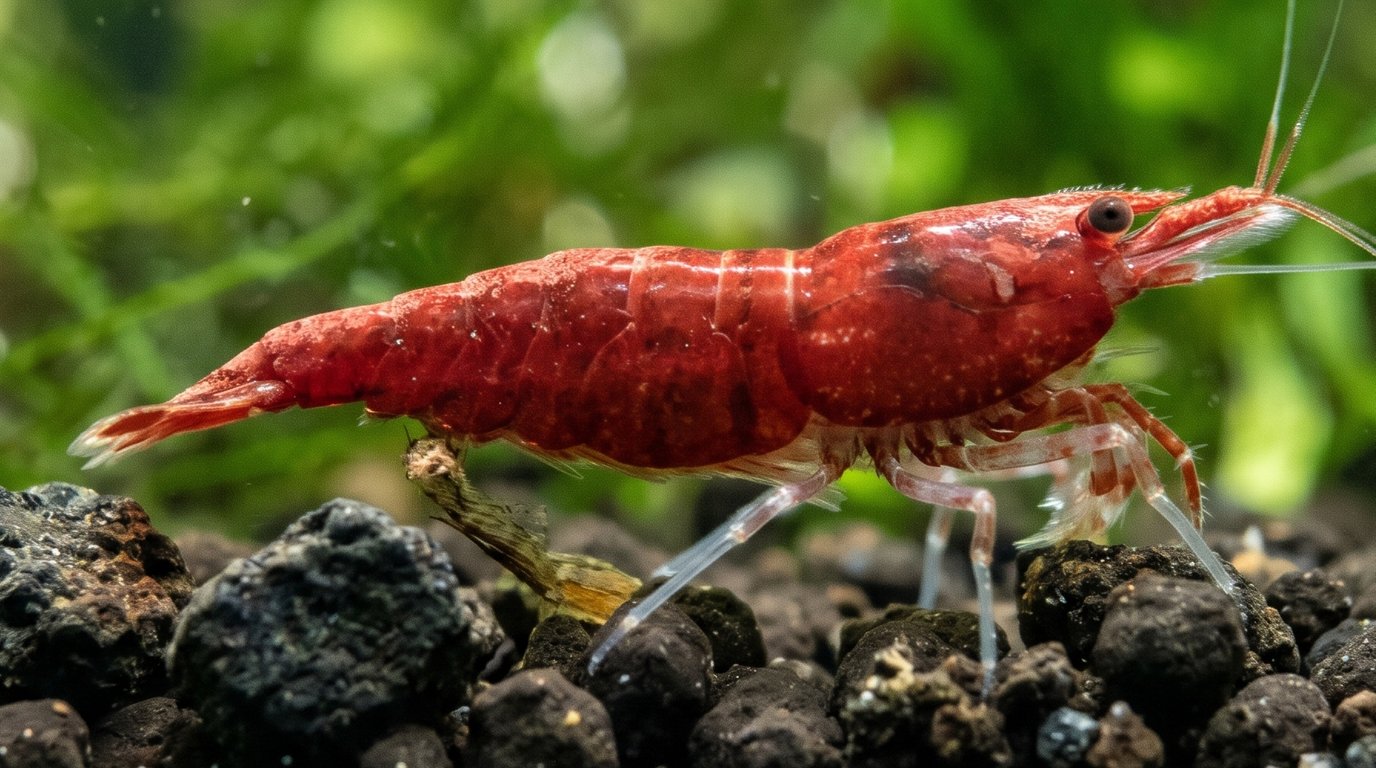
Bloody Mary shrimp
Bloody Mary shrimp have a clear shell, and their deep red shows through it from the body underneath rather than looking painted on the outside. Young Bloody Mary are pale, and the red deepens as they grow. Next to Fire Red they’re a darker, deeper red. Most young keep their parents’ deep red, and females are a deeper red than males.
Orange Pumpkin shrimp
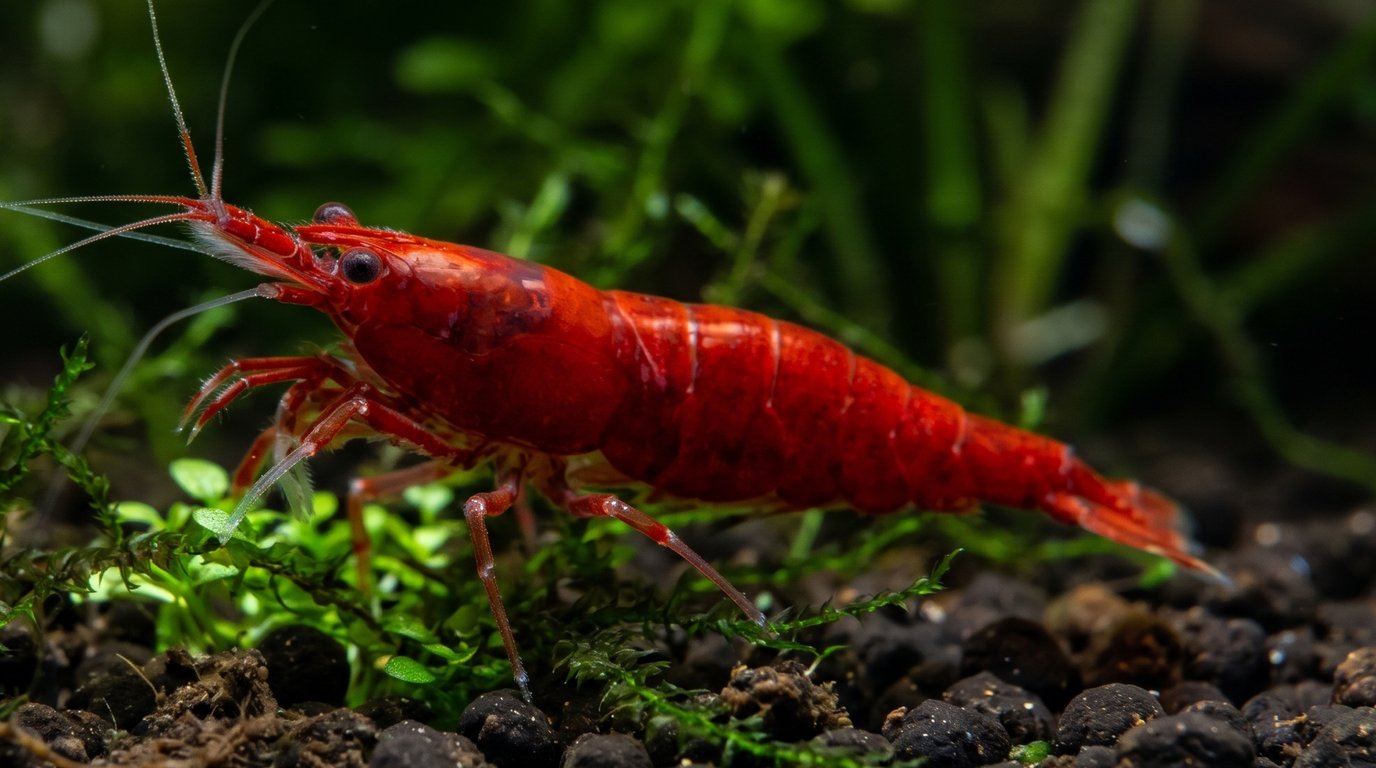
The University of Florida’s name for the orange form is orange sakura.1 Orange Pumpkin is a solid orange line: the body is orange all over, while the legs and the underside stay a little see-through. The orange is already deep in young shrimp and looks nearly the same from one adult to the next. Females are a deeper orange than males.
Yellow Golden Back shrimp
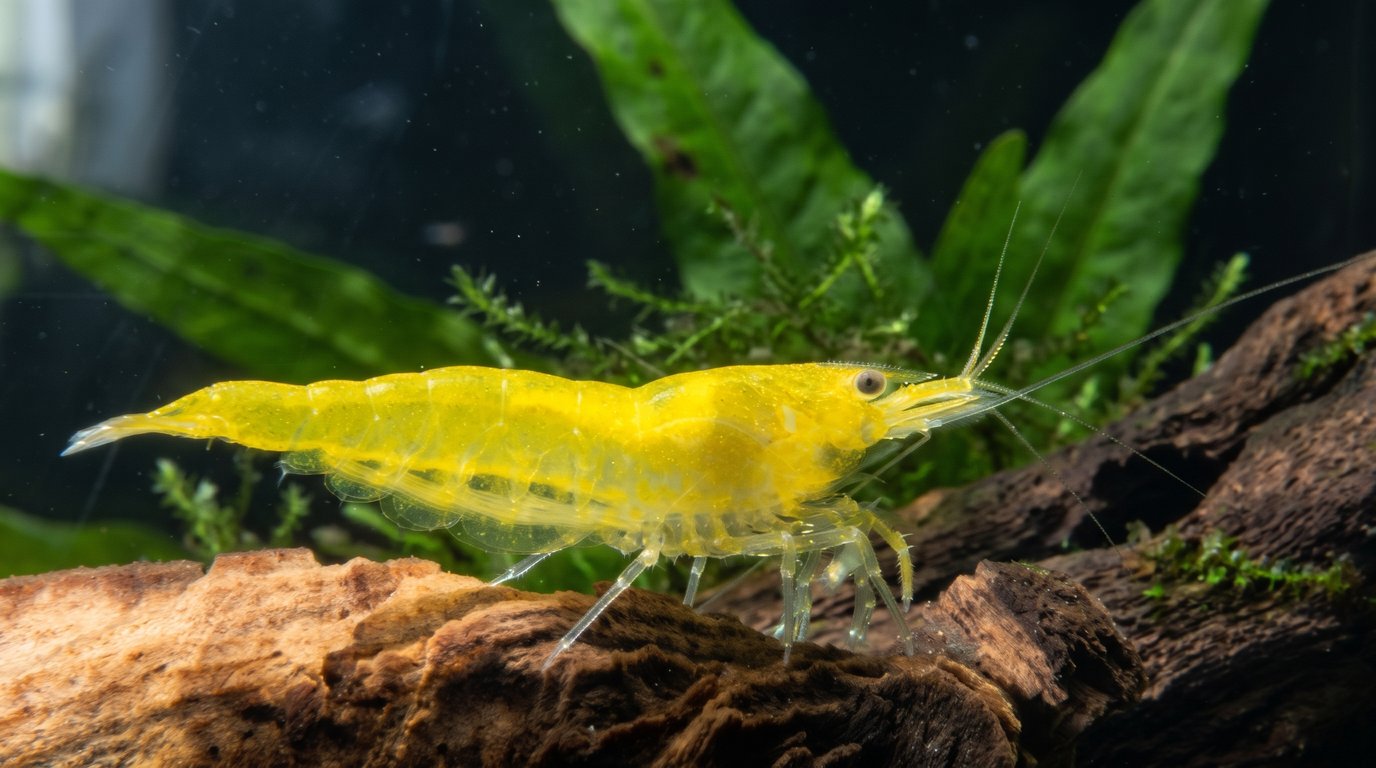
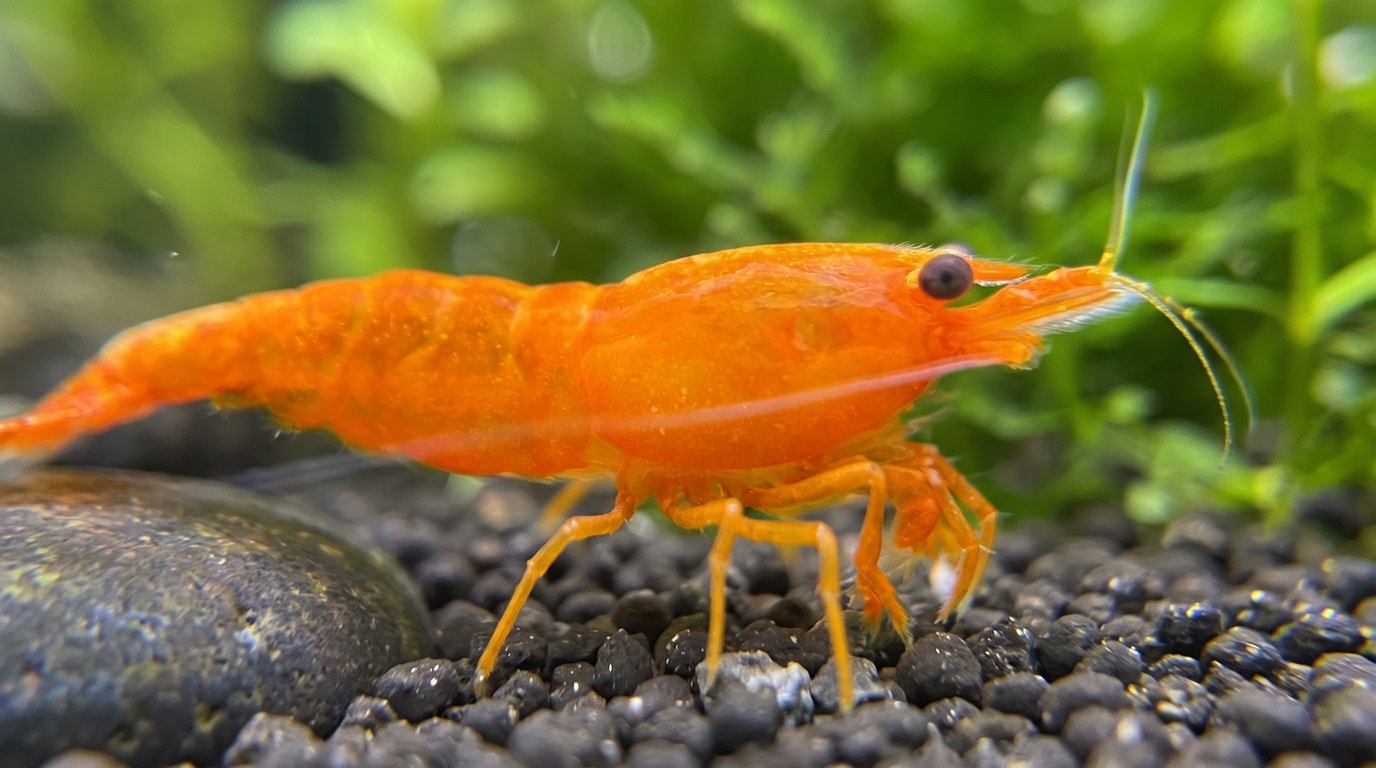
The University of Florida lists the yellow form as yellow sakura.1 Yellow Golden Back carry a golden stripe along the back, males and females alike, and on females it’s broader and clearer. Young shrimp are pale, and the yellow deepens and the stripe sharpens as they grow. Most young keep the yellow and the stripe of their parents.
Green Jade shrimp
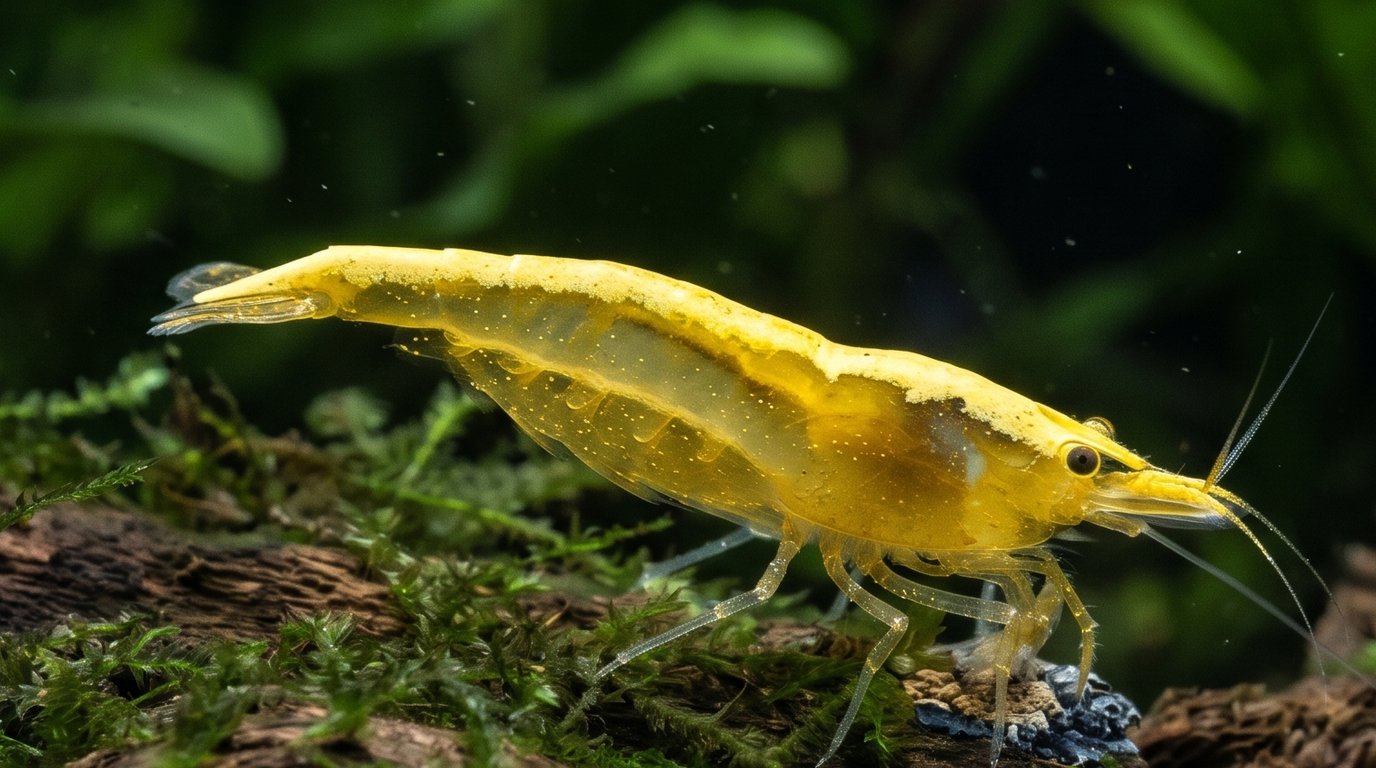
Green jade is the name listed for the green form.1 Green Jade are already a deep green when young, and grown shrimp look nearly the same green from one to the next. Females are a deeper green than males, and most young keep their parents’ green. Off-color shrimp, brownish, clear or blue, turn up now and then and are culled from the line.
Blue Dream and Blue Velvet shrimp
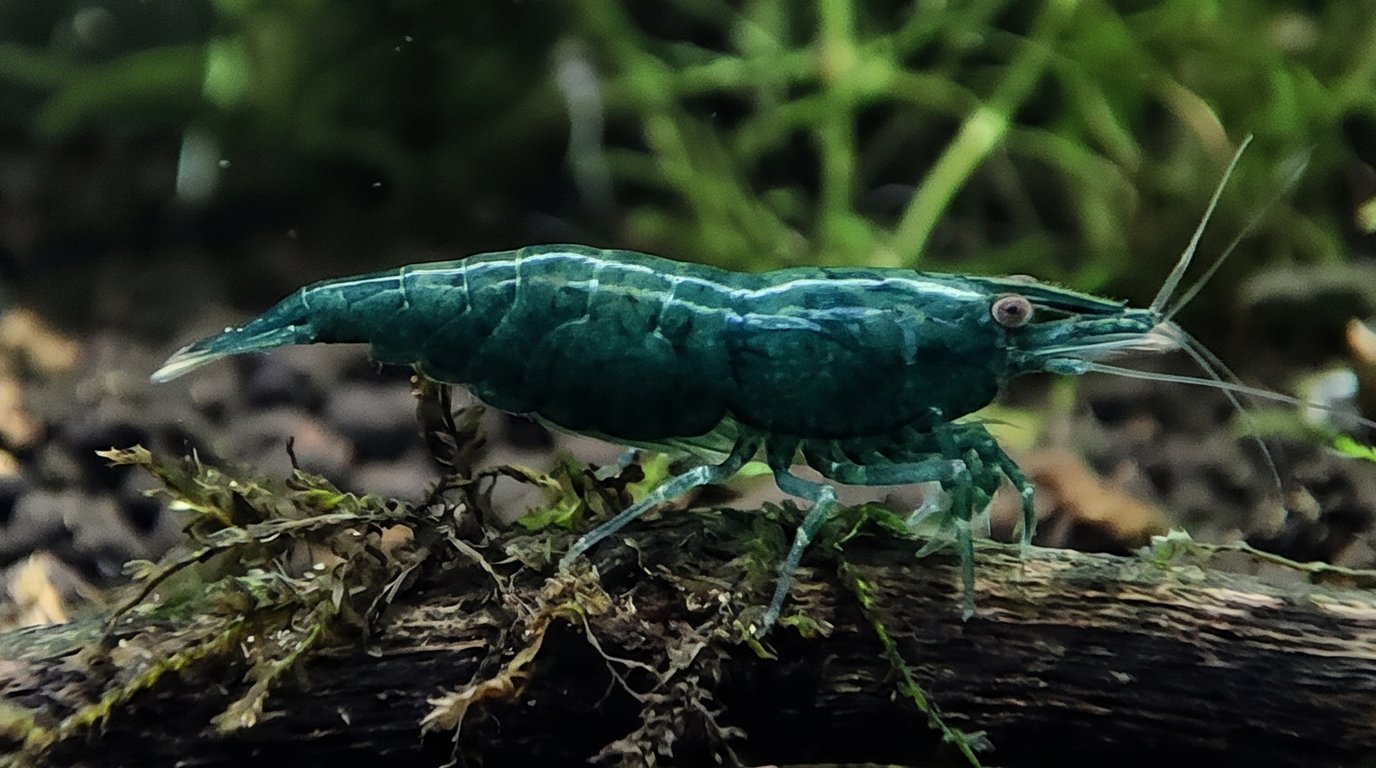
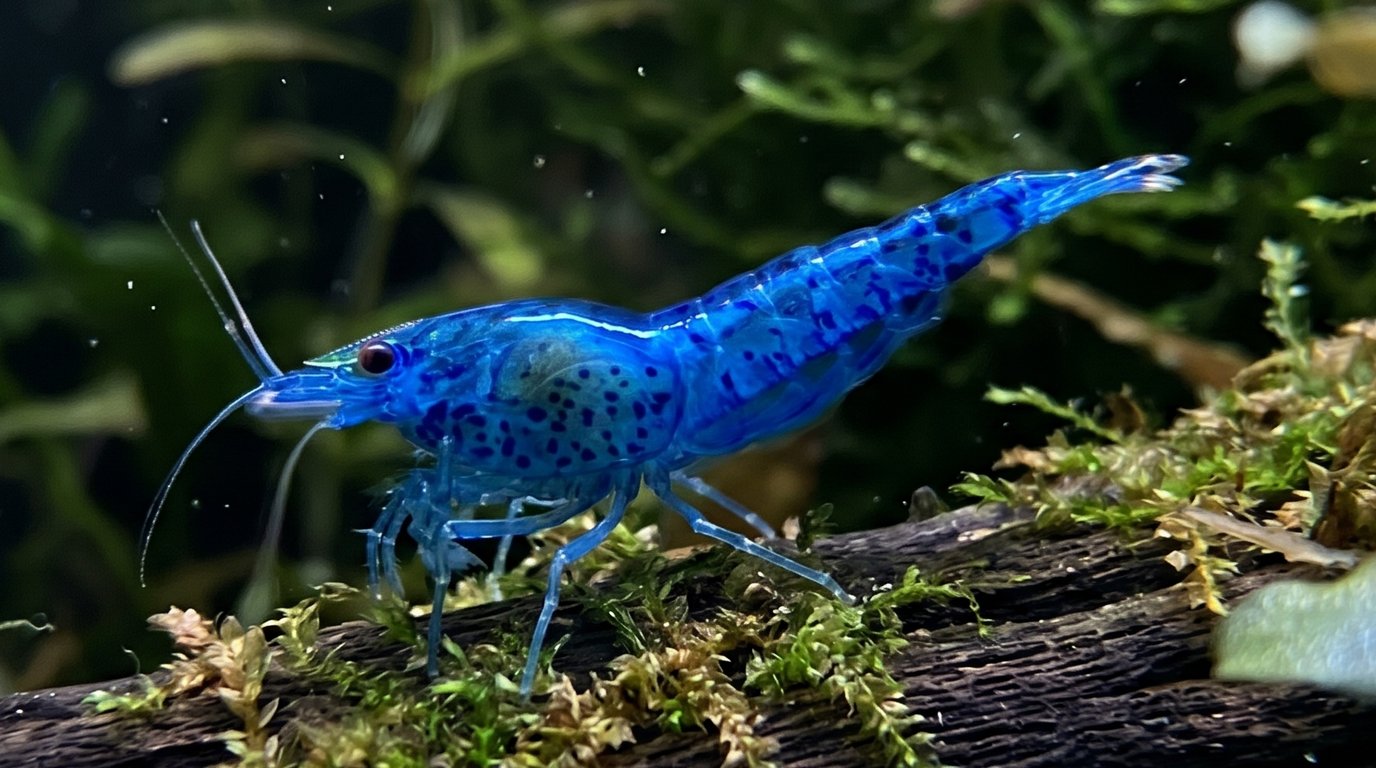
Blue dream and blue velvet are both listed as blue forms of the species.1 Blue Dream shrimp sit in the middle of the blue lines described here: a deeper, more solid blue than Blue Jelly and a lighter blue than Blue Diamond.
Blue Jelly shrimp
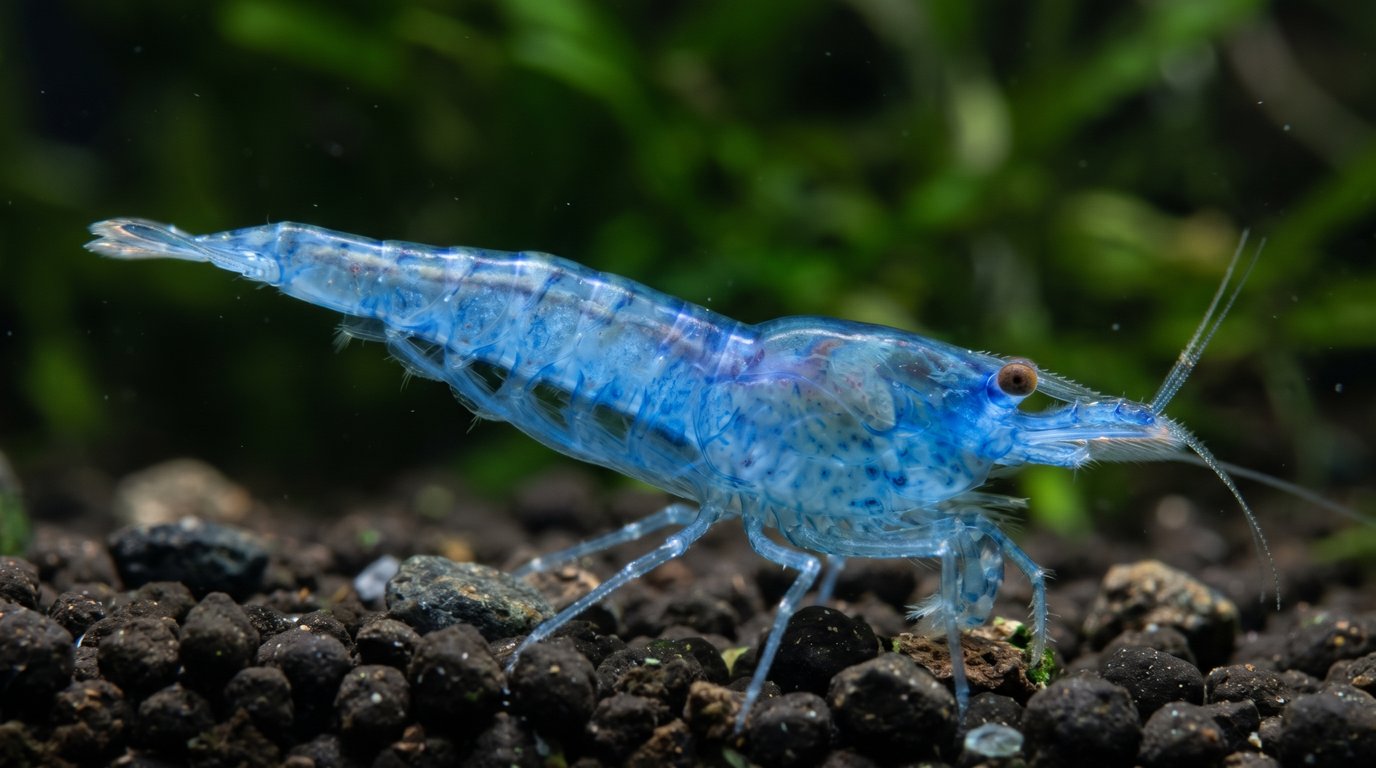
Blue Jelly is a pale, see-through blue line. Young Blue Jelly are pale, some close to clear, and the blue gets stronger as they grow. Next to Blue Dream they look paler and more see-through, and they show a deeper blue over a dark substrate than over a light one. Now and then one grows red marks, and breeders take those out to keep the line blue.
Blue Diamond shrimp
Blue Diamond are a solid, deep blue over the body, while the legs and the underside stay a little see-through. The blue is already deep in young shrimp, and grown shrimp look nearly the same blue from one to the next. Females are a deeper blue than males, and most young keep their parents’ blue.
Black Rose shrimp
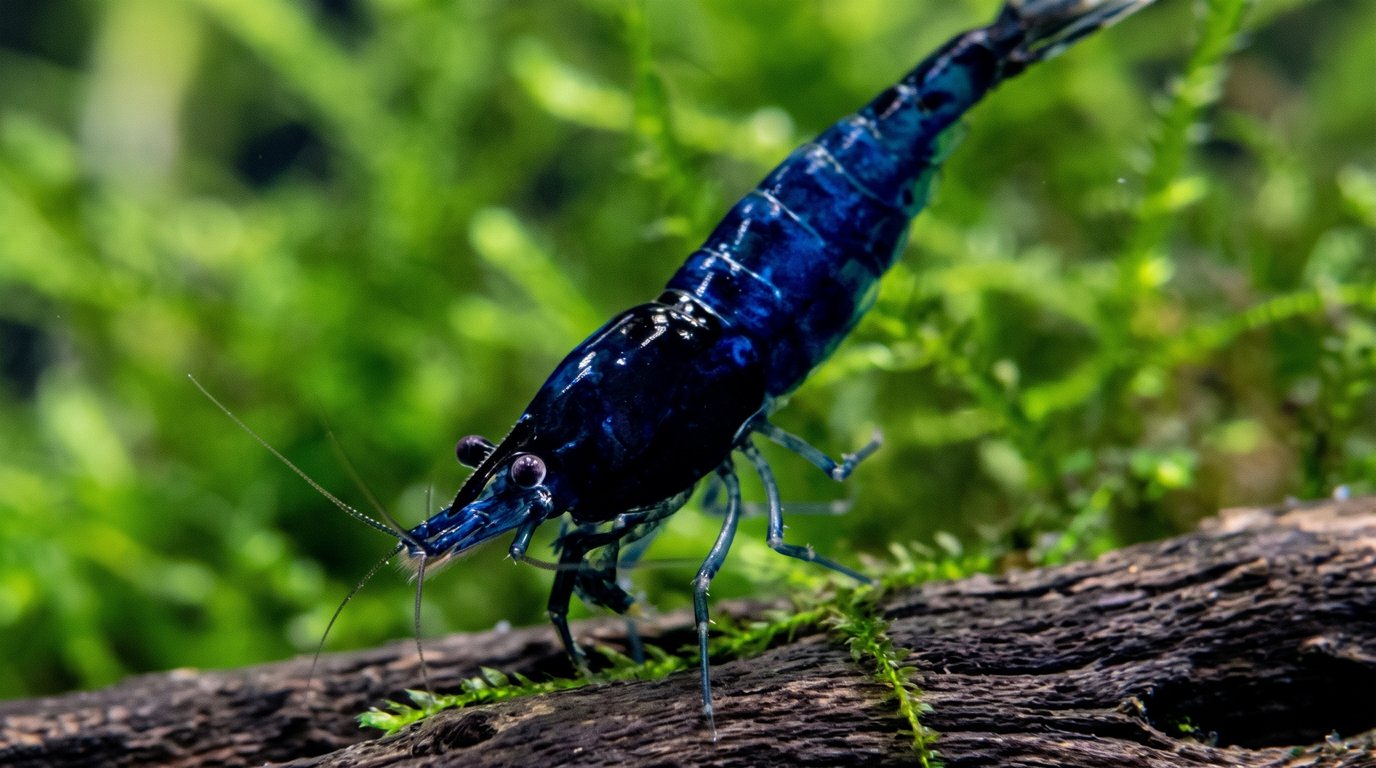
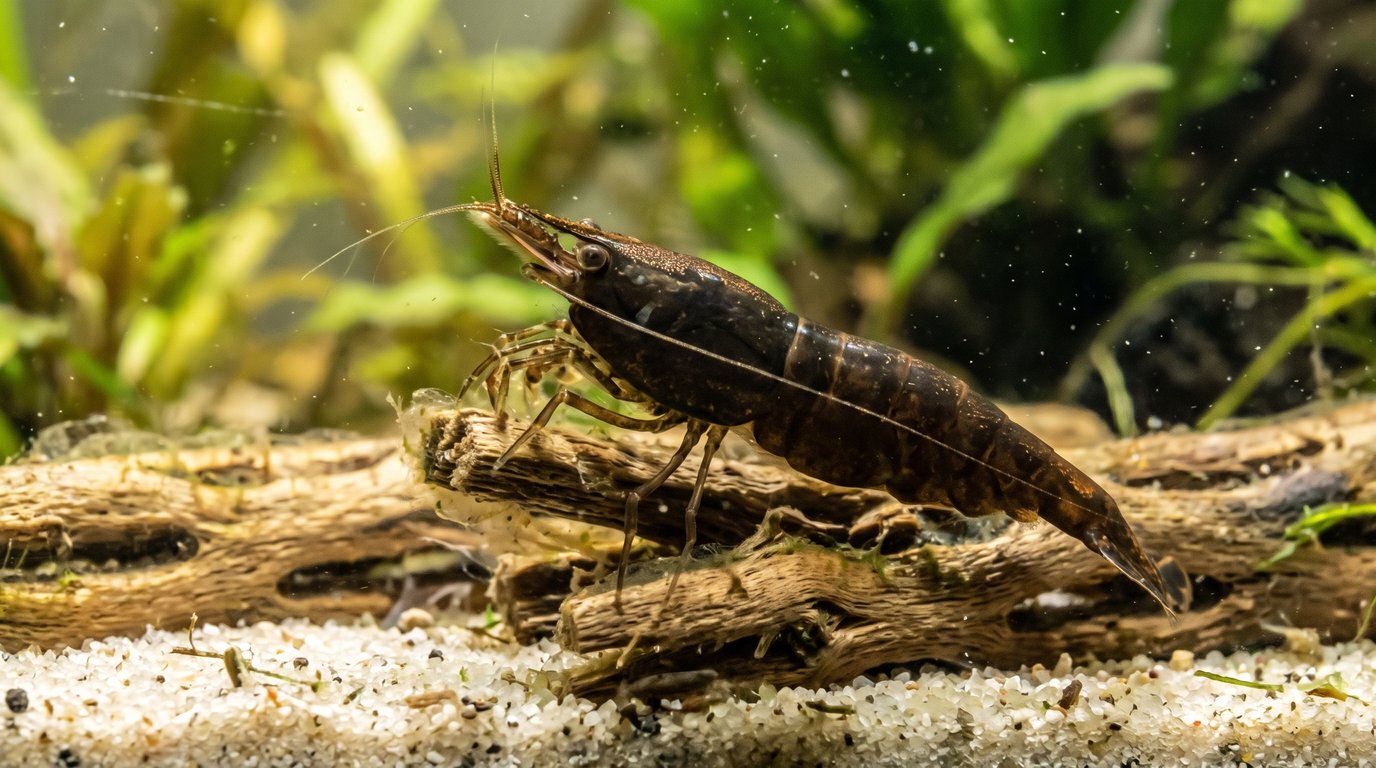
Black Rose are a solid black over the body, while the legs and the underside stay a little see-through. They’re already black when young, and females are a deeper black than males. Side by side with Chocolate, Black Rose are plainly black and Chocolate plainly brown. Black Rose stand out more over a light substrate and blend in over a dark one.
Chocolate shrimp
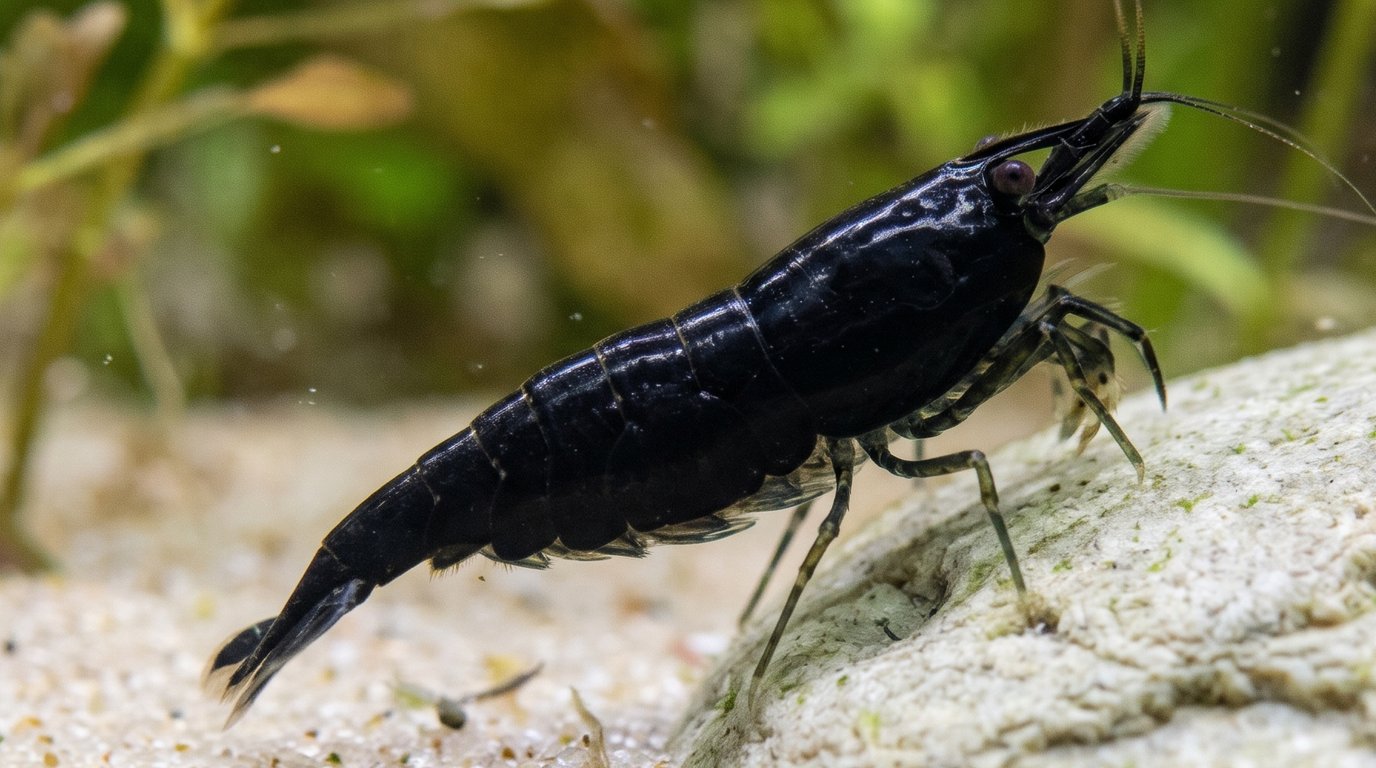
Chocolate shrimp are a solid chocolate brown over the body, while the legs and the underside stay a little see-through. They’re already a deep brown when young, and females are a deeper brown than males. Like Black Rose, they stand out more over a light substrate and blend in over a dark one.
Red Rili shrimp
Rili lines are the striped forms of the species.1 Red Rili have a red head and tail with a clear band across the middle. Young Red Rili are pale, and the red sections and the clear band sharpen as they grow. Females are a deeper red than males.
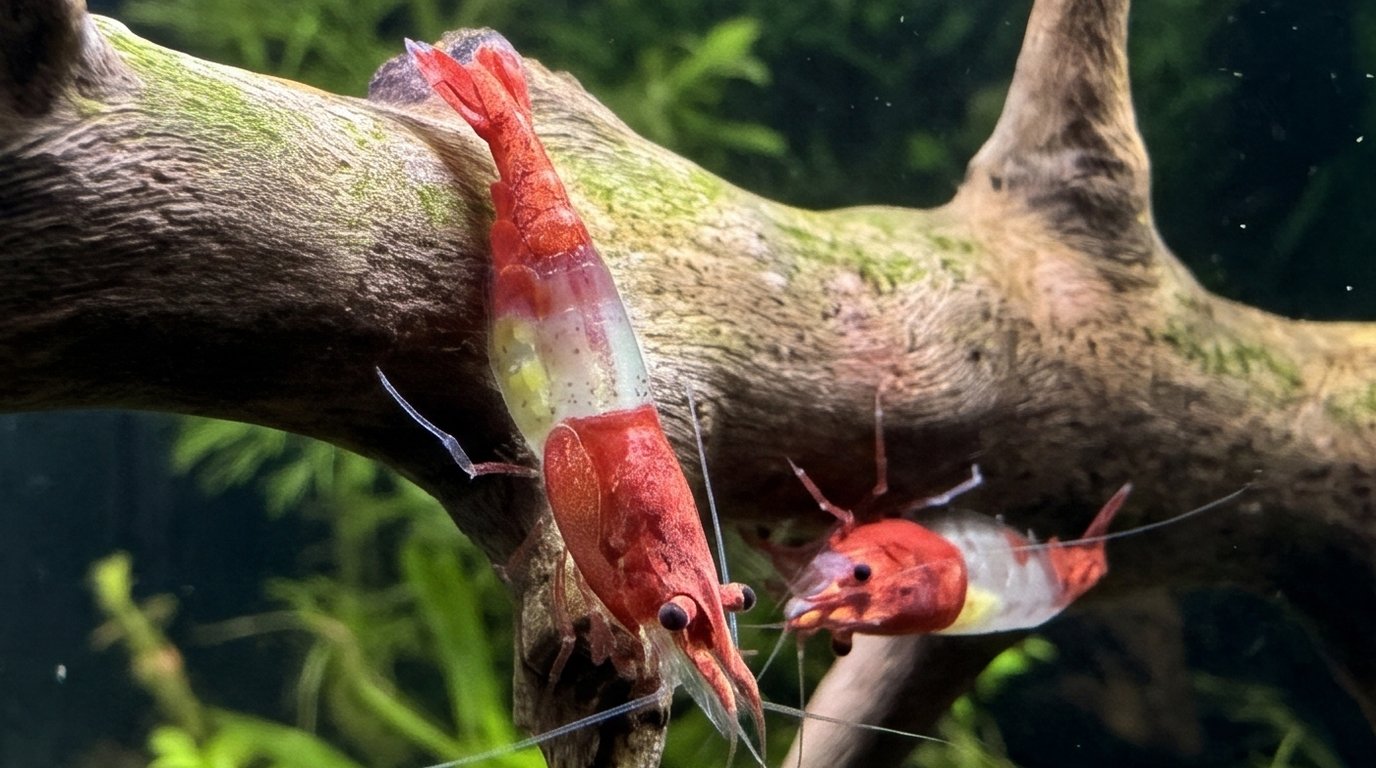
Most young keep their parents’ pattern, though some come out solid red or clearer. Shrimp with red over most of the body, or with red spreading into the clear band, are culled to keep the line.
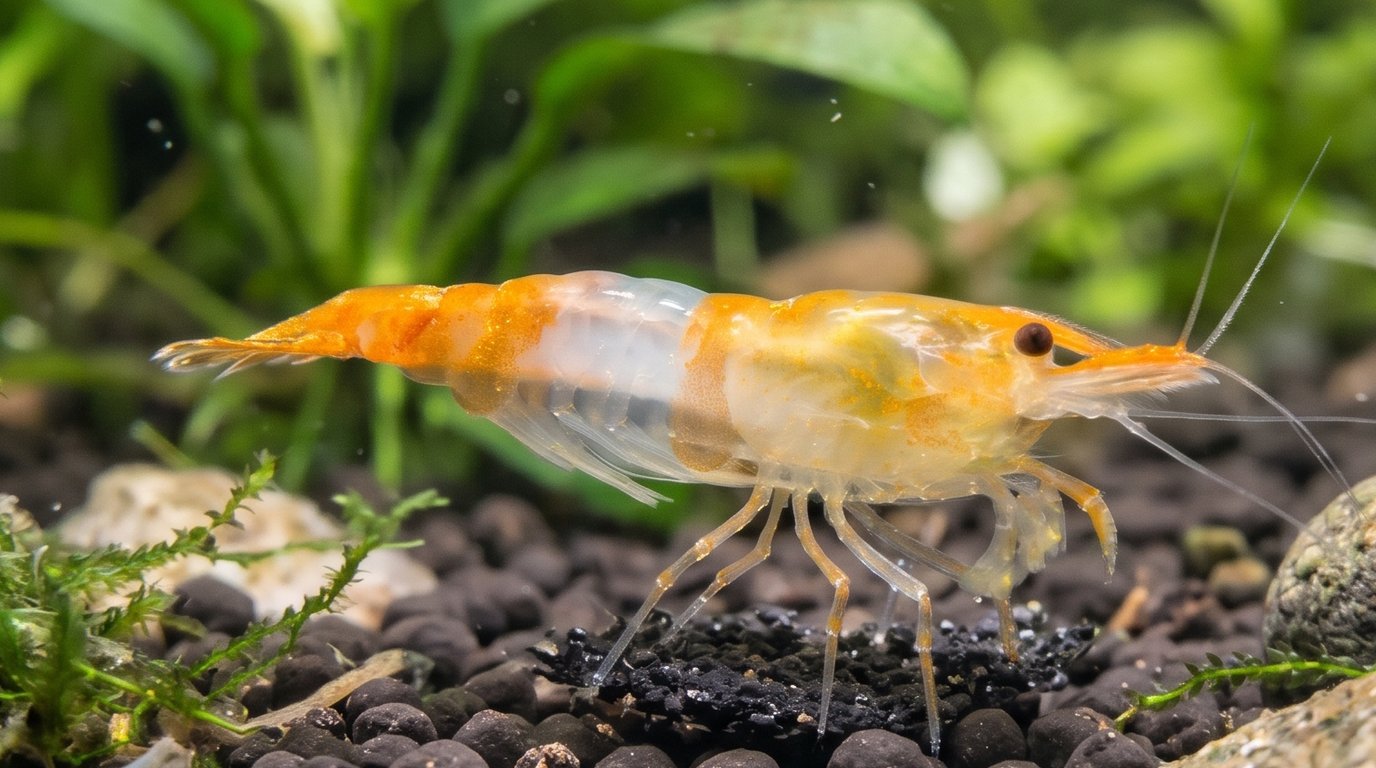
Orange Rili shrimp
Orange Rili have the same pattern in orange: an orange head and tail with a clear band between them, already visible in young shrimp. The clear band and the amount of orange look nearly the same from shrimp to shrimp, and females are a deeper orange than males. Most young keep the pattern, and a few come out solid orange or clearer.
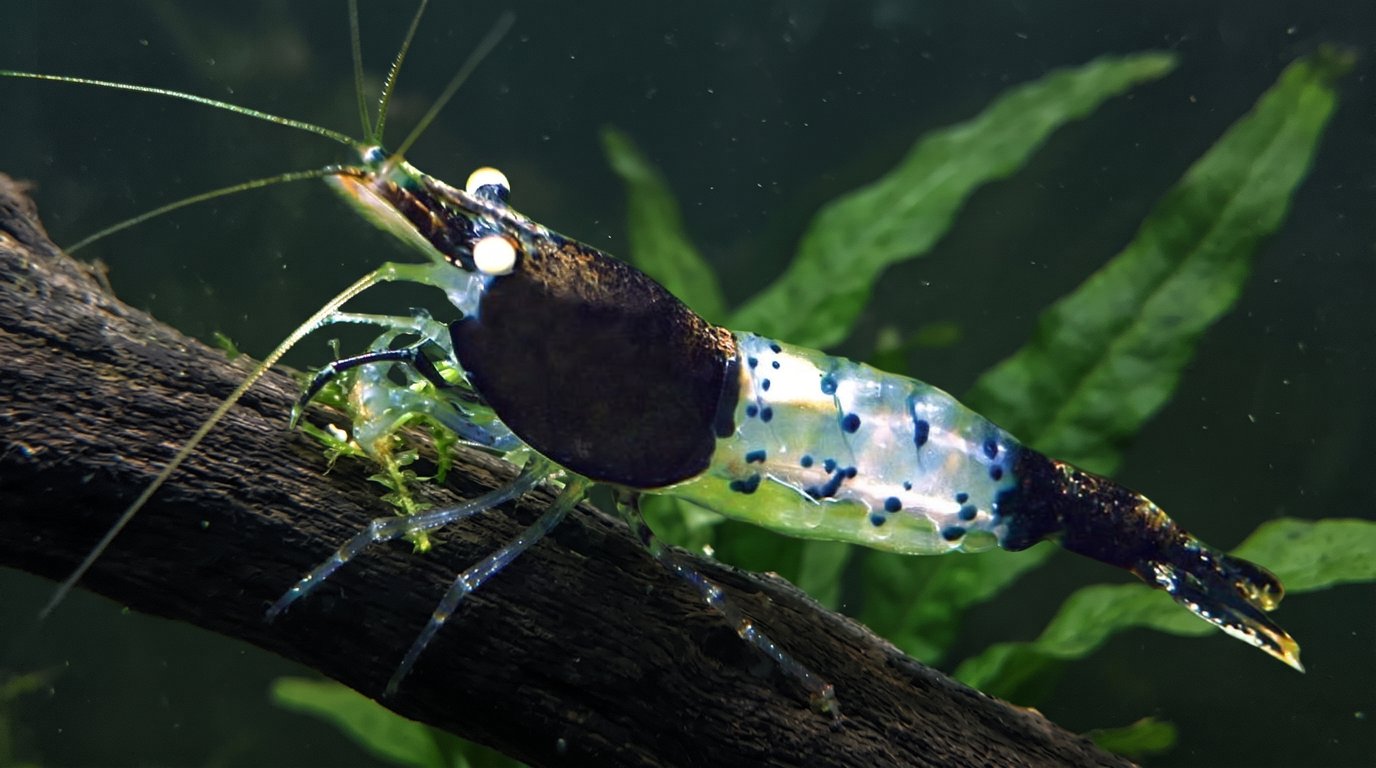
Carbon Rili shrimp
Carbon Rili have a solid black head and tail, not a brownish one, with a clear band across the middle. The pattern already shows in young shrimp. The clear middle carries a pale blue tint with small black dots scattered through it, and some have a yellowish stripe along the back. Most young keep the black and clear pattern, and a few come out blacker or clearer.
Snowball shrimp, a separate species
Snowball is an opaque white line of Neocaridina zhangjiajiensis, a separate species from the cherry shrimp in the world register of decapod names.2 That makes it a relative in the same genus, so it isn’t a cherry shrimp color line. Snowball are opaque white even when young, and females are a more solid white than males. Females carry white eggs, like small snowballs, which is where the name comes from.
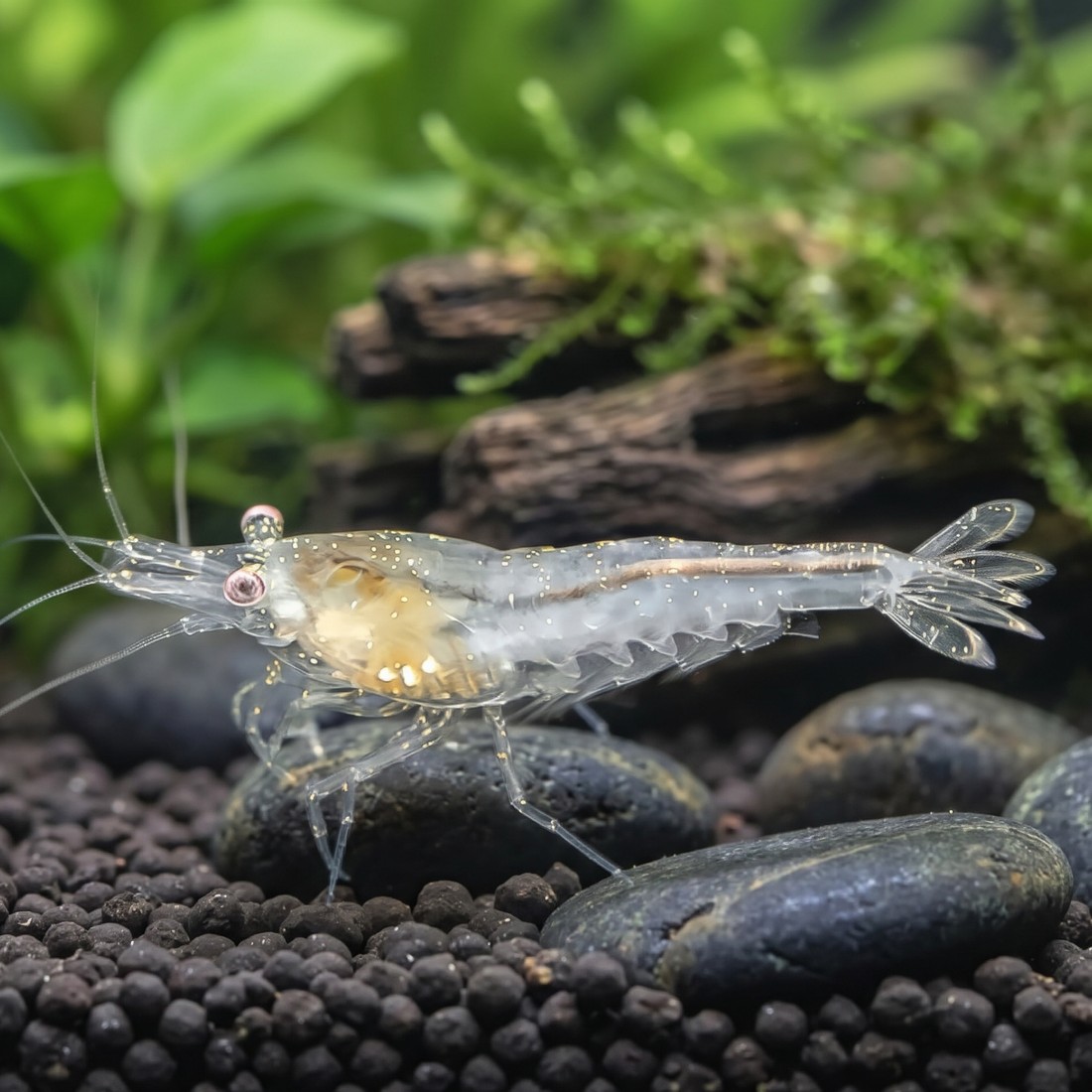
Snowball need the same water as cherry shrimp. They still cross with other Neocaridina lines, red cherry and Blue Dream included, and the young from those crosses lose their color, so Snowball need a tank of their own like any other line.
What do cherry shrimp grade names like Sakura and Fire Red mean?
Cherry, Sakura, Fire Red and Painted Fire Red are names sellers use for red cherry shrimp of different looks. No published standard says what each name means, so two sellers can use the same word for different-looking shrimp.
Sakura isn’t only a red name, either: the University of Florida uses orange sakura and yellow sakura for the orange and yellow forms.1 So treat a grade name as one seller’s description and judge the shrimp themselves, from photos of the actual animals. The red lines in this guide aren’t ranked by grade; they’re compared by how they look side by side.
Can you mix Neocaridina colors in one tank?
You can keep Neocaridina colors in one tank, but mixed lines can produce brown or wild-type young. If you want a line to stay true, keep one line per tank. Don’t count on any particular color from a mixed tank’s young. Before you mix Neocaridina shrimp colors, know that keepers often see brown young from the very first broods.
Off-color young turn up in single-line tanks too. Brown, clear or otherwise off-color babies appear in blue tanks with no other shrimp added and in red-only tanks, as well as in tanks that mix lines. Keepers who want to hold a color take the off-color shrimp out, which the hobby calls culling.
So why bother with one line per tank if a single line can throw odd young anyway? Mixing adds crosses on top of that, and then you can’t tell which young came from which line. Keep the line on its own, take out the young that don’t match, and it has a chance to hold.
If you like the look of a mixed “skittles tank”, go ahead. Keep it as a display, though, and don’t expect the young to match their parents.
Why a cherry shrimp’s color can look different from day to day
A cherry shrimp’s color changes with its background and with stress, so the same shrimp can look deeper one day and paler the next. Two things drive it: pigment cells spread out or pull in within minutes, and the amount of pigment changes over days or weeks.3
Background matters. In an eight-week trial, red cherry shrimp on darker gravel built up more pigment than shrimp on lighter gravel.4 Given a choice of backgrounds, red, wild-type and white shrimp all picked dark ones over white.3
Stress can shift color too. In a feed study on one red strain, shrimp on the plain feed came out a measurably different color after nine hours in low-oxygen water.5 Females also tend to look different: one study describes them as larger and more brightly colored than males.6
So don’t judge a line from one glance or one photo. Compare shrimp in the same tank, against the same background, and look at both sexes before you decide what a line looks like.
Why every color line is still one species
Cherry shrimp have one accepted scientific name, Neocaridina davidi. The world register of decapod names lists Neocaridina heteropoda and Neocaridina denticulata sinensis as junior synonyms of davidi, which means later names for the same species.7 So if a shrimp’s sold under either older name, it’s the same animal as your cherry shrimp.
The name isn’t fully settled, though. A 2024 study argues that the cherry shrimp and a close relative are one species that should take a single older name,8 but the register hasn’t adopted that. For now, davidi is the name to look for.
Wild Neocaridina davidi are generally transparent or greenish-brown.1 Generations of selective breeding turned that plain shrimp into the colors and patterns sold today.1 The species is native to parts of China, Vietnam, Taiwan and Korea.9
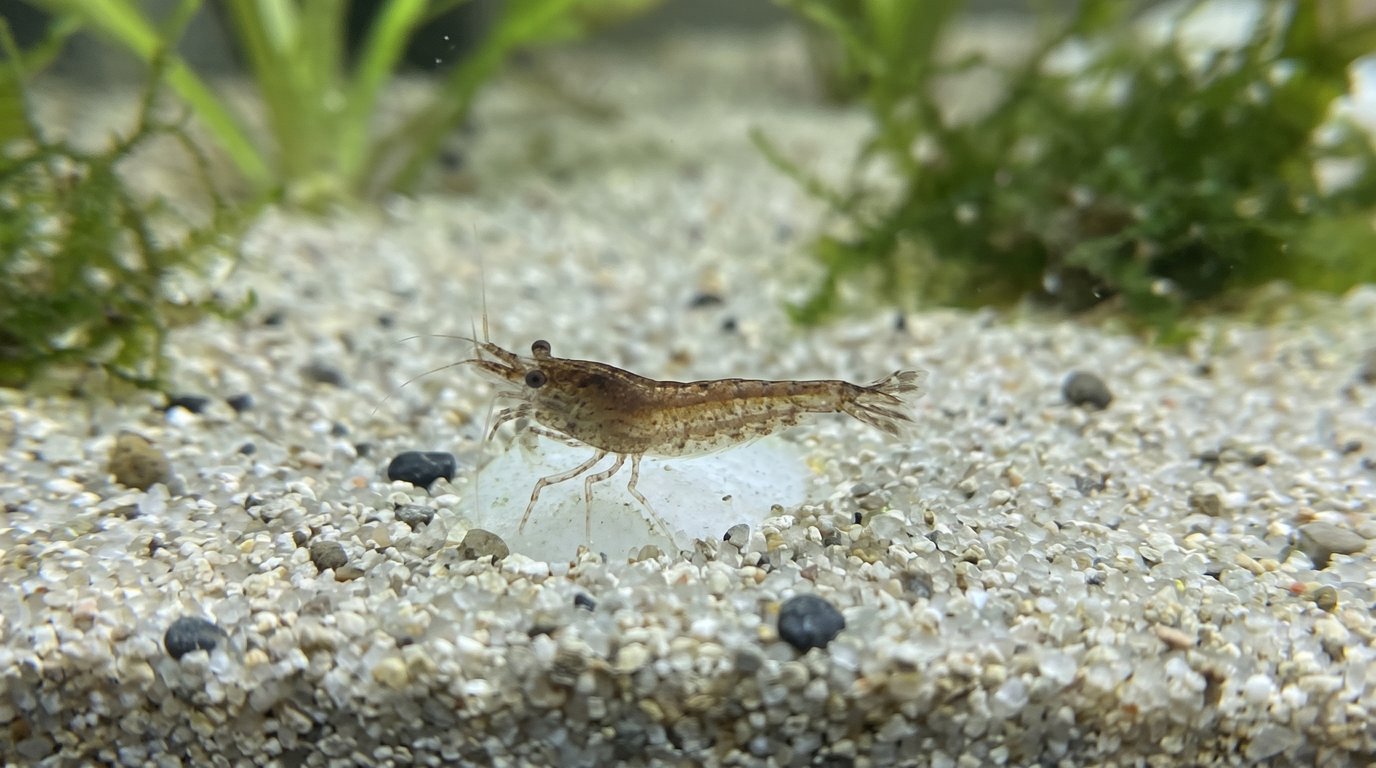
A wild cherry shrimp typically has a transparent body with scattered black spots.10 Natural mutations gave rise to stable color forms, and red, yellow and blue are the most widely cultivated of them.10 Red shrimp have been bred in Taiwan since the 1990s.10
The color itself comes mainly from carotenoids, the pigments behind the color of many crustaceans.11 Two recent gene studies on laboratory strains use the older name N. denticulata sinensis. They linked body color to genes that move or break down carotenoids.1011 The studies show which genes are involved, not how a color passes from parents to young, so don’t read them as a breeding rule.
Is a Caridina shrimp a type of Neocaridina?
No. Caridina is a separate genus in the same family as Neocaridina, the Atyidae, so no Caridina shrimp is a color line of the cherry shrimp.712 A color name alone doesn’t tell you the genus, so check the scientific name on a listing.
The choice of Sulawesi shrimp vs cherry shrimp comes down to water, because those lake shrimp are kept warmer and more alkaline than any Neocaridina line.
How to choose a Neocaridina color line for your tank
Choose a Neocaridina line by the look you want, because every line takes the same care. They all go in the same water: 72-77°F (22-25°C), pH 6.8-7.6, GH 6-10 dGH and KH 2-5 dKH, in a cycled tank with ammonia and nitrite at 0. No line is easier for a beginner than another, since the care doesn’t change with the color.
Want one even color or a pattern? For a solid color, pick from the red, orange, yellow, green, blue, black or brown lines. For a pattern, pick a Rili line. Want more than one color? Then plan a tank for each line you keep. Our tank-bred Neocaridina shrimp include every line described in this guide except red cherry and Blue Velvet.
Cherry shrimp color line questions keepers also ask
What is the rarest type of Neocaridina shrimp?
There’s no agreed rarest line. The lines differ in how they look, not in how you keep them, so choose the look you want and give that line its own tank.
Is Caridina or Neocaridina better?
Neither genus is better across the board. The Caridina sold for aquariums, bee and crystal shrimp among them, are kept in different water from Neocaridina. The better pick is the one whose water you can hold steady.
References
12 Sources
- Suen and Gillett-Kaufman, Cherry Shrimp Neocaridina davidi (Bouvier 1904), EENY-751, UF/IFAS Extension, University of Florida, 2020, revised 2024.
- Neocaridina zhangjiajiensis Cai, 1996, DecaNet taxon record in the World Register of Marine Species, DecaNet editors, VLIZ, accessed 2026.
- Plichta, Kobak, Maciaszek and Kakareko, All Shades of Shrimp: Preferences of Colour Morphs of a Freshwater Shrimp Neocaridina davidi (Decapoda, Atyidae) for Substrata of Different Colouration, Animals 11(4): 1071, 2021.
- Laohavisuti and Ruangdej, Effect of Dietary Astaxanthin and Background Color on Pigmentation and Growth of Red Cherry Shrimp, Neocaridina heteropoda, Journal of Fisheries and Environment 38(1): 1-7, 2014.
- Hou, Chang, Yang and colleagues, Enhancing the color and stress tolerance of cherry shrimp (Neocaridina davidi var. red) using astaxanthin and Bidens Pilosa, PLOS ONE 19(12): e0315585, 2024.
- Vazquez, Delevati-Colpo, Sganga and López-Greco, Density and gender segregation effects in the culture of the caridean ornamental red cherry shrimp Neocaridina davidi Bouvier, 1904 (Caridea: Atyidae), Journal of Crustacean Biology 37(4): 367-373, 2017 (repository copy, Universidad Nacional de La Plata).
- Neocaridina davidi (Bouvier, 1904), DecaNet taxon record in the World Register of Marine Species, DecaNet editors, VLIZ, accessed 2026.
- Yang, Cui, Li and colleagues, Integrative Taxonomy Reveals New Insights into the Species Validity of the Neocaridina davidi-N. denticulata-N. heteropoda Complex and Mitogenomic Phylogeny of Caridean Shrimps, Current Issues in Molecular Biology 46(11): 12279-12298, 2024.
- Neocaridina davidi (Bouvier, 1904), cherry shrimp, Nonindigenous Aquatic Species fact sheet, U.S. Geological Survey, revised February 11, 2026.
- Li, Zhang, Wang and Zhao, Functional Analysis of the NinaB-like Gene in Body Color Regulation of Neocaridina denticulata sinensis, BioTech 15(1): 15, 2026.
- Zhang, Wang, Li and Zhao, Role Analysis of the scarb1 Gene in the Pigmentation of Neocaridina denticulata sinensis, Animals 15(7): 901, 2025.
- Caridina H. Milne Edwards, 1837, DecaNet taxon record in the World Register of Marine Species, DecaNet editors, VLIZ, accessed 2026.