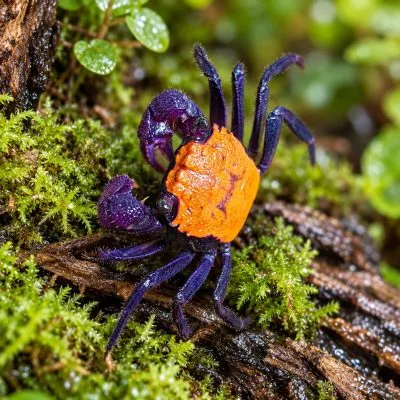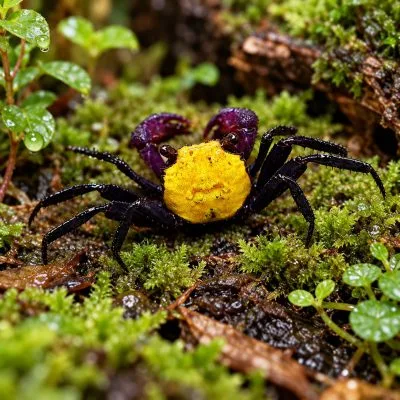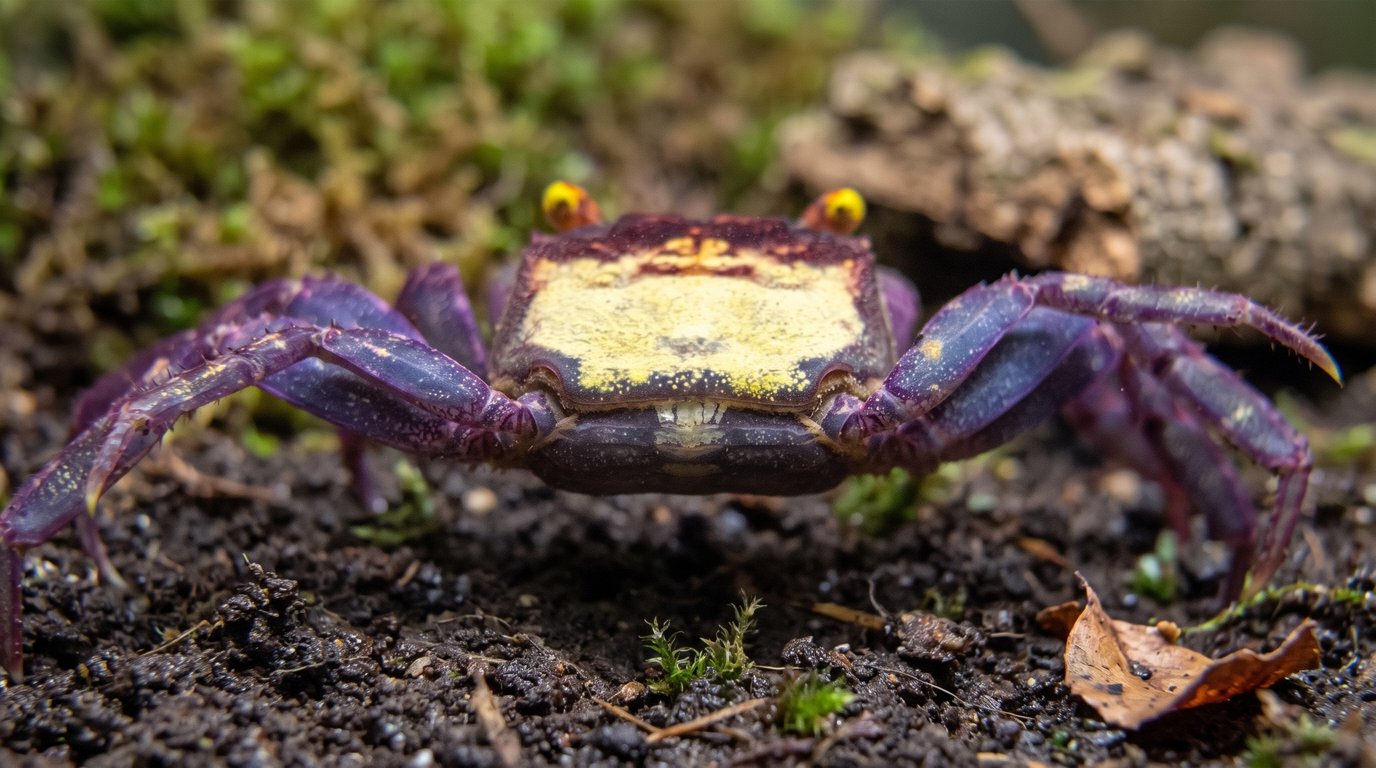
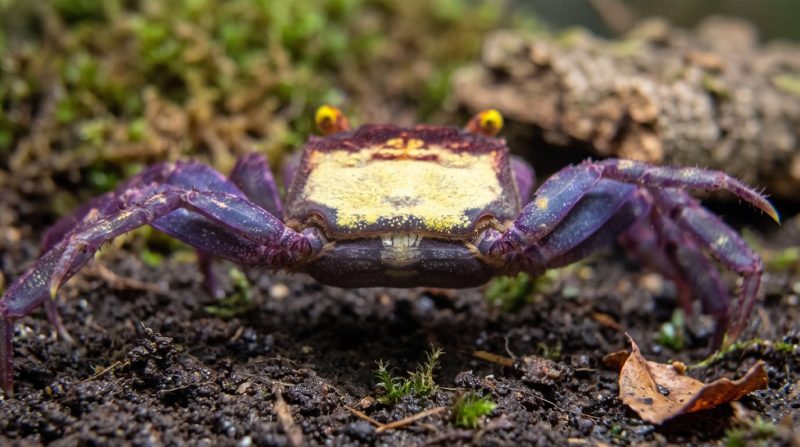
Yes, a vampire crab can regrow a lost leg or claw, but only when it molts. The new limb comes out at a later molt, often smaller and paler than the one it replaced at first.
How does a vampire crab grow a lost leg back?
A vampire crab rebuilds a lost leg or claw out of sight, and the finished limb only appears when the crab molts. It starts at the break. In the European shore crab, a leg comes off at a built-in breaking point near its base, cast off by the crab’s own muscle, and a membrane across that point seals the stump at once.1 In crabs generally, a thin sheath of shell then covers the joint and holds the new limb bud while it develops. The regrown limb comes out with the molt that follows.2
Lost legs and claws grow back. In our tanks, the sign that one is coming back at the next molt is a small bud of flesh at the spot where it was lost.
So don’t expect a stump to get longer week by week. What you’ll see between molts is the stump, maybe that bud, and then a crab with a new leg once it has molted. Across crustaceans and insects, regrowth depends on a successful molt and keeps in step with the molting hormones.3 Molting is a normal part of vampire crab care, and for a crab with a missing leg it’s the whole repair job.
That means the conditions for a safe molt are the conditions for regrowth: water the crab can climb into and fully enter, a damp hide on land, and being left alone while it sheds. None of the usual advice on vampire crab molting changes because a leg is missing.
How many molts until a regrown leg or claw is full size?
Expect the first regrown limb to be smaller than the one it replaced, and sometimes paler. In crabs generally, a regrown limb usually reaches full size within two or three molts, and in some species within one.2 There’s no vampire crab figure for this, and nobody has timed how often a vampire crab molts, so you can’t put a date on it.
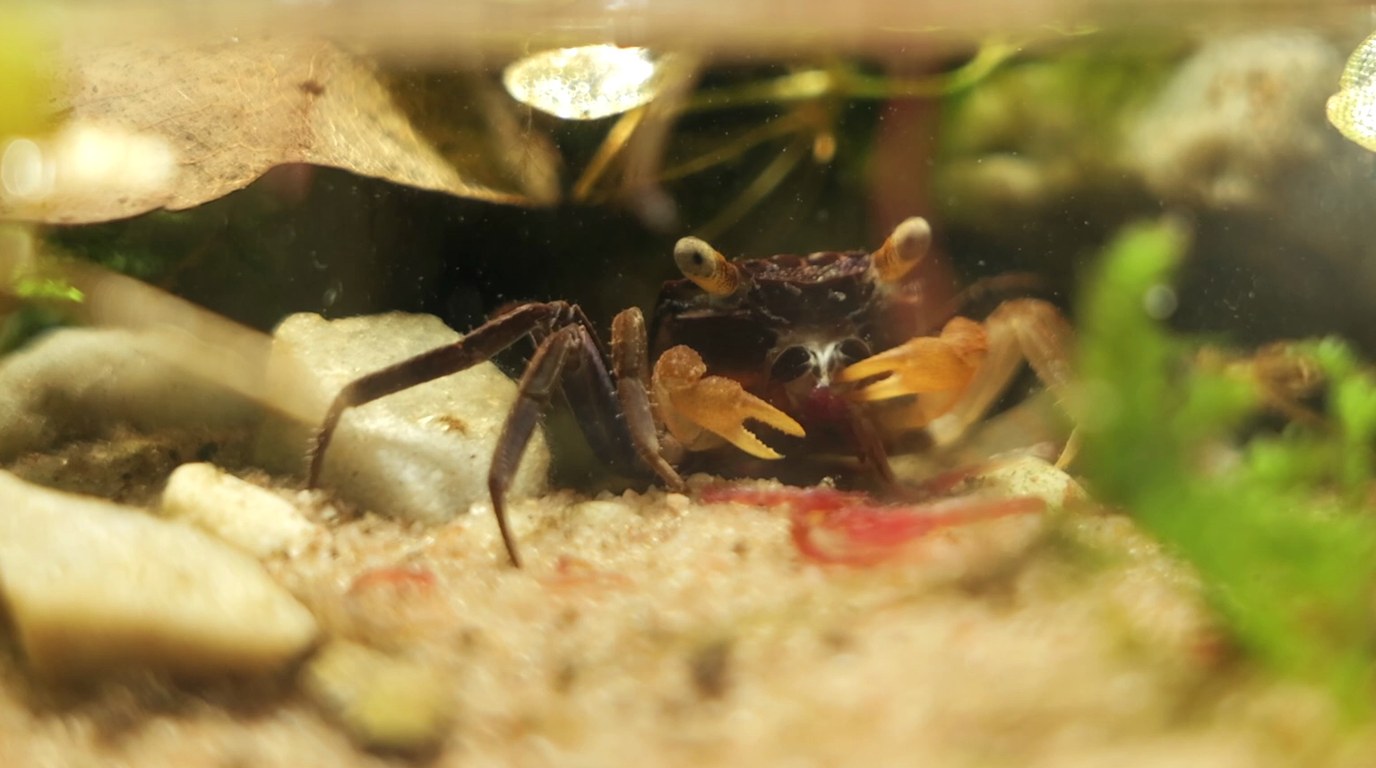
The first molt after a loss doesn’t always bring everything back, either. A leg lost shortly before a molt may not come back at that molt and only return at a later one. One crab lost three legs five or six weeks before it molted. One leg came back full size, one came back short and pale, and one hadn’t come back yet.
Don’t expect one lost leg to bring the next molt sooner. In a land crab studied in the lab, losing one to four limbs made no difference to when it molted; only losing five or more brought the molt forward.4 So a crab missing a leg or two simply molts when it’s ready.
Don’t judge the color on the day of the molt, either. Right after any molt a vampire crab often looks pale or washed out while its new shell hardens. Its normal color usually comes back within a few days, about a week at most. A new leg can still look paler than the rest after that, which happens with regrown limbs at first. A whole crab that keeps fading with no molt to explain it is a different problem from one pale new leg.
What should you do for a vampire crab with missing legs or claws?
For a crab missing a leg or two, very little: leave it where it is and let the next molt do the work. A crab that has lost both claws is the exception, because it needs help to eat. Either way, don’t lift a crab out just to look at the stump. You can see everything you need from outside the glass.
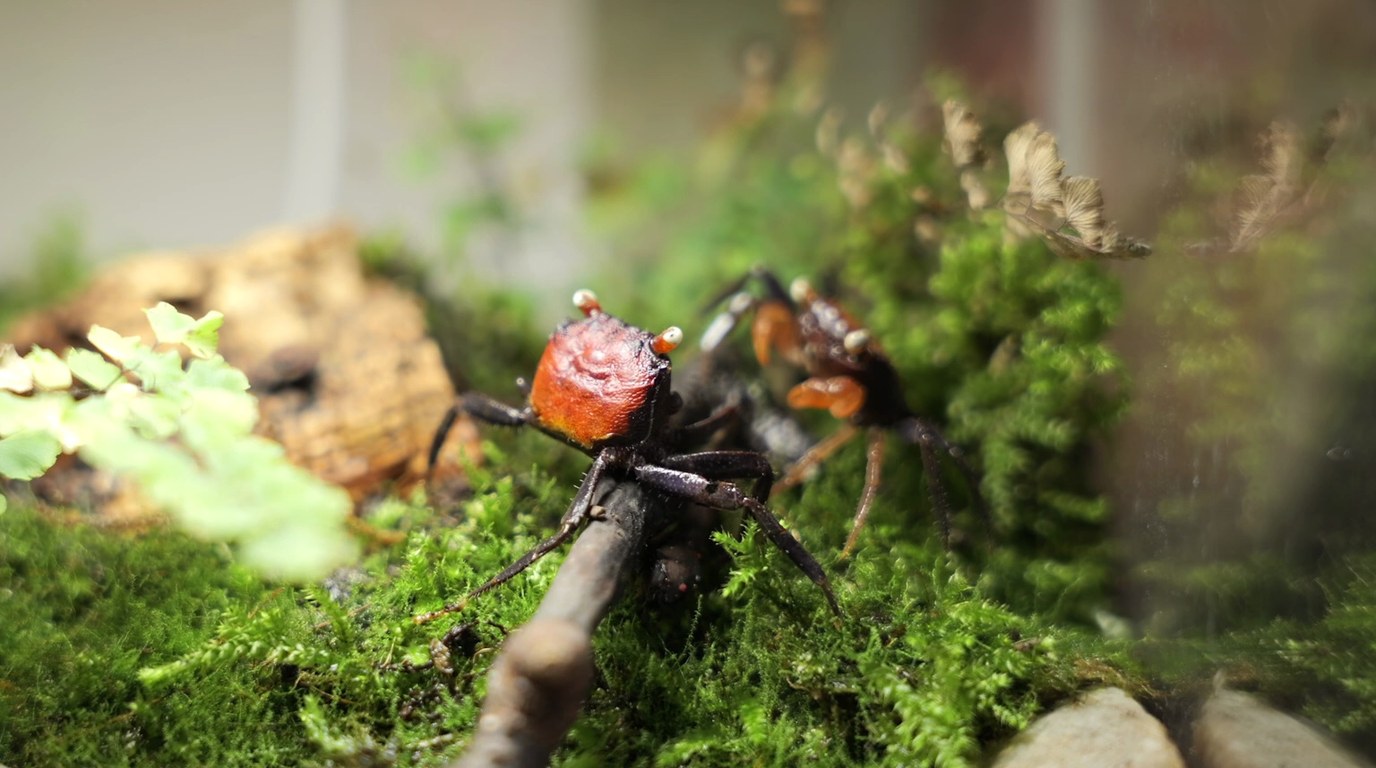
A vampire crab with both claws gone can’t pick up and tear ordinary food, so treat it as a patient. Move it out of the group into a small box of its own with damp soil or moss, a hide, and a dish of water it can climb into and fully enter, since that’s where it will molt. Offer small, soft food: fish food moistened into a sticky paste, crumbled fish food, or small pieces on a flat dish. It takes these with its mouthparts or scoops them up with its front legs.
Small pieces from the usual list of what vampire crabs eat work too, as long as they’re soft and cut fine. Crabs kept apart like this have lived on for weeks, and some grew their claws back at the next molt. Wait until it has new claws, a hardened shell and is eating on its own before it goes back to the group.
How do you stop the same vampire crab losing more legs?
Find the crab doing the chasing and move it. In a group, vampire crabs often lose legs and claws in fights with each other, most often when a dominant male chases or attacks the others. A crab can lose anything from one leg to both claws and several legs that way.
A chase over a hide that ends with one crab backing off is ordinary group life. It’s most of what people mean when they ask whether vampire crabs are aggressive. What tells you something is wrong is a pattern: the same crab losing legs one after another, or always being pushed out into the open.
When you see that pattern, set up a second tank before you need it. If it’s a male picking on a female, separate the aggressive male vampire crab once that tank is running, and give her extra cover while she regrows what she lost.
Adding crabs later? Our vampire crab lines are sold as Male or Female, so you choose the sex on the product page and decide how many males go in. Everything in our catalog is bred or propagated in our own tanks rather than collected from the wild.
When won’t a vampire crab’s lost leg grow back properly?
A leg torn off partway along, away from its normal breaking point, can grow back more slowly and may stay incomplete.2 Damage at the very base of the leg is worse. In the shore crab there’s nothing there to stop the bleeding, and the crab has to rebuild the base before a new leg can follow.1
Age matters too. In crabs generally, how fast a limb regrows depends on how often the crab molts and how much it grows each time. Both fall as the crab gets older, and a crab that stops molting altogether stops regrowing as well.2 So a young crab tends to get its legs back sooner than an old one, and an old crab may carry a gap or a small claw for longer.
An eye is different. Crabs regrow lost legs and claws, but not their eyestalks,5 so a crab that has lost an eye keeps that gap. Limbs can also be lost in a molt that goes wrong: after one failed molt, both of a female’s claws were found still stuck inside the shed skin, and she lived on.
References
5 Sources
- Crothers, The Biology of the Shore Crab Carcinus maenas (L.). 1. The Background: Anatomy, Growth and Life History, Field Studies 2(4): 407-434, 1967.
- Evidence of Cheliped Autotomy and Regeneration in the Lower Miocene Crab Achelous monspeliensis From Portugal, Neto de Carvalho C. and others, Ecology and Evolution 16(7): e73799, July 2026 (background section on living crabs).
- Das, Morphological, Molecular, and Hormonal Basis of Limb Regeneration across Pancrustacea, Integrative and Comparative Biology 55(5): 869-877, 2015.
- Skinner and Graham, Loss of Limbs as a Stimulus to Ecdysis in Brachyura (True Crabs), The Biological Bulletin 143(1): 222-233, 1972.
- Kao and Chang, Limb Regeneration in the Eye Sockets of Crabs, The Biological Bulletin 193(3): 393-400, 1997.
Ready to get started?
Shop our Vampire Crab collection
8 products available · Live Arrival Guarantee