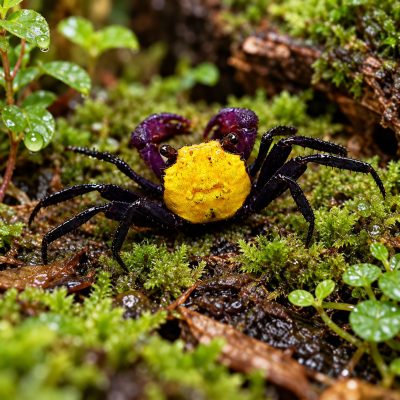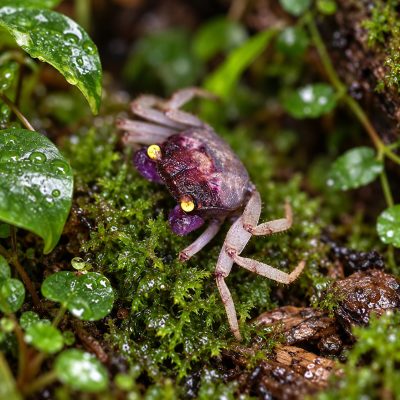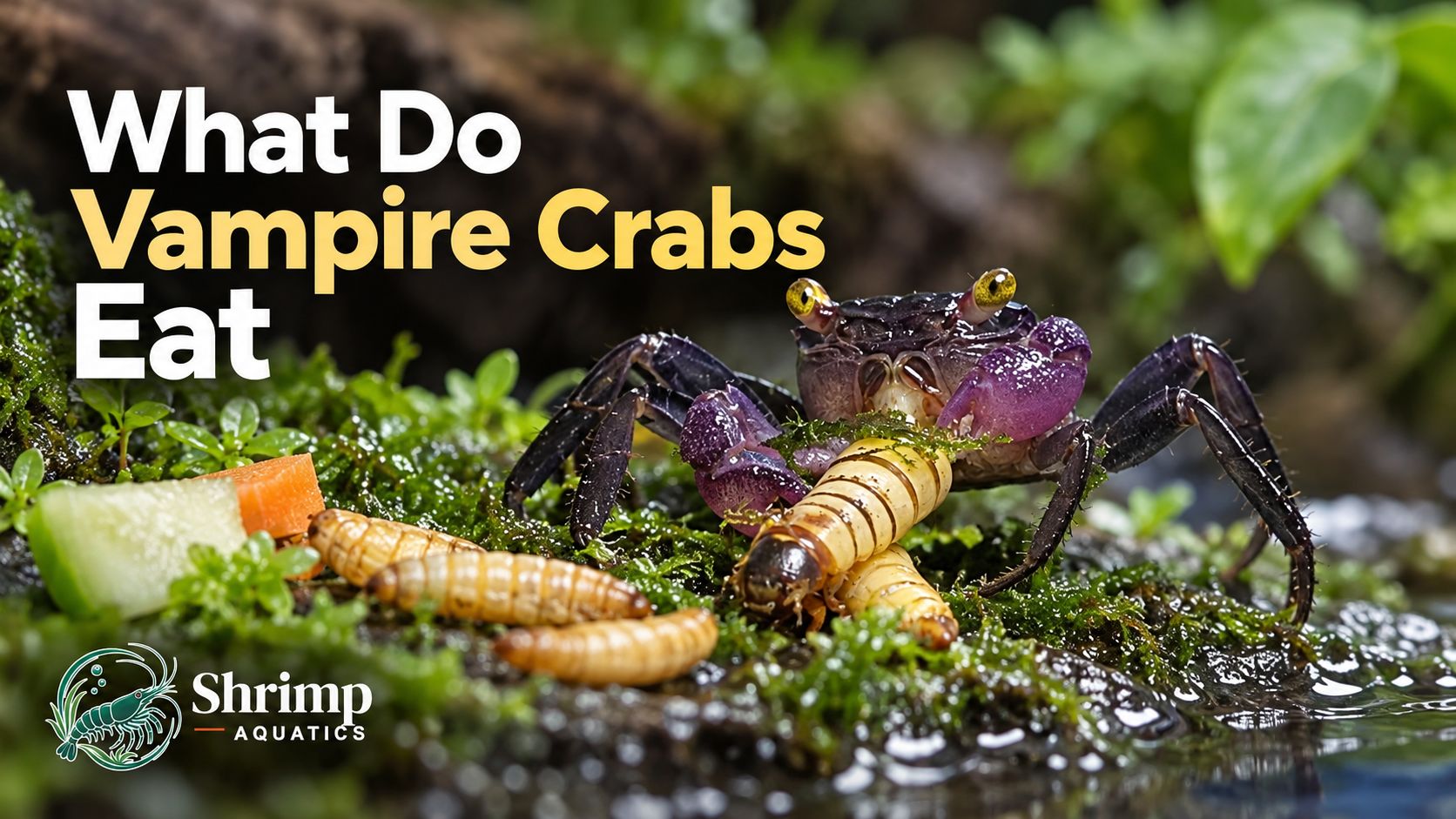
Your vampire crabs are in the tank, and now they need a menu. Feed vampire crabs (Geosesarma) small live, frozen or dried animal food, such as fruit flies, bloodworms or dried insect larvae, plus vegetables or a little fruit. Keep the portions small, and lift whatever’s left before it goes moldy.
That mix follows what wild crabs eat. Two vampire crab species described from central Java in 2015 were found to feed at least partly on insects, and one of them probably also on midge larvae and plant detritus.1 You’ll often see vampire crabs called omnivores or scavengers, and that fits too: land crustaceans mostly eat detritus and plants and add animal food, and many small species eat both.2 So offer both kinds, and let the next-day check show you which your crabs take.
Which foods to keep on hand for vampire crabs
Keep a few animal foods and some plant food on hand. At Shrimp Aquatics, we feed our vampire crabs vegetables, fruit and dried insect larvae, among other foods. Frozen bloodworms are an easy first pick for your crabs: they’re chironomid (midge) larvae, which Geosesarma dennerle, one of the two Java species, probably also eats in the wild.1 One keeper who breeds vampire crabs gives bloodworms as a treat at least once a week, and says adults and babies alike tear into them.
Whatever line you keep, treat the wild diet as a guide to the kind of food, not a fixed menu. A practical shelf looks like this:
- Small live insects, such as fruit flies or small crickets no bigger than a crab can hold.
- Frozen bloodworms, thawed first and bought from an aquarium supplier.
- An insect-based or sinking prepared food, such as a small pellet or wafer, broken up if it’s large.
- Dried insect larvae, an easy food to keep on the shelf.
- Plant food: a small piece of vegetable or fruit, or leaf litter left to soften on the land side.
Rotate between them, so no single food carries the whole diet. Live insects need the most care. They’re the easiest food to lose in the moss, so don’t add more than the crabs can deal with.
How often to feed vampire crabs
Feed small amounts and let the leftovers set the pace: offer a little, see what’s gone by the next day, and adjust. Food still sitting there untouched? Cut the portion back. If it’s all gone, keep that amount and keep checking. Start smaller than feels generous, because adding a little more is a lot nicer than fishing moldy food out of the moss.
How often that works out to depends on your tank. One keeper with a bioactive tank that has run for about 900 days says the only weekly jobs are feeding the crabs and topping up the water. Treat that as the low end for an established tank full of small life the crabs can forage, not a schedule for a new or bare one. A newer or sparser tank has less for the crabs to find between meals, so let the next-day check decide how often you feed, not the calendar.
Where to put food so a shy vampire crab finds it
Put food on the land side near the hides, and some at the water’s edge. In our paludariums, the crabs spend their time on land and climb down into the water from time to time to feed, so a spot at the water’s edge meets them on the way. Pick one or two fixed spots, such as a flat stone or a small shallow dish, so you always know where to look for leftovers. And because vampire crabs are mostly nocturnal, set the food out in the evening.
A crab that never seems to eat
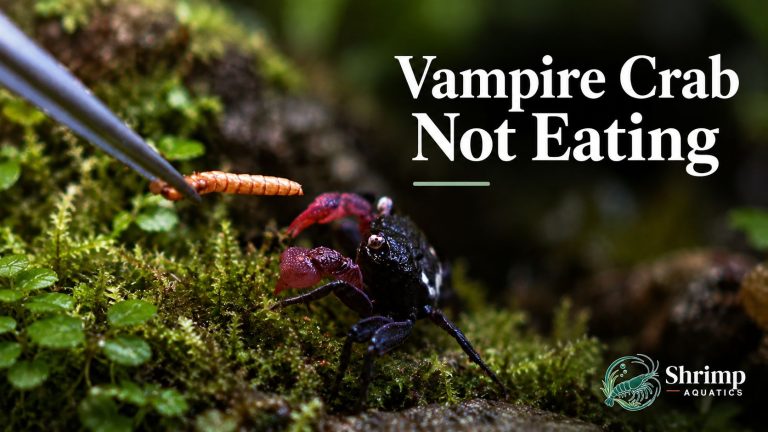
What if one crab hardly ever comes out? Put a small piece of food right beside its hide, where it doesn’t have to cross open ground to reach it. If the piece is still there the next day, lift it and try a different food next time. If a crab keeps refusing food, vampire crab not eating walks through what’s normal and when to worry.
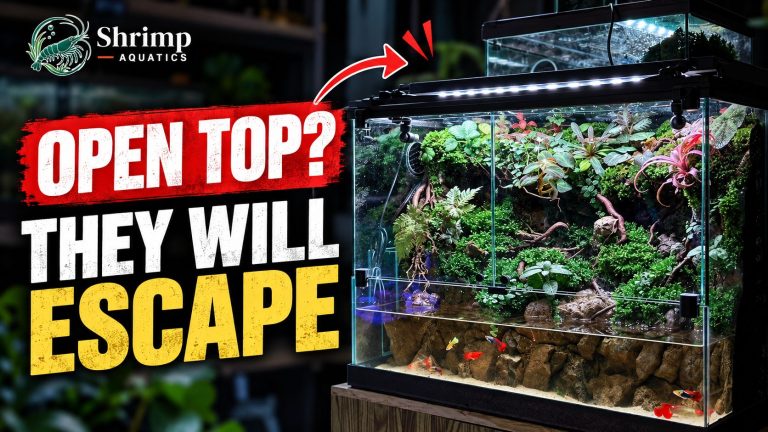
If shrimp or small fish share the water side, they’ll eat food that lands in the water too, so keep the crabs’ share on the bank. Which tank mates suit that water at all is part of wider vampire crab care, because the water has to fit them as well as the crabs.
Lift leftovers before they mold in a humid vampire crab tank
Lift anything uneaten within a day, and feed less next time if mold appears. In the damp air these crabs need, food that sits too long goes moldy and adds to the mess. Keep the feeding spots where you can reach them with tongs or a pipette without pulling the moss apart.
Tempted to fix mold by drying the tank out? Don’t. The crabs need that humidity, and keeping the air damp is part of the vampire crab tank setup from day one.
A cleanup crew of springtails and isopods works through small scraps you miss, but it’s a backup, not a substitute for lifting leftovers. Crabs that hunt small insects may catch some of the cleanup crew too, so a springtail or isopod colony may need topping up now and then.
Do vampire crabs need extra calcium around a molt?
Keep feeding the usual varied mix, with nothing extra for calcium, and leave a molting crab alone. Vampire crabs usually molt in the water, so if you see one molting there, keep food and your hands out of that spot until it climbs back out. Feed the rest of the group on the land side as usual.
No study has tested calcium foods or supplements in Geosesarma, so the peas, spinach and cuttlebone often suggested for molting have no tested benefit for these crabs.
Feeding vampire crablets in their own container
Feed crablets the same foods as the adults, crushed or cut finer so a tiny crab can handle them. Adult vampire crabs eat the crablets they find, so crablets are moved out of the adult tank to grow up, which means they’re fed in a container of their own.
Crumble the pellet to a powder, chop thawed bloodworms into short pieces and offer the smallest live food you can get. Tiny as they are, crablets hunt too: one keeper watched young crabs hunting springtails several times. A small container goes moldy just as easily, so give tiny amounts and lift what’s left the next day. Crablets only reach this container if you move them out as soon as you find them, the key step in vampire crab breeding.
Buying vampire crabs with food already on hand
Have a live or frozen food and a prepared food in the house before you order. Our vampire crabs come from several lines, such as the Tomato Vampire Crab, Geosesarma sp. “Tomato”, and the White-handed Vampire Crab, a Geosesarma species. Everything in our catalog is bred or propagated in our own tanks rather than collected from the wild.
You choose male or female on each product page. When they arrive, follow the instructions supplied with your order, then start with a small first meal once they’ve settled in.
References
2 Sources
- Ng, Schubart and Lukhaup, New species of “vampire crabs” (Geosesarma De Man, 1892) from central Java, Indonesia, and the identity of Sesarma (Geosesarma) nodulifera De Man, 1892 (Zenodo archive copy of the paper), Raffles Bulletin of Zoology 63: 3-13, 2015.
- Marin and Tiunov, Terrestrial crustaceans (Arthropoda, Crustacea): taxonomic diversity, terrestrial adaptations, and ecological functions, ZooKeys 1169: 95-162, 2023.
Ready to get started?
Shop our Vampire Crab collection
8 products available · Live Arrival Guarantee