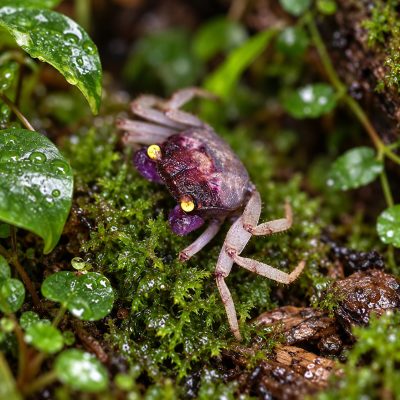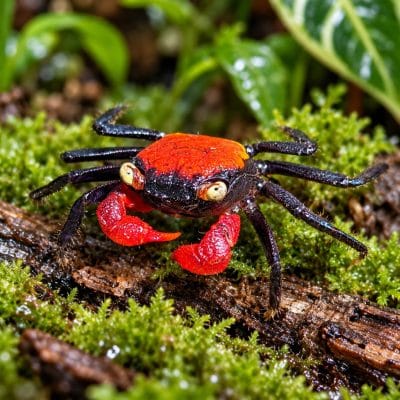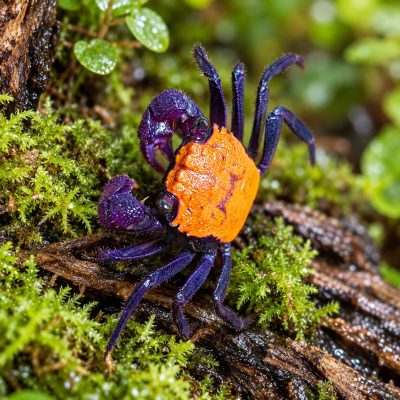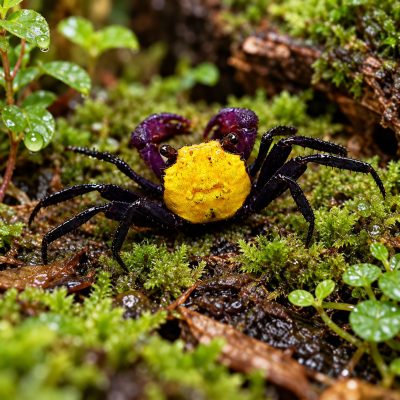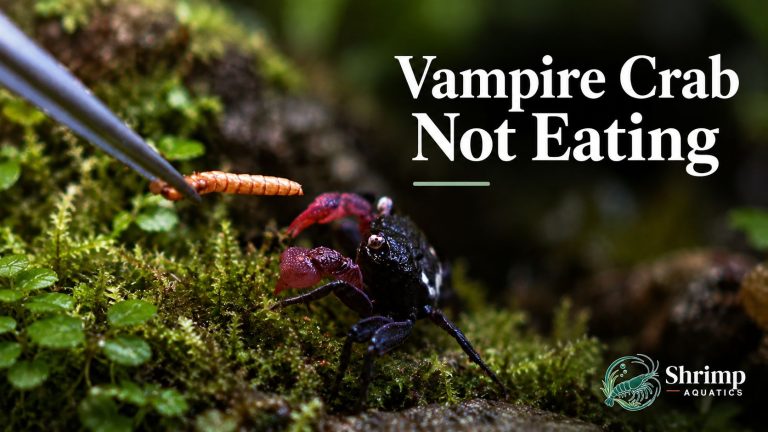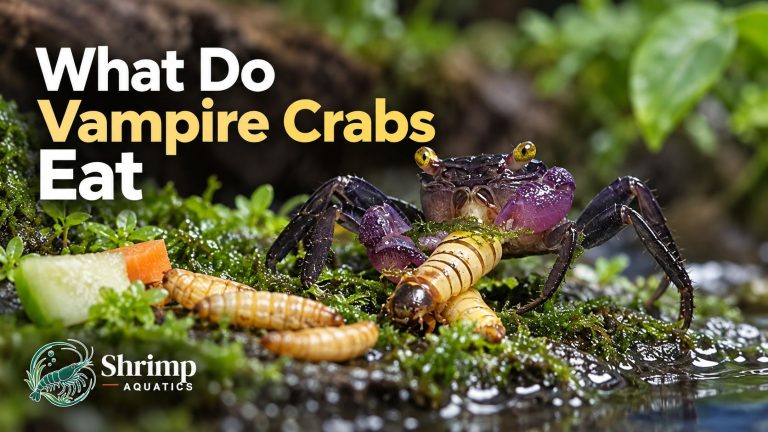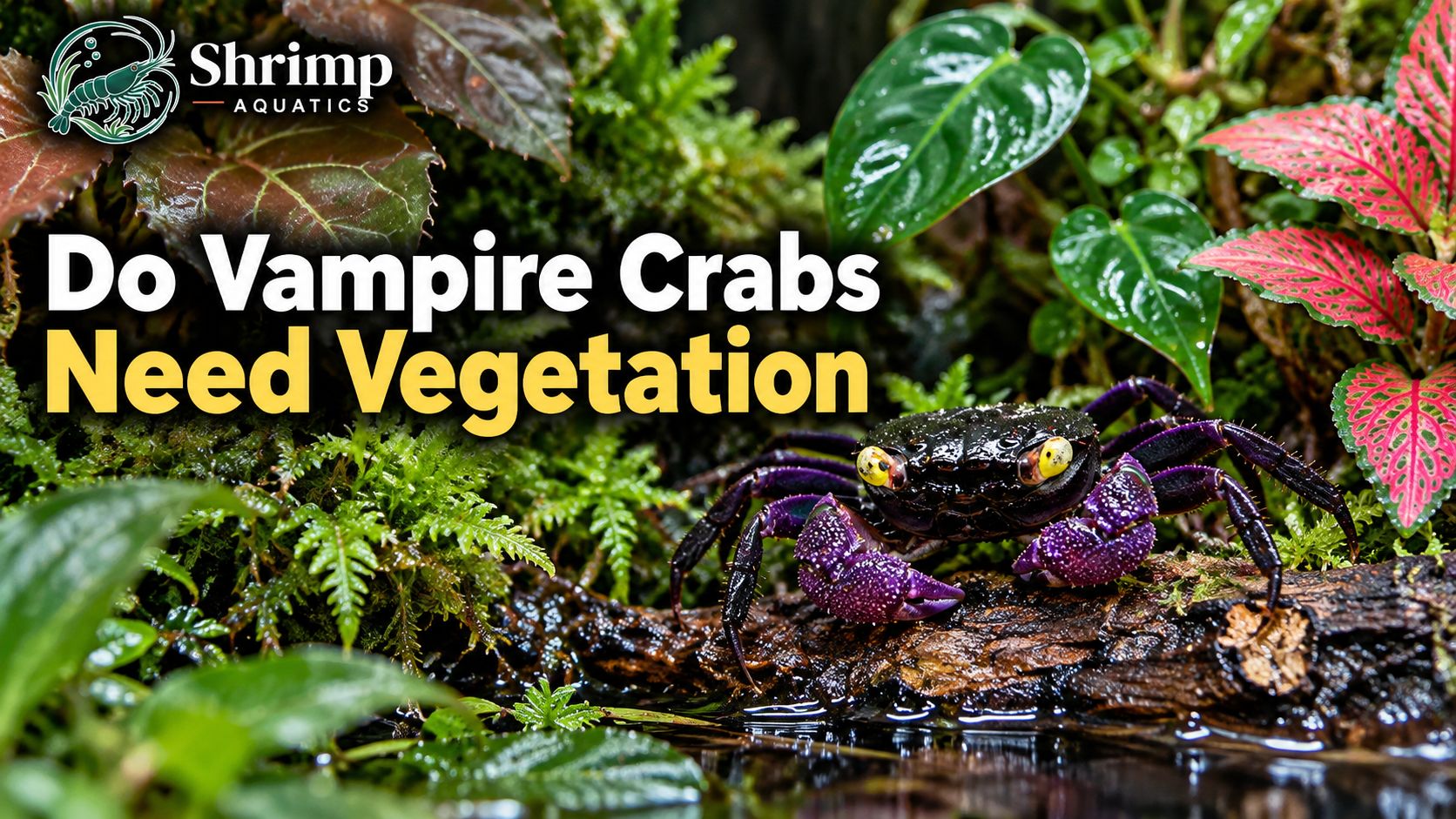
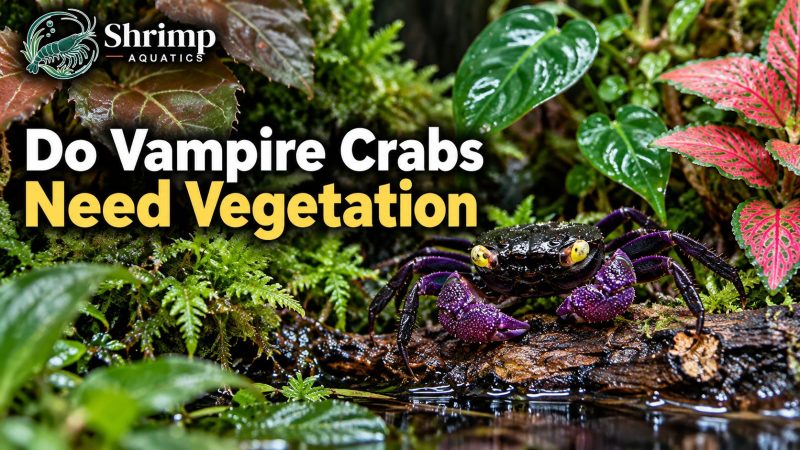
Yes, vampire crabs need dense cover, and plants are the easiest way to give it. The plants don’t have to be live. What your crabs need is somewhere dark to sit out the day, things to climb and damp air, and live plants and moss happen to give all three at once.
In the wild, the Javan crabs sold as vampire crabs live on land near hill streams. They hide under rocks and dense vegetation and dig burrows near the water’s edge.1 A home paludarium works the same way. By day your crabs will sit in burrows, in caves and crevices, under stones, cork or leaves, or deep among the plants. It’s normal to go days without seeing one, and cover is what lets them do that.
Plants also do a job you can’t see. In a closed tank, moss and a moist substrate keep the air damp, and dry air is the failure keepers run into most with these crabs. Cover matters around a molt as well. Crabs in general are soft and close to helpless straight after molting, and they look for a secluded spot until the new shell hardens.2
Should vampire crabs get live plants or fake cover?
Give them live plants if you can, and at the very least some live moss. Live plants and moss hold water, so they help keep the humidity up between mistings. Their soft and dead leaves become food, too: one of the described wild species probably eats plant detritus along with small insects.1
Fake plants, cork bark, stones and a layer of leaf litter give cover just as well, and crabs hide under them happily. What they don’t do is hold moisture. A tank furnished only with fake cover leans harder on a tight lid, a damp substrate and regular misting. Those three are how you keep a vampire crab tank humid when plants aren’t doing it.
Live plants do bring two chores. They need light, but an ordinary aquarium or terrarium light on a timer is enough, and some keepers dim it so the crabs still come out. And a closed, damp tank grows mold, mostly in the first weeks, on damp wood, substrate, moss and soft plants. Keepers pick it off, give the tank a little more air and add springtails or isopods. Don’t count that as a point for fake plants, though: wood and substrate mold too.
Do vampire crabs eat live plants?
Mostly, no. Keepers report little or no damage to the land plants in a paludarium. What does get eaten is moss tips and soft or dying leaves, and in one keeper’s tank the crabs stripped Anubias leaves. Pothos and climbing fig grow on with the crabs in other keepers’ tanks.
In our vampire crab paludariums we grow Java moss, Anubias nana, Java fern and pothos, and our crabs don’t eat them.
We know of no toxicity data for houseplants on crabs. We’d stick to plants keepers already grow with them and leave unknown houseplants out. Java moss, Anubias, Java fern and pothos are good first plants for a vampire crab paludarium.
How much cover does a vampire crab tank need?
Enough that a crab can get out of sight wherever it happens to be. One cave in a bare corner isn’t it. Spread plants and hides across the land, put cover along the waterline where the crabs climb in and out of the water, and give the water section some plants too. Build that spread of cover into your vampire crab tank setup from the start.
Density matters most if your crabs breed. Adults eat any crablets they catch, so moving the young (or the adults) to another tank raises the most. Still, in a large, densely planted paludarium some crablets grow up alongside the adults. Thick planting in the water helps shrimp as well. In most keepers’ tanks shrimp live alongside vampire crabs and few get caught. Keepers who put a handful into a small, sparsely planted water part, though, have lost most of them.
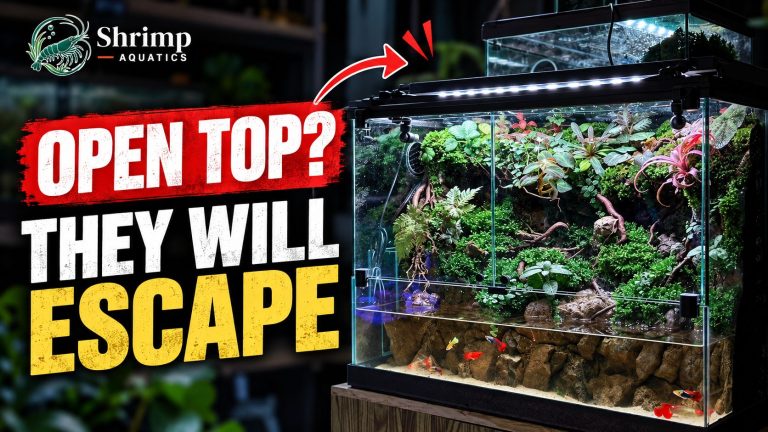
Keep climbing plants trimmed below the lid. Anything that reaches the lid seam gives a crab a ladder to the one gap you missed. A tight lid is basic vampire crab care, and plants shouldn’t undo it.
Get the planting done before your vampire crabs arrive
Plant the paludarium first and give it time to settle. You want the moss to have taken and the first wave of mold to have come and gone before any crab goes in. Rinse every new plant well, especially anything from a garden center. Plants from an unknown tank or nursery can carry pesticides. Unwashed or treated plants are also one of the first things keepers check when new crabs die soon after arrival.
Once the tank is ready, you can pick from our vampire crab lines. Everything in our catalog is bred or propagated in our own tanks rather than collected from the wild. You choose a male or a female on each product page. Confirming your own import rules is part of ordering. We cannot tell you that live freshwater invertebrates are legal to import where you live.
References
2 Sources
- New species of “vampire crabs” (Geosesarma De Man, 1892) from central Java, Indonesia, and the identity of Sesarma (Geosesarma) nodulifera De Man, 1892, Raffles Bulletin of Zoology 63: 3-13, 2015.
- Edible Crabs of the United States (Fishery Leaflet 550), George H. Rees, U.S. Fish and Wildlife Service, 1963.
Ready to get started?
Shop our Vampire Crab collection
8 products available · Live Arrival Guarantee