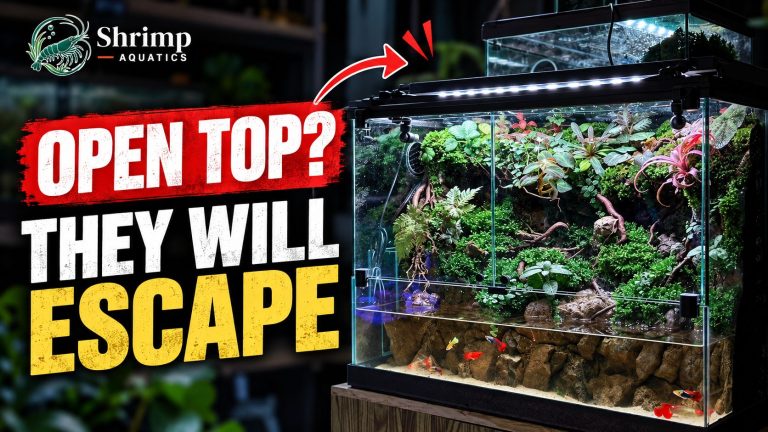

Haven’t seen your vampire crabs for days, even though you know they’re in there? That’s normal, because vampire crabs (Geosesarma) are mostly nocturnal: they come out in the evening, through the night and early in the morning, and spend most of the day hidden. Some crabs do show themselves in daylight, but a crab you hardly ever see is usually just a crab keeping its own hours. Look for yours after dark, feed in the evening, and check for a molt before you worry about one that’s vanished.
What do vampire crabs do at night in the wild?
Much what yours do at home: they come out after dark and never stray far from cover. Field notes on wild vampire crabs keep finding them at night. Geosesarma todaeng, from a swamp forest in southern Thailand, is described as a nocturnal species, and G. bunian and G. penrissen from Malaysian mountain forest were found at night, in burrows, on low shrubs, in leaf litter and on plants.123 These are collecting notes rather than timed studies, and none of them covers the crabs sold in the hobby, but they all point the same way.
Cover matters just as much. G. todaeng climbs roots, palm stems and leaves about half a meter to a meter above the water, and when something disturbs it, it drops straight into the water.1 That’s the animal living in your paludarium: small, shy, and never more than a second away from a hiding place.
When will you see your vampire crabs in the tank?
In the evening, at night and early in the morning. By day most vampire crabs stay hidden, though some do sit out in daylight now and then, which is why “mostly nocturnal” fits them better than “only at night”. One keeper finds theirs up on the waterfall and climbing the back and side walls once the light goes out.
A small lab study points the same way. Four wild-caught Geosesarma noduliferum from Java, watched over three days, explored, fed and interacted more at night, with a peak at about 11 PM, and rested or buried themselves more by day.4 Four crabs is a tiny sample, but it matches what keepers see at home.
Why newly bought vampire crabs hide more at first
New crabs usually stay hidden at first and show themselves more once they’ve settled. That can take anywhere from about two weeks to six months, and some bought crabs stay shy. One keeper’s crabs hardly showed themselves for the whole first half year. These days they wander about freely and ignore the keeper completely, which is about the best compliment a vampire crab can pay.
Where a crab was born makes a difference too. Crabs born and raised in a keeper’s own tank are much less shy than bought adults, many of which were caught in the wild. One keeper who started with wild-caught crabs now has the sixth or seventh tank-bred generation in the same tank, and those crabs are far less jumpy than the founders ever were. So if your new crabs disappear for their first weeks, give them time, leave the hides alone and do your looking in the evening.
Is a vampire crab hiding all the time normal?
Usually, yes. By day vampire crabs sit in burrows and tunnels they dig, in caves and crevices, under stones, cork or leaves, or among dense plants. Days without seeing a crab are common, and some crabs aren’t seen for weeks or even months even though they’re alive. A missing vampire crab is usually just a well-hidden one.
How hidden can they get? One keeper with nine species hasn’t laid eyes on some of them for three months or more, and only knows they’re alive because new babies keep turning up. Another slid a small inspection camera behind the rockwork and found the crabs had moved in there like an ant colony. In other tanks one or two crabs are out most days, so don’t measure yours against someone else’s.
If a crab hasn’t shown itself for days, check the basics of vampire crab care while you wait:
- The lid is closed with no gaps a crab could squeeze through.
- The moss and substrate on the land feel damp, not dry.
- A thermometer at crab level reads about 78°F (26°C), inside 72-85°F (22-29°C).
- Every crab can climb into the water, get fully under and walk back out.
When a missing vampire crab may be molting
A crab that suddenly vanishes may be molting. In our paludariums, a molting crab stays down in the water for a few hours, so look in the water section before you dig under hides, and leave a crab that’s sitting there alone. The shed it leaves behind can look a lot like a dead crab, which is where vampire crab molting helps you tell the two apart. New arrivals are the other case to keep in mind. Newly bought crabs often die between arrival and about two weeks later, even in a tank where other crabs do well, and the checks for new vampire crabs dying start with the same molt question.
Feed vampire crabs in the evening, near their hides
Feed in the evening or at lights-off, because that’s when vampire crabs eat. You’ll rarely catch them at it. What you’ll notice instead is food that’s smaller or gone by the next morning, and that’s exactly the sign you want. Put a small portion on the land near the hides as the lights go off, then check in the morning and lift what’s left before it molds. A piece on a flat stone is easy to find again, whichever of the foods vampire crabs eat you choose.
New crabs may leave food untouched for days or even weeks before they start, so a full dish in the first weeks doesn’t mean something’s wrong. Keep offering a little each evening and keep lifting the leftovers.
Do vampire crabs need a moonlight or red light at night?
No, so save your money: vampire crabs don’t need a moonlight, a red light or any special lamp. The light over the tank is there for the plants. Keepers grow them under ordinary aquarium or terrarium lights, fluorescent tubes or LED bars, usually on a timer, and a steady day and night cycle is ordinary practice. Where part of the tank gets too little light, plants and moss grow poorly there, so pick the light for the best plants for a vampire crab paludarium you’re growing.
Does a dimmer tank bring the crabs out more? Keepers disagree. Some see their crabs more often with the light dimmed or switched off, and others find a bright light doesn’t seem to bother theirs. No study has tested whether a night light, red light or moonlight changes when vampire crabs come out, so don’t buy one expecting it to change your crabs’ habits. Thinking of a UV lamp instead? Check whether vampire crabs need UV light at all before you buy one.
How to see your vampire crabs more often
Work their hours, not yours. Look in the evening, after lights-off and early in the morning, when the crabs are out. A dim light is enough to watch by. Put some of the hides near the front glass, so a crab sitting at the entrance of its cave is in view. Then give new crabs their settling time before you change anything.
Don’t expect more plants to fix it on their own. Thick cover can make crabs feel safe, but it also hides them from you, and keepers split on whether a densely planted tank means more sightings or fewer. A few open patches between the hides near the front give you somewhere to see a crab when it does step out.
Ordering tank-bred vampire crabs for your paludarium
When you order tank-bred vampire crabs, you choose Male or Female for each crab on the product page. Everything in our catalog is bred or propagated in our own tanks rather than collected from the wild. Set the tank up and let it run before you order, with hides already in place near the front, so new crabs have somewhere to go the moment they’re in. When they arrive, follow the instructions supplied with your order, then expect a quiet first few weeks and do your looking in the evening.
References
4 Sources
- Ng, Yeesin and Promdam, A New Species of Vampire Crab (Crustacea: Brachyura: Sesarmidae: Geosesarma) from a Freshwater Swamp Forest in Narathiwat Province, Southern Thailand, Tropical Natural History 23: 97-104, 2023.
- Ng, Khadijah-Ahmad and Ahmad, On a new species of vampire crab from the Geosesarma foxi species-group (Crustacea: Brachyura: Sesarmidae) in northern Peninsular Malaysia, Raffles Bulletin of Zoology 73: 162-168, 2025.
- Grinang, Ng and Ng, A new species of vampire crab of the genus Geosesarma De Man, 1892 (Crustacea: Brachyura: Sesarmidae) from a montane forest in southwestern Sarawak, Malaysian Borneo, Raffles Bulletin of Zoology 74: 457-464, 2026.
- Putri, Ridwan, Sofandi, Rahmah and Raffiudin, Circadian rhythm of freshwater crab Geosesarma noduliferum (De Man, 1892) under laboratory conditions, Jurnal Natural 26(1): 13-21, 2026.
Ready to get started?
Shop our Vampire Crab collection
8 products available · Live Arrival Guarantee