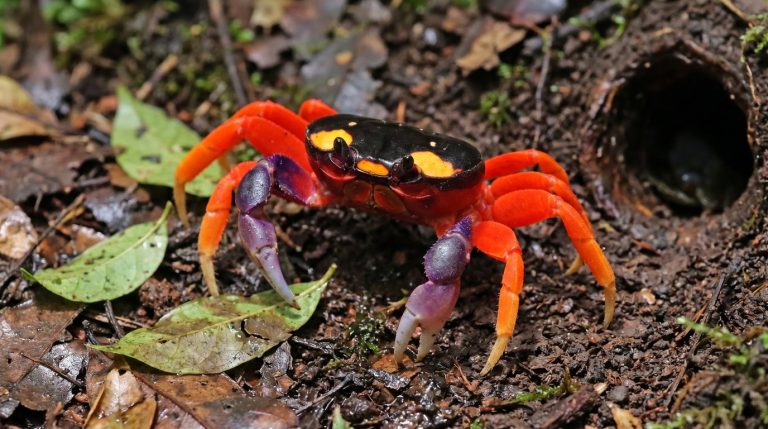
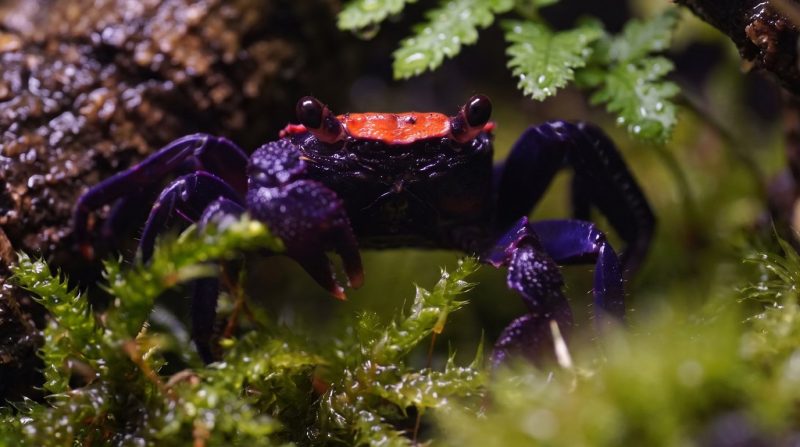
Vampire crabs are aggressive with each other, not with you. In a group they chase and fight, most often when a dominant male goes after the others. A fight can cost a crab anything from one leg to both claws. You won’t stop it entirely, but how you stock and build the tank decides how many crabs get hurt. That’s as much a part of vampire crab care as a tight lid or damp moss.
Will a vampire crab attack you or pinch your hand?
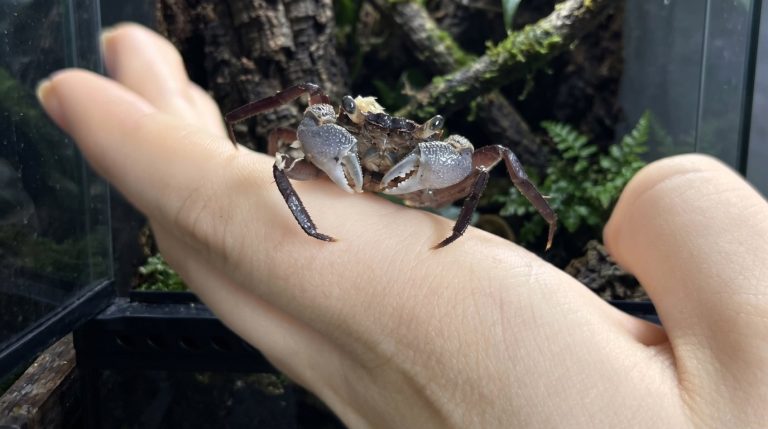
No. The worst a vampire crab can do is try a pinch, and the claws on our vampire crabs are too small to pinch a person’s hand. That’s why you can hold vampire crabs at no risk to you.
The risk runs the other way. A crab that gets grabbed is the one that gets hurt, so move one in a cup or on a flat, open hand. Wash your hands after you work in the tank, which is also the one plain precaution that comes up when people ask whether a vampire crab is venomous.
Do vampire crabs fight each other?
Yes. Vampire crabs kept in a group fight, and a crab can lose anything from one leg to both claws and several legs that way. It’s most often a dominant male chasing or attacking the others.
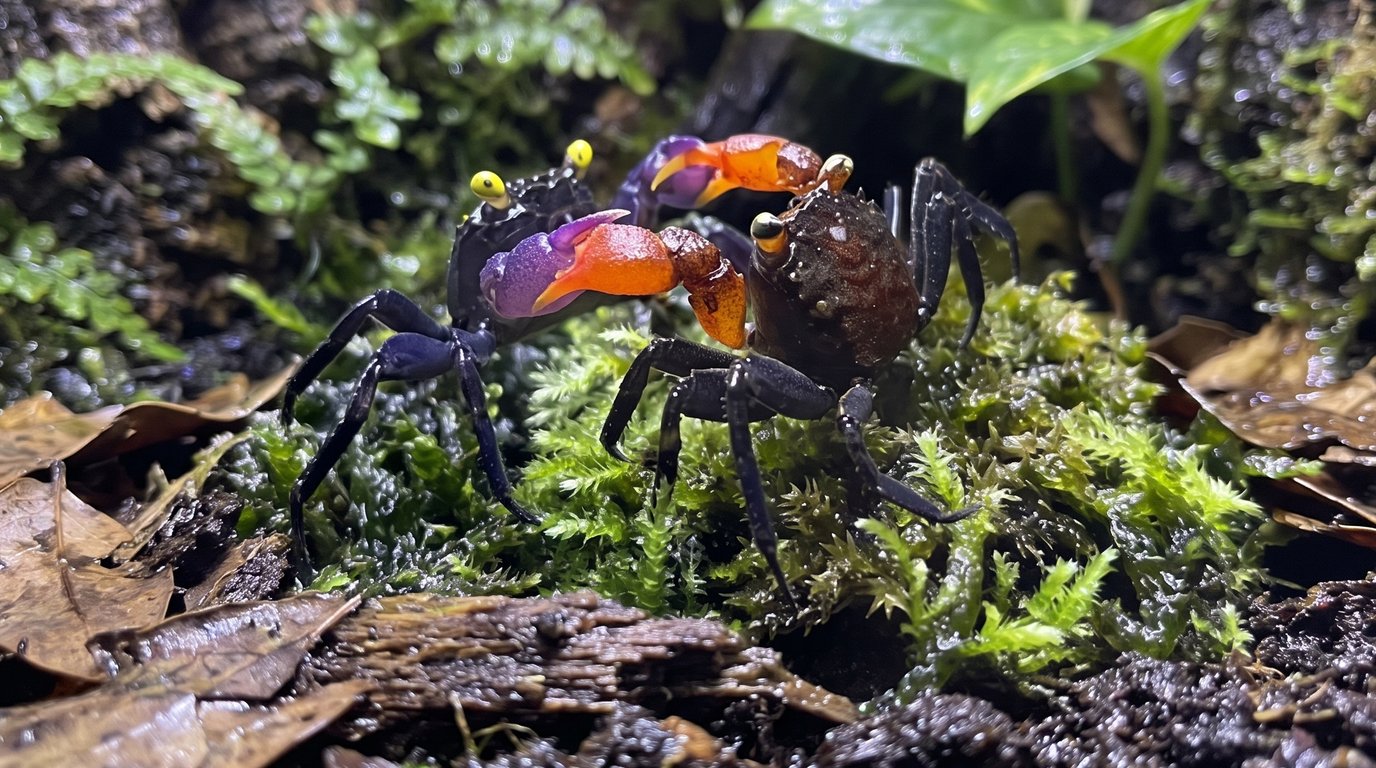
You may never catch a fight in progress. Vampire crabs are mostly out in the evening, at night and in the early morning. So you’re more likely to find a crab short of a leg, or a claw lying on the moss, than to see the fight.
A chase over a hide that ends with one crab backing off is ordinary group life. What tells you something is wrong is a pattern: the same crab losing legs one after another, or always being pushed out into the open.
Will the legs come back? Lost legs and claws grow back at a later molt. The new limb is often smaller, and can be paler, than the old one at first. A limb lost just before a molt may not show up until the molt after that.
How should you stock vampire crabs so fewer get hurt?
Keep males fewer than females, and keep the Rainbow Vampire Crab in a tank of its own. Males do most of the chasing, so they’re the number to hold down.
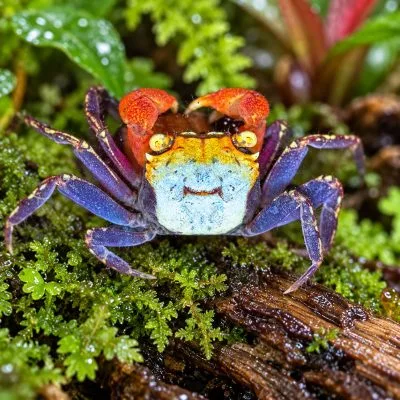
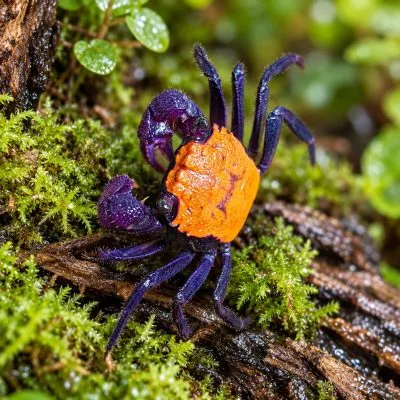
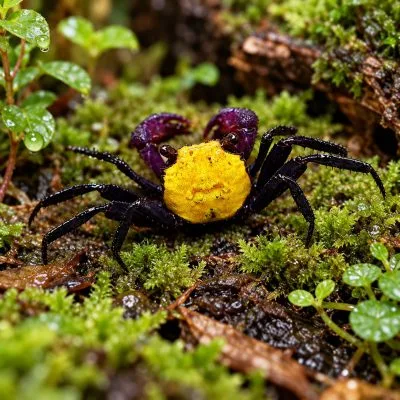
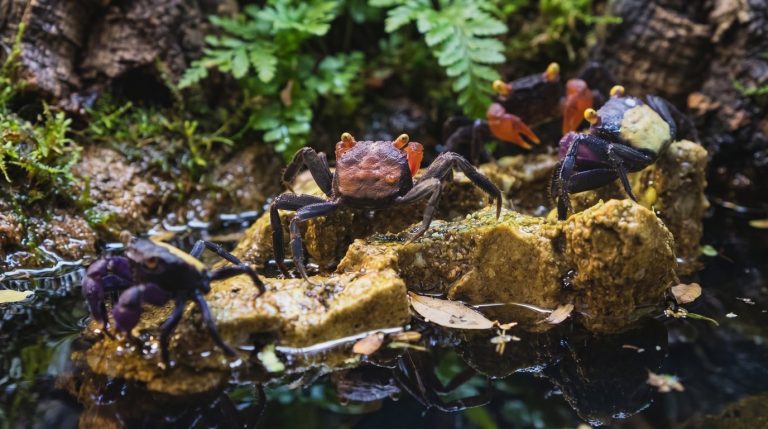
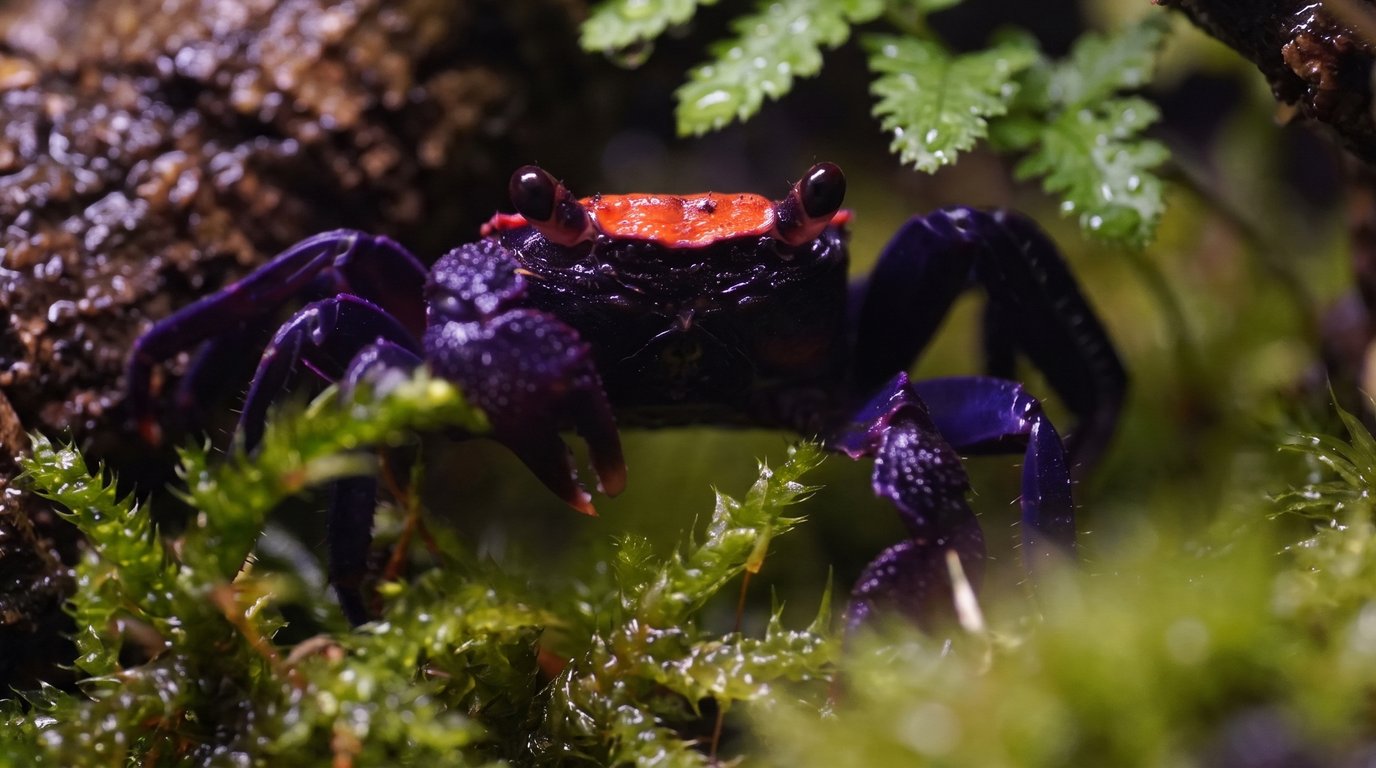
Now and then one of our crabs loses a leg or a claw, usually to a male. We stock each of our tanks with fewer males than females. In our paludariums, the Rainbow Vampire Crab is more aggressive than our other lines. Our different color lines have shared a tank without trouble, but lines kept together can crossbreed.
No male-to-female ratio has been tested in vampire crabs, so take any exact ratio you read as a starting point, not a rule. The plain version is more females than males. When you order tank-bred vampire crabs, you choose Male or Female for each crab on the product page. Everything in our catalog is bred or propagated in our own tanks.
Already have crabs and don’t know which are which? Check each crab’s underside, because vampire crab male vs female is read from the flap under the body.
Mixing color lines is a breeding question as much as a fighting one. If you want to breed a line you can name, keep each line in its own tank so nothing crosses. Keep the Rainbow Vampire Crab away from other vampire crabs altogether.
Do more hides mean fewer vampire crab fights?
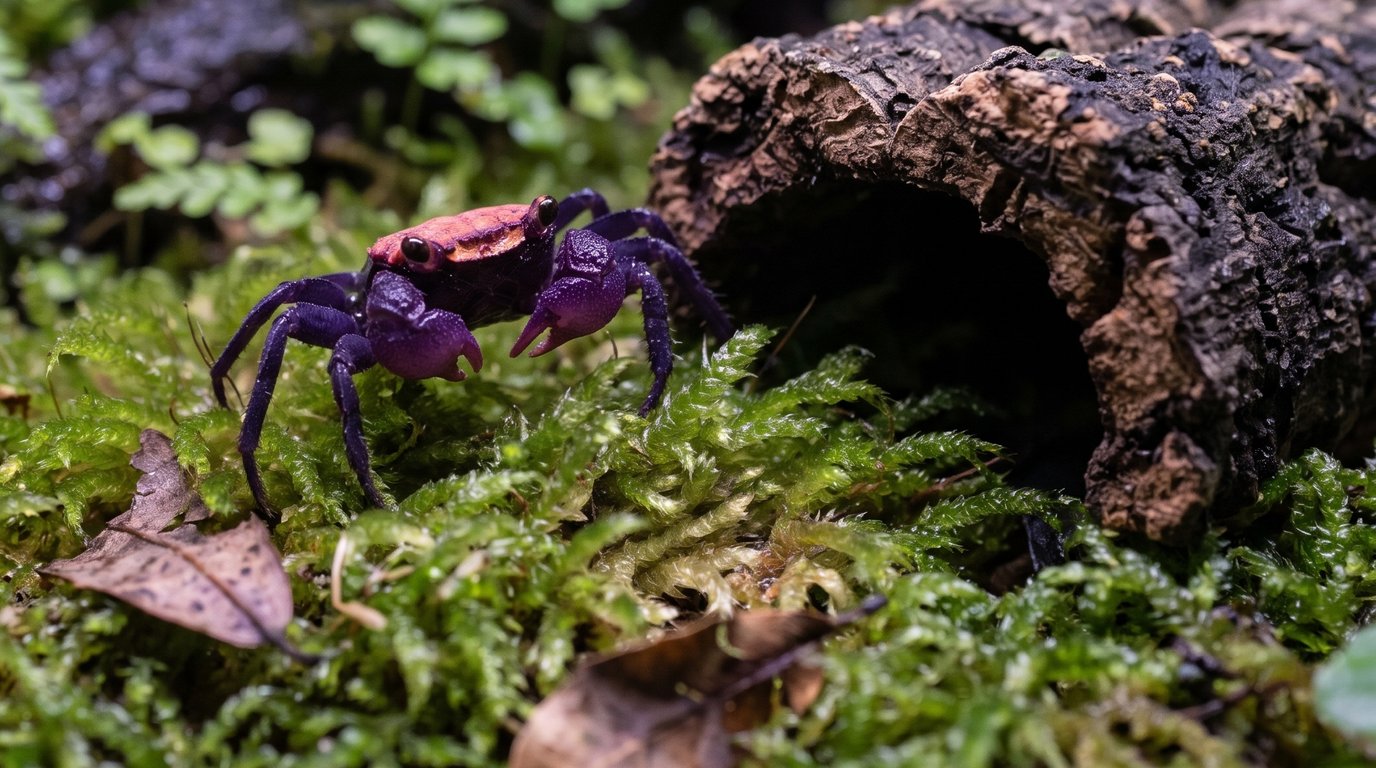
Give every crab a hide of its own with spares left over, so no crab has to win a fight to get under cover. Cork bark, roots, leaf litter and dense moss on the land section all count, and so does cover in the water section.
Other crabs show what a shortage of cover costs. In a burrowing mud crab from estuaries, large crabs ate the small ones that came out when there were more crabs than burrows.1 The killing went on until the numbers fell to about the number of burrows. That’s a different crab in a much bigger space, so it gives you no hide count. It does show which way the risk runs.
Hides set the size of your group more than gallons do. Counting them first is how you work out how many vampire crabs can live together in the tank you’ve built.
Are crablets and freshly molted crabs safe with the adults?
Not reliably. Adult vampire crabs eat the crablets they catch, so moving the crablets, or the adults, to another tank raises the most young. In a large, densely planted paludarium some crablets do grow up alongside the adults.
Want to raise a brood? Set up the second tank before a female drops her young, because vampire crab breeding in a shared tank can feed part of a brood to the adults.
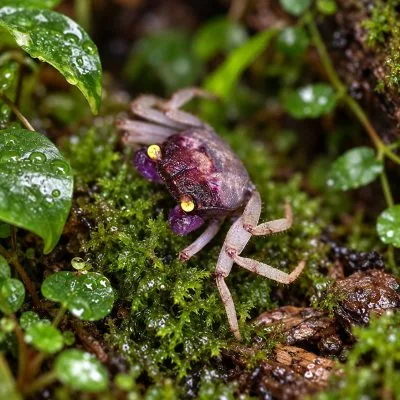
A crab that has just molted is the other soft target. In juvenile swimming crabs, those around a molt were especially likely to be eaten, and more shelter meant more survivors.2 That’s a marine crab, so it doesn’t measure the risk for yours. The fix it points to costs nothing, though. Vampire crabs molt in the water, so give the water section enough plants and cover for a soft crab to hide.
Leave a crab alone while it’s soft. Don’t lift it out or move the decor during a vampire crab molting. Keep the others fed and the cover thick, and let it harden where it chose to go.
Will vampire crabs hurt the shrimp or fish in the water section?
Rarely the shrimp, sometimes small fish. Vampire crabs go after dwarf shrimp but catch few, and in most keepers’ tanks Neocaridina live alongside them and keep breeding.
Small groups are the exception. A handful of shrimp put into a small or newly planted water section has been lost to the crabs. That’s why vampire crabs can live with shrimp in a well-planted water section with a real colony, not a bare corner with five shrimp.
Fish are a closer call. Vampire crabs can catch and eat small fish. A sleeper goby has been found half eaten beside a crab burrow, and two male guppies were taken within hours in another tank. The fish that can live with vampire crabs are small, quick mid-water species kept with well-fed crabs, never slow fish that rest on the bottom.
When is a vampire crab fight worth separating?
When one crab keeps losing, not when you see a single scuffle. Is the same crab chased out of cover again and again, or losing legs one after another? Move the crab doing the chasing to a tank of its own.
Have that tank running before you need it. If it’s a male picking on a female, separate the aggressive male vampire crab once the second tank is ready. Give her extra cover while she regrows what she lost.
References
2 Sources
- Wandering behaviour of the mud-crab Helice tridens related to evasion of cannibalism, Marine Ecology Progress Series 49: 41-50, Inter-Research, 1988.
- Cannibalism in juvenile blue-swimmer crabs Portunus pelagicus (Linnaeus, 1766): effects of body size, moult stage and refuge availability, Applied Animal Behaviour Science 90(1): 65-82, 2005, abstract record held by the Queensland Department of Primary Industries.
Ready to get started?
Shop our Vampire Crab collection
8 products available · Live Arrival Guarantee