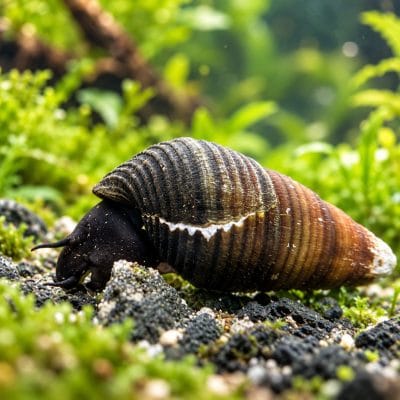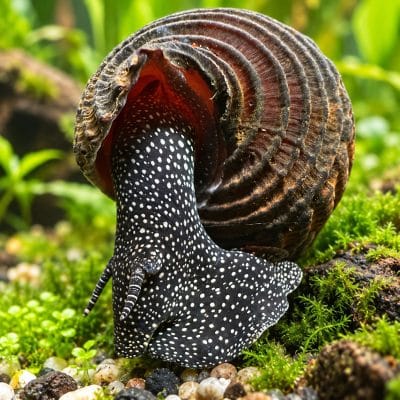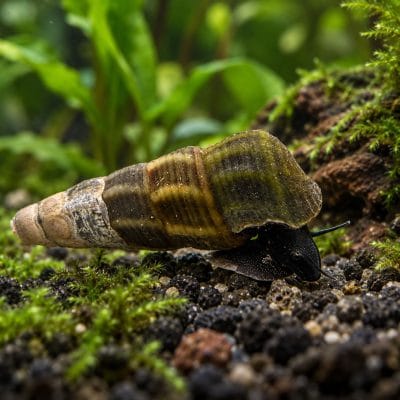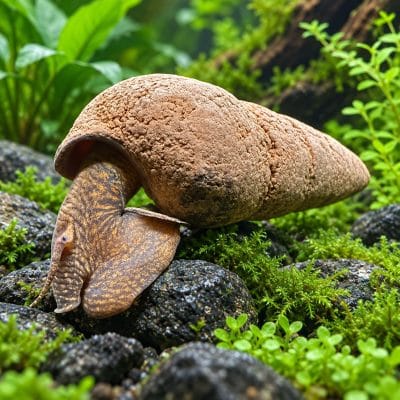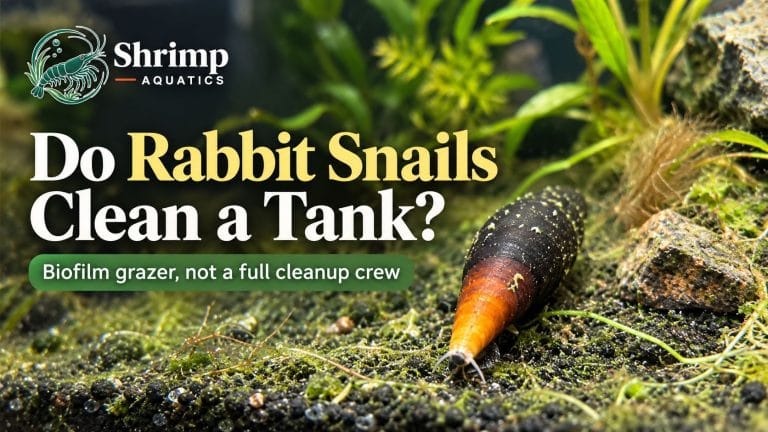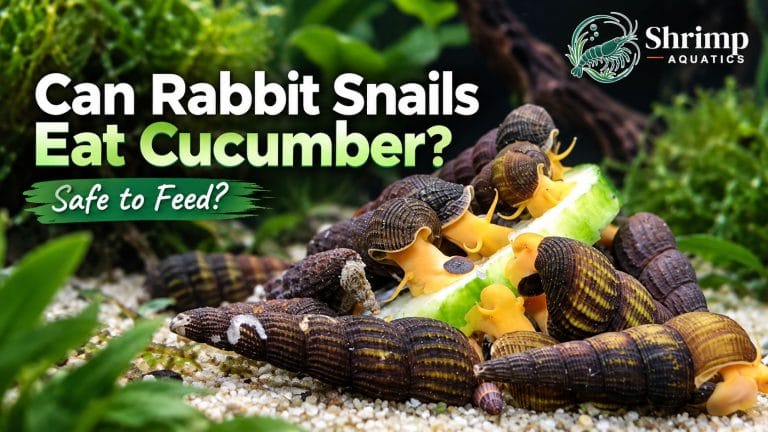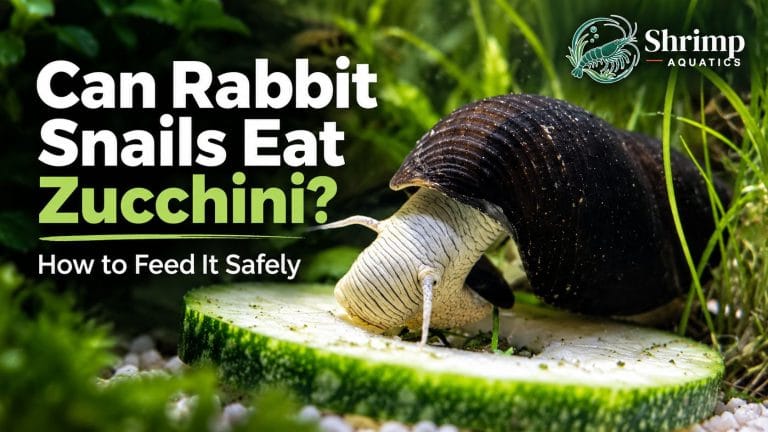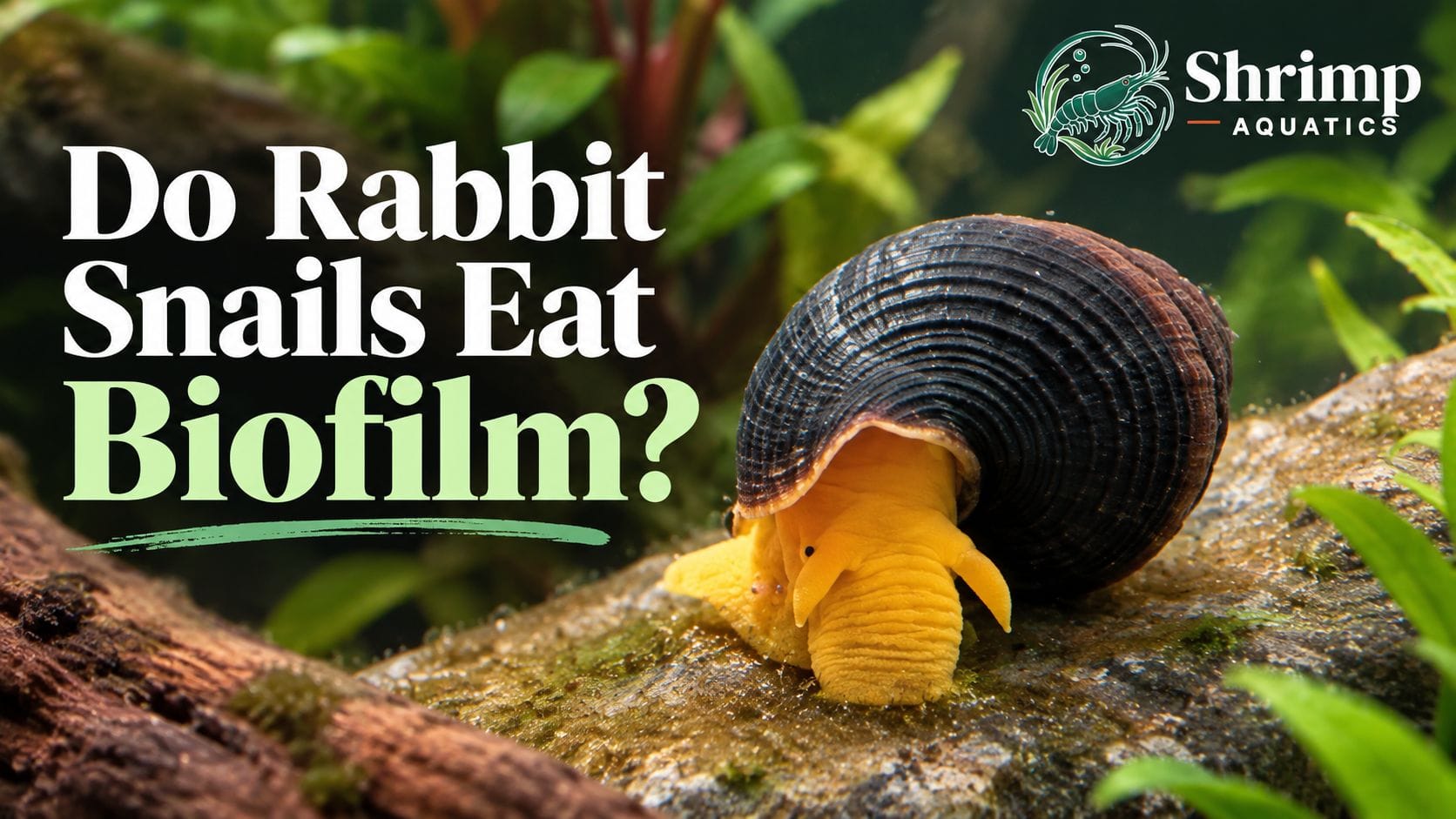
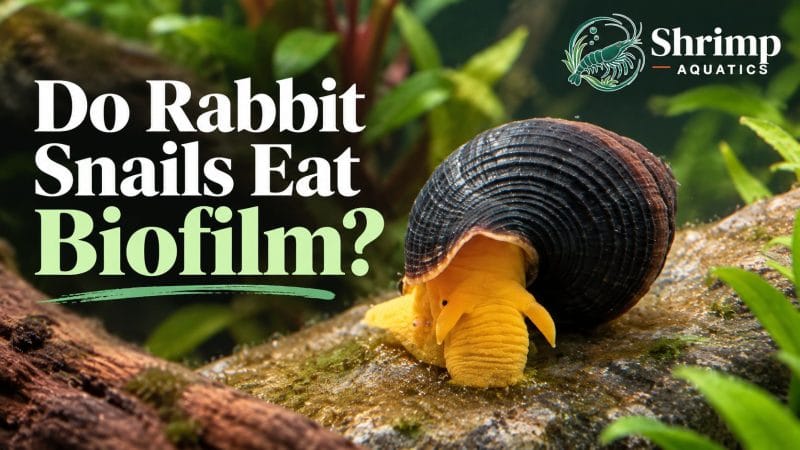
Yes. Rabbit snails (Tylomelania sp.) graze the film that grows over rock, wood and glass. That grazing is the feeding mode the published work on them describes, and it’s why the tank has to be mature before one goes in.
Is the film on your rock and glass the food a rabbit snail needs?
Probably, if you mean the thin slippery layer you can wipe off with a finger. Scientists call it periphyton, or biofilm: a mixed community of algae, bacteria, fungi, small animals and detritus attached to a submerged surface and held together in a sticky matrix.1 In shallow sunlit water that layer can account for more than 80 to 90 percent of all the primary production going on,1 which is why it can feed grazers that never touch a pellet.
What it isn’t is hair algae. Sulawesi Keepers, the conservation group that works with these snails, says green filamentous algae are definitely not their natural food. A heavy growth of it also gets in the way, because it blocks access to the surface underneath.2 A tank thick with green threads gives your snail less to graze, not more.
What you’re looking for
A brown or green haze on the glass that comes off on your finger. A dull coating on smooth stone. That soft slick wood gets after a few weeks under water. If everything still looks scrubbed and new, the pantry is empty. Everything else you might add sits on top of that, which is the order set out in what rabbit snails eat.
Give your rabbit snail hard surfaces and open sand to graze
Where the film grows matters nearly as much as whether it’s there. In Lake Towuti, one rabbit snail species, Tylomelania sarasinorum, turns up as two forms that feed on different surfaces. Among snails collected from rock, 79 percent were the rock form, and every snail found on wood was the wood form. Their feeding organs differ measurably.3 That study looked at the radula and the genes expressed in it, not at stomach contents, so it doesn’t show any of them eating wood itself. What it shows is that surface type is part of what this animal is.
Sulawesi Keepers draws the same line for the aquarium. Some species stay on stones, glass and other smooth surfaces and feed on the biofilm there. Others prefer soft substrate, don’t climb stones at all, and lose living space when you fill the tank with rockwork.2 Which group any traded line belongs to isn’t recorded anywhere, and that includes the lines we sell, so we won’t guess. Cover both: smooth stone and wood carrying a mature film, plus an open area of fine sand. A tank set up that way is also the best answer to keeping rabbit snails off your plants, because a fed grazer has less reason to test a leaf.
Can a rabbit snail live on biofilm alone?
Treat the film as the main meal and top it up lightly, because whether film alone can carry a snail has never been measured. The weekly feeding charts you’ll find on care sheets are keeper habit written up as fact, and we’d treat them that way.
Here’s what we would take seriously. A snail this size counts toward the grazing load of the tank the way a group of shrimp does. One large adult in a small young system will clear the visible film faster than it grows back. If you want to offer something, a safe default is a small amount of a sinking vegetable food after lights out. Lift whatever’s left in the morning, so it isn’t breaking down in warm water all day. Keep the portion small. Sulawesi Keepers describes the generalist species as omnivorous and literally voracious,2 and an animal that eats readily is an easy one to overfeed. If you want to take pressure off that film, a small piece of vegetable can help, and whether rabbit snails eat cucumber shows how little it takes.
What extra food cannot do is stand in for a mature tank. If your rock and glass are clean because the system is three weeks old, more food isn’t the fix. Waiting is.
Adding a rabbit snail to a tank that can actually feed it
Look at your hardscape before you order. You want a film you can see and feel, and enough surface for a slow grazer to work across without stripping it bare in a week. Then check the water, because the film has to grow in it and the shell has to hold up in it. These are Sulawesi animals and they get the same water as our Sulawesi shrimp. The full range for that water, and the checks that keep it there, are in Sulawesi rabbit snail care.
| Temperature | 79-86°F (26-30°C) |
|---|---|
| pH | 7.5-8.5 |
| GH | 4-8 dGH |
| KH | 3-6 dKH |
| TDS | 150-250 ppm |
| Nitrate | Aim under 10 ppm |
| Substrate | Inert sand and hardscape, no pH-lowering aquasoil |
The snail is the forgiving part of this setup. The system isn’t. It has to be warm, alkaline, mineral-rich and already established. A young or soft-water tank is the wrong home for one, however placid the animal looks on the shop page.
One expectation worth setting before you buy. This is a grazer, not a cleanup crew, and it won’t clear an algae problem for you. If your system already holds those numbers and the film is there, the Sulawesi rabbit snails we stock are tank-bred by Shrimp Aquatics and not collected from the wild.
References
3 Sources
- New Methods, New Concepts: What Can Be Applied to Freshwater Periphyton?, Frontiers in Microbiology 11:1275, 2020.
- Do you know Sulawesi snails?, Sulawesi Keepers, undated, read September 2026.
- Evolutionary Divergence and Radula Diversification in Two Ecomorphs from an Adaptive Radiation of Freshwater Snails, Genes 13(6):1029, 2022.
Ready to get started?
Shop our Sulawesi Snail collection
12 products available · Live Arrival Guarantee