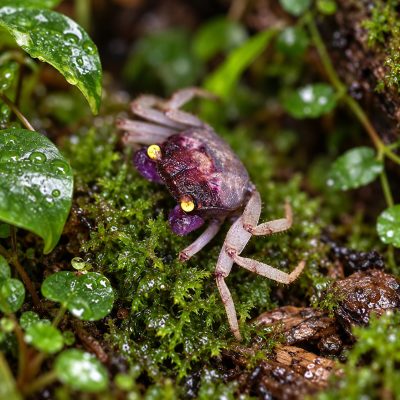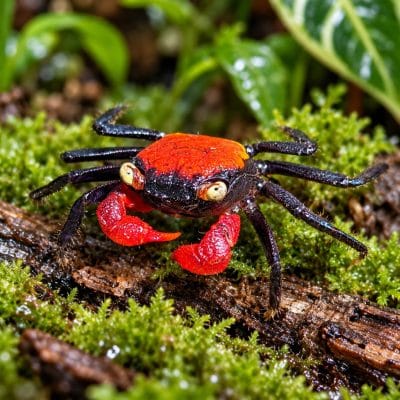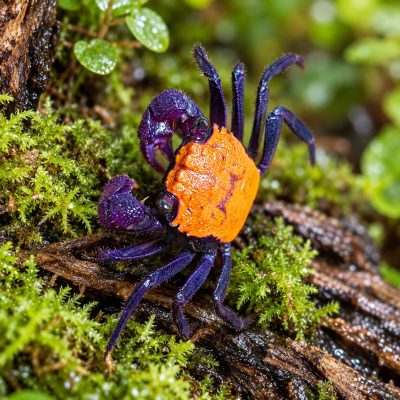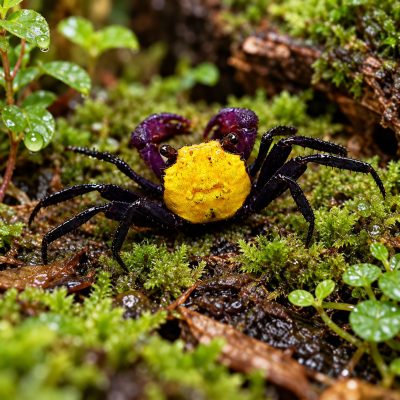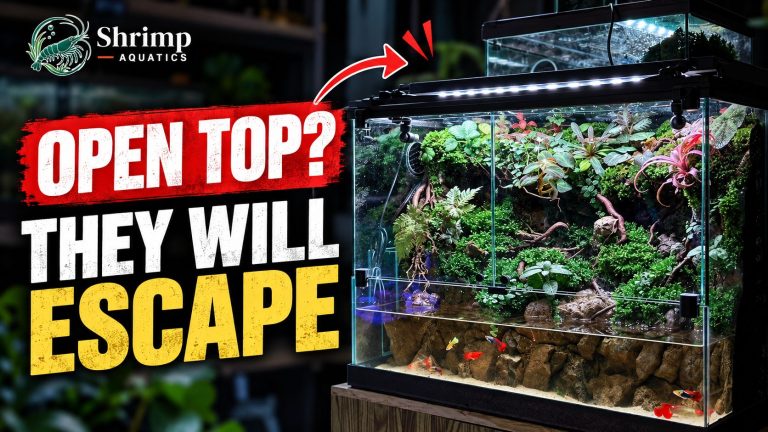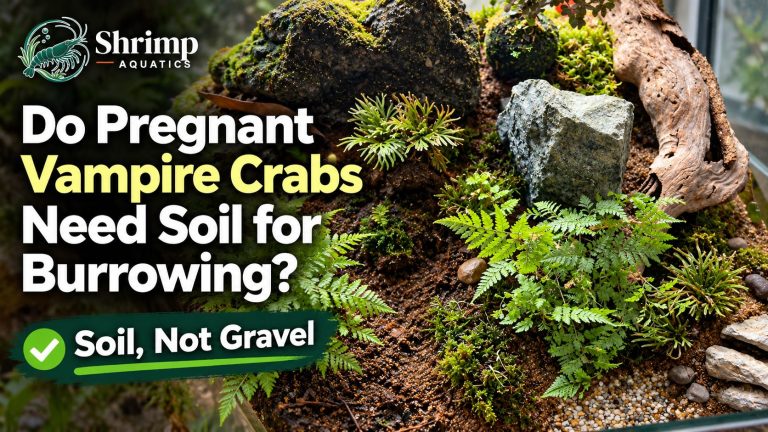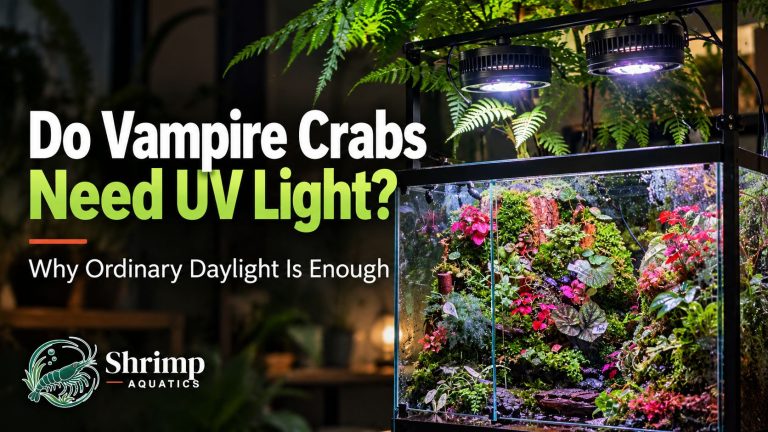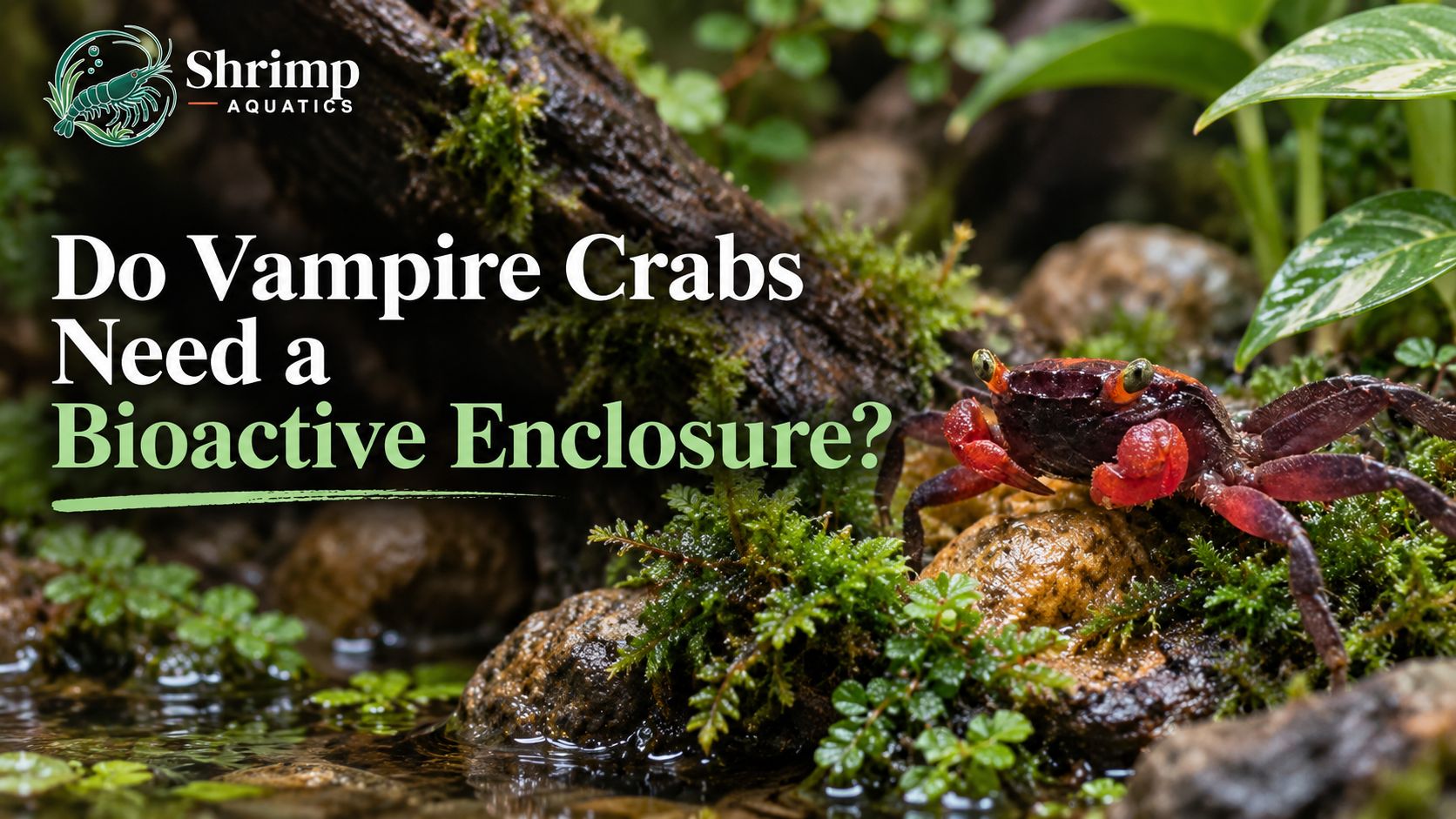
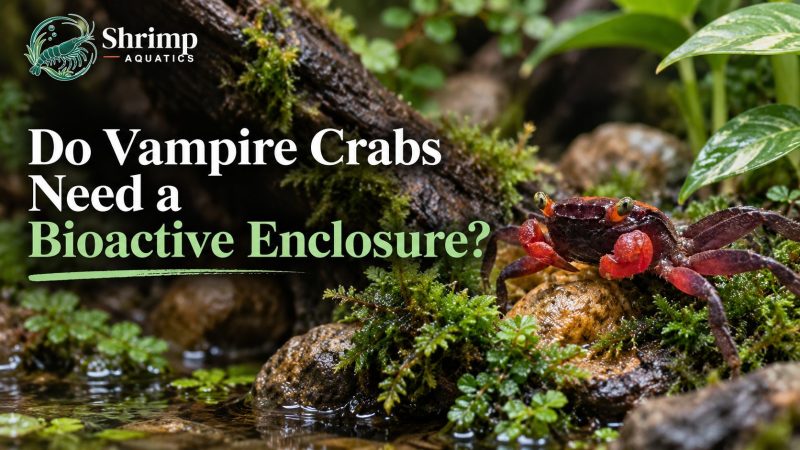
No, vampire crabs don’t need a bioactive enclosure. What they do need is a humid, lidded paludarium that’s mostly land, with plenty of hides and a water section every crab can climb into, fully enter and leave. Springtails, isopods and live plants are optional helpers. They can make the land easier to keep damp and clean, but they don’t replace the lid, the humidity or your feeding.
What a vampire crab enclosure needs, bioactive or not
Every vampire crab enclosure needs the same five things, bioactive or not: mostly land, a lid that closes tight, humid air, steady warmth and water every crab can fully get into and out of. Vampire crabs (Geosesarma) are semi-terrestrial. They live on land and use water, and across true crabs, researchers note that no known crab is completely independent from water through its whole life cycle.1 So the water section stays, whatever you decide about the land.
- Land: most of the floor is damp land the crabs can dig into, with more hides than crabs.
- Lid: it closes with no gaps, including around cables and tubing.
- Humidity: a closed lid, damp substrate and moss, and regular misting keep the air moist. Dry air is the usual failure.
- Warmth: about 78°F (26°C), inside 72-85°F (22-29°C), read on a thermometer at crab level.
- Water: every crab can climb in, get fully under and walk back out.
In the wild, two vampire crab species described from central Java hide under rocks and dense plants and dig burrows near the water’s edge.2 That’s the cover you’re copying, and a vampire crab tank setup built in the right order gives it to them. Notice that nothing on the list above needs a cleanup crew. If crabs are dying in a tank you already have, those five checks matter far more than springtails do, because they’re what everyday vampire crab care rests on.
What springtails, isopods and live plants add to a vampire crab tank
A bioactive land section adds small helpers that deal with what rots, so the damp land stays cleaner between your own clean-ups. “Bioactive” just means the land is planted and seeded with tiny animals, usually springtails and isopods, that keepers add to deal with mold.
Mold is the problem they help with most. It’s common in a closed vampire crab tank, above all in the first weeks of a new setup, and it grows on damp wood, coconut shells, substrate, moss and soft plants wherever water sits and the air is still. Keepers handle it by lifting it out, getting more air moving and adding springtails or isopods. Light mold on new wood can go away on its own within a few days.
Live moss and plants do the other half of the work. A misted moss mat keeps the land surface damp and gives the crabs cover, and a little leaf litter adds hiding places. The two Java species feed at least partly on insects in the wild, and one probably also eats midge larvae and plant detritus,2 so a crab picking through damp litter is doing what it would do anyway. Start with hardy, low-light plants for a vampire crab paludarium that cope with humid air and wet roots.
Will vampire crabs eat their cleanup crew?
Yes, some of it, so expect to lose the smallest animals. Vampire crabs eat small water snails: bladder snails and young or small ramshorns are caught and eaten, sometimes until none are left, while ramshorns larger than about 1 cm mostly survive. On the land, one keeper reports the crabs eat isopods between feedings, and says their numbers stay stable.
Does that make a cleanup crew pointless? Not if you plan for it. Think of the crew as part cleaners, part snacks, and top it up if a colony crashes. What it can’t do is feed your crabs for you, so keep feeding them as usual.
Can you keep vampire crabs without springtails or isopods?
Yes. A planted paludarium with no springtails or isopods works as long as you do the cleaning yourself, and ours run that way. The same goes for a simple vampire crab enclosure, where you lift leftovers and mold by hand.
At Shrimp Aquatics, we breed our vampire crab lines in paludariums planted with Java moss, Anubias nana, Java fern and pothos, and we don’t add springtails or isopods. Our crabs don’t eat those four plants.
Without a cleanup crew, you do its job by hand. It’s a few minutes of looking each time you feed or mist:
- Lift leftover food before it starts to mold.
- Lift mold out as soon as you see it, and get more air moving if it keeps coming back.
- Replace a patch of substrate that stays moldy or smells sour.
- Trim soft or dying leaves before they rot on the damp land.
When is a bioactive land section worth setting up?
It’s worth it when you’re planting the land heavily and want it to run with less hand cleaning. If you’d rather keep the land simple and check it yourself, skip it. We know the bioactive label is tempting on its own, but the crabs care about damp land, cover and water, not about the label.
Go bioactive if
- the land is thick with moss, plants and leaf litter that you can’t easily lift and check
- mold keeps showing up in the first weeks of a new build
- you’re happy to feed a few springtails and isopods to your crabs along the way
Skip it if
- the land is small and simple enough to spot-check when you feed
- you’d rather lift leftovers and mold by hand
- you’re counting on the crew to feed your crabs
Dense planting has one more payoff if your crabs breed. In a large, densely planted paludarium some crablets grow up alongside the adults, though moving crablets to their own container still raises the most, because adults eat the young they catch. If you do go bioactive, add the springtails or isopods while you set the tank up, so they’re settled before the crabs go in. That way they settle in during land cycling in a vampire crab paludarium.
Ordering tank-bred vampire crabs for a planted paludarium
Order your crabs once the land holds its humidity and the lid is sealed, bioactive or not. Our tank-bred vampire crabs come from several lines, and you choose Male or Female for each crab on the product page. Everything in our catalog is bred or propagated in our own tanks rather than collected from the wild. We can’t promise that a group will breed or how many young you’ll get.
References
2 Sources
- Wolfe et al., Convergent Adaptation of True Crabs (Decapoda: Brachyura) to a Gradient of Terrestrial Environments, Systematic Biology 73(2): 247-262, 2024.
- Ng, Schubart and Lukhaup, New species of “vampire crabs” (Geosesarma De Man, 1892) from central Java, Indonesia (Zenodo archive copy of the paper), Raffles Bulletin of Zoology 63: 3-13, 2015.
Ready to get started?
Shop our Vampire Crab collection
8 products available · Live Arrival Guarantee