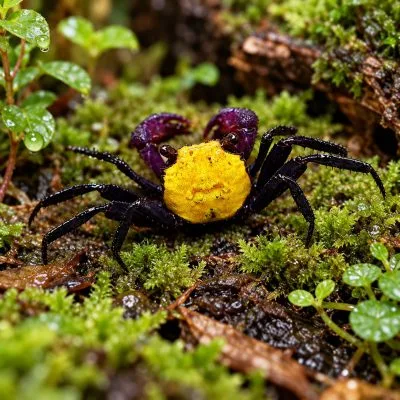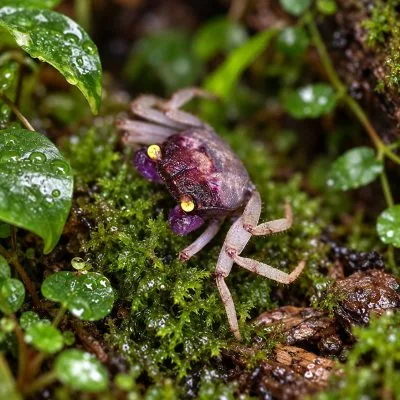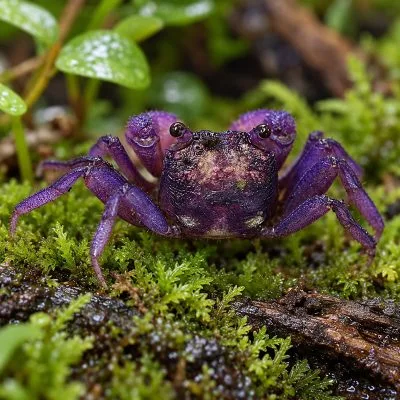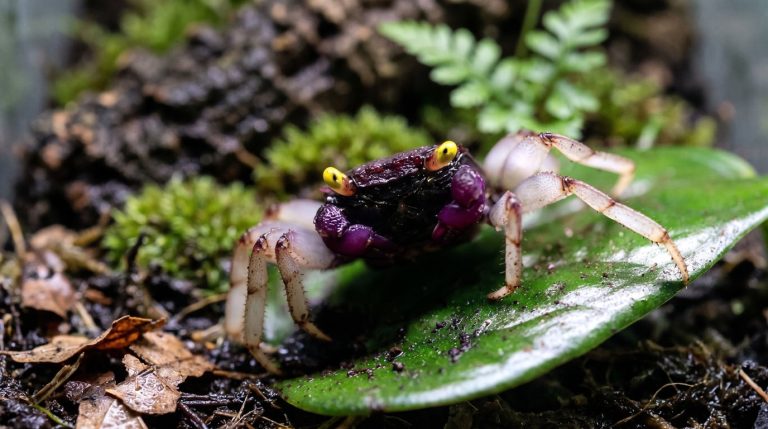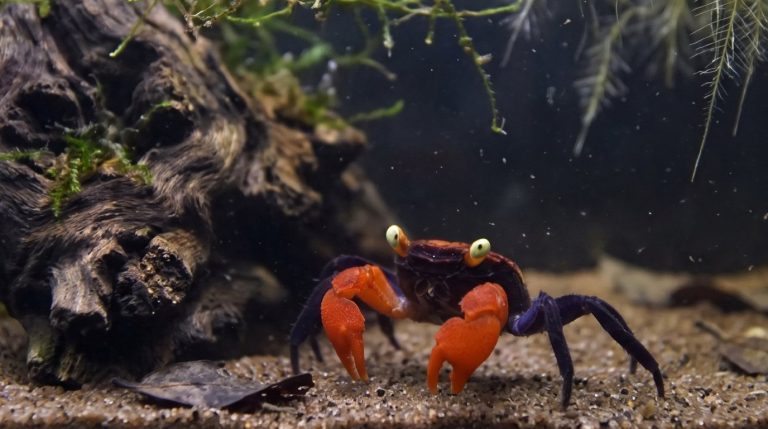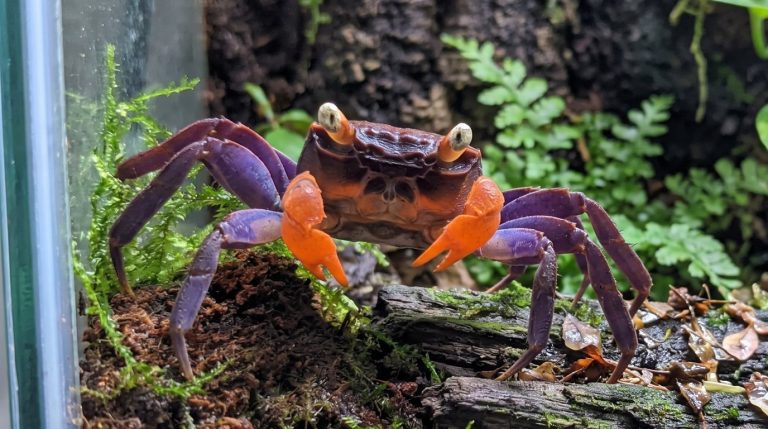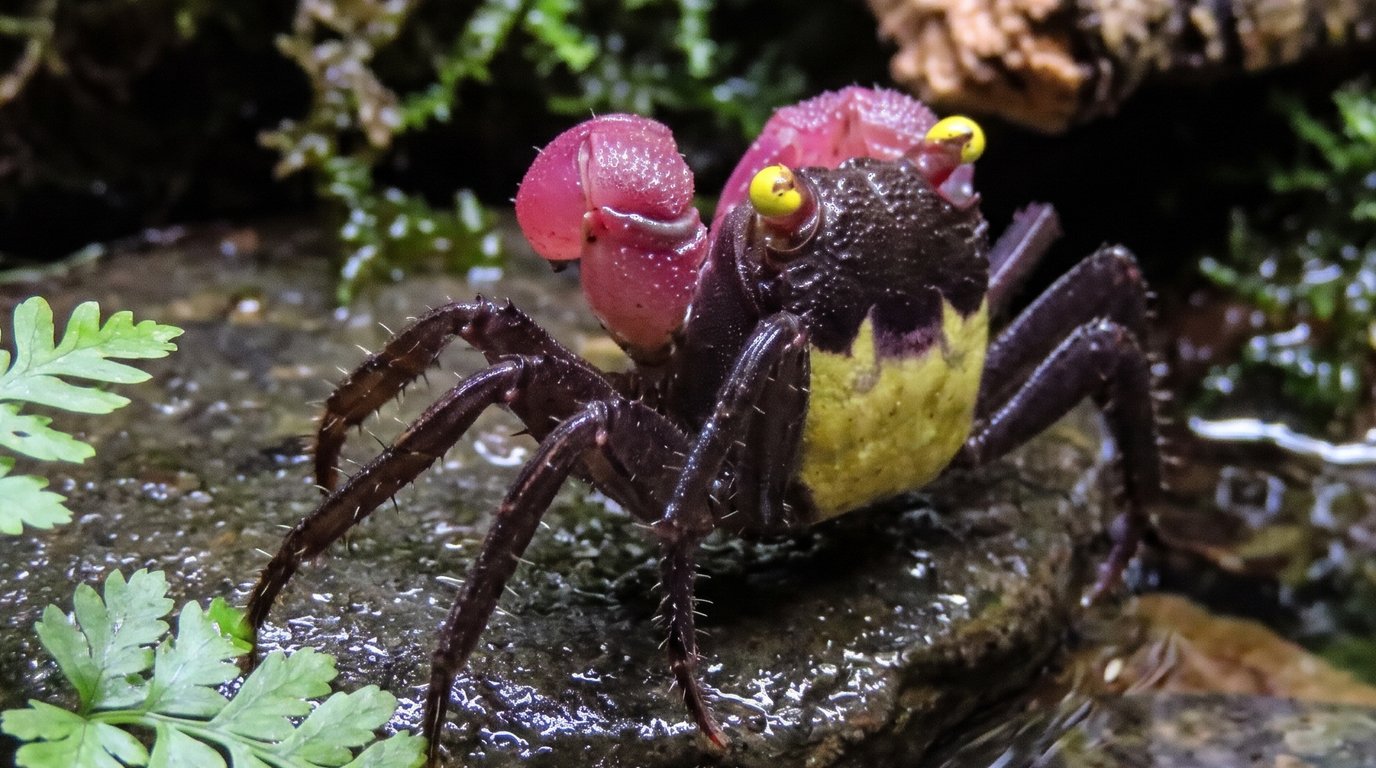
No, vampire crabs don’t need a filter. A vampire crab tank can run with or without one, but the water section the crabs climb into has to stay clean either way. Run a gentle sponge filter or a small pump in it, or change part of the water often by hand. Either way, treat all new water for chlorine and chloramine first. That small, warm pool is where your crabs go to molt, so it fouls fast and matters more than its size suggests.
When a filter saves work in a vampire crab pool
A filter saves you work, but a pool without one is fine if you’ll change it more often. A filter gives the bacteria that break down waste a large surface to grow on and keeps the water moving. Those bacteria grow on every wet surface in the system, filter media included.1 Without a filter, the gravel, rock and plants in the pool carry them instead, and you make up the difference with your own hands. Clean water is only one part of good vampire crab care, but it’s the part a crab sits in while it molts.
Keepers who skip the filter keep the water section small. They either change most of it every day or two, or plant it with floating plants and snails and change it every week or two. Either way, it still has to be a pool every crab can climb into, get fully under and climb back out of. If you keep shrimp in the water section, we’d lean toward a filter, because the pool then carries more animals and more waste.
The table shows how much water changing each route takes.
| Water section | How often keepers change the water |
|---|---|
| Small pool, no filter | Most or all of it every day or two |
| Small pool with floating plants and snails, no filter | Every week or two |
| Settled, heavily planted pool, no filter | A few keepers only top up what evaporates |
| Larger pool, or one with a small filter | About once a week, 20-30 percent at a time in a planted pool |
Pick a gentle filter that can’t trap a vampire crab or its young
Choose a filter that moves water slowly and has nothing a small crab can be sucked against. Will it pull in a crablet? Not if the intake is covered. A sponge filter run from an air pump is the simplest fit for a shallow pool. It has no open intake, and its bubbles stir the surface without pushing the crabs around. A mini corner filter, or a very small pump feeding a waterfall or stream, also works, and keepers often wrap the pump in sponge. A bigger external filter only makes sense when the water takes up a third to half of the tank.
- The intake is covered with sponge, so a newly hatched crablet can’t be pulled in.
- The flow is low enough that a crab sitting in the pool isn’t pushed off its footing.
- The filter sits in water deep enough to cover it, and it doesn’t stop a crab walking out of the pool.
- Every tube and cord leaves the tank through a gap the crabs can’t squeeze through.
That last check is easy to miss after the lid is already sealed. Filter tubing that leaves a gap undoes the rest of a careful vampire crab tank setup. Check every hole the tubing passes through once the filter is in.
How often should you change the water in a vampire crab tank?
Change a small pool with no filter every day or two, and a larger or filtered one about once a week. In a small unfiltered pool, change most or all of the water each time. In a larger planted one, a 20-30 percent change is typical. A few keepers with a settled, heavily planted pool only top up what evaporates. Whatever your routine, change the water early if it turns cloudy, smells, collects debris or a surface film, or has food rotting in it.
We don’t change the water in our crab tanks on a fixed schedule. In our vampire crab paludariums the water section runs on a small pump or a small waterfall filter. We change the water when it turns cloudy or starts to smell, when debris or a surface film builds up, or when leftover food or an old shell starts to rot in it. We refill it with RO water that we’ve remineralized first.
The signs matter more than the calendar, because how fast a pool fouls depends on how many vampire crabs and shrimp you keep and how much food ends up in the water. The quickest fix is still prevention. Lift uneaten food out of the water before it rots, and keep the soil from slumping into the pool.
Make tap water safe before it reaches the crab pool
Vampire crab keepers fill their pools with ordinary tap water, treated first. Use a conditioner that removes chloramine, not only chlorine, on every bucket, and if shrimp share the pool, test your tap water against their range as well. Many water suppliers disinfect with chloramine. Unlike chlorine, it doesn’t leave the water if you let it stand, so standing it overnight isn’t a safe way to clear it.2 Read the label, because a product made for chlorine may or may not also handle chloramine.2 Your water supplier can tell you which one comes out of your tap.
Removing chloramine releases ammonia into the water.3 Products that also take care of that ammonia exist, and a working biological filter helps clear it too.3 That matters most when you swap most of a small, unfiltered pool at once, because there’s no filter to take up the slack. There, a conditioner that also deals with ammonia is the safer pick.
If you use RO water instead, remineralize it before it goes in, the way you would for a shrimp tank. When shrimp share the water section, mix the new water to their range, not to a number meant for the crabs. Neocaridina, for example, are kept at pH 6.8-7.6 and 6-10 dGH. Whatever you use, bring the new water to the tank’s temperature first, about 78°F (26°C) within 72-85°F (22-29°C). A crab sitting in the pool shouldn’t get a sudden chill.
Change vampire crab water without upsetting a molting crab
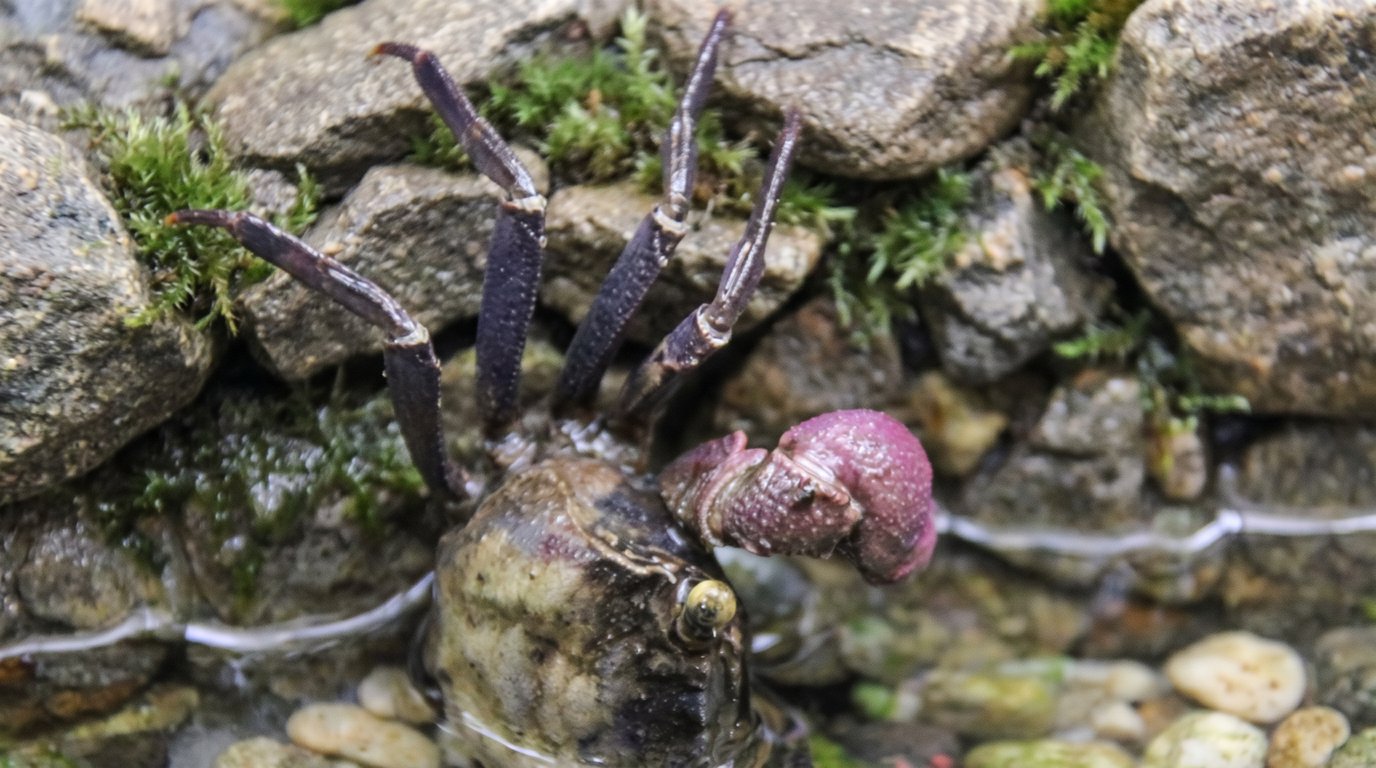
Look before you siphon. Vampire crabs climb into the water to molt, and a crab sitting still in the pool may be in the middle of one. If a crab is down there and not moving, wait and do the change another day. A soft crab doesn’t need a tube poking around it.
- Check the pool for a crab sitting still in the water, and leave the change for later if you see one.
- Take water out with a thin tube or hose run down into a bucket set lower than the tank, drawing from the bottom where debris settles. Keep the end just above the gravel so you don’t stir it up.
- Lift out rotting food and anything else breaking down in the water. Leave a fresh shed shell where it is.
- Pour the treated, temperature-matched water in slowly over a rock or your hand so it doesn’t churn the pool.
- Count your crabs over the next day or so, the same way you would after any change to the tank.
A fresh shed shell can look just like a dead crab, so check before you lift anything out. A shed has empty, see-through eye shells and is hollow inside, and the signs of vampire crab molting are worth knowing before your first water change. Leave a shed in place for a few days, and if it’s still whole after that, lift it out before it starts to rot.
Clean a vampire crab filter without wiping out its bacteria
Rinse the sponge or media in water you’ve just taken out of the tank, and never under the tap. The bacteria that turn waste into less harmful nitrate live on that media.1 So why not rinse it under the tap? Chlorine kills them: a system disinfected with a bleach solution loses its filter bacteria along with the germs.1 Tank water does the same job without that risk.
- Squeeze the sponge gently in a cup of tank water until it stops clouding the water, then put it back.
- Clean the filter during a water change, not on the same day you rebuild the pool or the land.
- Never replace all of the media at once. If one piece is falling apart, swap it on its own and leave the rest.
- Keep soap, bleach and cleaning sprays away from the filter, the tubing and the cup you use.
What to do when the crab pool tests positive for ammonia or nitrite
Change part of the water straight away, cut back on food, and look for what’s rotting. Both should read zero in a settled vampire crab pool. Ammonia matters more here than in a cool tank, because a vampire crab pool runs warm. The toxic share of ammonia rises as water gets warmer or more alkaline.4 Nitrite, the next step in the breakdown of waste, is toxic to aquatic animals too.1
Test again the next day and keep changing small amounts until both read zero. Then find the cause: look for leftovers, a dead animal buried in the substrate, soil washing into the pool or a filter that was cleaned too hard. A new pool that keeps showing ammonia hasn’t finished cycling. Hold off on more crabs and let land cycling in a vampire crab paludarium run its course in the water section first.
Ordering vampire crabs once the water section runs clean
Order your crabs once the pool tests clean and your filter or change routine is settled. Every crab should also be able to walk into the water and back out. You choose Male or Female for each crab on the product page when you buy tank-bred vampire crabs. Everything in our catalog is bred or propagated in our own tanks rather than collected from the wild.
References
4 Sources
- DeLong and Losordo, How to Start a Biofilter (SRAC Publication No. 4502), Southern Regional Aquaculture Center, 2012.
- Monochloramine Information for Pet Stores and Fish Aquarium Owners, Tampa Bay Water, Florida, undated.
- Facts About Chloramines, Pinellas County Government, Florida, undated.
- Aquatic Life Ambient Water Quality Criteria for Ammonia, Freshwater (2013), U.S. Environmental Protection Agency, Office of Water, April 2013.