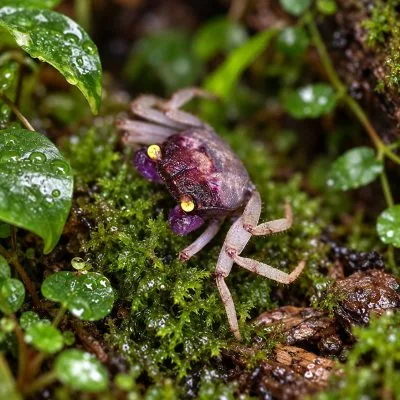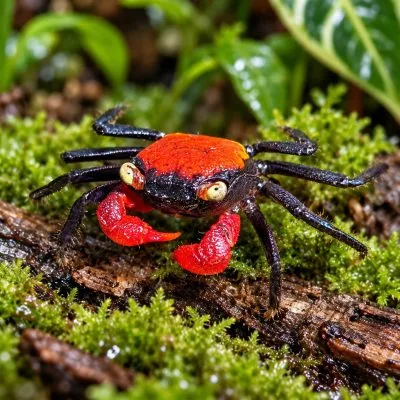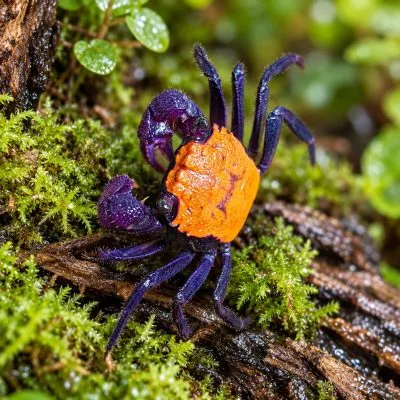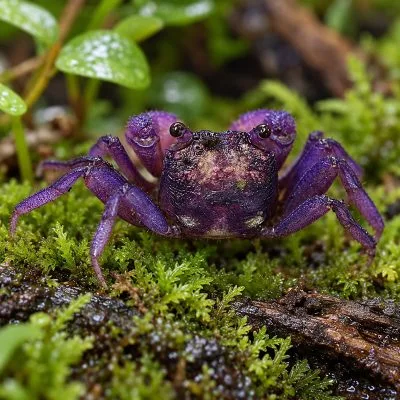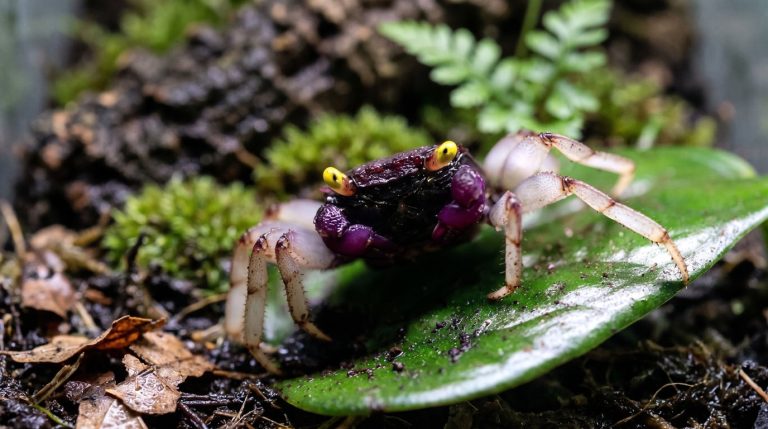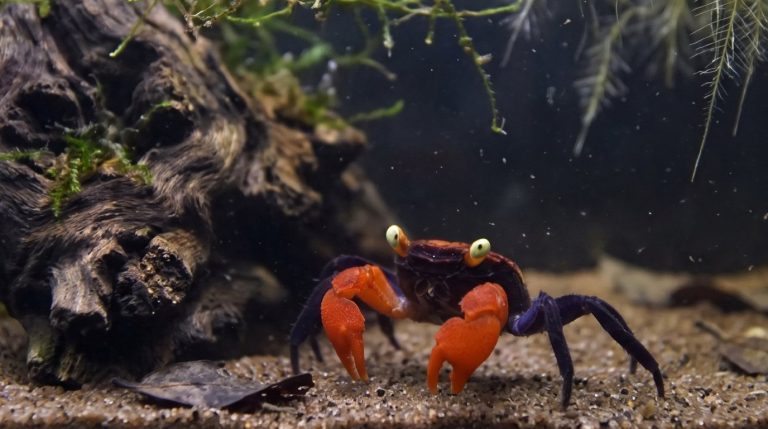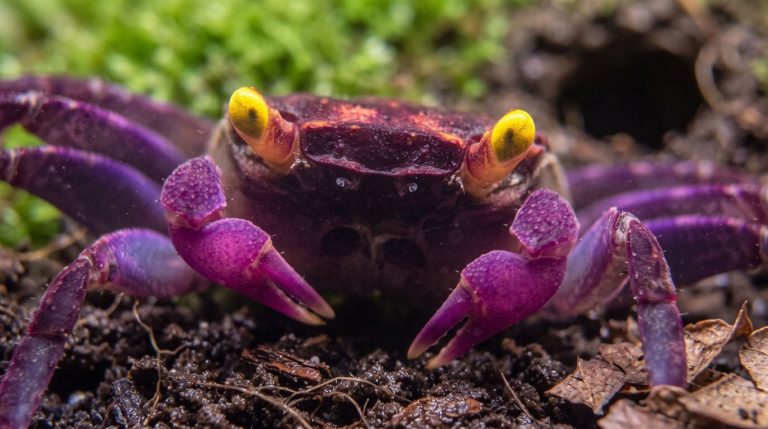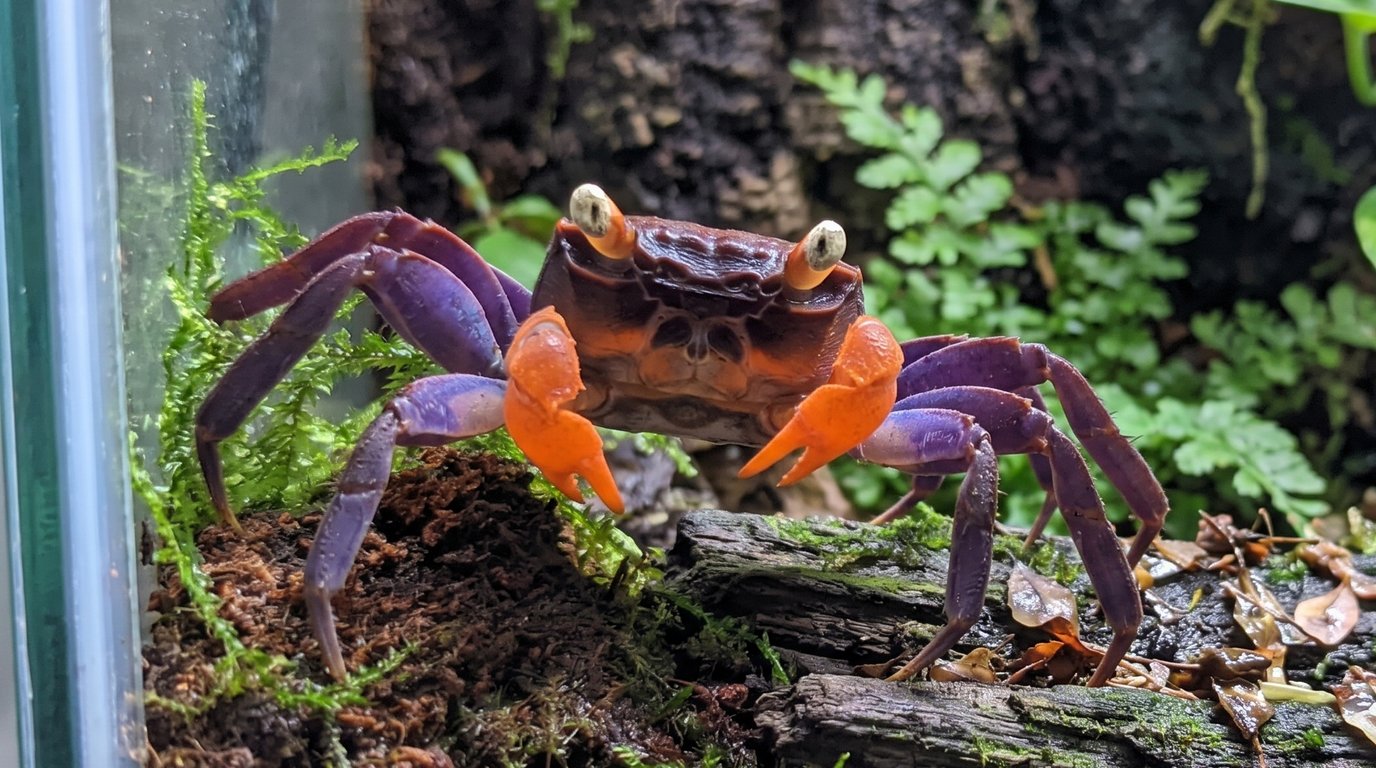
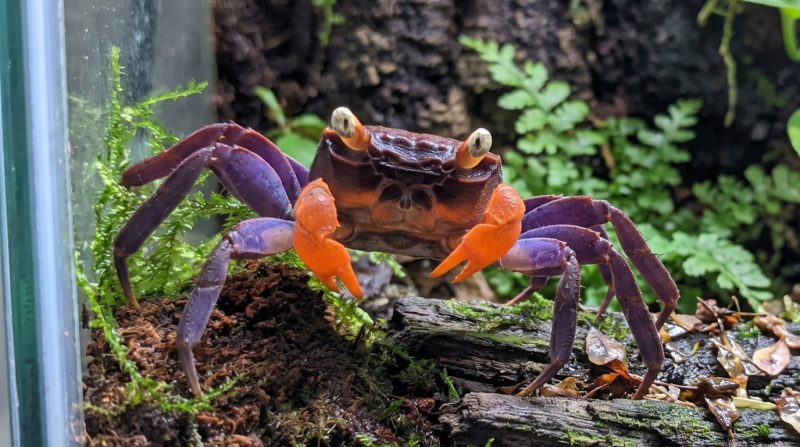
Vampire crabs are most often kept in a 24-inch (60 cm) tank of about 14-17 gallons (54-64 L), which holds two to six adults. That isn’t a minimum, though. Trios have lived and bred in tanks of 5-7 gallons (19-27 L), and bigger groups live in tanks of 30 gallons and up. Pick the size by how many crabs you want and by floor space, because these are land crabs and most of the tank is land.
How many vampire crabs fit in a 5, 10 or 15-gallon tank?
About three adults fit a tank of 5-7 gallons, and two to six fit a 24-inch tank of about 15 gallons. Tanks of 30 gallons and up have held nine to eighteen. Those are the groups keepers have actually run in tanks of each size, so read them as what has worked, not as tested limits.
| Tank size | Floor, roughly | Adults kept in a tank this size |
|---|---|---|
| 5-7 gallons (19-27 L) | 16 x 10 in (40 x 25 cm), or a 12-inch (30 cm) cube | About 3 (from 1 to 4), usually one male with two females |
| 10 gallons (38 L) | 20 x 10 in (50 x 25 cm) | 3 or 4 is a reasonable group |
| 14-17 gallons (54-64 L) | 24 x 12 in (60 x 30 cm) | 2 to 6, the most common setup |
| 30-66 gallons (112-250 L) | Up to about 39 x 20 in (100 x 50 cm) | 9 to 18 where the keeper ran a big group |
Why not one firm number? Nobody has measured how many vampire crabs a tank can hold, and care sheets don’t agree with each other. Some give 5 gallons as the minimum and some give 10, and for a 10-gallon tank they suggest anything from three crabs to six.
So how many vampire crabs fit in a 10-gallon tank? It sits between the two sizes with the most history behind them. Trios do well in 5-7 gallons and a 24-inch tank holds two to six, so three or four adults is a reasonable group, and we’d start with three. One 10-gallon paludarium was stocked with six, which is about as dense as keepers have run these crabs at any size. Treat it as the ceiling, not the plan.
Any of these counts only holds in a tank built for land crabs: a tight lid, damp ground and plenty of cover. That’s the heart of vampire crab care, and no amount of extra gallons makes up for a dry, bare tank.
The sex mix matters as much as the head count. Males do most of the chasing in a group, so work out how many vampire crabs can live together, and how many of them should be male, at the same time as you choose the tank.
Settle the tank before you order your tank-bred vampire crabs. You choose Male or Female for each crab on the product page, so you can match the group to the tank you’ve picked.
Is a 5-gallon tank too small for vampire crabs?
No, a 5-gallon tank isn’t too small for a trio of vampire crabs. Keepers have kept one to four adults in tanks of 5-7 gallons (19-27 L), usually one male with two females, and three of the five groups bred in that same tank.
It’s the bottom of the range, though, and a cramped tank can cause fights.
At Shrimp Aquatics, our crab tanks come in several sizes; we don’t have one standard tank. When we’ve kept a group in a small tank, about 12 inches (30 cm) long, the crabs fought more than they do in our bigger tanks.
Why does a cramped tank lead to fights? A dominant male chasing the others is most of the answer to whether vampire crabs are aggressive, and on a small floor a chased crab has fewer places to go. It doesn’t always turn out that way. One 6.6-gallon (25 L) tank ended up holding about 30 crabs of all ages, with none seen missing a leg or a claw.
The water section shrinks with the tank, too. The smaller a body of water is, the faster its temperature changes, a rule fish farmers have long worked by.1 In a 5-gallon tank, that means keeping it out of direct sun and away from heaters and air vents.
Do you want more than three crabs, or do you plan to keep the young? Then skip the 5-gallon and go up a size or two. A small tank won’t raise the count for you, since vampire crabs don’t breed more in a smaller tank.
Measure a vampire crab tank by its floor, not its gallons
Compare tanks by length and width, because vampire crabs live on the ground. In the wild, Geosesarma dennerle and Geosesarma hagen, two Java species long sold as vampire crabs, hide under rocks and dense plants and dig burrows near the water’s edge.2
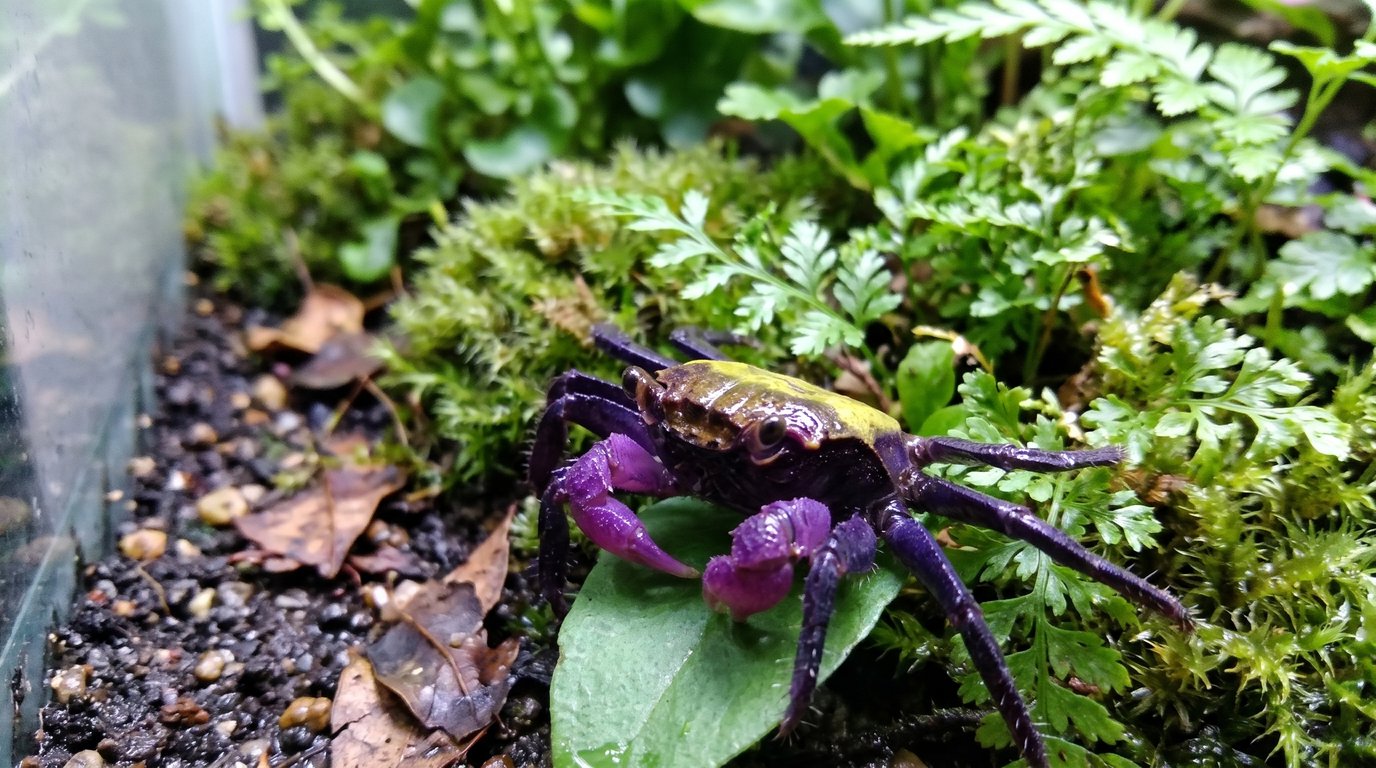
A gallon figure counts the whole glass box: the land, the water and the air above them. It tells you little about how much ground the crabs get. Two tanks sold under the same number can have different floors, too. A “long” tank spreads its gallons over more ground than a “high” tank of the same volume, which puts the extra into height.
Most of that floor should be land. Every crab needs a hide of its own on it, with a few spares, and that’s the real test of how much land vampire crabs need in the tank you’re looking at.
The water takes the smaller share of the floor. It has to let every crab get fully under and climb back out, and that, not the tank’s volume, decides how much water vampire crabs need.
Should you buy a long or a tall tank for vampire crabs?
Buy the long one when two tanks hold the same volume, because it gives vampire crabs more ground. A tall tank can work too, as long as you build ground into it.
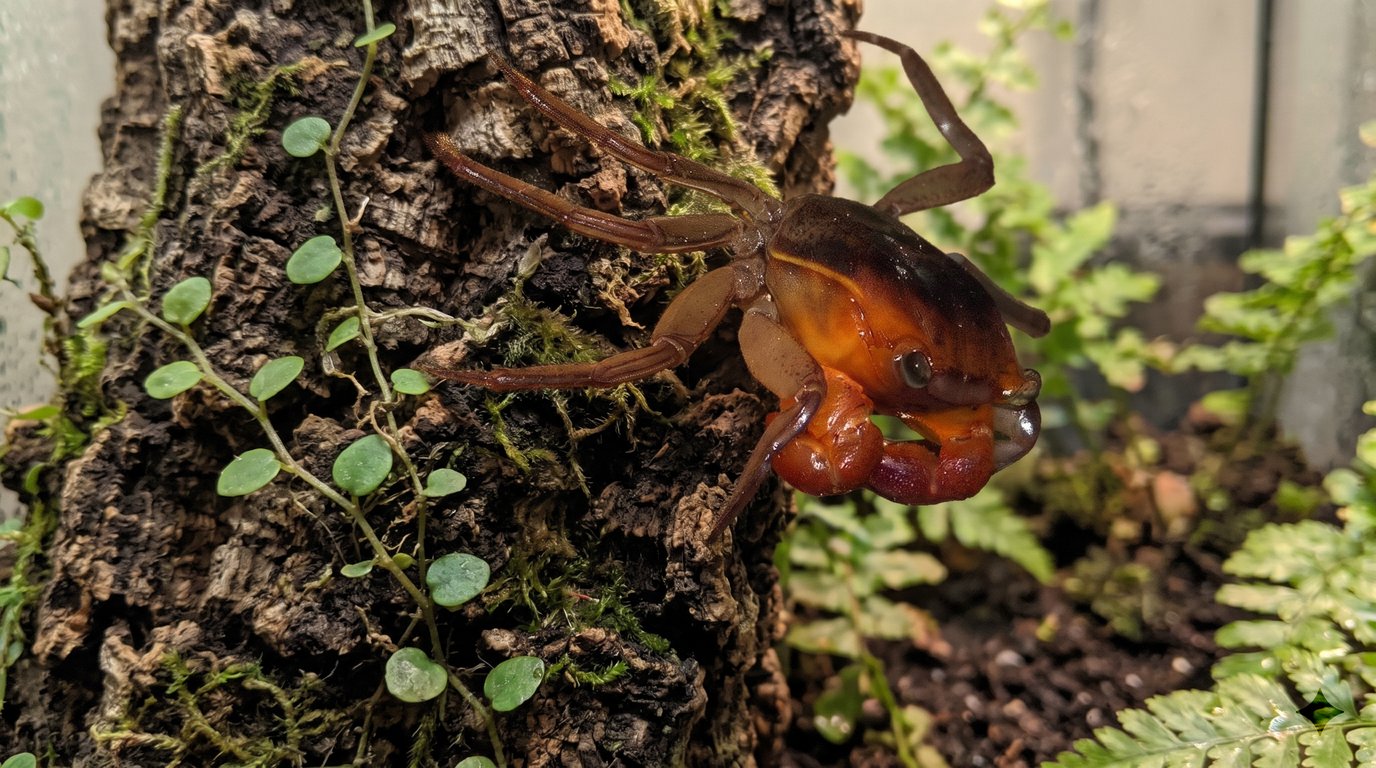
How much these crabs use height is less settled than care sheets make it sound. Climbing does run in the genus: Geosesarma todaeng, a Thai species, was found on palm leaves and stems 0.5-1.0 m (about 2-3 feet) above the water.3 The two Java species above, though, were found under rocks and in burrows on the ground.2 So give your crabs cork, branches and plants to climb, but don’t count the height as living space.
A tall tank can still suit a small group. One 18 x 18 x 24 inch (45 x 45 x 60 cm) terrarium held a single pair, and they bred in it.
Height does buy you one thing: room to bank the soil up deep at the back. The best substrate for vampire crabs is damp soil or coco fiber laid about 2-10 inches (5-25 cm) deep, and a taller tank lets you reach the deep end of that without crowding the lid.
Whichever shape you pick, check that its lid closes tight before you buy. A lid that fits is what keeps the humid air in and the crabs with it.
Plan the tank size for the vampire crab colony, not the starting trio
Expect your vampire crab group to grow. Keepers who started with two to four adults have counted about 15 to 50 or more crabs in the same tank within one to a few years.
What did they do next? Some gave young away, some set up a second tank, and some moved the whole group somewhere bigger. One 30-gallon (112 L) tank, with the young left in, settled at about 15 adults and stayed there for years.
So decide which keeper you are before you buy. If you want a small group and nothing more, a 15-gallon tank is plenty, but you’ll need somewhere for the young to go. Ending up with too many vampire crab babies is a problem with a few good answers, and all of them are easier when you’ve planned ahead.
If you’d like a colony, buy the bigger tank now. Adults eat the crablets they catch, but in a large, densely planted tank some of the young still grow up alongside them. That’s a big part of vampire crab breeding, and it’s one more reason to size up at the start.
Which vampire crab tank size should you buy?
Buy the 24-inch tank of about 15 gallons if you’re unsure. It’s the size with the most keepers behind it, and it gives a first group of three or four crabs room to settle. Otherwise, match the tank to the group you have in mind:
- A trio on a small footprint: 5-7 gallons, knowing it’s the smallest size that has worked, with more risk of fights and no room for young.
- A first group of three or four: 10 to 15 gallons.
- Up to six adults: a 24-inch tank of 14-17 gallons.
- Nine or more adults, or young you plan to keep: 30 gallons and up.
Tempted to buy the small tank now and upgrade later? Moving a settled group means digging hidden crabs out of their burrows, perhaps a female carrying eggs, so we’d buy the larger tank once.
Whatever you choose, get the land, the hides and the lid finished before the crabs arrive. Everything in our catalog is bred or propagated in our own tanks rather than collected from the wild.
References
3 Sources
- A Fish Farmer’s Guide to Understanding Water Quality, Swann L., Illinois-Indiana Sea Grant Program, Purdue University, Aquaculture Extension Fact Sheet AS-503.
- New species of “vampire crabs” (Geosesarma De Man, 1892) from central Java, Indonesia, and the identity of Sesarma (Geosesarma) nodulifera De Man, 1892, Ng P.K.L., Schubart C.D. and Lukhaup C., Raffles Bulletin of Zoology 63: 3-13, 2015.
- A New Species of Vampire Crab (Crustacea: Brachyura: Sesarmidae: Geosesarma) from a Freshwater Swamp Forest in Narathiwat Province, Southern Thailand, with a Note on Geosesarma serenei Ng, 1986, Ng P.K.L., Yeesin P. and Promdam R., Tropical Natural History 23: 97-104, 2023.
Ready to get started?
Shop our Vampire Crab collection
8 products available · Live Arrival Guarantee