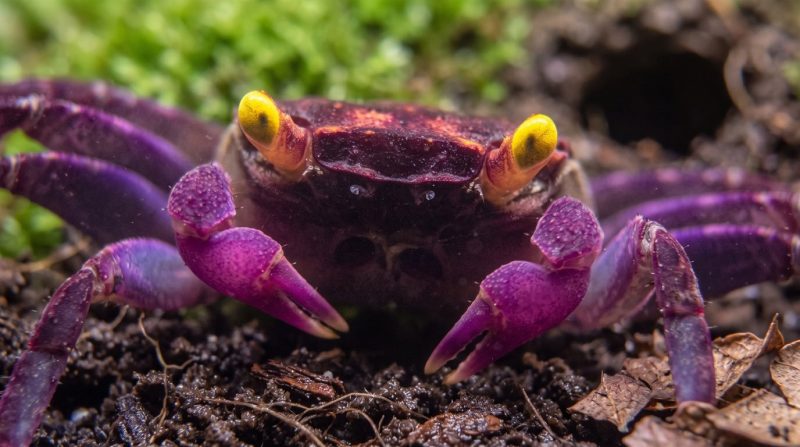
The best substrate for vampire crabs is a damp, loose soil mix with nothing added to it, laid deep enough on the land section for a crab to dig a burrow that keeps its shape. Coco fiber works too, on its own or laid over sand. The water section is a separate choice, and sand or fine gravel does the job there. Get the ground right and the rest of vampire crab care gets easier, because a crab that can dig in is a crab that can hide.
What makes a good substrate for vampire crabs?
A good vampire crab substrate is soft enough to dig, firm enough that a burrow keeps its shape, and damp without sitting wet. Those three things matter more than the brand on the bag.
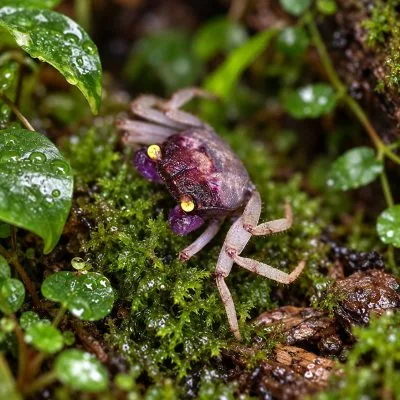
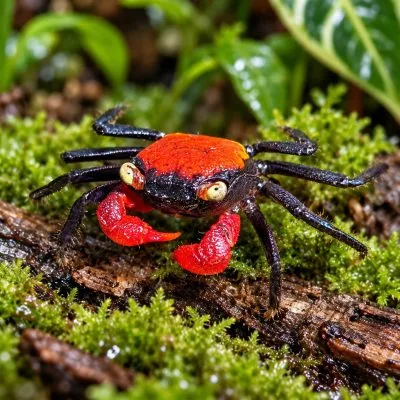
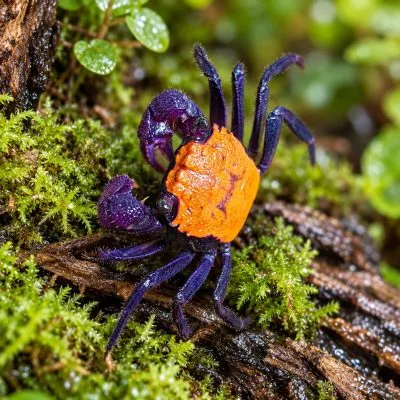
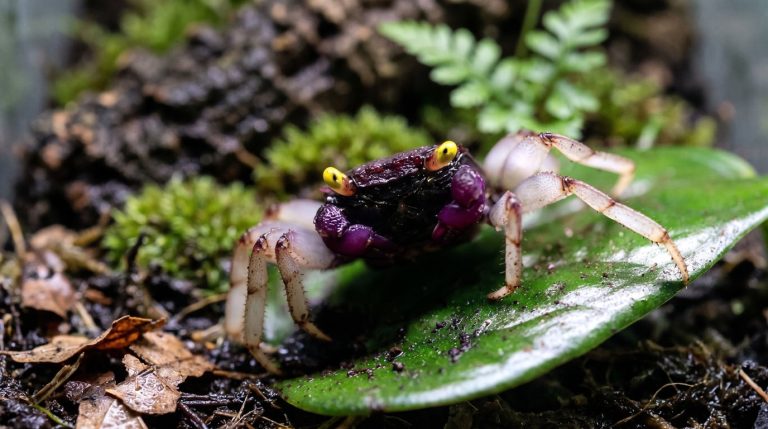
That’s the ground these crabs come from. The two Javan species long sold as vampire crabs hide under rocks and dense vegetation and dig burrows near the water’s edge, and the adults of one of them live mostly on moist banks.1 Your land section is the stand-in for that bank, so it’s where your crabs will spend most of their time.
Choose the substrate before you buy plants or hardscape, since it goes in early in a vampire crab tank setup and everything else sits on top of it.
Is soil mix, coco fiber or sand best for vampire crabs?
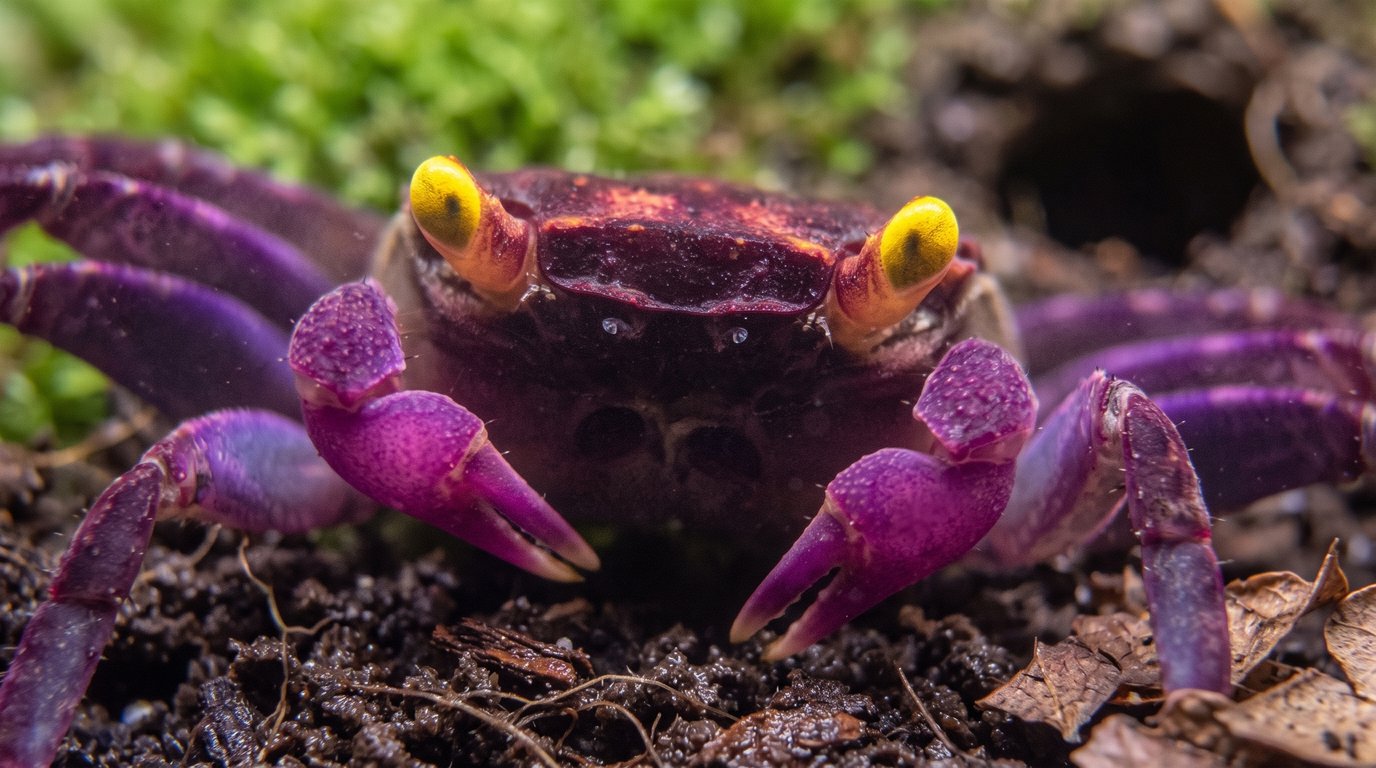
A soil mix is our pick for the land, and coco fiber is a fair alternative. Keepers fill the land part with soft, unfertilized substrates like these so their crabs can dig burrows that hold. Every line needs that burrowing space for vampire crabs, including the ones that climb a lot.
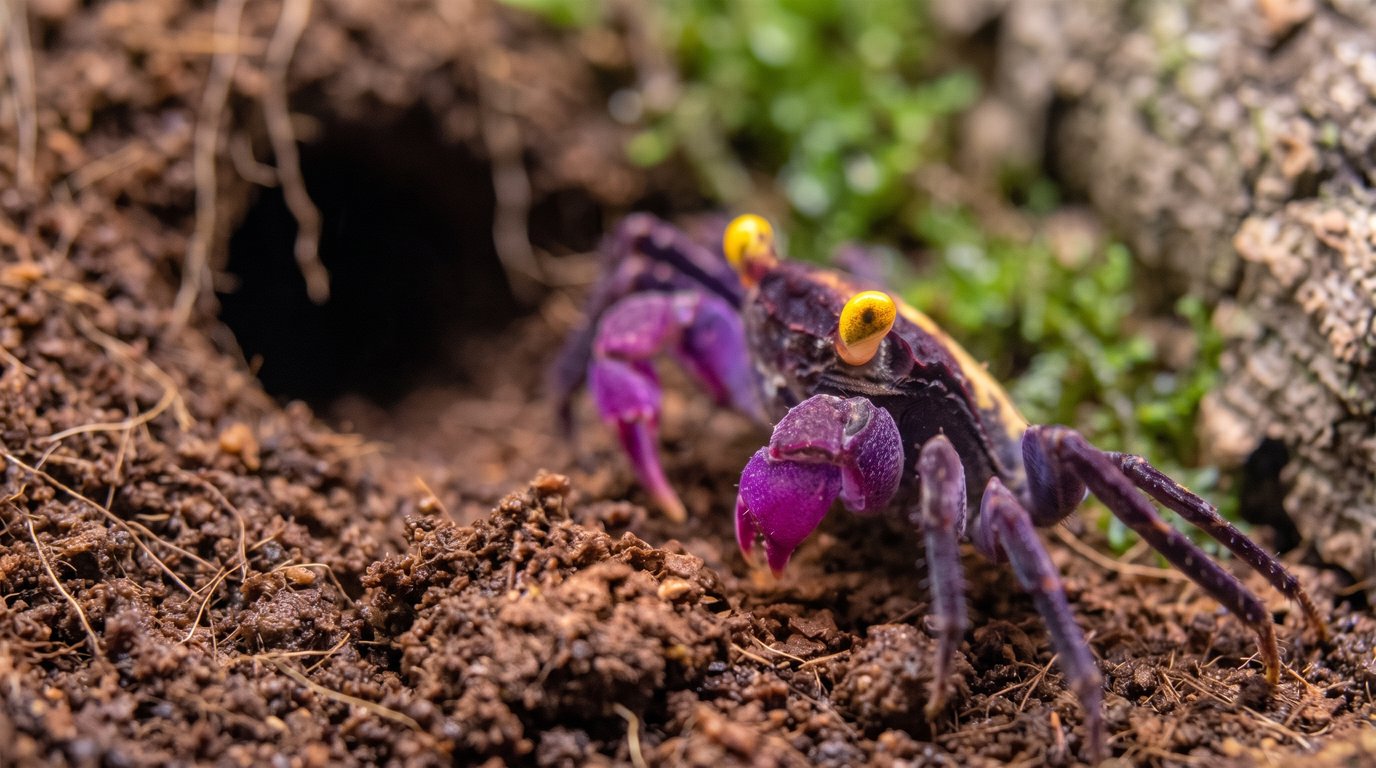
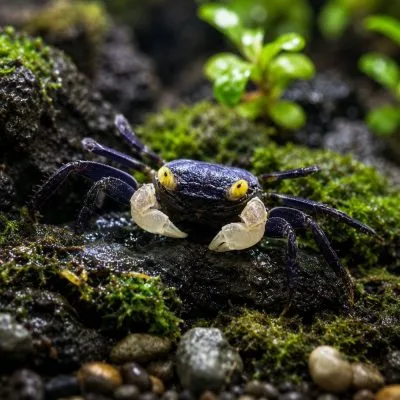
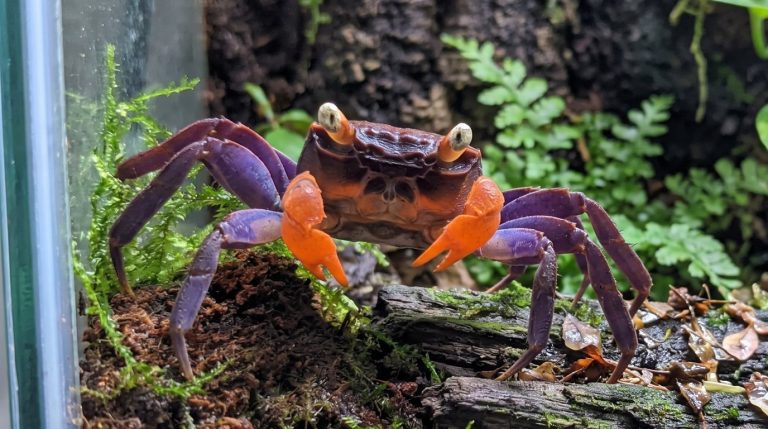
Across our paludariums we use three land substrates, one to a tank: coco fiber, a soil mix, and sand or gravel. Our crabs dig all the time, except in the sand and gravel tanks, where they dig less and hide under stones and wood instead. Of the three, the soil mix has suited our crabs best, because their burrows keep their shape in it.
What counts as a soil mix? Plain potting soil with nothing added, a peat-and-bark mix, or either one cut with some sand.
Coco fiber usually comes as a compressed brick. Soak it, squeeze out the extra water and it’s ready. Vampire crabs dig burrows in damp coco fiber, and some keepers mix it with fine sand or lay it over a sand base.
Want sand on the land anyway? It can work, but give the crabs plenty of stones, wood and cork to hide under, because they’ll be using those more than burrows. Whichever you pick, have it laid and damp before you order vampire crabs. Everything in our catalog is bred or propagated in our own tanks rather than collected from the wild.
Keep fertilizer and pesticides out of vampire crab soil
Use soil with nothing added. Fertilizer, moisture crystals, perlite, vermiculite and anything that may have been sprayed don’t belong in a vampire crab tank.
Nobody has tested potting mixes on vampire crabs, so this rule comes from caution and from what zoos do for other animals in damp terrariums. Zoo guidance for amphibian terrariums calls for potting mix without perlite, vermiculite or additives such as fertilizer, and for everything in the enclosure to be free of pesticides and other chemicals.2 Read the bag before you buy:
- No fertilizer, plant food or “feeds for months” on the label
- No perlite or vermiculite, the white grains in many potting mixes
- Garden, lawn or flower-bed soil you can’t vouch for
- Mixes with moisture crystals or wetting agents
We know the bag that says organic or for terrariums is tempting to grab. Read the ingredient list anyway, because that’s where fertilizer and perlite show up.
How deep should vampire crab substrate be?
About 2-10 inches (5-25 cm), deep enough for a crab to dig in until it’s out of sight. You don’t need that depth everywhere. Bank the substrate up toward the back and let the front slope down to the water.
Keepers who give their crabs a deep bed see them burrow and build tunnels in it, egg-carrying females included. That’s why pregnant vampire crabs need soil for burrowing, and why the deep spot should be in place before a female needs it.
A shallow bed isn’t a disaster. If your crabs dig in and disappear, the soil is deep enough. Depth is only part of the plan, though, and the hides, moss and slope decide how much land vampire crabs need in your tank.
Do you need a drainage layer under vampire crab substrate?
Not always, but it’s the simplest way to stop the bottom of the soil from sitting in water and going sour. Keepers who build one lay clay balls (LECA), lava gravel or plain gravel under the land, put mesh, fleece or landscape fabric between that layer and the soil, and keep the top of the layer above the water line.
One keeper added theirs only after the bottom of the land had rotted unnoticed. Zoo guidance for damp amphibian terrariums uses the same build: a gravel or LECA layer at the bottom, a screen so the soil doesn’t mix into it, and the water kept below the top of the substrate.2
Plenty of tanks run without one. If you skip it, slope the land up and away from the water, and press the soil a few days after misting. Soil that stays wet low down is a drainage problem, and it’s far easier to fix before the crabs dig in. Soil that drains is what you’re waiting for during land cycling in a vampire crab paludarium, before the crabs go in.
What goes on the bottom of the vampire crab water section?
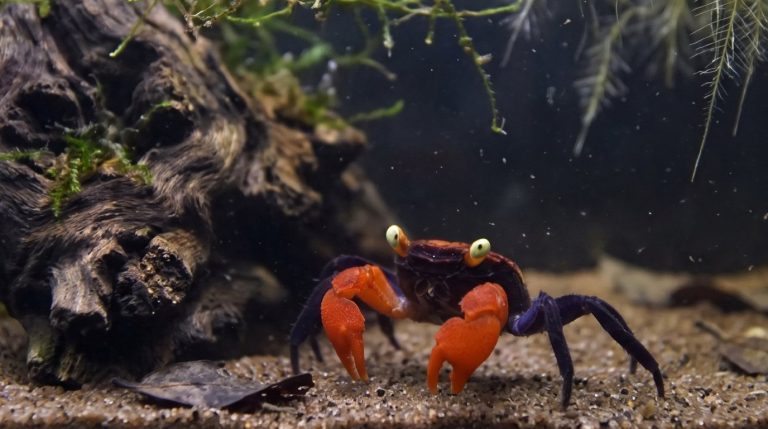
Sand, fine gravel or a mix of the two. Sand looks the most natural, and fine gravel is the fix if sand keeps getting into your filter.
Cover matters more than grain size here. Vampire crabs molt in the water, so add stones and plants a soft crab can tuck in among. It’s the water a crab heads for at every vampire crab molting, so plan that cover from the start.
How do you keep vampire crab substrate damp but not moldy?
Keep it damp to the touch, mist when the top starts to dry, and let a little air move. About once a day is typical, judged by the moss and the surface of the soil.
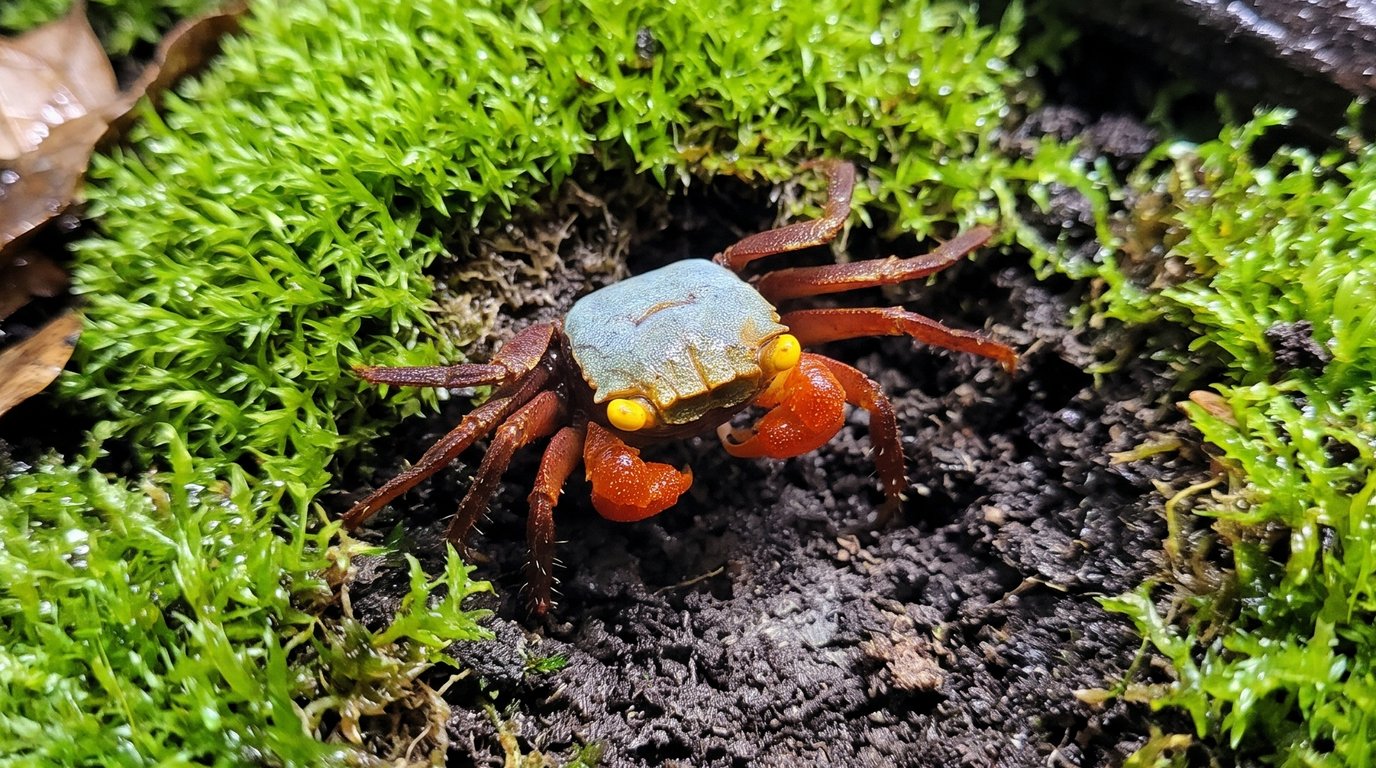
We cover the land substrate with moss. A living layer on top holds moisture in the soil and gives the crabs cover between burrows. If the top still dries out between mistings, check the lid first, then spray the substrate as well as the moss when you keep a vampire crab tank humid.
Mold is common in a closed vampire crab tank, above all in the first weeks of a new setup. It grows on damp wood, coconut shells, substrate and moss where water sits and the air is still. Lift out what you can reach, replace any patch of substrate that’s moldy through, mist a little less and get more air moving. Light mold on new wood often goes away on its own within days.
Keepers also add springtails or isopods to deal with mold and scraps. Whether vampire crabs need a bioactive enclosure comes down to how much of that cleaning you’d rather do yourself.
Watch the edge where land meets water, too. Soil that slips into the water clouds it and feeds the water section waste it has to deal with. A firm edge of stones or a divider between the two holds the soil back, and it’s worth fixing the first time you see a muddy trail.
References
2 Sources
- New species of “vampire crabs” (Geosesarma De Man, 1892) from central Java, Indonesia, and the identity of Sesarma (Geosesarma) nodulifera De Man, 1892, Ng P.K.L., Schubart C.D. and Lukhaup C., Raffles Bulletin of Zoology 63: 3-13, 2015.
- Amphibian Husbandry Resource Guide, Edition 2.0, Association of Zoos and Aquariums, Amphibian Taxon Advisory Group, 2012.
Ready to get started?
Shop our Vampire Crab collection
8 products available · Live Arrival Guarantee