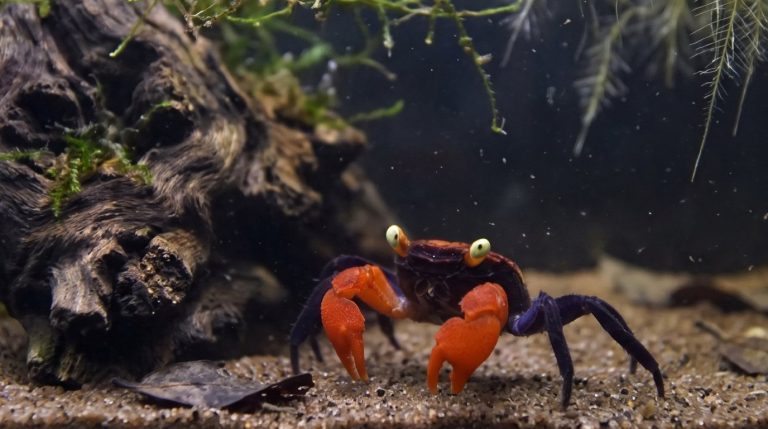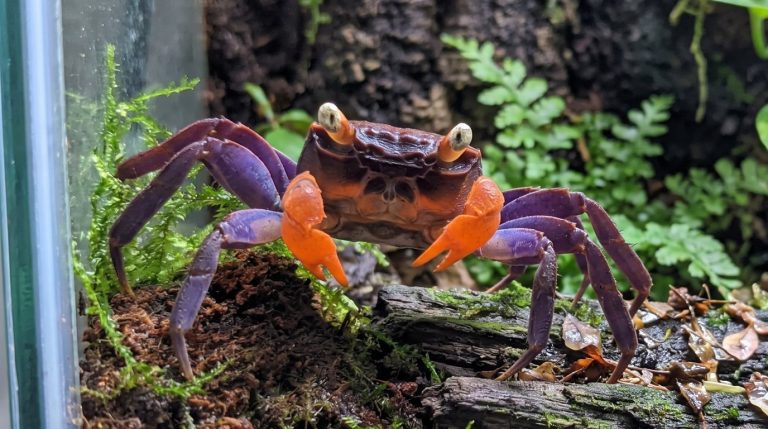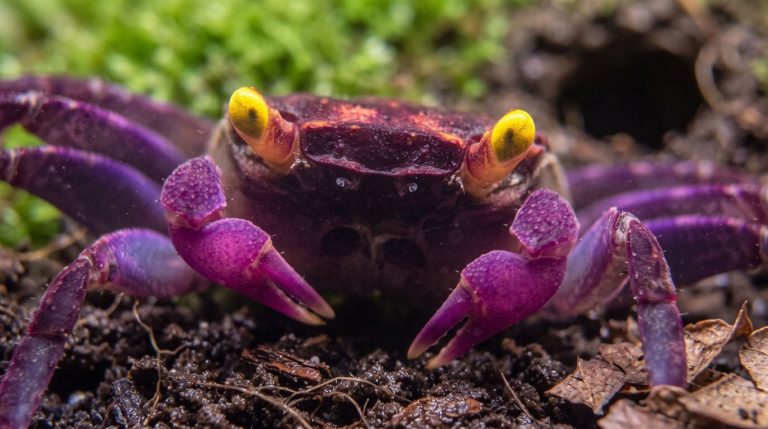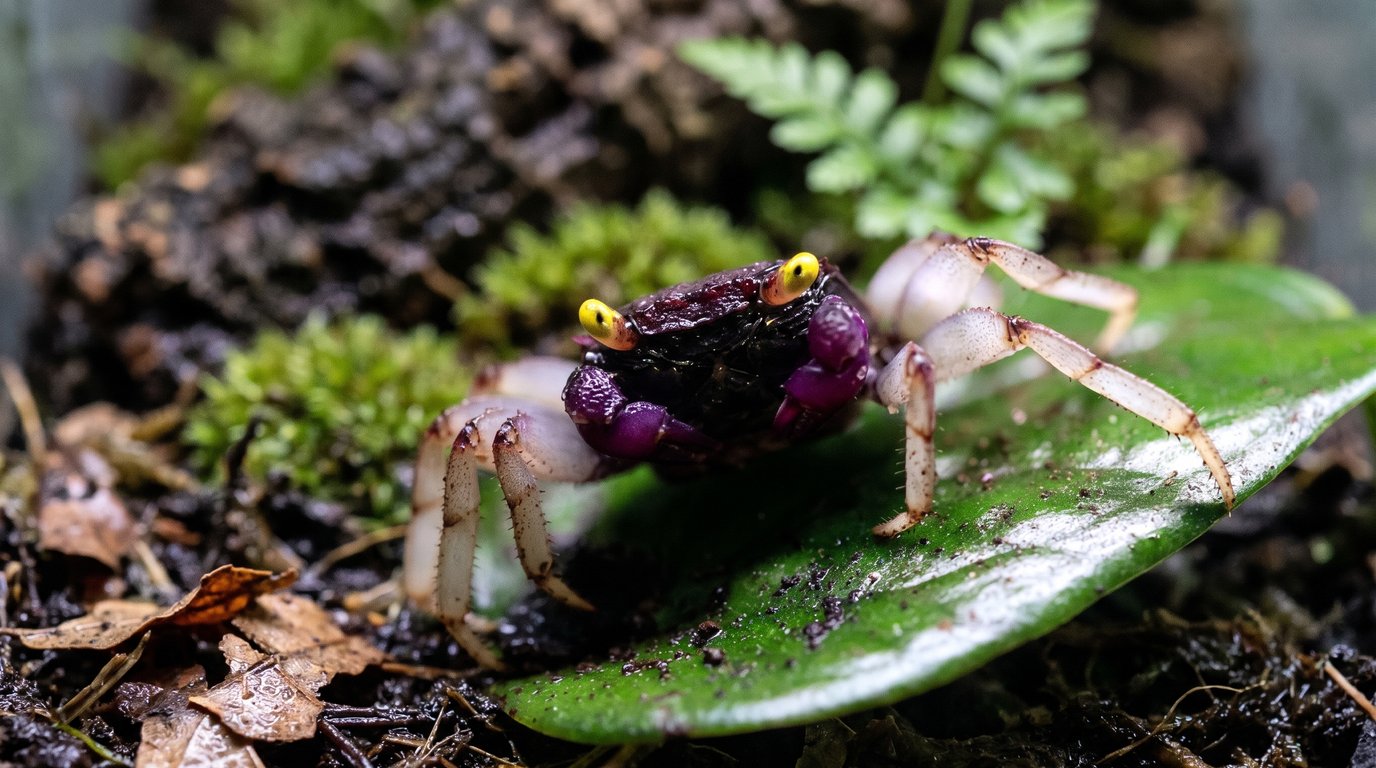
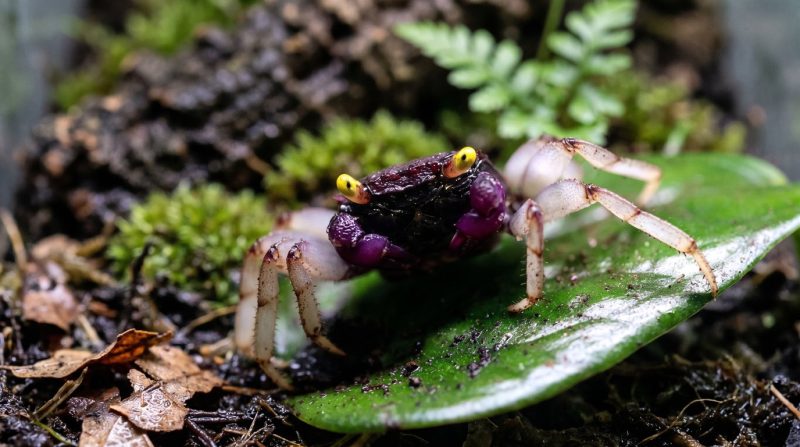
To acclimate vampire crabs, leave the closed box beside the tank for a while so it comes to room temperature, then open it on the land section and let the crabs walk out on their own. You don’t need the slow drip you’d use for shrimp or fish. After that, the most useful thing you can do is close the lid and leave them alone while they dig in and settle.
Get the vampire crab paludarium running before the box arrives
Have the tank finished and running before you order, so new crabs go straight from the box into a home that’s already warm, damp and closed.
Acclimation is short when the tank is right. The land should be damp, the hides in place, the lid tight, and the water section shallow enough for a crab to climb in and out of. Getting that ready is the part of vampire crab care that decides how the first week goes.
Run it for a few days and check the temperature. Vampire crabs do well at about 78°F (26°C), within about 72-85°F (22-29°C), and a tank that’s still swinging outside that range isn’t ready for them. If you’re still building, get the land, water and lid of your vampire crab tank setup settled before you pick a delivery day.
Fill the water section with dechlorinated tap water. Chlorine and chloramine are toxic to small freshwater invertebrates at very low levels,1 so treat tap water with a conditioner before it goes in. The same water rules apply later to vampire crab water changes and filtration.
Then order vampire crabs for a day you’ll be home. Everything in our catalog is bred or propagated in our own tanks rather than collected from the wild. You choose male or female on each product page. Once the courier collects the box, transit is normally 2-3 days.
Should you drip acclimate vampire crabs like shrimp?
No, vampire crabs don’t need the drip. That routine is built for animals that live in water and have to adjust to new water chemistry slowly. Vampire crabs spend much of their time on land.
Sesarmid crabs, the family vampire crabs belong to, breathe air with their gills, holding water in the gill chambers and moving it around to keep it full of oxygen while they’re out of the water.2 So a new crab doesn’t have to be adjusted to your water before it goes in. It needs land to stand on and water it can walk into when it chooses.
That’s how keepers put new vampire crabs in, too. They lift or tip them out of the shipping tub straight into the enclosure, with no drip and no floating cup. Active crabs explore, step into the water or dig in within the first hours, and no keeper has reported a crab hurt or drowned by being put in this way.
A drip also means holding the crabs in a cup of water for an hour or more, which is the opposite of what an air-breathing crab fresh out of a box needs. If a seller’s instructions with your order say something different, follow those, because the packing and the trip can change what’s best.
How to unpack and release new vampire crabs
Unpack vampire crabs over the land section, let the closed box come to temperature first, and let the crabs walk out without being picked up.
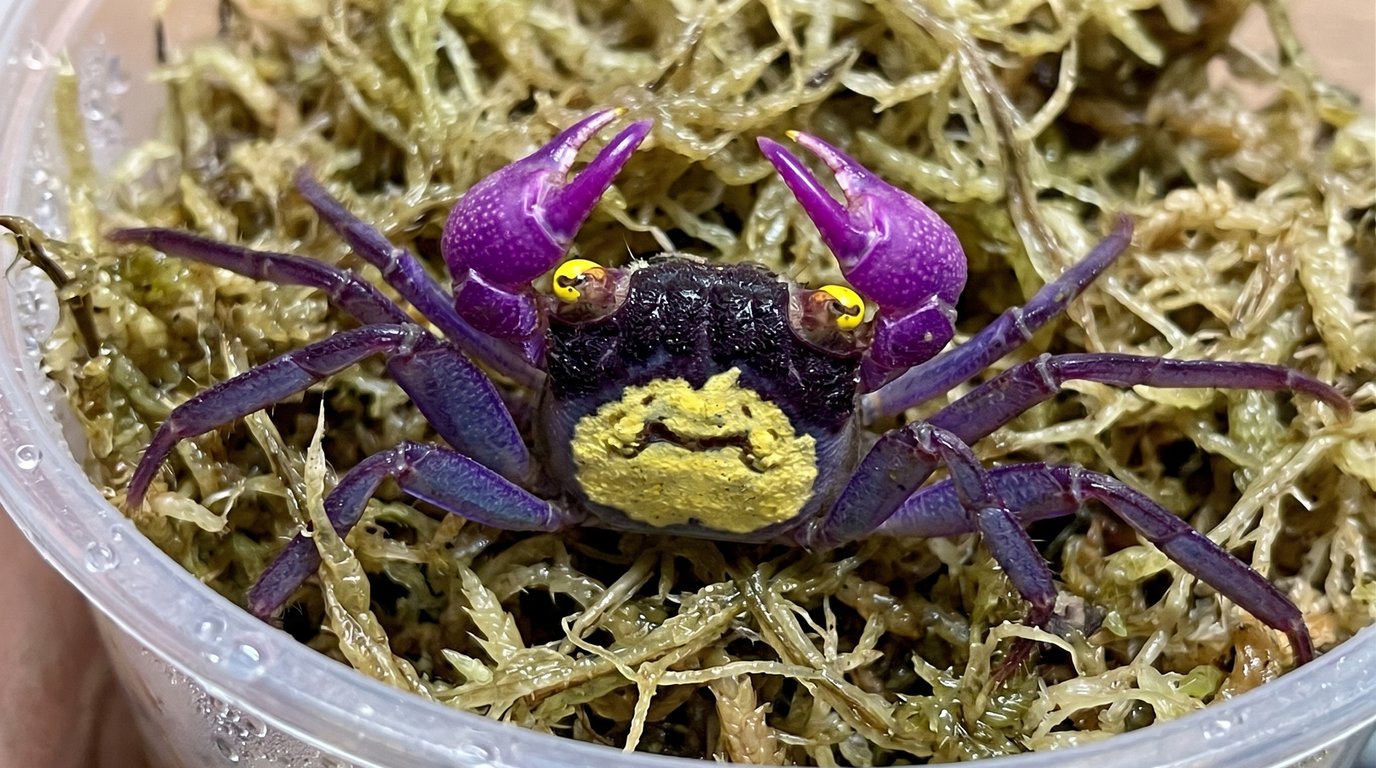
At Shrimp Aquatics, our vampire crabs travel in a small box or cup with damp moss, not in water. Before we open a box of crabs, we leave it closed for a while in the room or on top of the tank so it can come to the same temperature. When we move crabs into a tank, we open their container on the land and let them walk out on their own. We don’t put them in the water. In our tanks, new crabs usually dig in or hide, and we see little of them for the first few days.
- Start filming before you cut the tape, and keep the camera running in one take until every crab is out, because our live arrival guarantee works from that video. Livestock that arrives dead is replaced free of charge, counted from the first animal, when you report it within 2 hours of the carrier’s delivery time with an uncut unboxing video.
- Leave the closed box or cups beside the tank or on the lid for a while, so whatever is inside comes to the temperature of the room and the tank. There’s no tested time for this, so don’t rush it and don’t add heat to speed it up.
- Dim the room or switch the tank light off. It’s a safe default for release: in welfare studies of commercial crabs, crabs given the choice between light and a dark shelter typically pick the dark,3 and new crabs head for cover anyway.
- Lift the lid only as far as you need, set the open cup low on the land section, and tip it gently if a crab won’t come out. Don’t grab a crab by its legs or pull it off the moss. In commercial decapods, rough handling can cost a crab a leg and handling of any kind is a stress, so the less of it the better.3
- Close the lid as soon as the last crab is out, and take the cup and packing moss away.
Why keep the lid so close? Vampire crabs can make a short, fast leap when they’re unpacked or set down, and one jumped about 3 inches (8 cm) the moment its box was opened. They don’t get far, but an open lid is all it takes. Whether or not vampire crabs climb glass, the top is the way out during release.
What if a crab walks straight into the water? Let it. Some keepers’ crabs go to the water first, and a crab that does has found what it wants. Leave the water section shallow, with an easy slope or rock to climb out on, and don’t lift the crab back onto land.
What new vampire crabs do in the first days and weeks
Expect new vampire crabs to vanish. They dig in or hide, and you may see very little of them for a while.
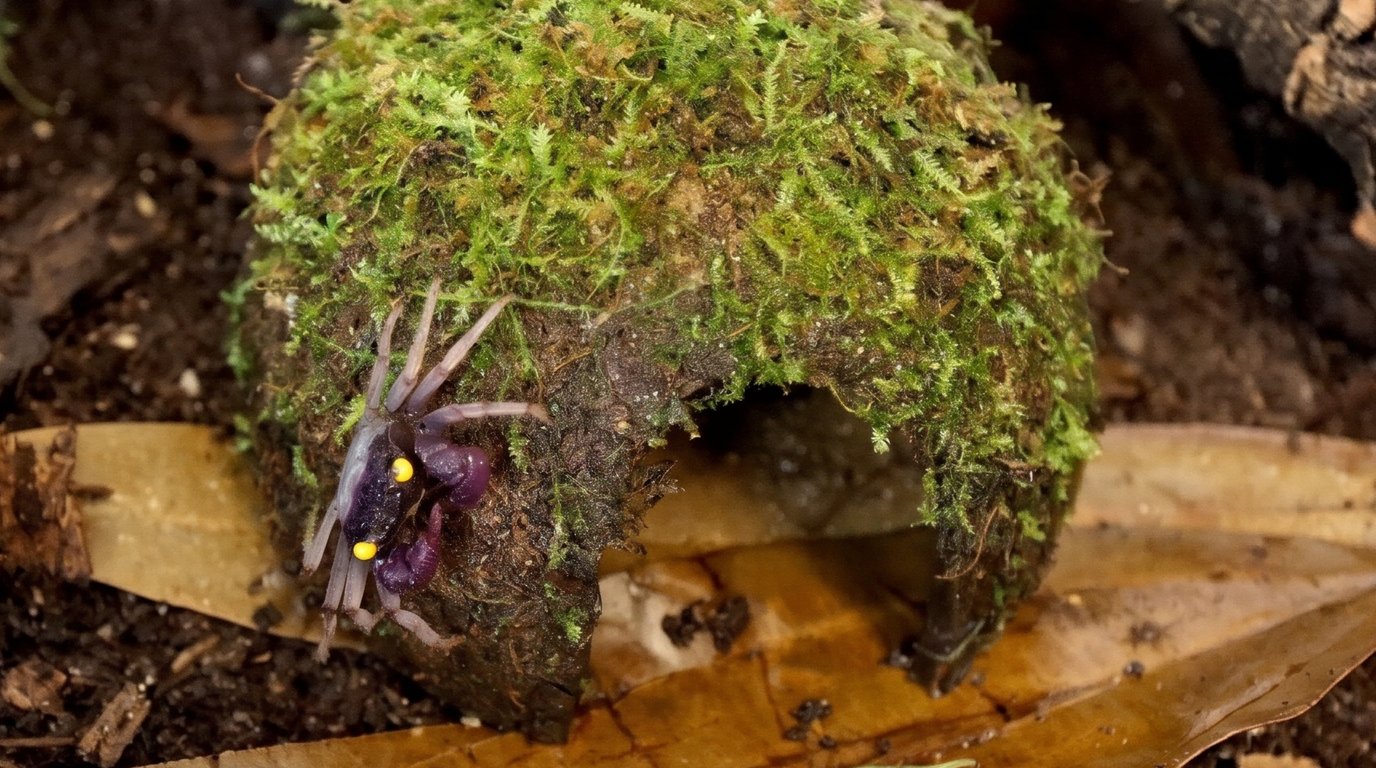
How long is a while? Bought crabs, many of them wild-caught, can stay hidden anywhere from about two weeks to half a year before they show themselves, and some stay shy for good. Crabs born and raised in a home tank are much bolder than wild-caught adults.
Don’t dig them out to check. The safe default is to leave the hides and substrate alone for the first couple of weeks, because a buried crab is doing what new crabs do. If you’re worried one has gone, look for signs before you search, the way you would for any missing vampire crab.
Food can wait too. A new crab often ignores food at first, and its first meal can come anywhere from the first night to about a week after it arrives. Vampire crabs mostly eat in the evening and at night, so put a small piece near the hides after dark and lift whatever’s left in the morning. Start to worry when a crab that has settled in leaves its food untouched morning after morning; that’s when a vampire crab not eating needs a closer look.
Keep the routine dull for the first couple of weeks: mist, top up the water, feed a little at night, and leave the hides alone.
When a new vampire crab needs a closer look
Look more closely at a new vampire crab that lies still out in the open, foams or drops legs, and at any bad smell from the tank.
Some boxes arrive with a crab dead or barely moving, while others arrive with every crab alive and active. New crabs can also die between arrival and about two weeks later, even in a tank where other crabs do well. When keepers checked their tanks after those early losses, they mostly found nothing wrong and put them down to the crabs’ condition on arrival. Still, run the same checks you would for vampire crabs dying in an older tank, starting with the temperature and any plants that went in unwashed.
Not everything that looks like a dead crab is one, though. A shed skin looks like a whole crab, but its eyes are empty, clear shells, it’s hollow and the back lifts open. A molting crab needs water it can fully climb into, so keep the water section filled while you wait. Finding a skin is good news: it means the crab has grown.
References
3 Sources
- Chlorine Water Quality Guidelines, Technical Appendix (Water Quality Guideline Series WQG-10), British Columbia Ministry of Environment and Climate Change Strategy, reformatted 2021 from Singleton H.J., 1989.
- Species-specific gill’s microbiome of eight crab species with different breathing adaptations, Scientific Reports, 2023.
- Animal welfare risks from commercial practices involving cephalopod molluscs and decapod crustaceans, Browning H., Burn C., Schnell A.K., Crump A. and Birch J., Animal Welfare 34, 2025.
Ready to get started?
Shop our Vampire Crab collection
8 products available · Live Arrival Guarantee