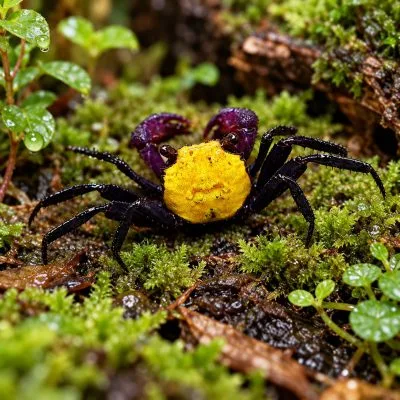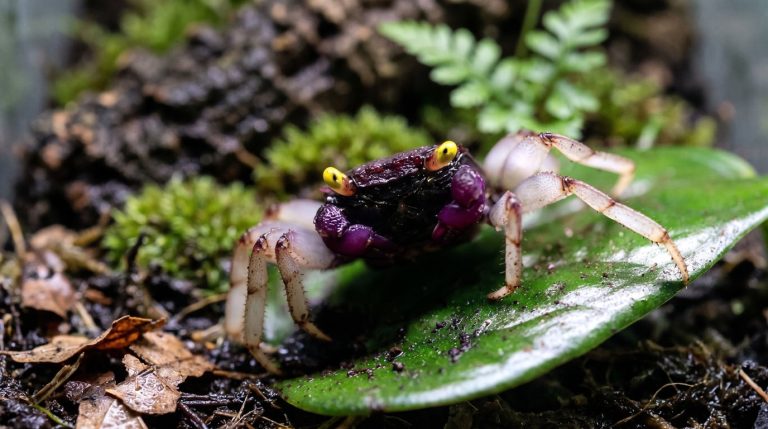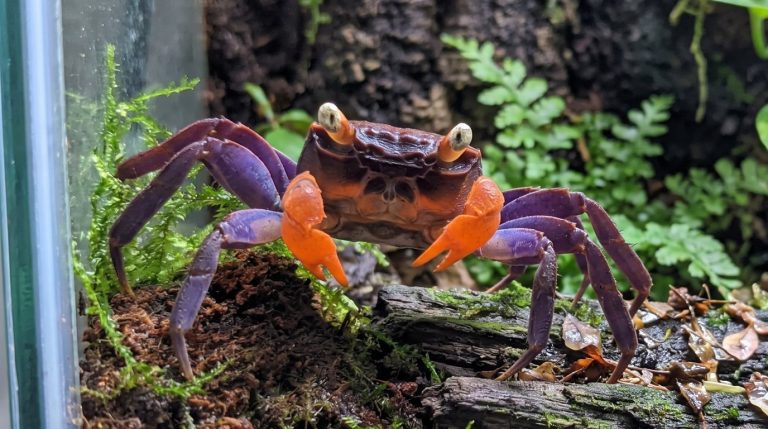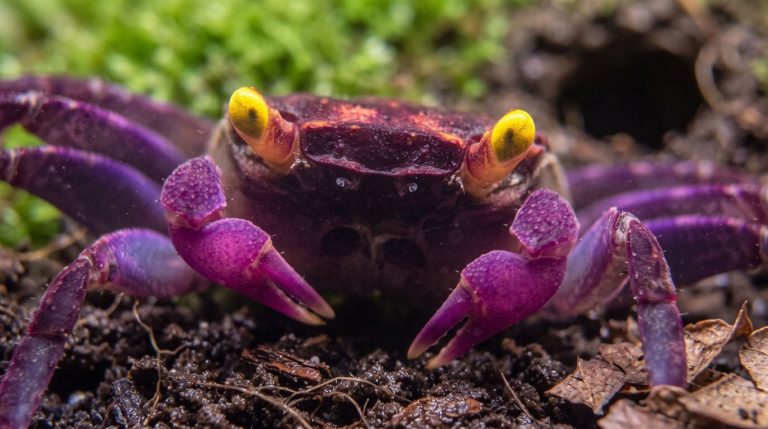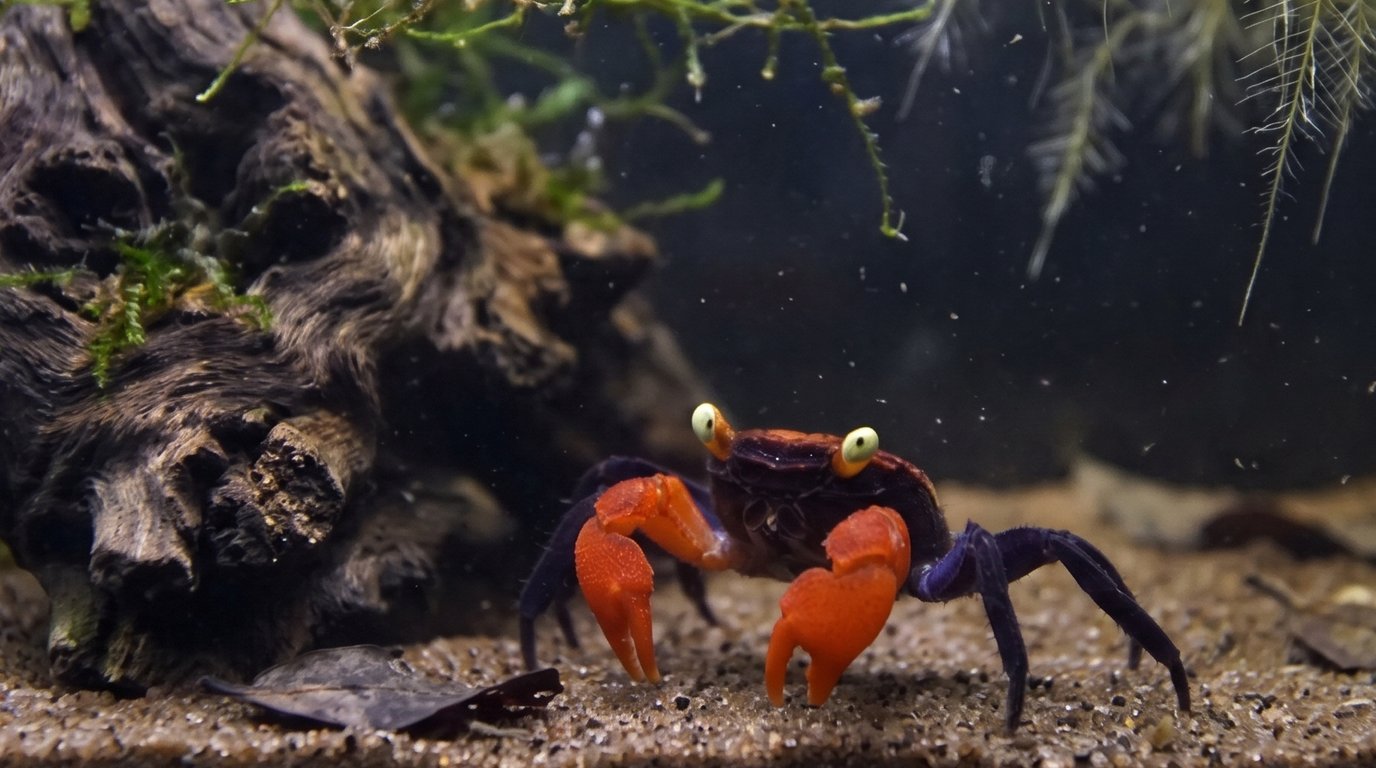
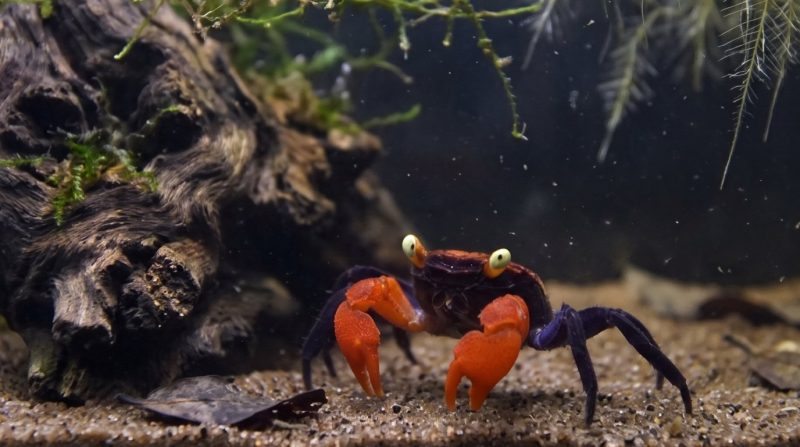
Adult vampire crabs can’t climb clean, bare glass in our paludariums, and keepers who’ve watched their own crabs point to the same thing: the way up a glass wall is the silicone seam in the corner. Babies are different. Small crablets can walk up glass when it’s damp, and vampire crabs of any age climb cork, wood and plants and can jump a short way when startled. So the glass walls hold the adults, and the lid has to do the rest.
Can adult vampire crabs climb a clean glass wall?
Adult vampire crabs don’t climb a clean, bare pane of glass, going by our own tanks and by keepers who’ve watched theirs.
At Shrimp Aquatics, our adult crabs can’t climb the bare glass of their tanks. They climb the wood, rock and plants instead. Our crablets don’t climb the glass either. Our crab tanks stay closed under a tight lid, and we’ve never had a crab get out.
Other keepers describe the same limit. Those who’ve watched closely say their adults can’t get up the glass at all, and that the one thing they can use is the silicone seam where two panes meet.
Why the seam and not the pane? A crab’s walking legs end in hard, pointed tips, and a pointed tip needs something to press into or catch on. Work on how insects climb puts the rule plainly: a claw only holds on a surface soft enough to sink into, or rough enough to hook.1 Glass is neither. Silicone is soft, so a seam gives those leg tips a line of grip from the floor to the rim. Nobody has tested vampire crabs on glass, so take that as the likely reason, not a measured one.
It isn’t an iron rule, either. At least one crab has been seen sitting on the front pane of its tank, and the report doesn’t say whether the glass was wet or how high the crab got. Count on the glass to stop adults at the walls, and don’t be shocked by an exception.
A wall the adults can’t climb is one small part of vampire crab care. The corners and the top are where a glass box lets crabs out.
That’s useful to know before you order tank-bred vampire crabs, because any glass tank will do for the walls and your attention can go to the seams, the decor and the lid. Everything in our catalog is bred or propagated in our own tanks rather than collected from the wild.
Can baby vampire crabs climb glass?
Yes. Newly hatched and small vampire crablets can climb glass when it’s damp, so plan for it even if yours never do it.
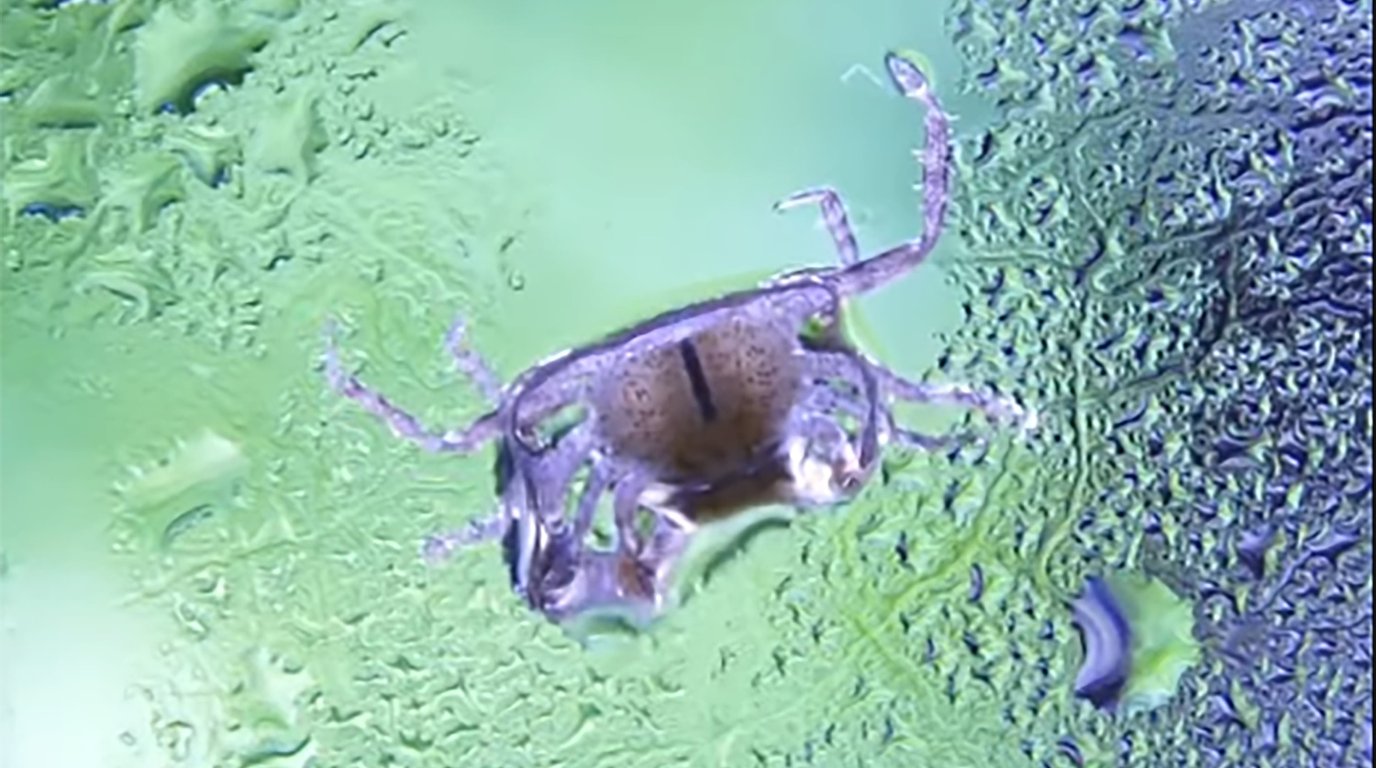
Babies have been found sitting in the middle of a pane, running up the damp glass of a covered tank, and climbing the walls of plastic rearing boxes to hang under the lid. Every keeper who names the conditions says the same thing: the surface was wet, or carried a thin film of water.
Why can a crablet do what an adult can’t? The likely answer is the water. In insects, a thin film of fluid between the foot and the surface is what holds a small animal on a smooth wall,1 and a newly hatched crablet weighs next to nothing. A humid, lidded tank is exactly where glass fogs up.
What does that change for you? Size every gap for the babies, not the adults. Young vampire crabs have got out through the slot between two sliding front panes, through slits in a lid and through ventilation openings, and some were found dead on the vent mesh or in the door rail.
If your group breeds, closing those gaps is part of baby vampire crab care from the first brood, and it’s easier to do before the crablets appear than after.
What vampire crabs climb to reach the top of the tank
Vampire crabs climb plants, branches, cork and other textured backgrounds, and the silicone seams of the glass. Anything with grip that runs from the floor to the rim is a way up.
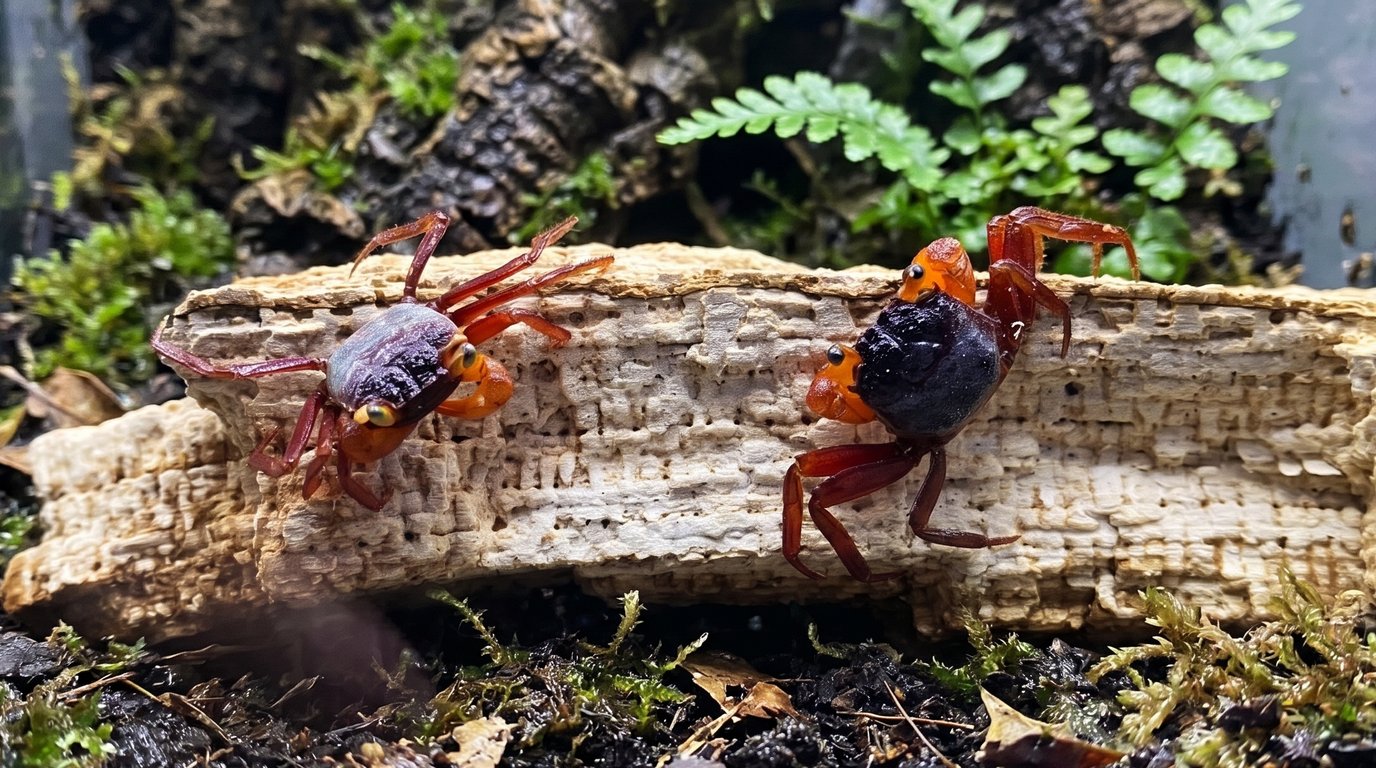
How high do they go? As high as the grip does. In one tall tank, a group of Red Devil crabs often climbed about 28 inches (70 cm) up a cork back wall to rest on a cork ledge at the top. Crabs have also been watched going straight up a waterfall and roaming through branches in the evening.
Not every group does it. Keepers are split on how much their adults climb: some see it all the time, and others say theirs hardly leave the ground. So don’t read anything into a crab that stays on the ground.
Climbing does run in the genus, though. In the wild, Geosesarma todaeng in southern Thailand was found on palm leaves and stems 0.5-1.0 m (about 2-3 feet) above the water,2 and Geosesarma perracae in Singapore has been found inside a pitcher plant and seen on leaves about a meter off the ground.3
So give your crabs cork, branches and plants to climb, and keep the top of all of it below the lid. A crab sitting on a branch that touches the cover is one push from the outside. Settle that gap during vampire crab tank setup, before the plants grow in.
Tall, leafy plants work as cover and as climbing frames at once, which is one more thing to weigh when you choose the best plants for a vampire crab paludarium. Cords and airline tubing run straight over the rim, so treat them as ladders too.
Can vampire crabs jump?
Yes, vampire crabs can jump, in short, fast leaps when something startles them.
Keepers have seen it when a crab bolts, when a new crab is set down on the land section, and when a hand reaches in. One crab jumped a good 3 inches (8 cm) as it was being unpacked. That’s a long way for an animal this small, and it happens too fast to catch.
It isn’t something every tank sees. We’ve never seen one of our vampire crabs jump. They walk and climb.
Should you worry about a crab jumping out? Only while the tank is open. The leaps keepers describe come from a crab that’s fleeing: during unpacking, at release, or when a hand comes near. In one build, a male jumped out moments after he was set on the land. So unpack and release new crabs low over the land section, keep the cover within reach, and close it before you step away.
Do vampire crabs still need a lid if they can’t climb glass?
Yes, vampire crabs still need a lid that closes all the way round, even in a tank with clean, bare glass.
Tempted to leave the cover off because your adults can’t get up the walls? Count the ways past the glass first: a seam in every corner, cork and plants that reach the top, crablets on a damp pane, a leap while the tank is open. In one open tank, four crabs climbed the plants to the top bars, and two of them got out and were lost. A male has also hooked a leg over the rim and lifted the lid just far enough to slip out under it.
A crab outside the tank is in trouble quickly. In one terrarium, crablets that slipped between the sliding panes lasted only a few hours outside. If one of yours disappears, search the tank before the room, the same way you would for any missing vampire crab.
The lid does a second job, too. It holds in the damp air these crabs live in, and without it you can’t keep a vampire crab tank humid for long.
Rimless and open-top tanks are the hard case, because there’s no lid to close. Whether vampire crabs escape from an open-top enclosure comes down to the same routes, and the fix is a cover cut to fit with every cord gap packed.
References
3 Sources
- Physical principles of fluid-mediated insect attachment – Shouldn’t insects slip?, Dirks J.-H., Beilstein Journal of Nanotechnology 5: 1160-1166, 2014.
- A New Species of Vampire Crab (Crustacea: Brachyura: Sesarmidae: Geosesarma) from a Freshwater Swamp Forest in Narathiwat Province, Southern Thailand, with a Note on Geosesarma serenei Ng, 1986, Ng P.K.L., Yeesin P. and Promdam R., Tropical Natural History 23: 97-104, 2023.
- First record in Singapore of a nepenthiphilous crab, Geosesarma perracae (Crustacea: Decapoda: Sesarmidae), Tan H.H. and Ng P.K.L., Nature in Singapore 1: 201-205, 2008.
Ready to get started?
Shop our Vampire Crab collection
8 products available · Live Arrival Guarantee