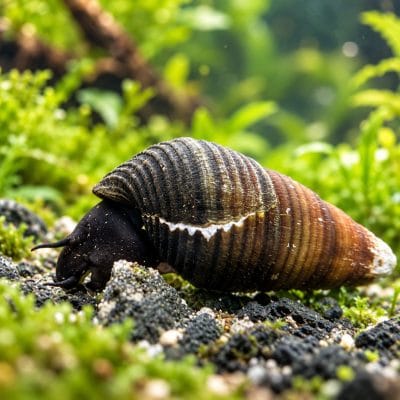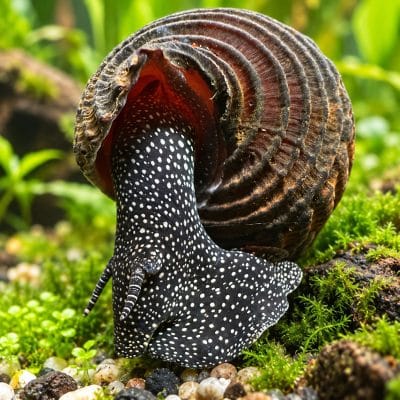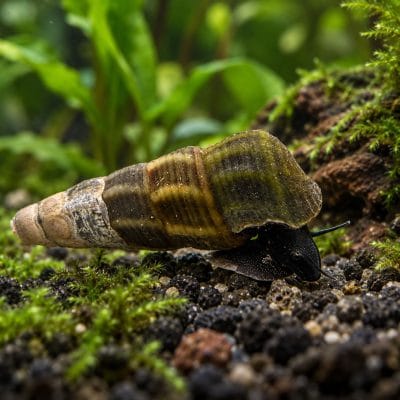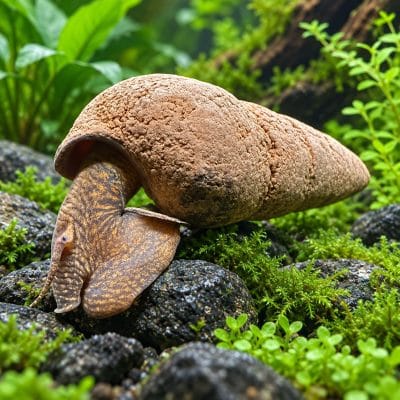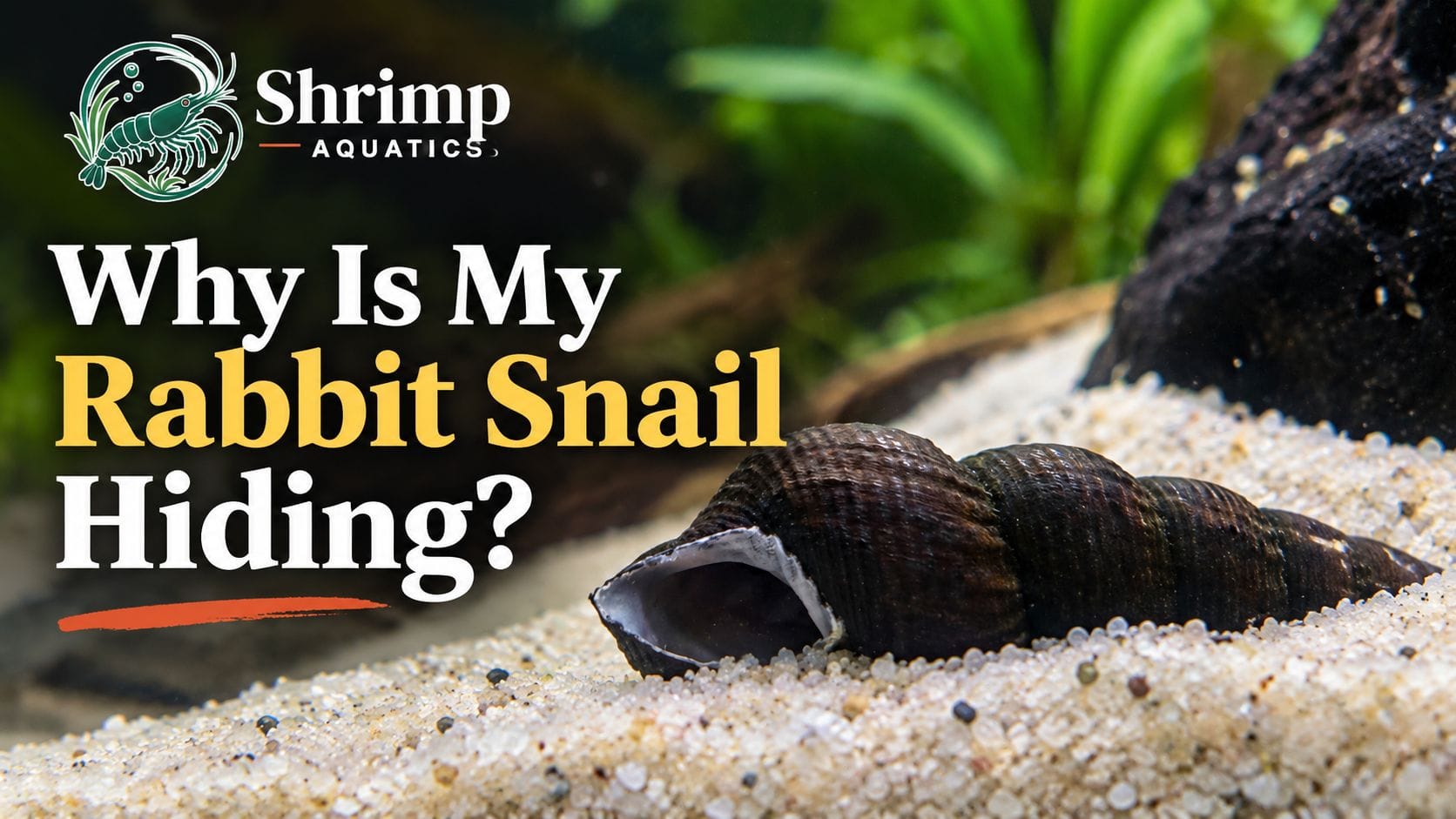
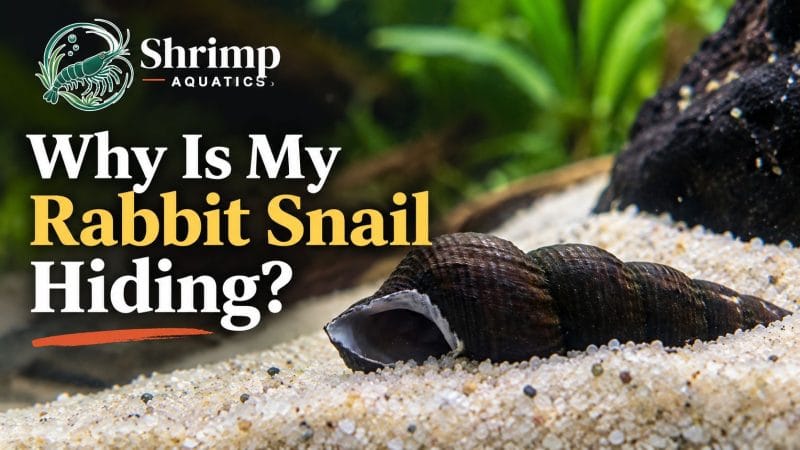
Most rabbit snails (Tylomelania sp.) that hide are resting or settling in: keepers commonly report a new snail staying shut or half-buried in the sand for several days, and care sites put a single rest at up to three or four days. Those figures are keeper experience. Hiding only becomes a problem when it comes with a water fault, a tankmate that picks at snails, or a snail that no longer reacts when you touch it, and the checks below sort those out in order.
Is your rabbit snail alive or just shut tight?
It’s almost certainly alive if it clamps down when you touch it. Lift the snail out, hold it opening-up, and press the operculum, the small horny door that closes the shell, gently with a fingertip. A live snail pulls it in or holds it tight. That’s close to the check a toxicology lab used on another freshwater snail, where an animal only counted as dead once it stopped responding to a gentle touch.1
Then use your nose. Keepers treat a strong, rotten smell from the opening as the sign that a snail has died, and they report that a dead snail tends to fall open or hang loose instead of staying sealed. If it smells of nothing but tank water and the door is shut, put it back where you found it.
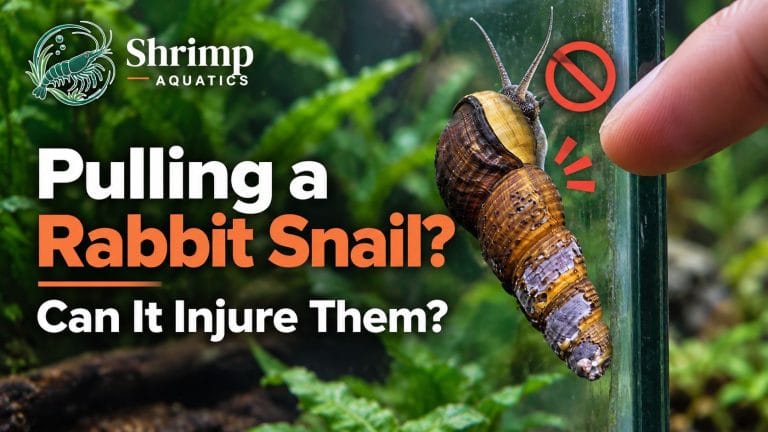
Don’t pry a snail that’s clamped to the glass or a rock. Slide a fingernail under the edge of the foot, or wait until it lets go by itself. A snail you’ve yanked off the glass hasn’t told you anything, and you can hurt it.
How long can a rabbit snail stay hidden before you should worry?
A few days is normal, and a snail that has just arrived can stay withdrawn for longer while it settles. Keepers also describe rabbit snails spending the day half-buried in sand with only the head showing, then moving more once the lights go out. Read that as a keeper habit and judge your own snail against what it did last week. Keepers call them night animals, but rabbit snails are nocturnal mostly in the sense that they avoid bright light.
What matters more than the number of days is what else is going on around the snail. Use these two cards to decide which side you’re on.
Probably resting or settling in
- It arrived in the last couple of weeks.
- It clamps down when you touch the door.
- Other snails and any shrimp are behaving as usual.
- Nothing has changed in the tank this week.
- It moves at night or reappears after a few days.
Check the tank today
- A snail you’ve had for months suddenly stays shut for days.
- Several snails close up at once, or shrimp act oddly too.
- It started after a water change, a new fish or a dose of anything.
- It doesn’t react when you touch the door.
- Something is nipping at it when it comes out.
If the second card sounds like your tank, go straight to the tests below. Several animals changing at once usually points at the water, not at one sick snail.
Test your rabbit snail tank in this order
Test ammonia and nitrite first. Both should read 0 in a cycled tank, and we’d treat any reading above that as the most urgent thing on this page.
Why does a small ammonia reading matter so much here? Warm, alkaline water makes it harsher. The toxic, un-ionized share of ammonia rises about tenfold with each full pH unit and roughly doubles with every 18°F (10°C) of warming, so the same test-kit reading means more in a rabbit snail tank at pH 8 and 82°F than in a cool, neutral one.2 Those figures come from EPA work on freshwater animals in general, so use them to judge urgency, never as a safe level for a snail.
Next, read the thermometer. If the tank has dropped below 79°F (26°C), a failed heater may be the whole story, and keepers report that rabbit snails kept on the cool side move less. Then check pH, KH, GH, TDS and nitrate against the numbers below.
| Ammonia and nitrite | 0 |
|---|---|
| Temperature | 79-86°F (26-30°C) |
| pH | 7.5-8.5 |
| GH | 4-8 dGH |
| KH | 3-6 dKH |
| TDS | 150-250 ppm |
| Nitrate | Under 10 ppm |
It’s the same water Sulawesi shrimp need. If a number is out, don’t fix it all at once. The correction can hurt more than the fault, and the section on fixing the water below shows how to do it in steps.
What changed in your rabbit snail tank before it started hiding?
Look back over the last week, because a change you made is the easiest cause to find and the easiest to undo. Did anything go into the water?
- A fish medication, algae treatment, snail treatment or plant fertilizer.
- A big water change, especially with water that wasn’t matched for temperature, pH and TDS.
- A new fish, shrimp or snail in the last few days.
- A heater that failed, was switched off or got knocked.
- New rock, wood or decor that hasn’t been in water before.
Rule out copper before anything else on that list. Read the label of every product you’ve added, and never dose copper or a copper-based medication into a tank with rabbit snails. In a laboratory test on a freshwater snail from a different family, copper was the most toxic of eight metals tried, killing half the snails within four days at 0.14 mg per liter.1 That’s a figure for another animal and not a safe level for yours. If copper went in, move the snail into clean water matched to the table above while you deal with the tank.
Could a tankmate be keeping your rabbit snail shut in?
Yes, if anything in the tank picks at snails. Keepers report fish nipping rabbit snail antennae until the snail stays closed, and care sites name loaches, pufferfish and crayfish as snail eaters. Assassin snails don’t belong in a rabbit snail tank at all. Once a fish has started, there’s no reliable way to stop fish attacking rabbit snails except separating them.
The lakes the genus comes from show how hard fish can hit these snails. In Lake Matano, surveys after snail-eating flowerhorn cichlids spread through the lake found far fewer rabbit snails and no small ones at all.3 The researchers also saw the lake growing over with algae in the same years, so the fish may not be the only cause.
Watch the tank for a while after the lights go out. If something goes for the snail when it comes out, that’s your answer, and the fix is to rehome the fish. When you plan the next addition, stock only animals that share this water. Every rabbit snail in our Sulawesi snail range is tank-bred, and every one needs the numbers in the table above.
How to fix the water without shocking a hiding rabbit snail
Fix it in small, matched steps and leave the snail where it is. We know you want to do one big water change and be done, but a sudden swing in temperature, pH or TDS is a second shock on top of the first.
- Match the new water to the tank for temperature, pH and TDS before any of it goes in.
- Change a small amount, then retest the next day before you change more.
- If ammonia or nitrite showed up, stop feeding and keep making small changes until both read 0.
- If pH or KH has drifted, bring it back over several days instead of in one dose.
- Check the snail once a day with the touch test, and otherwise let it be.
Stability is the goal. A tank that holds the same numbers week after week is what lets a rabbit snail come back out. That steadiness is most of what Sulawesi rabbit snail care asks of you.
When should a hiding rabbit snail come out of the tank?
Take it out the same day if it’s dead, or move it to clean, matched water if something toxic went into the tank. A dead snail breaks down in the tank, and decomposing animals release ammonia,2 which is the last thing the rest of your tank needs. Check the trap door first, because telling whether a rabbit snail is dead or just inactive takes a touch, not a guess.
If it’s alive, the water tests clean, nothing changed and nothing is picking at it, keep leaving it alone and keep testing. Stable water and time are what’s left to give it. If you’d like a second opinion, email contact@shrimpaquatics.com with your temperature, pH, GH, KH, TDS, ammonia, nitrite and nitrate readings, your tank size and your tankmates. If the snail has visible wounds or you can’t find a cause, a qualified aquatic veterinarian is the right next call.
References
3 Sources
- Toxicity of Metals to a Freshwater Snail, Melanoides tuberculata, Shuhaimi-Othman M. et al., The Scientific World Journal, 2012.
- Aquatic Life Ambient Water Quality Criteria for Ammonia, Freshwater 2013, U.S. Environmental Protection Agency, Office of Water, April 2013.
- New species from a ‘lost world’: Sulawesidrobia (Caenogastropoda, Tateidae) from ancient Lake Matano, Sulawesi, Indonesia, Haase M. et al., European Journal of Taxonomy 864: 77-103, 2023.
Ready to get started?
Shop our Sulawesi Snail collection
12 products available · Live Arrival Guarantee