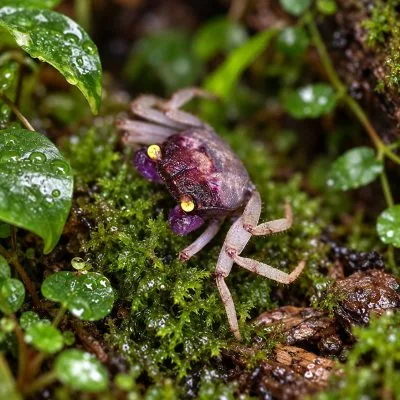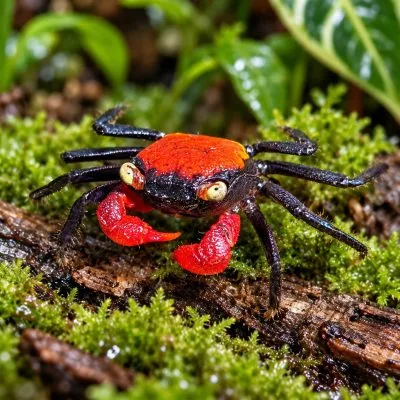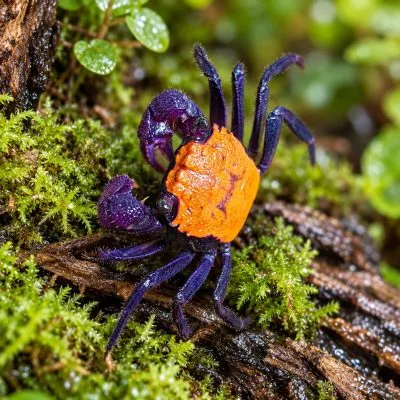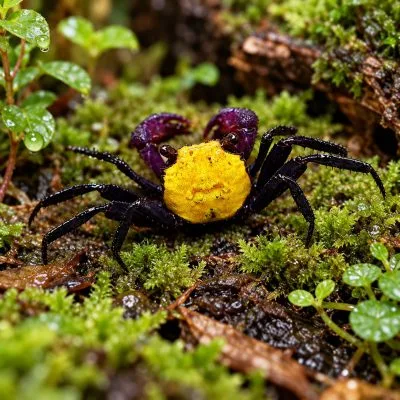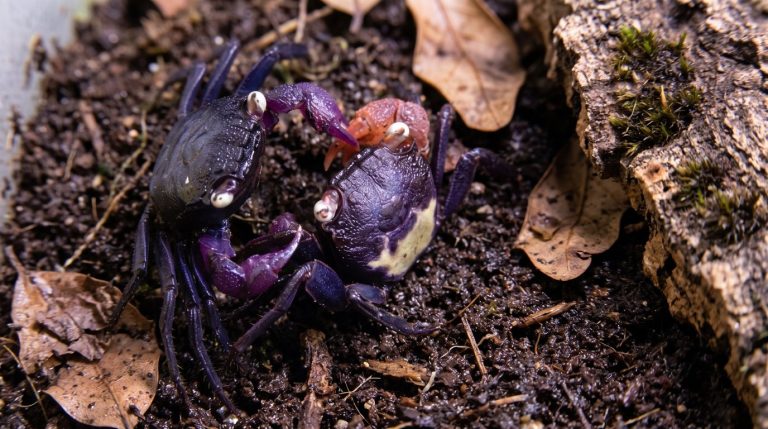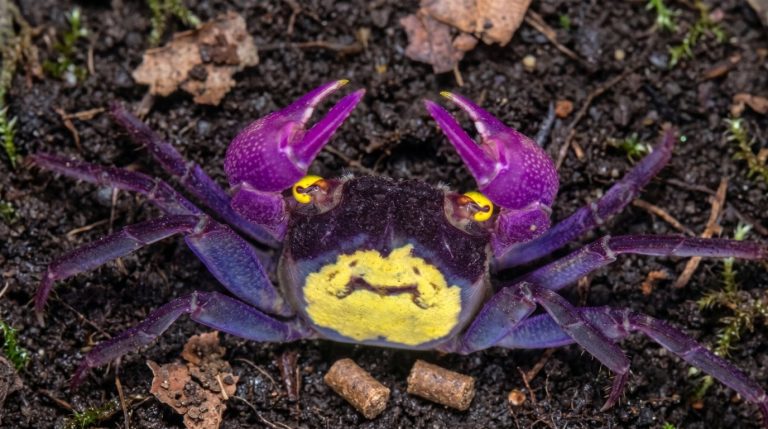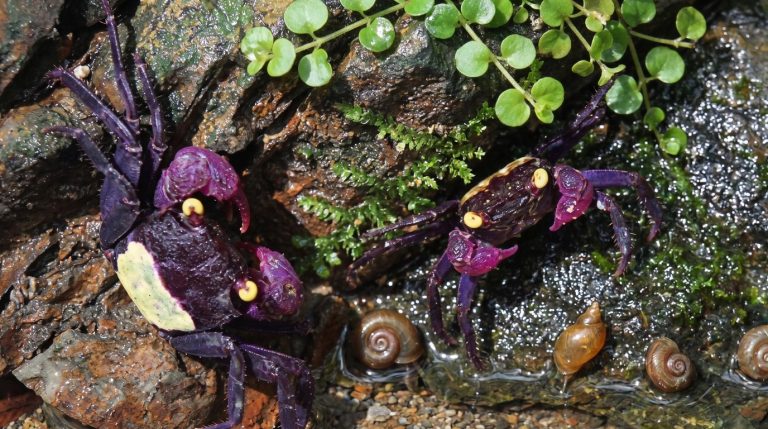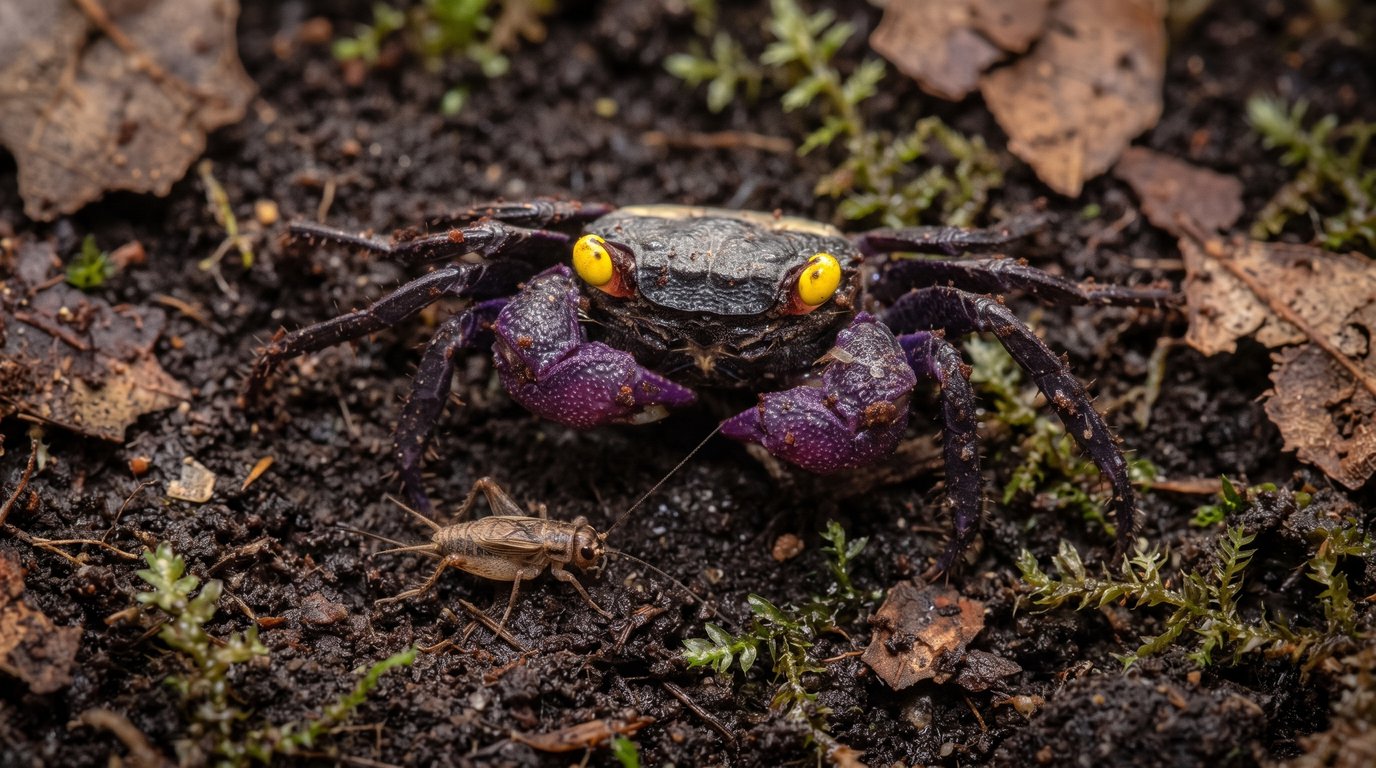
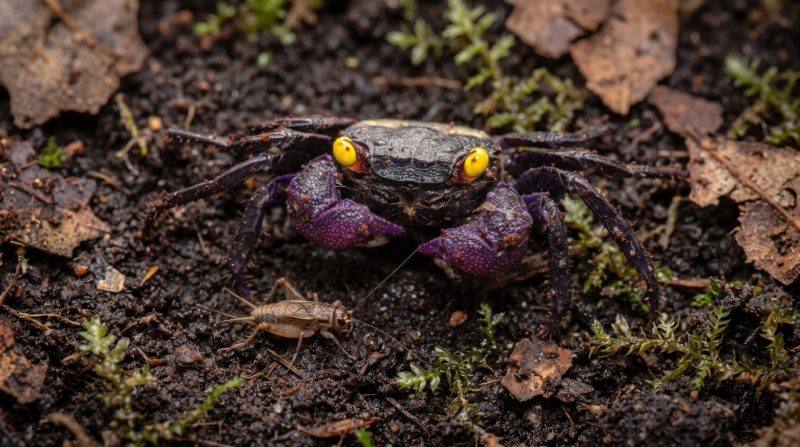
Yes, vampire crabs eat crickets, as long as the crickets are small. Pick pinhead or small crickets no longer than the crab’s shell is wide, put in only a few at a time around lights-out, and treat them as one animal food in a mix, not the whole diet. Dried or thawed crickets work too, with less fuss.
What size crickets can a vampire crab eat?
Feed crickets no longer than the crab’s shell is wide. For an adult vampire crab that means pinhead crickets, the tiny just-hatched ones sold as feeders, or the next size up. Adult crickets are too big.
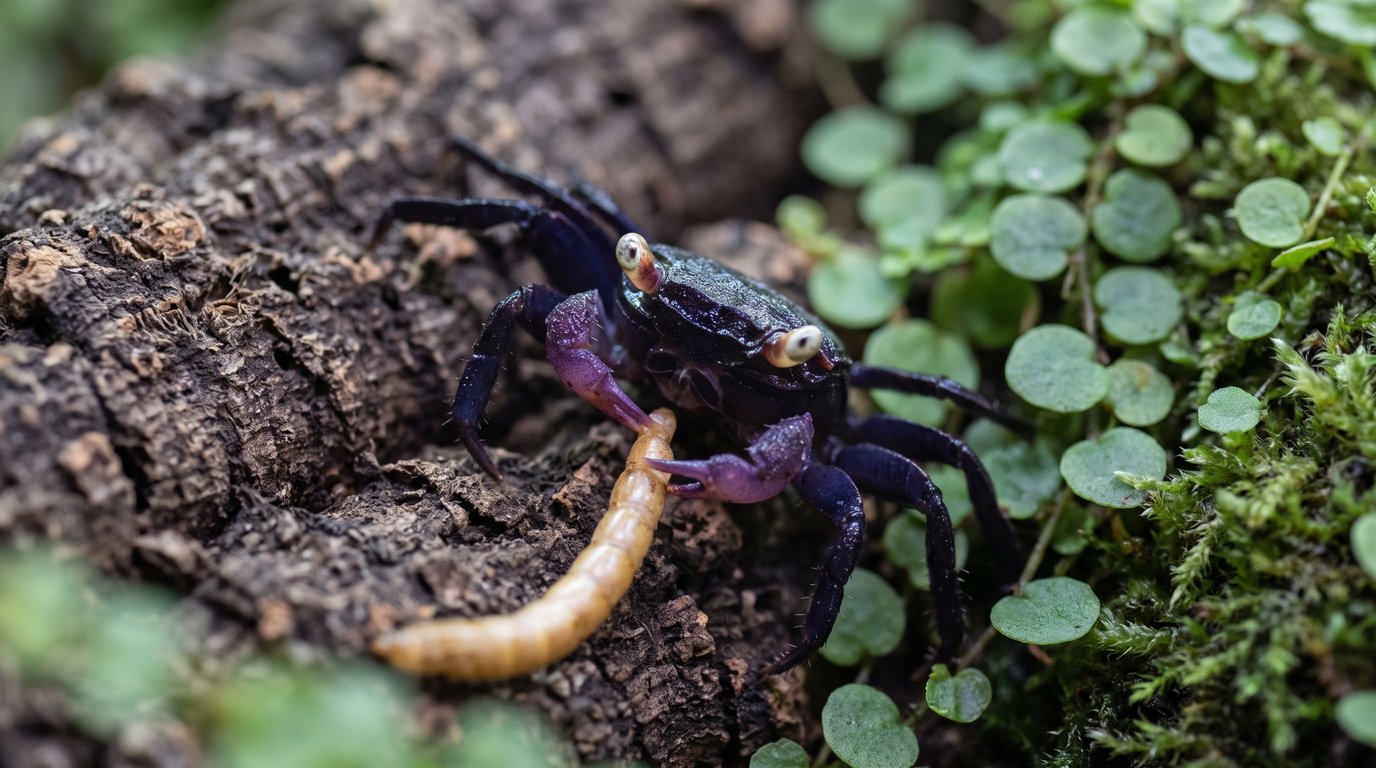
Vampire crabs are small animals. In the described species, an adult’s shell measures about 10-15 mm (about half an inch) across.1 A crab doesn’t swallow its food whole. It holds a piece in its claws and picks it apart, so a cricket it can grip and pin down is a meal, and one that kicks free is just another animal running around the tank.
Insects are a natural part of what vampire crabs eat. Two vampire crab species described from central Java feed at least partly on insects, one of them mainly on small land insects such as grasshoppers, which are close relatives of crickets.1 Small is the point there too: the prey is sized to the crab.
If the shop only has large crickets, skip the live ones and use dried or thawed crickets cut into pieces instead.
Should you feed vampire crabs live or dead crickets?
Both work, and you don’t need live crickets at all. Live crickets get some crabs hunting. Dried or thawed crickets are easier to control and can’t escape or hide in the moss.
Live food earns its place with a crab that won’t eat. Many vampire crabs ignore fruit, vegetables and some prepared foods, and keepers whose crabs did that got them eating with animal food: frozen bloodworms, worms, small fish pieces, fish flakes and pellets, or small live crickets. Preferences differ between groups, so a crab that turns down one food should be offered a different kind, animal food first.
Live crickets aren’t a sure thing, though. New crabs often eat little or nothing you can see in the first days, and at least one newly bought crab refused crickets dusted with calcium. Give a new crab time before you decide crickets are the answer: a vampire crab not eating much in its first days is often still settling in.
At Shrimp Aquatics, we feed our vampire crabs vegetables, fruit and dried insect larvae, among other foods. We don’t feed our crabs crickets.
Dried insects cover the same need as live crickets for most tanks. Freeze-dried crickets, broken into small pieces, or frozen crickets thawed and cut up are both easy options. Buy feeder crickets from a pet shop or breeder rather than catching them outside. A wild cricket may have picked up garden sprays, and you can’t tell by looking.
How to feed live crickets to vampire crabs without losing them
Add a few at a time, at lights-out, where the crabs live, and check the next morning. Loose crickets are the catch with live feeding, so put in only what the crabs can catch.
- Count out a few small crickets, roughly one or two per crab to start.
- Put them in around lights-out on the land side, near the hides and burrow entrances. Vampire crabs eat mostly at night.
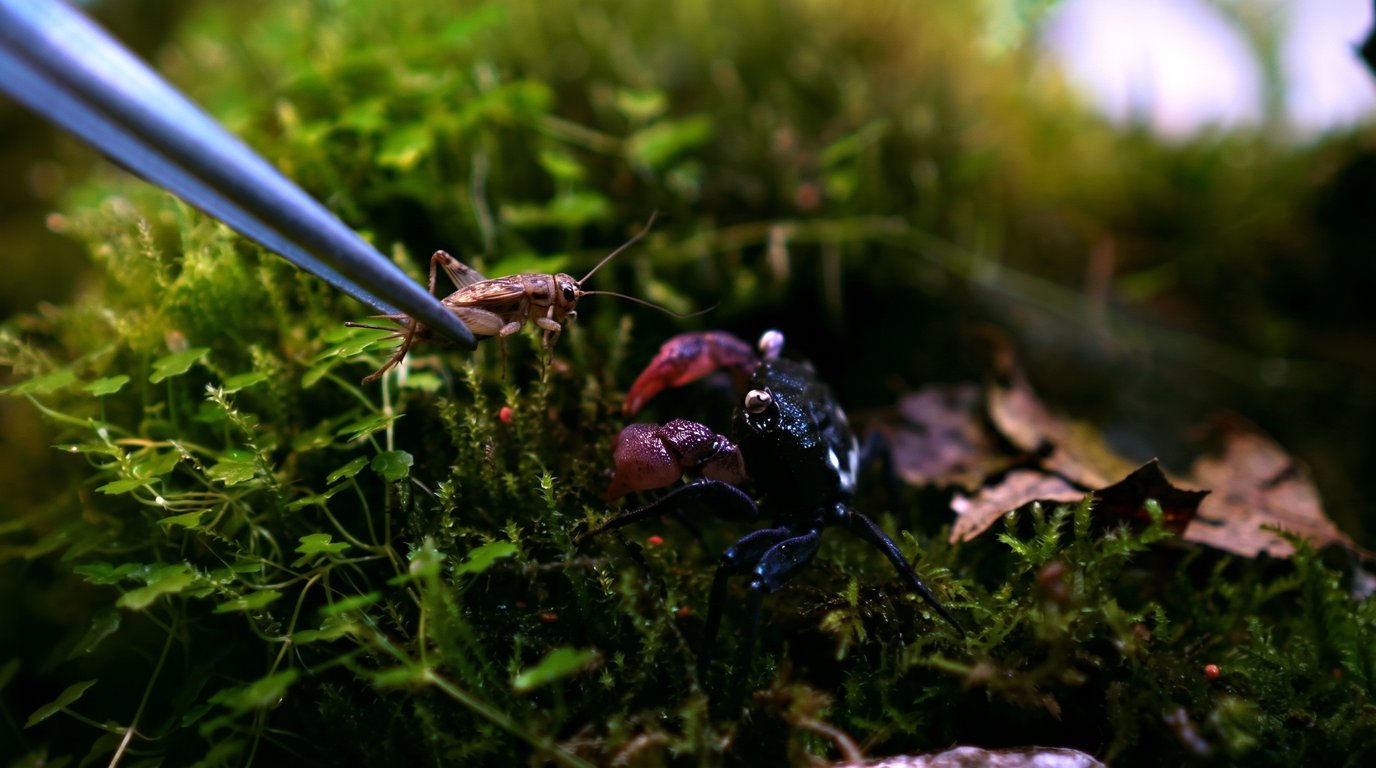
- For a shy crab, offer a cricket with feeding tweezers at the burrow entrance. In at least one tank, the crabs grabbed a cricket from tweezers at once.
- The next morning, count what’s left. Take out any cricket still loose, and check the water section for drowned ones.
- Next time, put in fewer if crickets were left, or a few more if all of them were gone.
Don’t expect to watch it happen. Many keepers seldom or never see their vampire crabs eat, above all with new crabs. What you see instead is fewer crickets the next day. That’s why the morning count matters: it’s the only way you’ll know how many were eaten.
Why not just leave the extras in? A cricket the crabs don’t catch hides in the moss and leaf litter, chirps at night and looks for a way out. One that falls into the water section can drown and rot there, which is a bigger problem if shrimp share that water. A tight lid is part of vampire crab care anyway, and it keeps crickets in too, so check the gaps around cables and tubing.
If a crab is hiding before a molt, it may skip several meals. Feed the rest of the group as usual and don’t leave extra crickets in to tempt it.
Do you need to dust crickets with calcium for vampire crabs?
No, you don’t need to dust them. Keep crickets as one part of a varied diet and don’t add calcium powder to them.
Calcium dusting comes from reptile keeping. Feeder crickets are a poor source of calcium, a finding repeated across studies of commercially raised feeder insects,2 so reptile keepers coat them with powder before feeding. Nobody has tested calcium dust or supplements on vampire crabs, and we wouldn’t start. Powder on a cricket also ends up on damp moss in a closed, humid tank.
The low calcium is a better reason to keep crickets as one food among several than to dust them. After a molt, leave the shed shell in the tank. The old shell holds minerals the crab takes back by eating it, and that meal is a normal part of vampire crab molting.
Where crickets fit in a vampire crab feeding routine
Use crickets as one of the animal foods you rotate, alongside bloodworms, small pellets and dried insect larvae, with some plant food on the side. You don’t need them at every feeding.
Crablets are the exception. Even pinhead crickets are too big for a newly hatched crab. Feed crablets the same foods as the adults, crushed to a powder, and let them hunt springtails in the soil. Some keepers add fruit flies.
Have some animal food on hand before your crabs arrive, whether that’s a tub of small crickets or a dried food. You choose Male or Female for each crab on the product page when you buy tank-bred vampire crabs. Everything in our catalog is bred or propagated in our own tanks.
A cricket night slots into the usual rhythm instead of being extra food on top of it, so count it as one of the meals when you work out how often to feed vampire crabs.
References
2 Sources
- New species of “vampire crabs” (Geosesarma De Man, 1892) from central Java, Indonesia, Ng P.K.L., Schubart C.D., Lukhaup C., Raffles Bulletin of Zoology 63: 3-13, 2015.
- Complete nutrient content of four species of commercially available feeder insects fed enhanced diets during growth, Finke M.D., Zoo Biology 34(6): 554-564, 2015.
Ready to get started?
Shop our Vampire Crab collection
8 products available · Live Arrival Guarantee