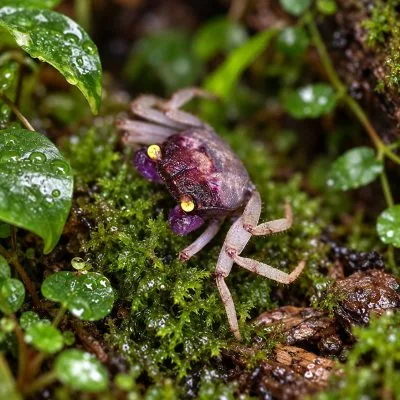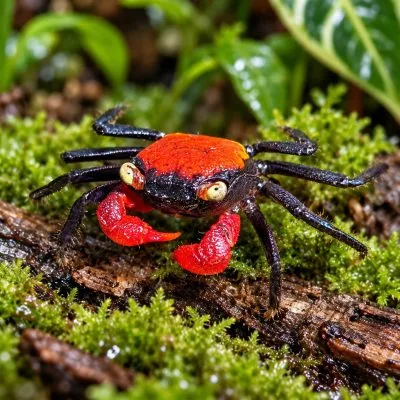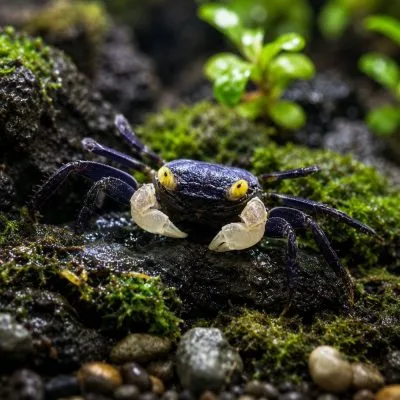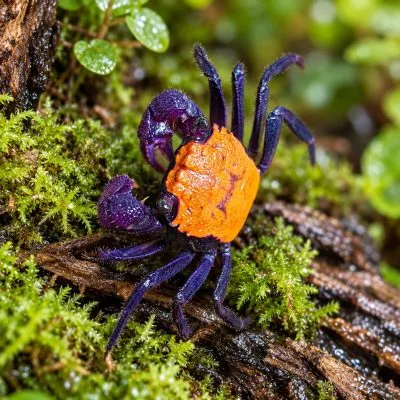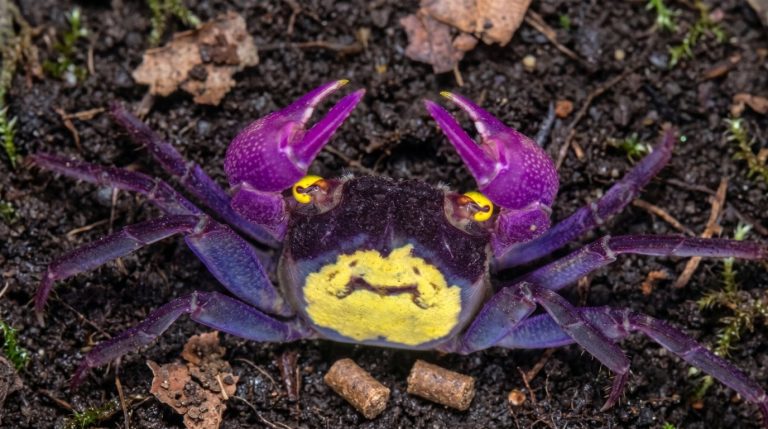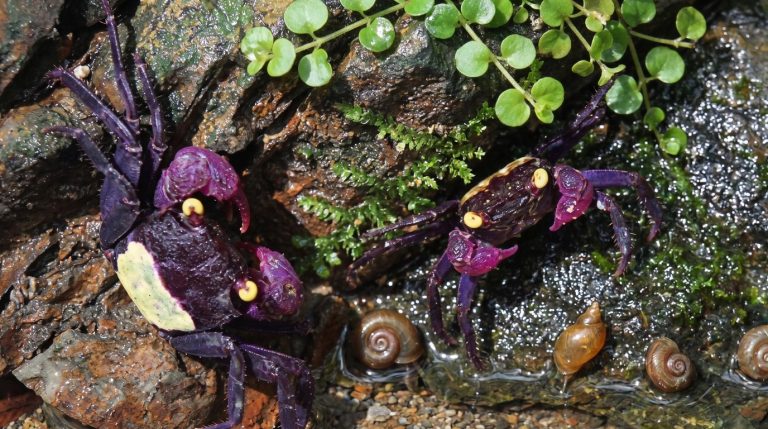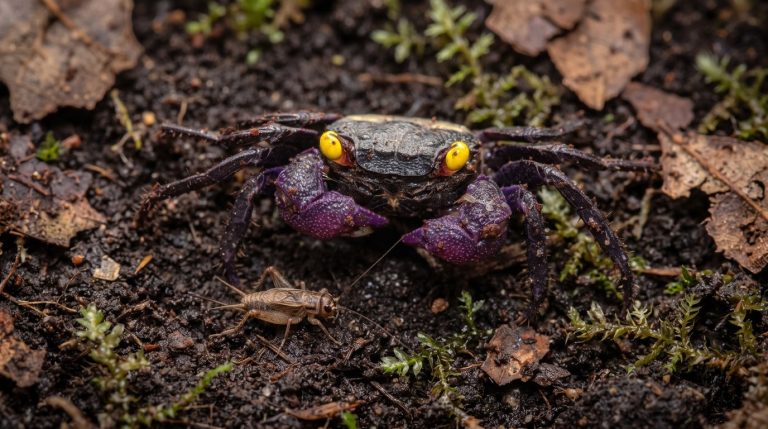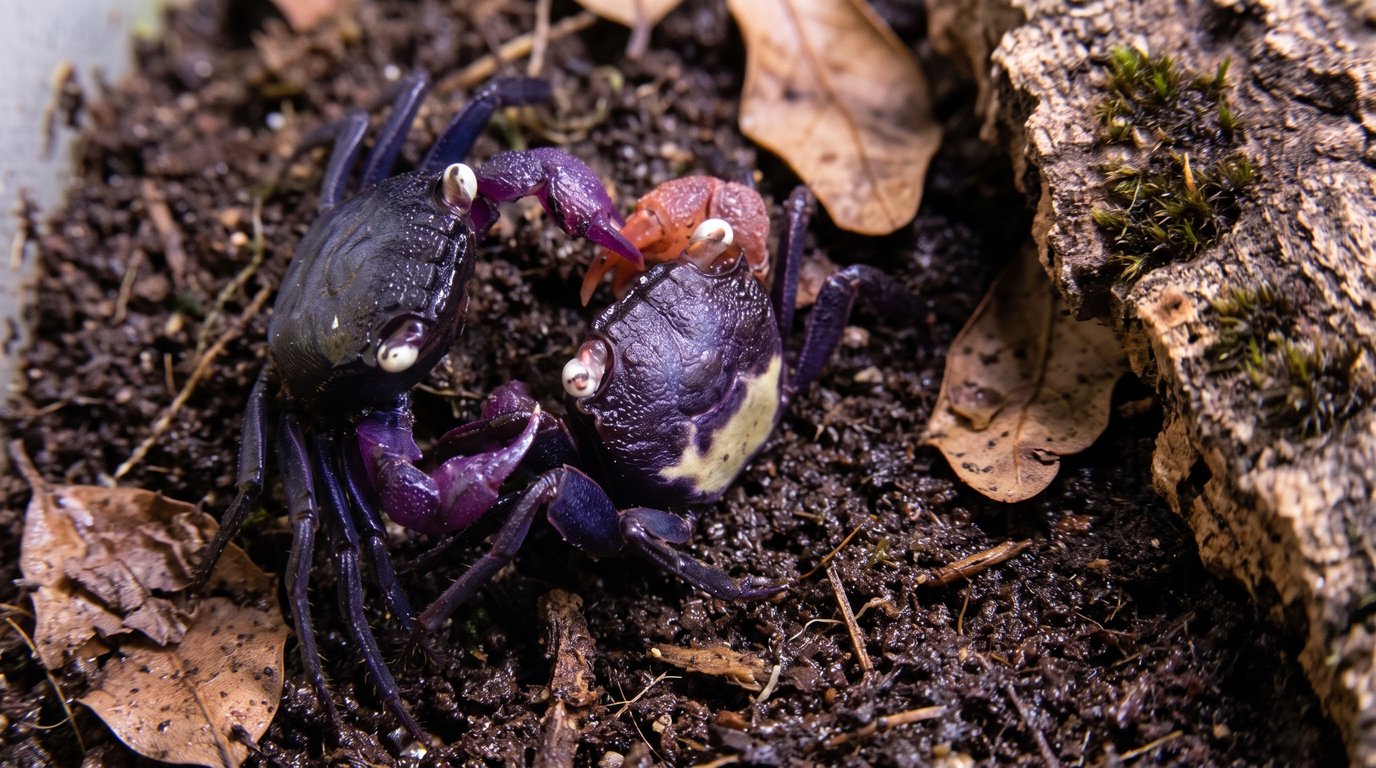
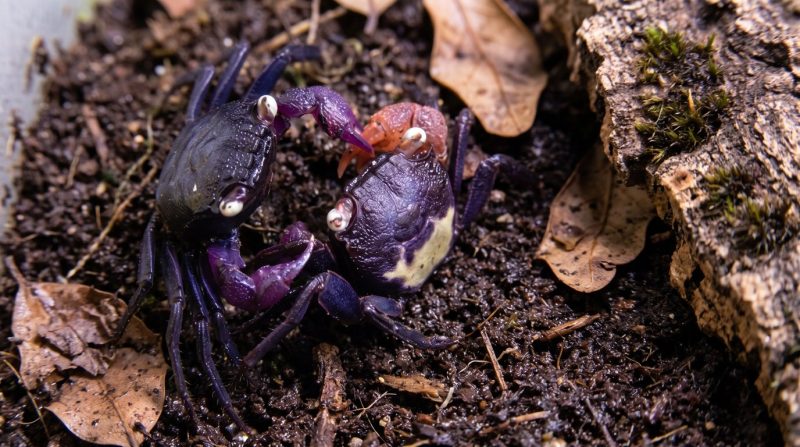
Yes, vampire crabs eat springtails, and crablets catch them as part of their everyday food. A springtail colony still keeps going alongside the crabs, because springtails are quick to jump away and quick to breed.
Will vampire crabs wipe out a springtail colony?
A springtail colony keeps going alongside vampire crabs, even though the crabs eat some of them. Keepers still find springtails in numbers about 11 to 26 months after the crabs moved in, and none of them reported the colony crashing.
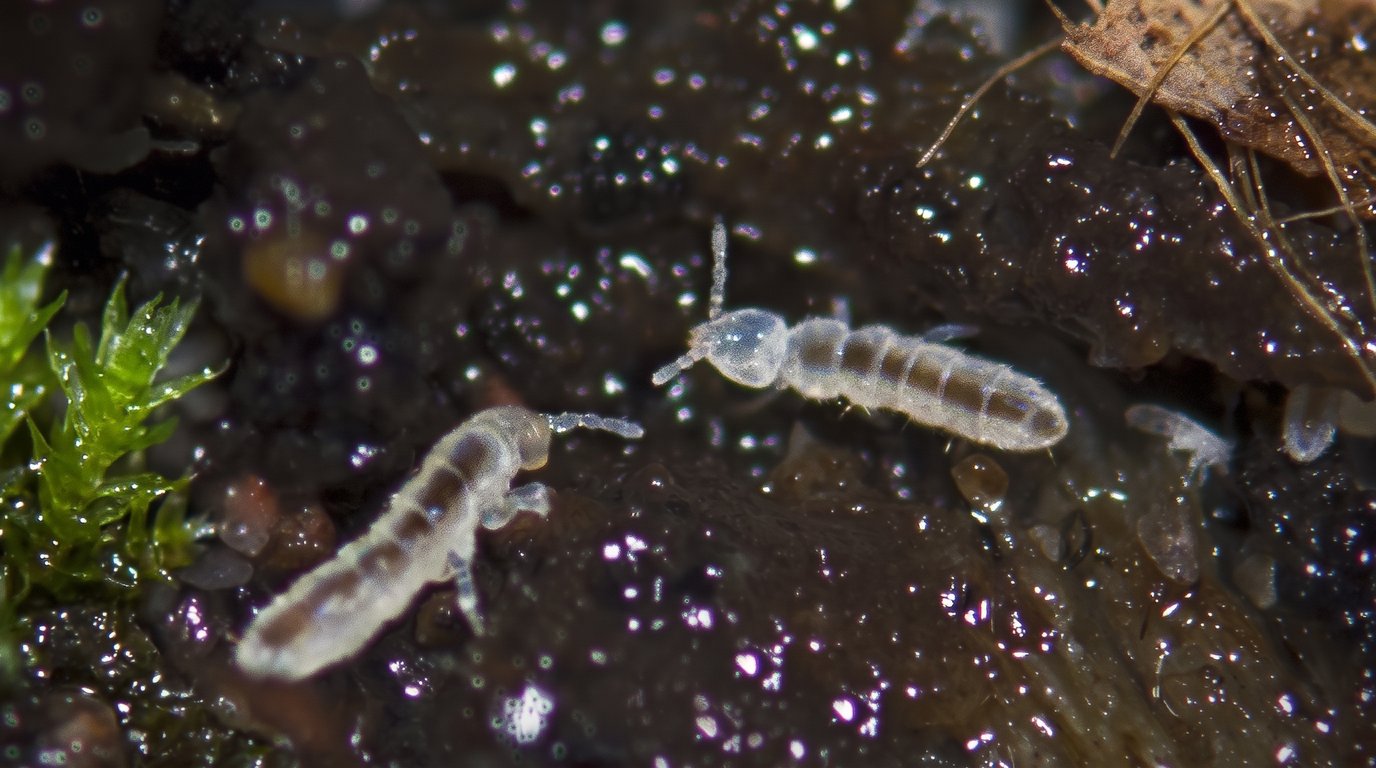
We’ve watched both adult crabs and crablets eat springtails in our paludariums. The springtail colony in our tanks stays dense on its own, and we’ve never had to add more.
Don’t expect a steady carpet of them, though. One keeper describes the colony running in phases: everywhere for a while, hardly seen for weeks, then back again without anything added. So a quiet few weeks on the surface doesn’t mean the colony is gone. It’s one of the small things to get used to in everyday vampire crab care.
Why can’t the crabs clear them out? Size is part of it. An adult Folsomia candida, a white springtail kept in cultures, is only about 2 mm long,1 while a vampire crab’s shell is about 10-15 mm (0.4-0.6 inch) wide, so each one is a tiny mouthful the crab has to catch first. And catching one isn’t easy. Springtails carry a forked spring, the furca, folded under the body and held by a catch, and they release it to fling themselves away from predators.2 In one round-bodied species, a jump took off at about 1 meter (3 feet) a second within 1.7 milliseconds and carried the springtail up to about 10 cm (4 inches), from a body only 1-2 mm long.3
They also replace their losses fast. In that same white springtail, females don’t need a male, one generation runs from egg to egg in about 25 days, and a clutch holds 30-150 eggs.4 Those are lab figures from culture dishes kept cooler than a crab tank, but they show how a colony can outbreed a few hungry crabs. The eggs dry out easily and need moisture to develop,4 so the colony keeps breeding only while the land stays damp. The best substrate for vampire crabs, a damp, loose layer they can dig in, suits the springtails too.
Are springtails food for baby vampire crabs?
Yes. Crablets catch springtails and other tiny animals living in the tank, and several keepers count on that live food alongside what they scatter. At about 2 mm, a springtail is close to the size of a crablet, which is about 2 to 3 mm across when you first see it.
Still feed the crablets. Keepers give them the same kinds of food as adults, made small: crushed or powdered fish flakes, fine granules or small pellets, scattered on land and along the water’s edge, daily to every two or three days. Springtails top that up. They don’t replace it, and crablets have been raised on fish food plus whatever was already living in the tank.
You may read that springtails stop crablets from eating each other. We didn’t find a keeper who compared broods with and without springtails, so we wouldn’t count on it. Adult vampire crabs eat the crablets they catch, and moving the crablets, or the adults, to another tank still raises the most young. That part of vampire crab breeding doesn’t change with a springtail colony in the soil.
Hoping for crablets of your own? You’ll need both sexes. Our vampire crab lines are sold as Male or Female, so you choose the sex on the product page. Everything in our catalog is bred or propagated in our own tanks rather than collected from the wild.
Can springtails replace feeding adult vampire crabs?
No. For an adult vampire crab, springtails are a snack it picks up between meals, not a diet. Keep feeding as you would without them.
In the wild, described vampire crab species from Java feed at least partly on small insects such as grasshoppers, and probably also on midge larvae and plant detritus.5 So small live prey fits the way these crabs eat, but a springtail is a far smaller bite than an insect like that, and it has to be caught first. The small live, frozen or dried animal food and the vegetables that make up what vampire crabs eat stay on the menu with springtails in the tank.
Where springtails do help is the short gap. Settled crabs in tanks that hold live food, springtails included, have come through anywhere from a few days to several weeks with no food added. That buffer is useful when you’re away for a long weekend. Don’t plan a long absence around it, though, and check how long vampire crabs can go without food before you leave them.
Should you add springtails to your vampire crab tank?
You can, but you may not need to. Springtails often turn up in a vampire crab tank that nobody stocked them in, riding in on soil, moss, plants or reused substrate.
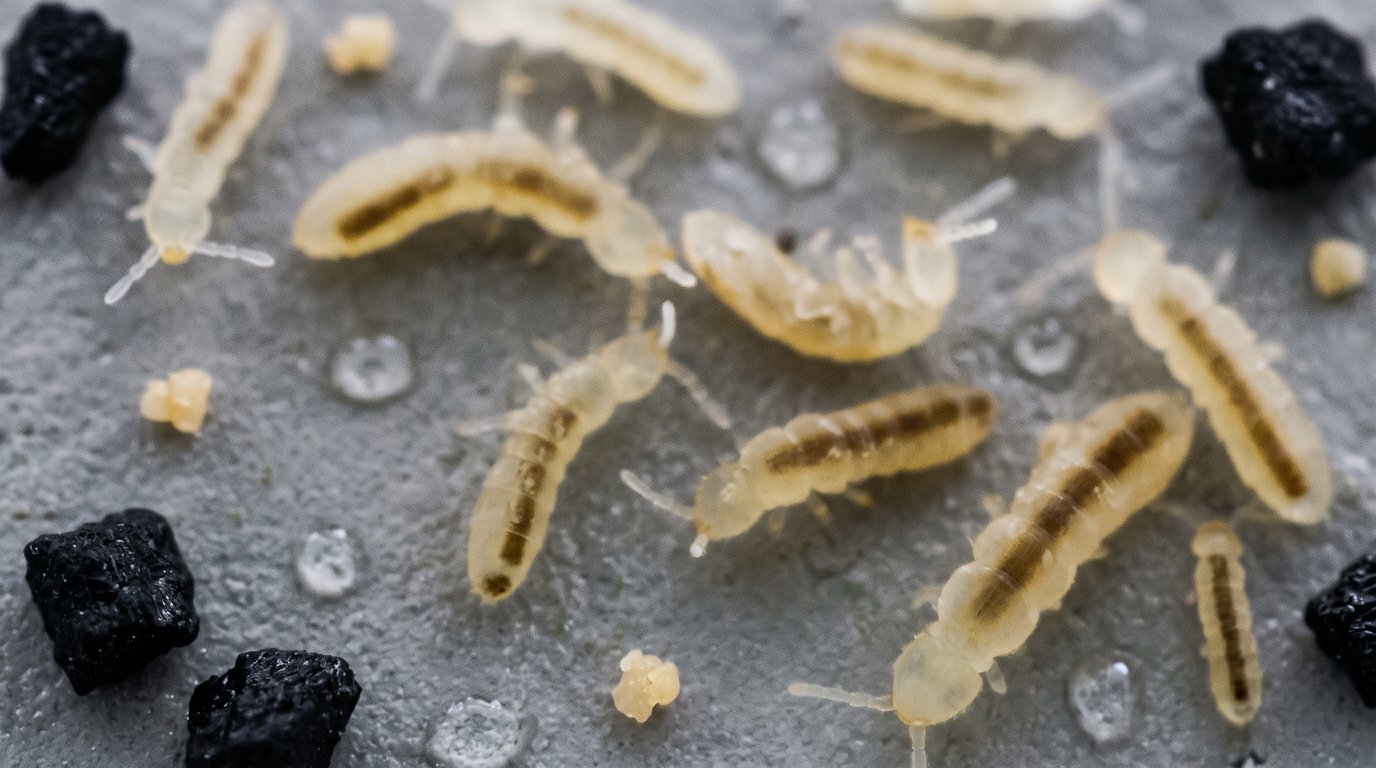
That doesn’t happen in every tank, and in a new one a colony that arrives by itself can take a long time to build up. If you want springtails working from the start, add a culture to the damp land section a few days before the crabs go in, so the colony settles first.
Why bother? Springtails feed on fungi and bacteria, and also on decaying plant debris, dead animals and droppings.6 Mold is common in a closed, humid crab tank, above all in its first weeks, and springtails are one of the things keepers add while they fix the wetness and airflow behind it. They’re helpers, not a requirement. What the crabs need is a lidded, humid paludarium with a real water section, and that’s the short answer to whether vampire crabs need a bioactive enclosure. Isopods are a separate question, though, and nothing here means they’ll hold out as well.
References
6 Sources
- Martinez-De Leon, Fahrni, Thakur and others, Temperature-size responses during ontogeny are independent of progenitors’ thermal environments, PeerJ 12: e17432, 2024.
- Oliveira, On springtails (Hexapoda: Collembola): a morphofunctional study of the jumping apparatus, Frontiers in Zoology 19: 21, 2022.
- Smith and Harrison, Jumping Performance and Behavior of the Globular Springtail Dicyrtomina minuta, Integrative Organismal Biology 6(1): obae029, 2024.
- Holmstrup, Water relations and drought sensitivity of Folsomia candida eggs (Collembola: Isotomidae), European Journal of Entomology 116: 229-234, 2019.
- Ng, Schubart and Lukhaup, New species of “vampire crabs” (Geosesarma De Man, 1892) from central Java, Indonesia, and the identity of Sesarma (Geosesarma) nodulifera De Man, 1892 (Zenodo archive copy of the paper), Raffles Bulletin of Zoology 63: 3-13, 2015.
- Argote, Albert, Geslin and others, Effects of litter quality on foraging behaviour and demographic parameters in Folsomia candida (Collembola), Ecology and Evolution 13(8): e10420, 2023.
Ready to get started?
Shop our Vampire Crab collection
8 products available · Live Arrival Guarantee