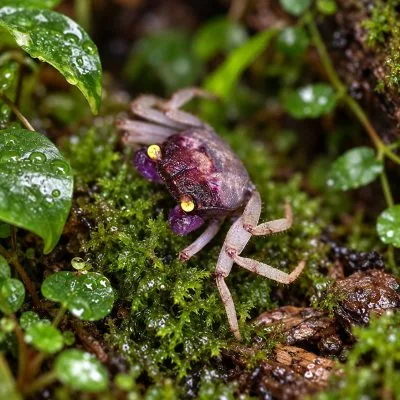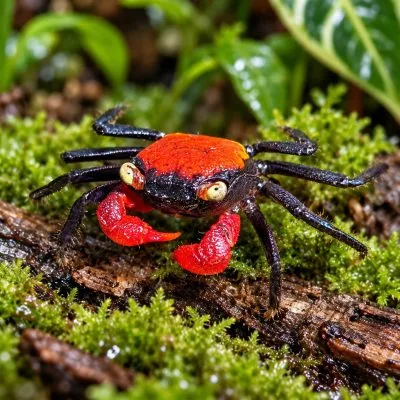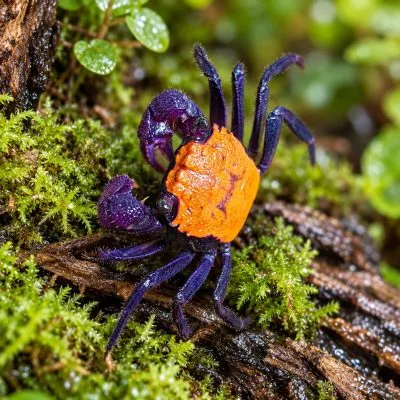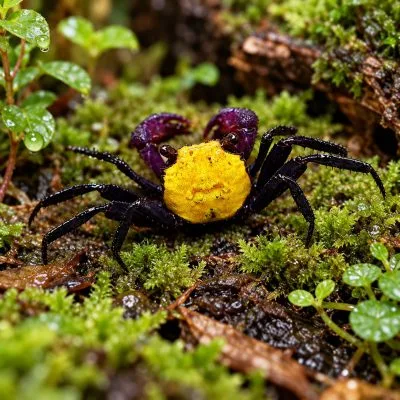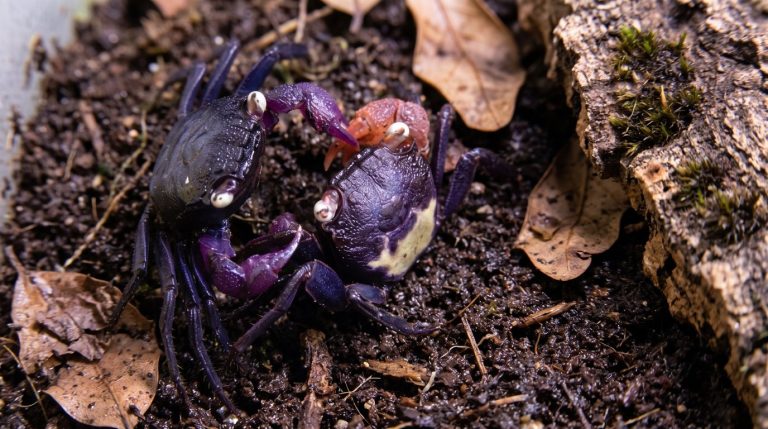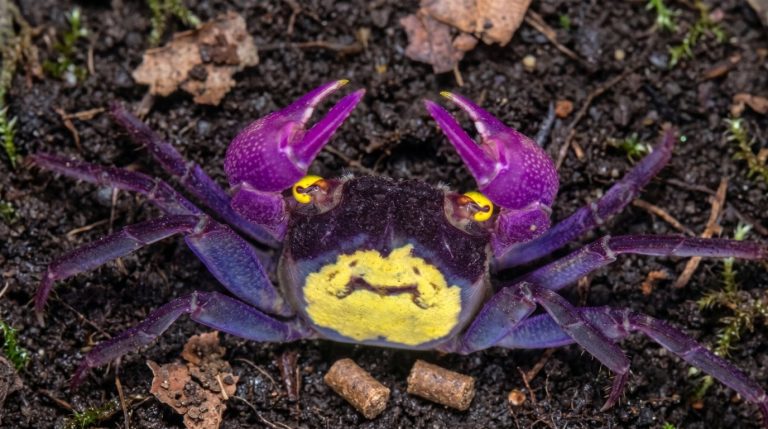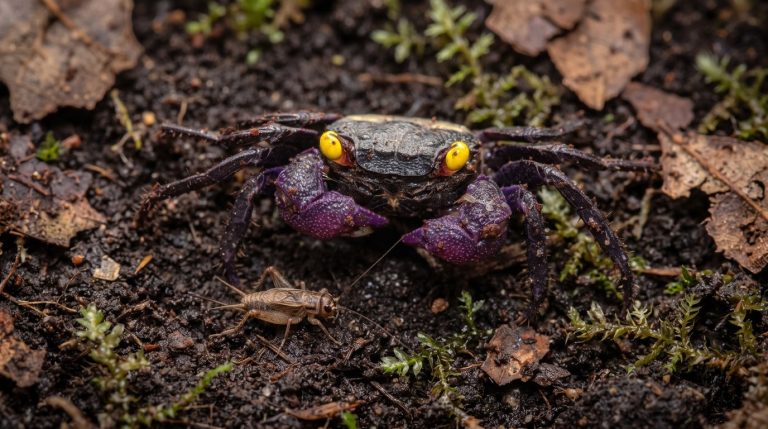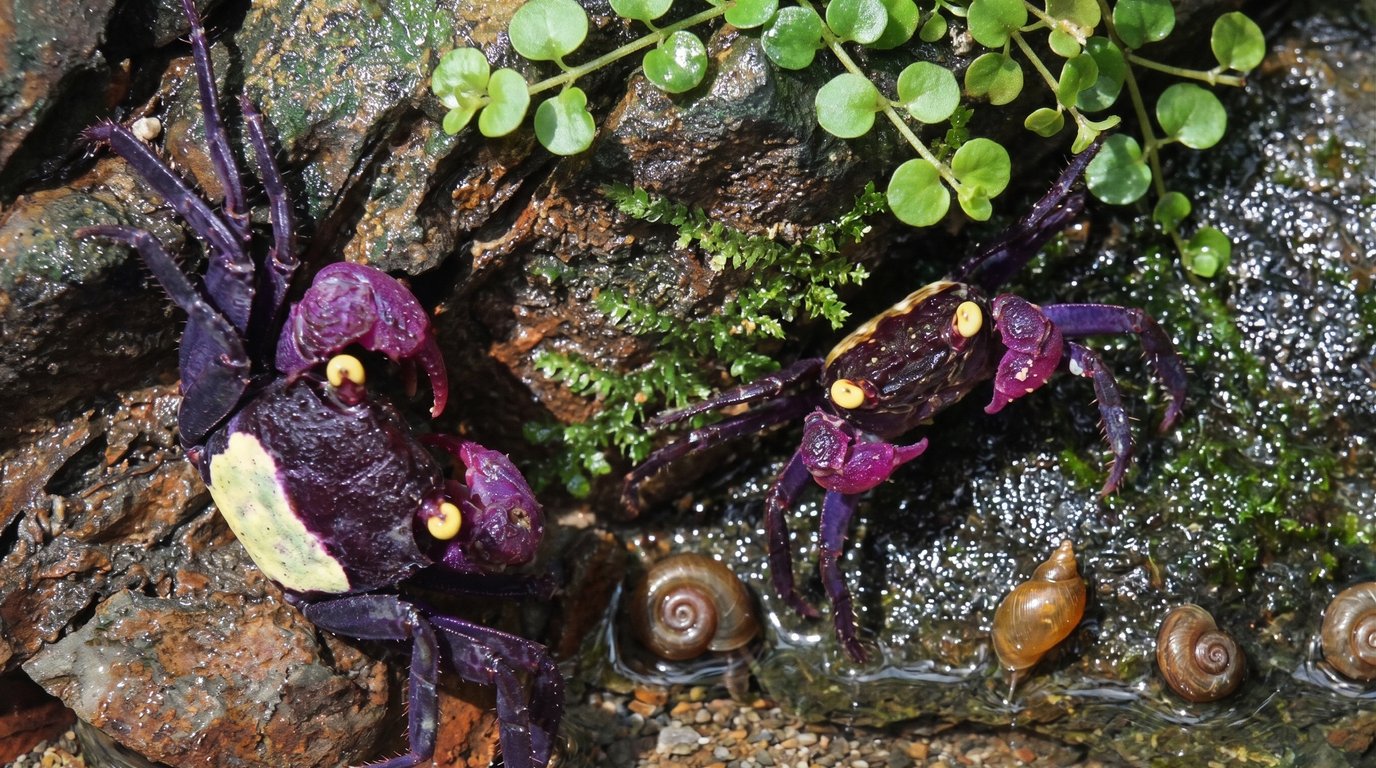
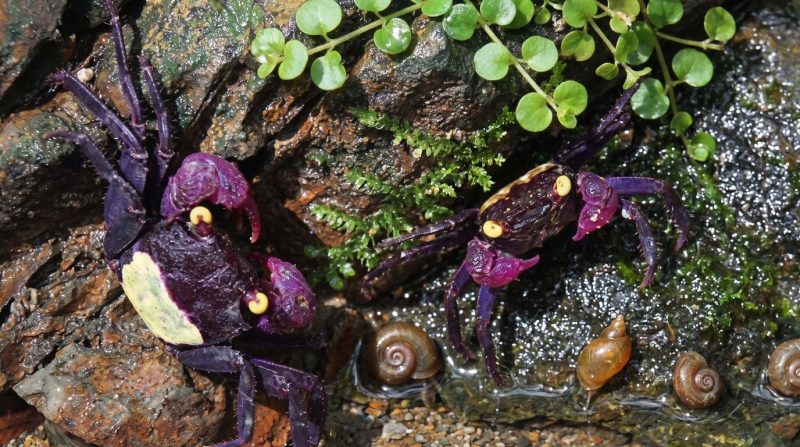
Yes, vampire crabs eat snails, mainly small ones. Bladder snails, young or small ramshorn snails and snail egg clutches get caught and eaten, sometimes until none are left, while ramshorns larger than about 1 cm across mostly survive. If you add small snails to the water section, treat them partly as live food and let them breed faster than the crabs can eat them.
Which snails do vampire crabs eat?
Vampire crabs eat bladder snails, young or small ramshorns and the egg clutches of both. Ramshorn young are often eaten while they’re still in the egg clutch.
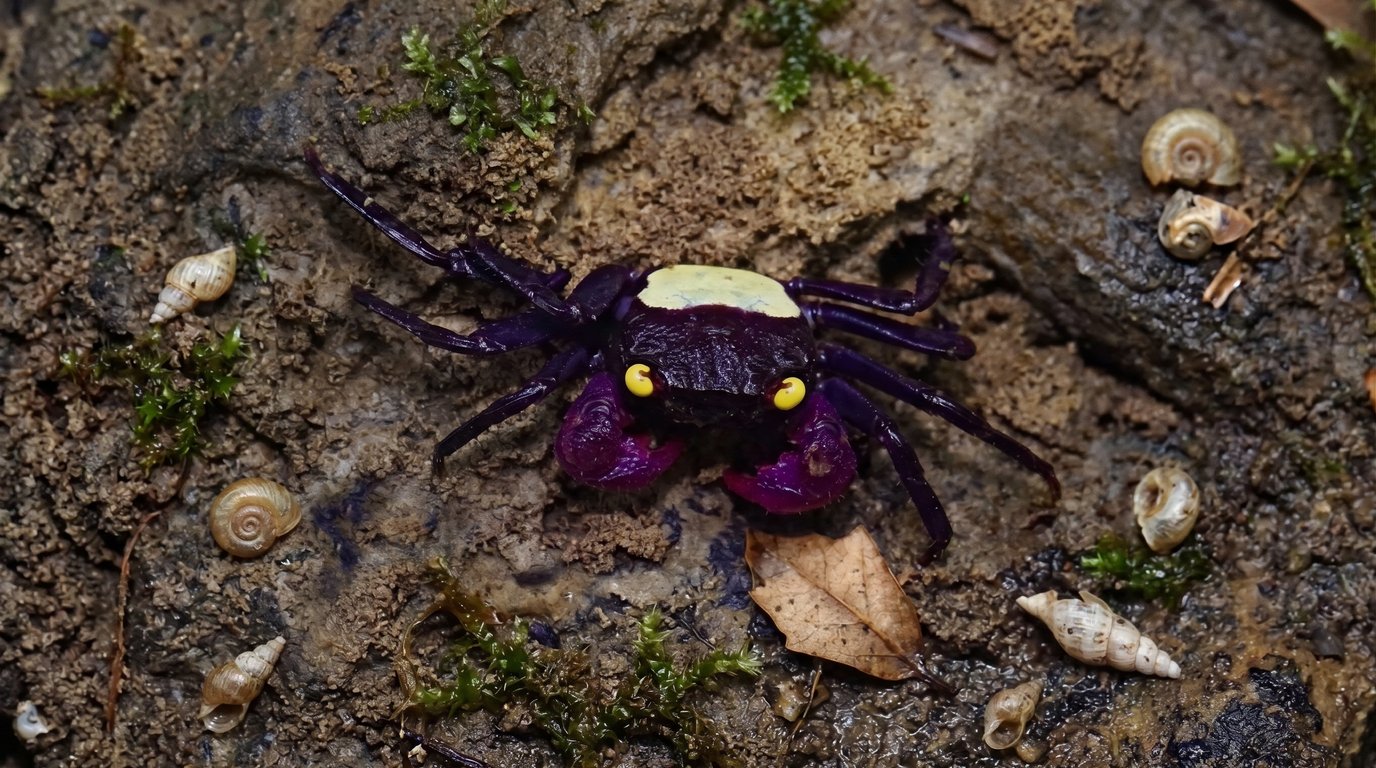
How do you know it’s happening? You’ll rarely see a crab eat, because vampire crabs are mostly nocturnal and feed after dark. What you’ll see is a pile of empty shells in the water section, or fewer snails than you put in.
Bladder snails get the worst of it. They get eaten whether they’re young or grown, and in some tanks the crabs wipe them out. That’s striking when you compare sizes. In the described species, an adult vampire crab’s shell measures about 10-15 mm (about half an inch) across,1 while a grown bladder snail (Physella acuta) reaches about 16 mm (0.6 inch) tall.2 A full-grown bladder snail is roughly the size of the crab, and it still ends up as food.
Ramshorns do better once they’re big. Young and small ones get caught, but ramshorns larger than about 1 cm across mostly survive. A crab may still drag a large one around and pick at it.
We keep small aquatic snails with our vampire crabs, such as nerite, ramshorn and Malaysian trumpet or bladder snails. Our crabs do eat young snails and snail eggs.
Which snails survive alongside vampire crabs?
Grown ramshorns over about 1 cm mostly survive as vampire crab tank mates, and Malaysian trumpet snails look promising too. Bladder snails are the ones to think of as food.
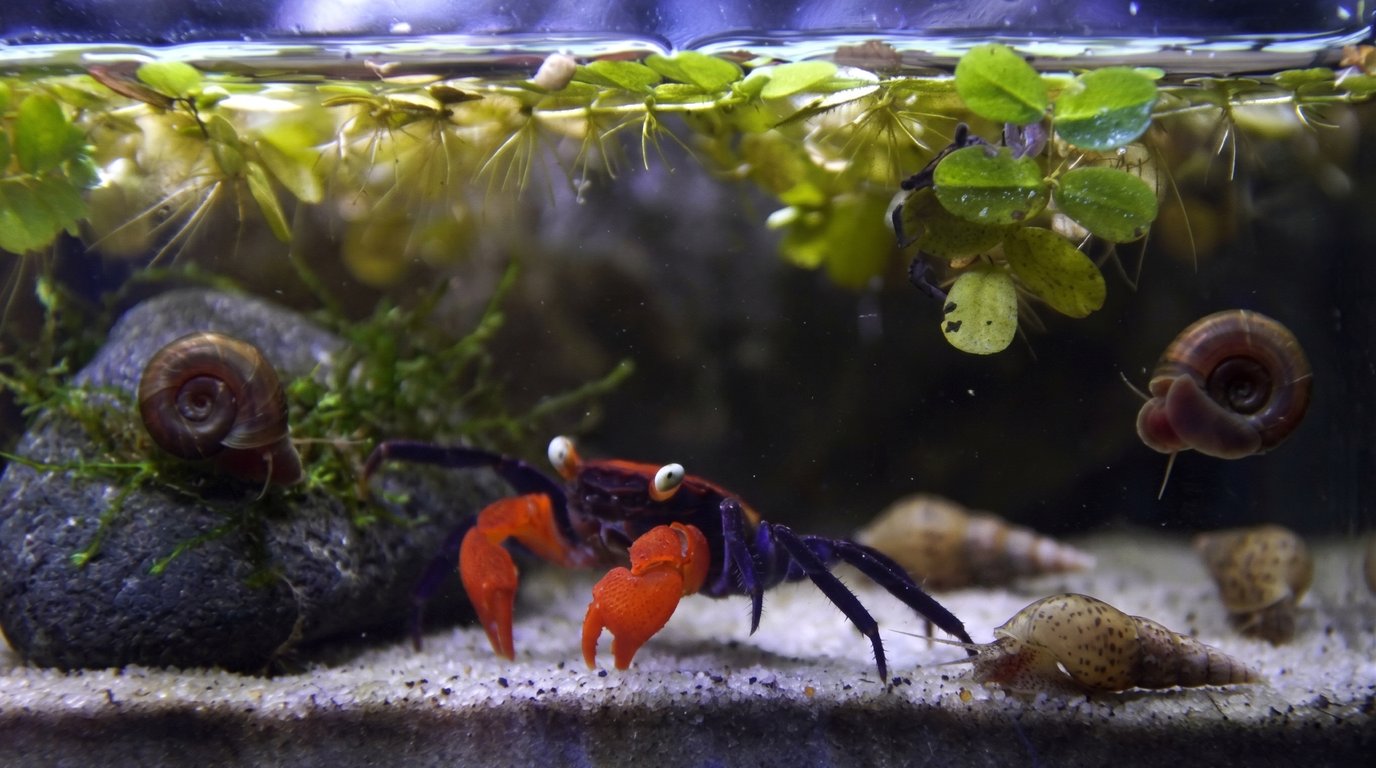
Malaysian trumpet snails (Melanoides tuberculata) have a good record with these crabs, though it comes from keepers on one forum. They report that the snails mostly survive and keep breeding in their crab tanks, but some still get eaten, and empty shells can pile up near the burrows. Their shells average 20-27 mm (0.8-1.1 inch) long,3 longer than the crab’s shell is wide.
Nerites are harder to call. In one tank, two nerites went untouched for the four weeks the keeper wrote about. That’s too little to promise anything, so if you add nerites, watch them for the first weeks.
We wouldn’t add mystery snails. One keeper who couldn’t feed the crabs for two days came back to three empty mystery snail shells and half the fish gone. It’s one more reason to stay steady on how often you feed vampire crabs.
Do vampire crabs need snails in their diet?
No, vampire crabs don’t need snails. What vampire crabs eat day to day is a varied mix of animal food and plant food, and snails are an extra if you have them.
In the wild, two vampire crab species described from central Java feed at least partly on small insects, probably also midge larvae and plant debris.1 Snails aren’t on that list, so treat them as an extra.
You may read that snail shells give the crabs calcium. No study has tested calcium foods or supplements in vampire crabs, so don’t add snails for that reason. Keep feeding the usual mix.
How to keep a snail colony going in a vampire crab tank
Snails fit into ordinary vampire crab care if you set them up first, let them breed and give the young somewhere to hide. Then the crabs eat some of the young without emptying the tank.
- Add a few grown snails to the water section and let them settle and start breeding before you bring in tank-bred vampire crabs.
- Give the water section thick cover, such as moss or leaf litter, so young snails and egg clutches have somewhere out of reach.
- Check that each snail’s own temperature range overlaps the crabs’ 72-85°F (22-29°C) before you buy it.
- Keep feeding the crabs on a regular rhythm, even when the snails are breeding well.
- Count empty shells now and then. If the snails are going faster than they breed, add a few more grown ones.
Regular feeding matters more than it looks. The mystery snail losses above came after two days without food, and a feeding rhythm you stick to keeps the snails a snack, not the main course.
If you want the water section to stay stocked with something the crabs mostly leave alone, shrimp are a better bet than small snails. Neocaridina usually keep breeding when vampire crabs live with shrimp, and the crabs catch few of them.
Get the snails breeding before your crabs arrive. You choose Male or Female for each crab on the product page when you order. Everything in our catalog is bred or propagated in our own tanks.
References
3 Sources
- New species of “vampire crabs” (Geosesarma De Man, 1892) from central Java, Indonesia, Ng P.K.L., Schubart C.D., Lukhaup C., Raffles Bulletin of Zoology 63: 3-13, 2015.
- Physella acuta (Draparnaud, 1805): Nonindigenous Aquatic Species fact sheet, U.S. Geological Survey, revised 2021.
- Melanoides tuberculata (Muller, 1774): Nonindigenous Aquatic Species fact sheet, U.S. Geological Survey, revised 2019.
Ready to get started?
Shop our Vampire Crab collection
8 products available · Live Arrival Guarantee