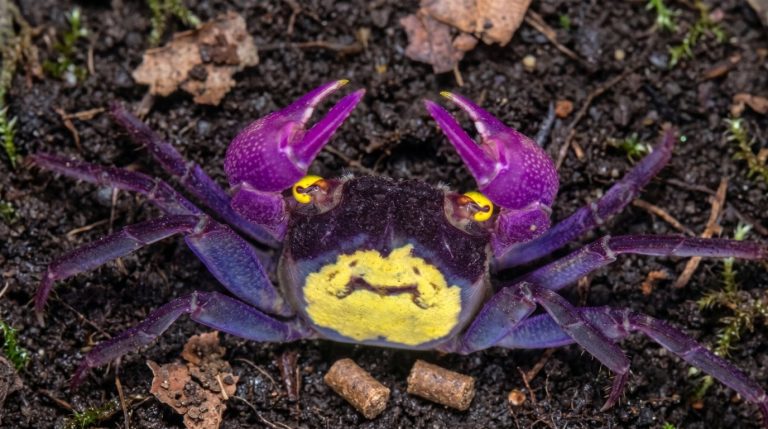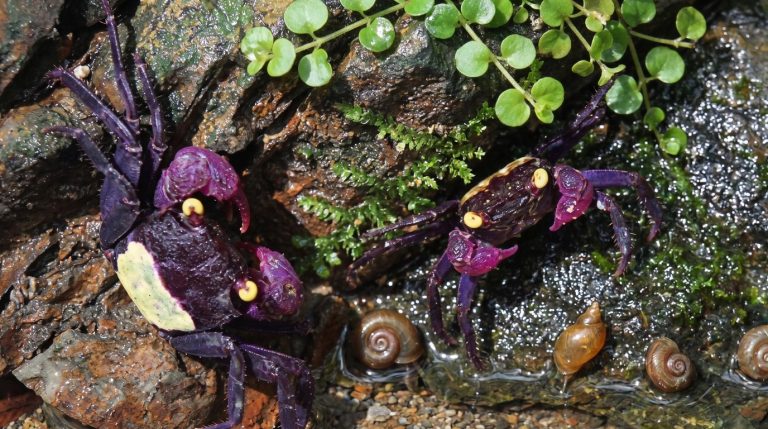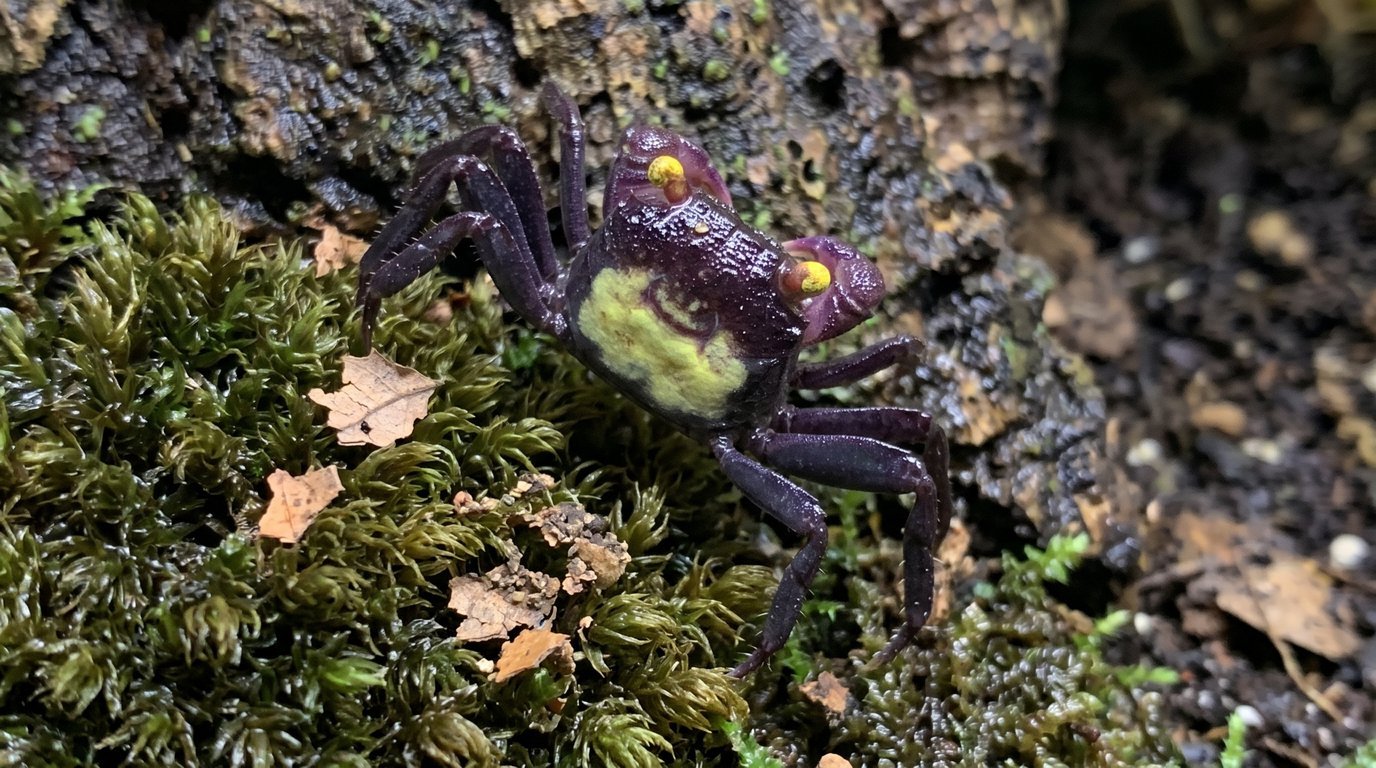
Feed adult vampire crabs a small amount every other day, or about every two to three days, and let the next morning decide the rest. If food is still there, wait longer or give less. If it’s gone overnight every time, feed a little more often. Crablets get small, crushed meals on a similar rhythm, which keepers set anywhere from daily to every two or three days.
How often should you feed adult vampire crabs?
Feed adult vampire crabs about every other day. That gives the crabs time to finish one meal before the next goes in, and it keeps old food from piling up in a warm, damp tank. On that rhythm, feeding stays a small, regular part of vampire crab care.
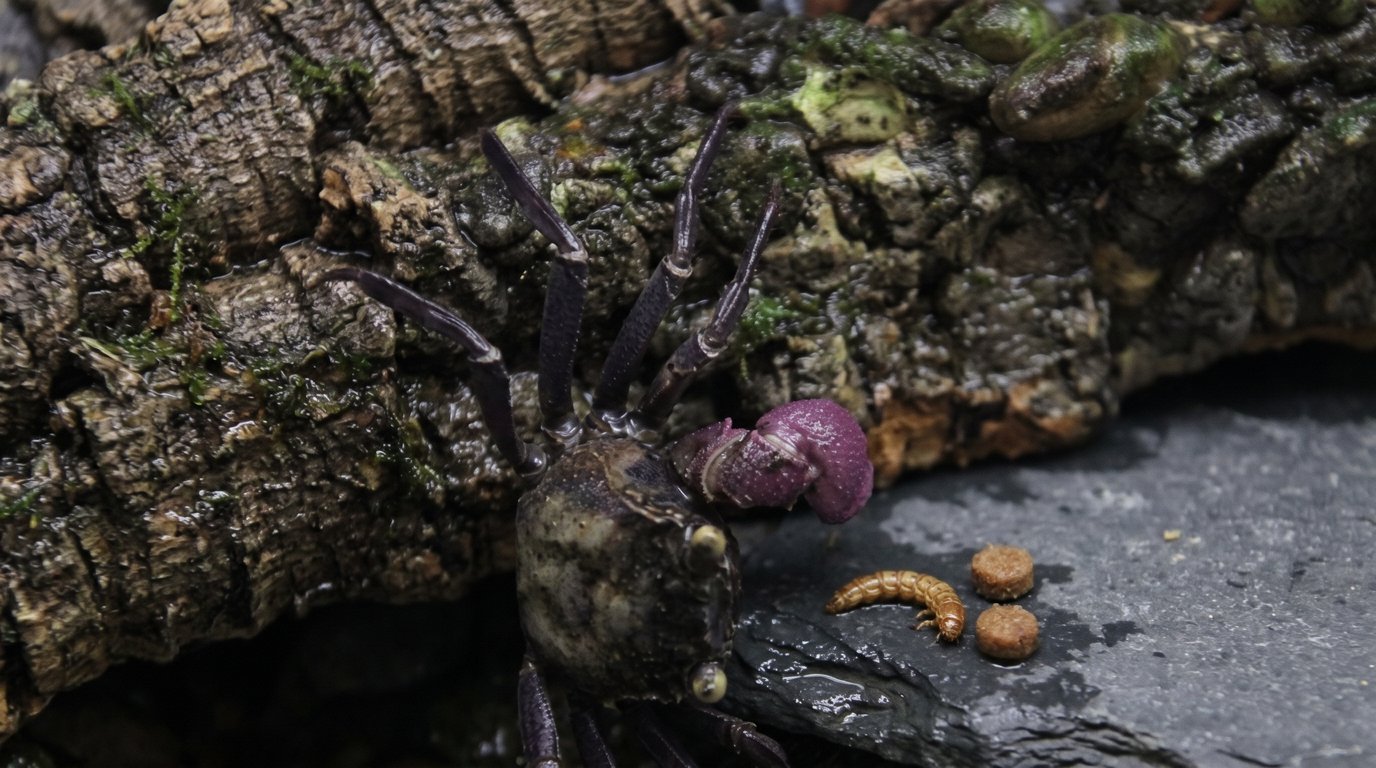
We feed our adult vampire crabs every other day, or about every two to three days. Our crablets get food on the same every-other-day rhythm as the adults.
Treat that as a starting point, not a fixed rule. The tank sets the real interval. A new or sparse paludarium has little for the crabs to find between meals. A planted, bioactive one that has run for months is full of small life they forage on, so it can go longer between feedings.
Vampire crabs don’t need a meal in front of them every day. One field study of a wild Geosesarma population in Java found the crabs’ stomachs held mostly debris, with only small shares of wood, worms and leaves.1 Two described species from central Java feed at least partly on small insects, and probably on midge larvae and plant detritus too.2 In a paludarium, that grazing goes on between your feedings.
Put the food in around lights-out. Vampire crabs mostly eat in the evening and at night, so you rarely see a meal happen. You’ll see the result in the morning, when the food is smaller or gone. It’s the same reason you rarely see them by day: vampire crabs are nocturnal.
Use the next-morning check to set your feeding interval
The next morning tells you whether to feed more often or less. Look at the food you put in the evening before, then adjust the gap or the amount.
- Food still there, mostly untouched: skip the next feeding or give less, and lift out what’s left.
- Some eaten, some left: the interval is about right. Keep it and take out the rest.
- All gone overnight, feeding after feeding: give a little more, or feed a day sooner.
- Fuzzy growth on old food: it sat too long. Remove it and feed less next time.
Keepers who feed every two to three days often do it for this reason: food was still there the next day. One keeper with a breeding group fed every two to three days until the crabs began clearing everything within one night, and then fed more.
Mold is the cost of feeding too often. It’s common in closed vampire crab tanks, above all in the first weeks of a new setup, and it grows wherever water sits and the air is still. Food left for days gives it a start. Lift leftovers the next morning, and give soft food such as fruit or thawed bloodworms a dish or a flat stone so it’s easy to find and remove. Springtails and isopods in the soil eat some of what you miss.
What goes in at each feeding matters as much as how often. In a tank, what vampire crabs eat is a mix of small animal food and some plant food.
How often to feed vampire crablets
Feed vampire crablets small amounts daily to every two or three days, the range keepers use. Give them the same food as the adults, crushed to a powder or cut very fine, and scatter it on the land and along the water’s edge where the young sit.
Crablets also hunt. Keepers have watched young crabs catch springtails, and some breeders count on a thick springtail population as the crablets’ main food, with a little fish food on top. A tank like that needs less from you. A bare container needs feeding at the shorter end of the range.
The next-morning check still applies, and it matters more in a small space. A crablet box molds just as fast as a big tank, so give tiny amounts and lift what’s left. If you’re raising young apart, decide first whether you should move adult vampire crabs after the babies appear or lift the crablets out.
When to feed vampire crabs less often
A few situations call for less food, not more. Feeding harder at these times mostly feeds mold. None of these is an emergency, because a settled adult comes through a few days without eating, and the limit on how long vampire crabs can go without food depends mostly on what else the tank holds.
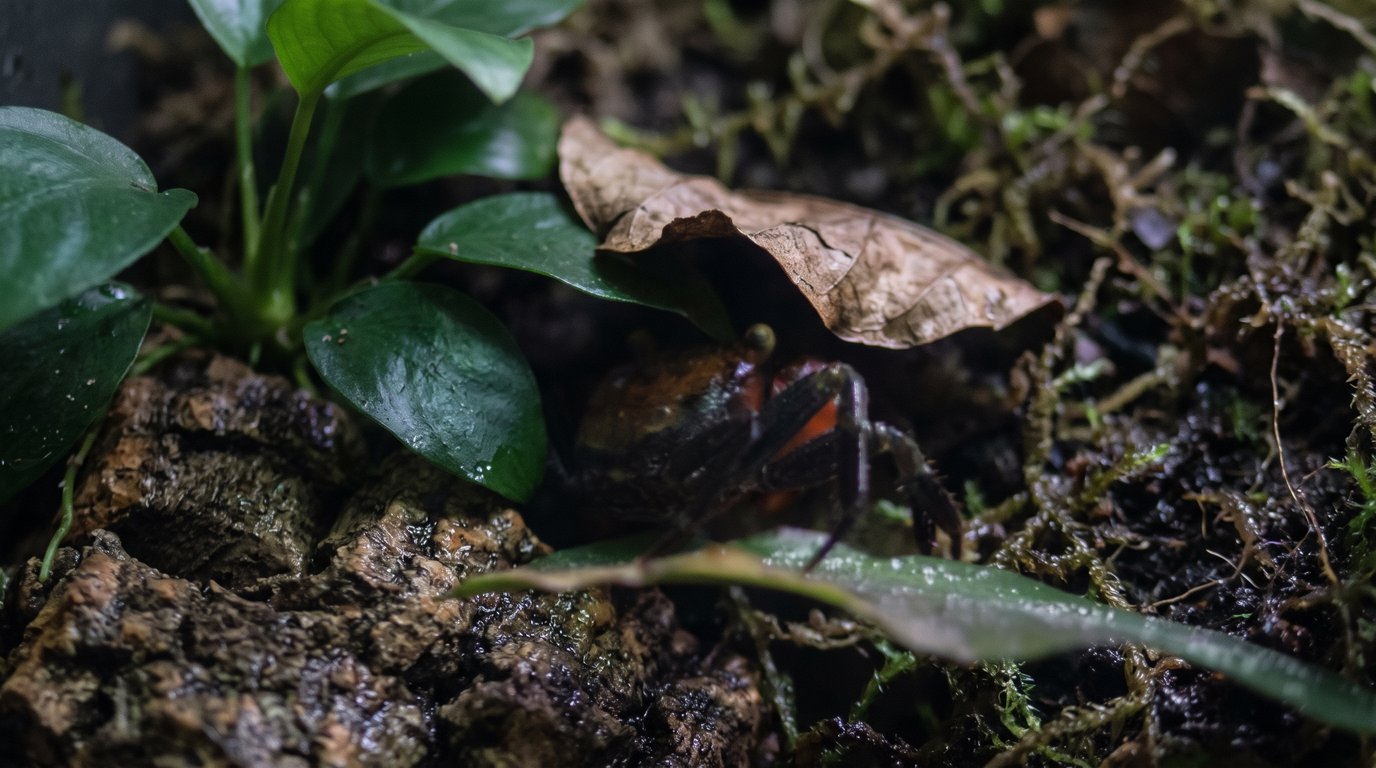
New crabs often eat little at first, so a vampire crab not eating in its first days isn’t cause for worry on its own. Keepers report the first meal anywhere from the first night to about a week after arrival, and a few crabs ate very little for weeks. Keep the portions tiny, check the next morning and don’t add more because nothing seems to happen. If a new crab stops moving or drops legs, that’s a different problem.
A crab near a molt hides and may skip a meal. In our paludariums, a crab goes off its food for a day or two around a molt. Keep feeding the group on the usual rhythm and don’t try to tempt the hidden crab. After the molt, leave the shed shell in the tank. The old shell holds minerals the crab takes back by eating it, which is a normal part of vampire crab molting.
For a trip of a few days, keepers put in extra food that keeps, such as dry fish food, just before they leave. Skip frozen food, which can mold while you’re gone. Food is only one part of vampire crab care while on vacation, alongside a tight lid and a full water section.
Starting a feeding routine with new vampire crabs
Have food on hand before your vampire crabs arrive, and plan to be home for the first two weeks so you can check the leftovers each morning. Start with an every-other-day rhythm, keep the portions small and let the first few mornings show you where to go from there.
You choose Male or Female for each crab on the product page when you buy tank-bred vampire crabs. Everything in our catalog is bred or propagated in our own tanks.
References
2 Sources
- Habitat and Food of Vampire Crabs (Geosesarma sp.) in Menoreh Mountain, Yogyakarta, Indonesia, Kurniawan T., Waluyo, Nofreeana A., Aji M.T., Media Konservasi 30(1): 141-153, 2025.
- New species of “vampire crabs” (Geosesarma De Man, 1892) from central Java, Indonesia, Ng P.K.L., Schubart C.D., Lukhaup C., Raffles Bulletin of Zoology 63: 3-13, 2015.
Ready to get started?
Shop our Vampire Crab collection
8 products available · Live Arrival Guarantee