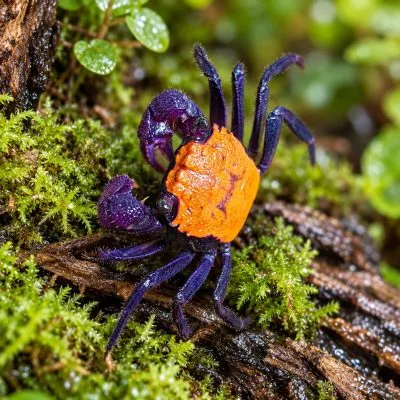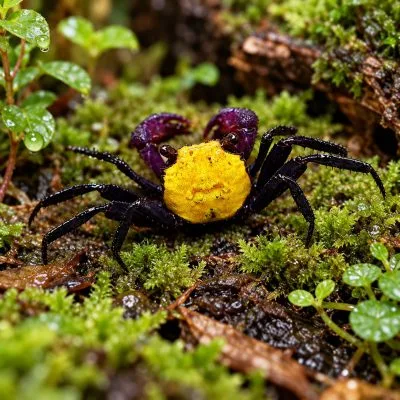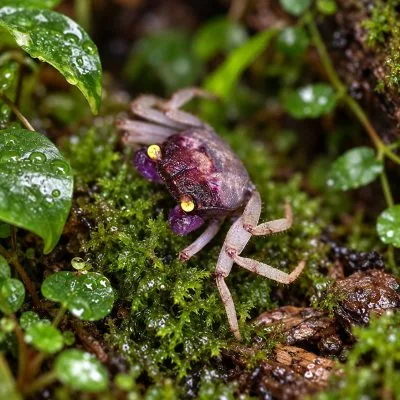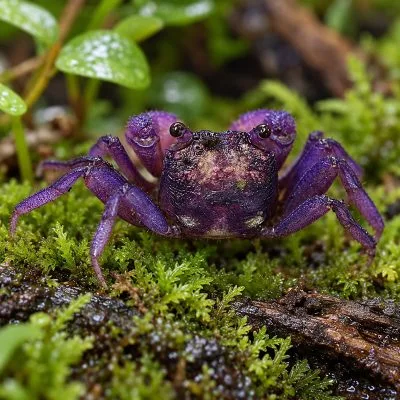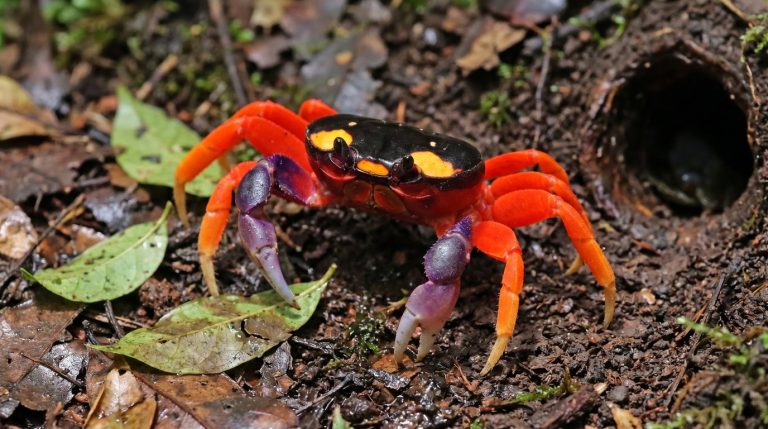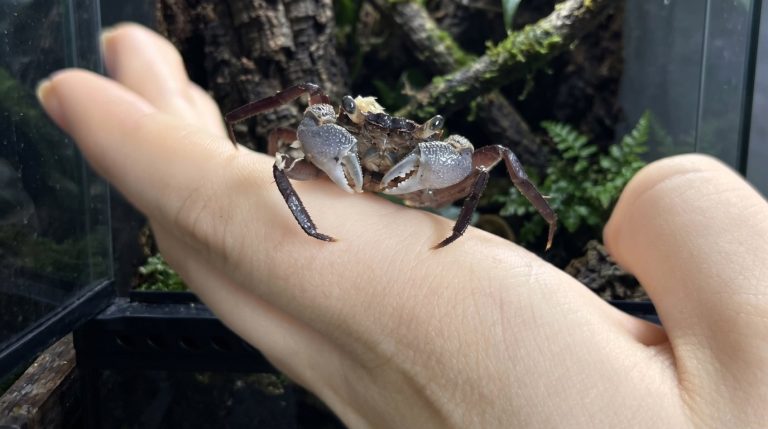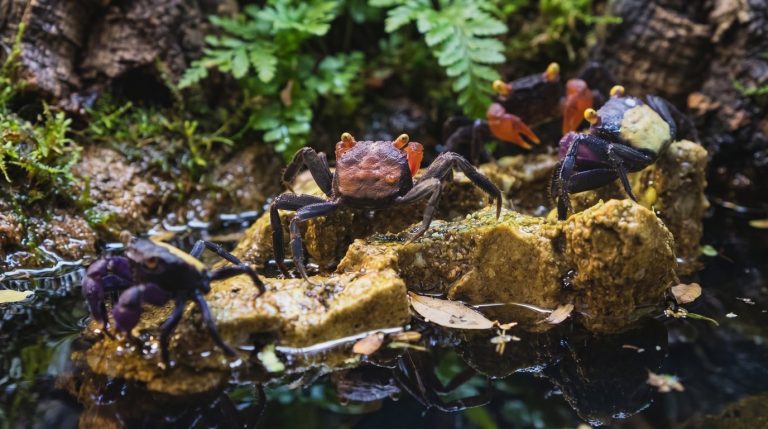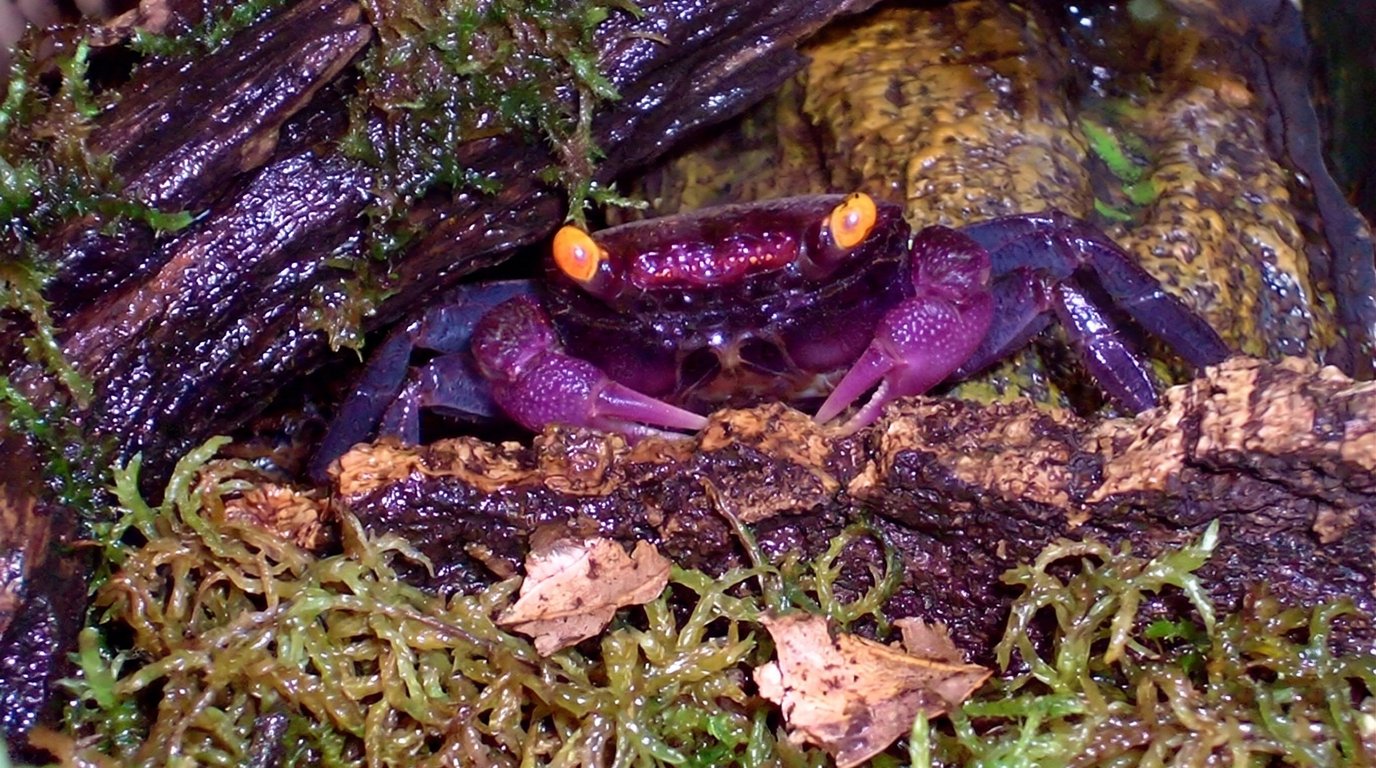
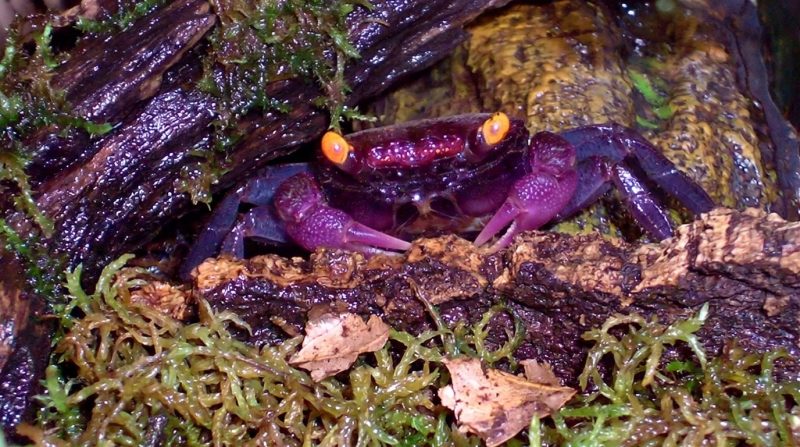
A settled vampire crab paludarium with a tight lid can be left alone for a few days. Before you go, top up the water section, close every gap in the lid, put the lights on a timer and add a little dry food that keeps. For a longer trip, line up someone to mist, top up and check the lid while you’re away. Start getting the tank ready a week or two ahead, not the night before.
How long can vampire crabs be left alone?
Vampire crabs in a settled paludarium can be left alone for a few days, as long as the lid is closed tight and the water section starts the trip full. What decides how long is the tank, not the crabs: how fast it dries out, how warm the room gets and whether anything in it can fail. Getting the tank through a trip is one small part of vampire crab care, and the work is the same as any week.
We’ve left our vampire crab paludariums for a few days with no feeding and no misting, and the crabs came through fine. Those are closed, lidded tanks in a warm room in Vietnam, so judge your own trip by how your tank holds up.
Past a few days, you need someone to come in. Plan on that for a week or more, for a tank that dries out between your own mistings, and for a room that can get hot. Heat is the risk you can’t fix from a hotel. In one tank that stood in a sunny spot through a hot week while its keeper was away for 10 days, three of four crabs died in the weeks that followed. Check that the room stays inside 72-85°F (22-29°C) before you go, and if it runs warm or cool, sort out how you heat a vampire crab paludarium first.
Fix what could fail in the vampire crab tank a week or two ahead
Use the week or two before the trip to find the weak spots while you’re still home to fix them. Anything you change in that time, you can watch for a few days. Anything you change the night before, you can’t.
- Every gap in the lid is closed, including where cords and tubing come out.
- The moss and soil stay damp from one misting to the next, so you know how fast this tank dries.
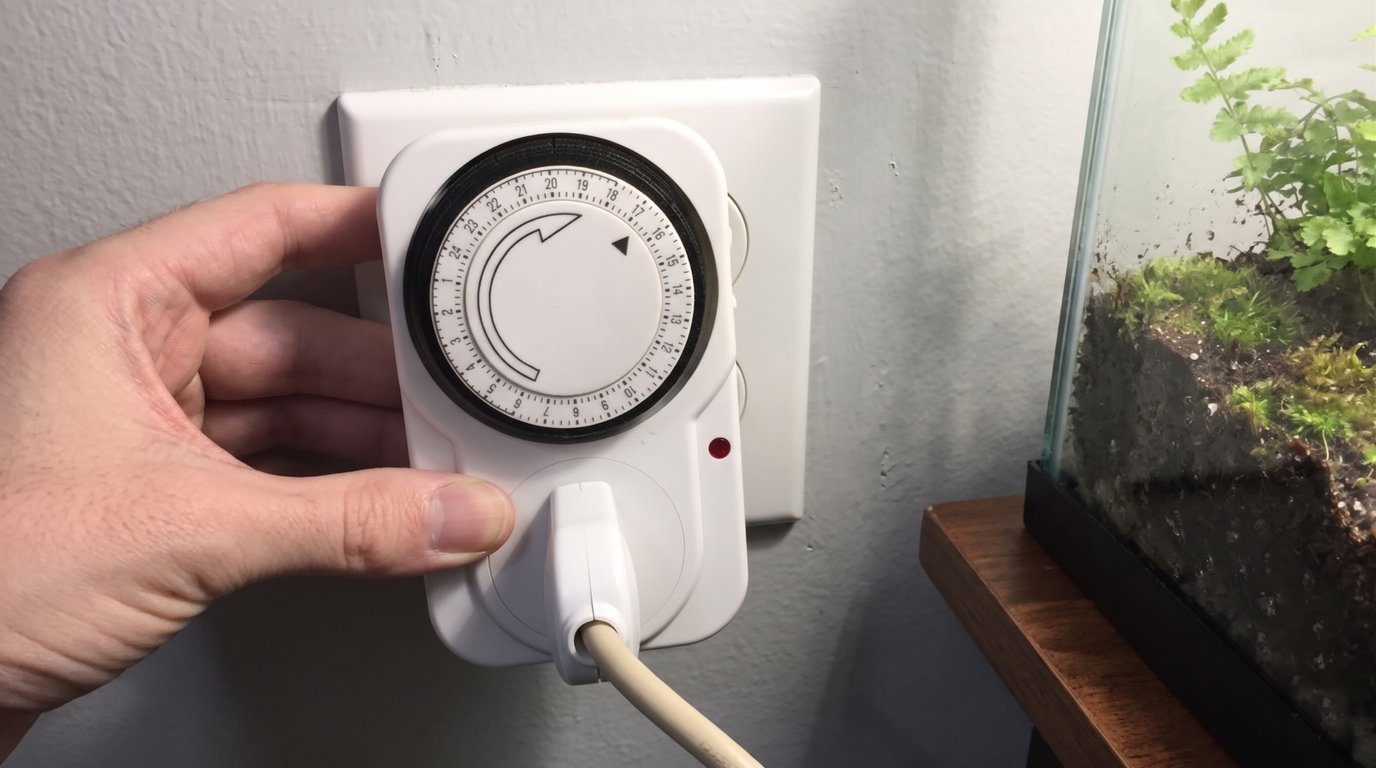
- The light timer has been running on its schedule for several days.
- The heater, if you use one, runs on its own thermostat, not through the light timer.
- The tank sits out of direct sun and away from anything that runs warm.
- No new vampire crabs, plants or rescaping in the last two weeks before you go.
Why fuss over the lid? A closed lid keeps the water in the tank. Even a small gap in a cover breaks that cycle and the tank starts drying out.1 The seams and gaps in an aquarium hood can let a lot of water vapor escape, so a plain pane of glass or clear plastic seals better.1 Look at the cord exits too. A gap there is a way out for a crab, the same way vampire crabs escape from an open-top enclosure, and it’s where the humid air leaks too.
A plug-in timer for the lights is the easiest thing to automate. Set it up and let it run while you’re home. Read its manual for what to do if the screen goes blank: the Jasco DaySmart timer is charged for an hour and then reset with a pencil tip.2 The same manual says not to use it to control anything with a heating element, such as a heater.2 So the heater stays on its own thermostat.
The last day or two before you leave your vampire crabs
In the last day or two, top up the water section, clear out old food, add a little dry food that keeps and close the lid for good. Do any bigger water change a few days earlier, so you can see the water settle before you go.
- Do your usual water change a few days before you leave, not on the last day.
- On the last day, top up the water section to its normal full line with the same water you always use.
- Lift out any old food and anything that has started to mold. Leave a fresh shed shell where it is, because the crab can eat it.
- Put in a little extra dry food that keeps, such as dry fish food or dried insects, spread over a few spots near the hides.
- Mist the tank as you normally would.
- Close the lid and run a finger along every edge and cord exit.
Keepers who leave vampire crabs for several days put in extra food just before they go and choose food that won’t spoil fast. Frozen food is the one to skip. It can mold in a warm, wet tank, and so can soft food like chopped worms spread around the soil. Don’t pile it on either. Food the crabs don’t get to sits in the damp until you’re home. If you want ideas for food that keeps, the list of what vampire crabs eat marks which foods are dry.
Do you need to mist more before the trip? No. Mist as usual and let the closed lid hold it. Soaking the tank to “fill it up” only leaves standing water and a better start for mold. How you normally keep a vampire crab tank humid is what carries it through a short trip.
Should you add an automatic feeder or mister to a vampire crab tank?
You don’t need either one for a few days away. The only thing automated on our crab tanks is a timer on the lights, and we feed, mist and top up the water by hand. If you add a feeder or mister for a longer trip, set it up at least a week before you leave and check it every day while you’re still home.
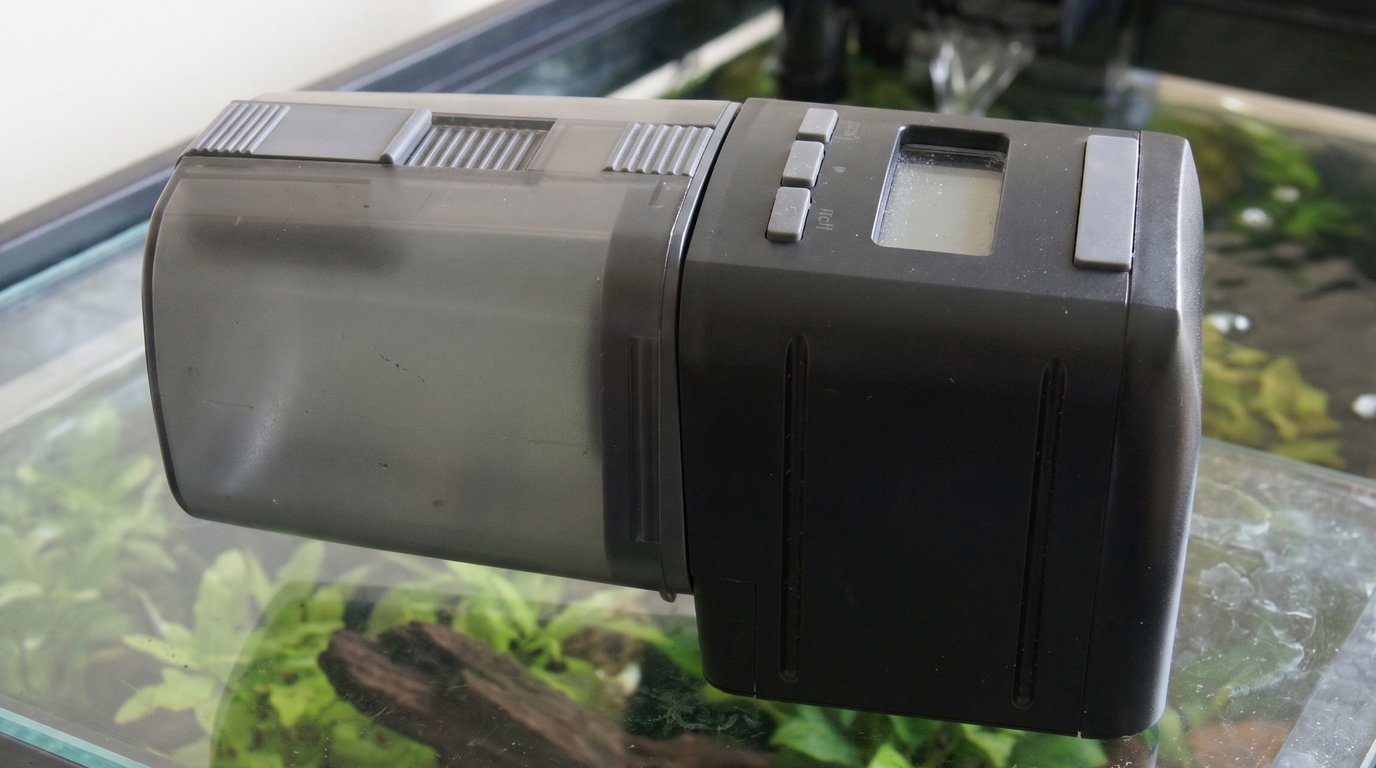
An automatic fish feeder is a poor match for a crab tank, and its own manual shows why. EHEIM’s autofeeder is made for dry flake and granules, not live or frozen food, and the drum has to be dry when you fill it.3 Its air intake must not sit in the humid air above an open aquarium.3 A vampire crab tank is humid air from the soil to the lid. The feeder also drops food onto a water surface, while your crabs eat on land. If the batteries run low, it keeps feeding for about three days and then switches itself off.3 Fit new batteries before the trip.
A timed mister makes more sense, and several keepers already hand the daily misting to one. Read its manual before you trust it with a trip, though. Exo Terra’s Monsoon takes only distilled or demineralized water, because tap water clogs the nozzles.4 Its pump must not run dry.4 It starts its cycle again by itself after a power cut.4 Set it so the water from one cycle dries before the next, or the tank can overflow.4 Exo Terra calls its reservoir “ideal for vacations”, but the same sheet says not to leave the unit unattended for long periods.4 We’d take the second line seriously and have someone check it.
What to tell the person checking on your vampire crabs
Ask the person to come in every few days, keep the lid open for as short a time as they can and close it fully every time. Most of the other instructions are about what not to do. Write them down and leave them beside the tank.
- Mist when the moss or the top of the soil looks dry, not on a fixed count.
- Top up the water section to the line you marked, with the water you left out for it.
- Add only a pinch of the food you left, and take out what’s still there from last time.
- Don’t move stones, wood or hides looking for the crabs.
- Close the lid and check the cord exits before leaving the room.
- Don’t add tap water straight from the faucet, extra food “just in case” or anything else to the tank.
Tell them they won’t see much. Vampire crabs hide by day, and a keeper can go days without seeing one in a healthy tank. Tell them about shells, too. A crab that looks dead may be an empty shed shell: the eyes are clear and empty, and the body is hollow and opens at the back. If they find one, leave it where it is. A dead crab still has its eyes, is full inside and soon smells. Ask them to lift that one out and send you a message. If they’re unsure, the photos in vampire crab molting show the difference.
Check the vampire crab tank when you get home
Look at the tank before you do anything to it. Check the lid and the floor around the tank first, then the water, the food and the shells, and feed at your normal time in the evening.
If the water section is cloudy or smells, change it, and do the same if old food has rotted in it. The signs that call for vampire crab water changes are the same ones you’d look for any other week. Pick out moldy food on the land. Leave fresh shed shells. If the light timer’s screen is blank, charge and reset it the way its manual says, then check the clock.2 Then count crabs over the next few evenings, when they come out to eat.
Order vampire crabs after the trip, not just before it
If you’re adding crabs, order them for a time when you’ll be home for the next two weeks or so. Newly bought vampire crabs often die between arrival and about two weeks later, even in a tank where others do well. They also hide and eat little at first. That’s the stretch when you want to be watching the tank, not reading messages from a sitter.
Plan the order once you’re back and the tank has settled again. Once the courier collects the box, transit is normally 2-3 days. You choose Male or Female for each crab on the product page when you buy tank-bred vampire crabs. Everything in our catalog is bred or propagated in our own tanks rather than collected from the wild.
References
4 Sources
- The Terrarium: An Oasis of Humidity for Plants (az2050), Michael Chamberland, University of Arizona Cooperative Extension, May 2023.
- 46213 DaySmart 7-Day Indoor Plug-In Timer product manual, Jasco Products Company, manufacturer manual, May 2022.
- autofeeder 3581 operating manual, EHEIM GmbH & Co. KG, manufacturer manual, undated.
- Monsoon SOLO II Programmable Misting System operating instructions, PT4200, Exo Terra (Rolf C. Hagen Inc.), manufacturer instructions, undated.
Ready to get started?
Shop our Vampire Crab collection
8 products available · Live Arrival Guarantee