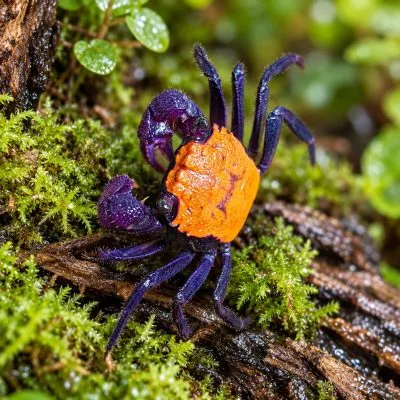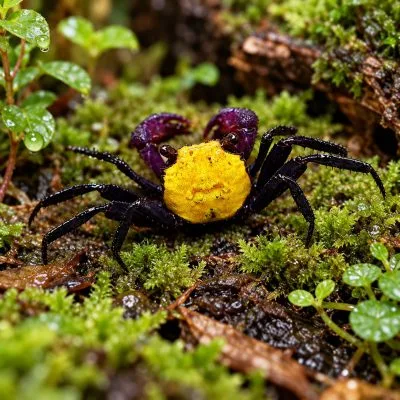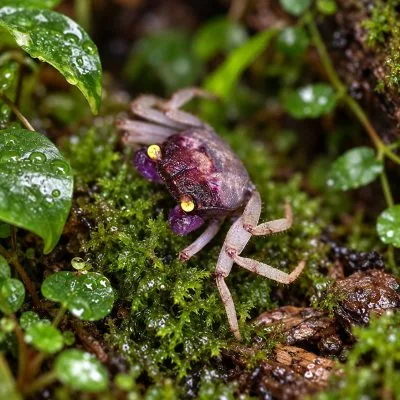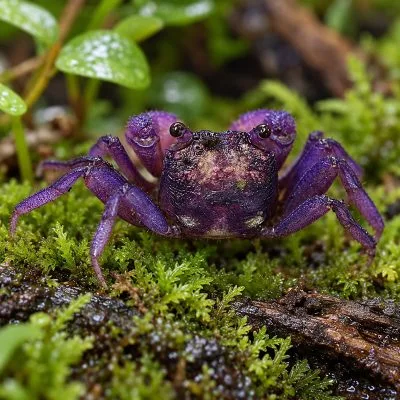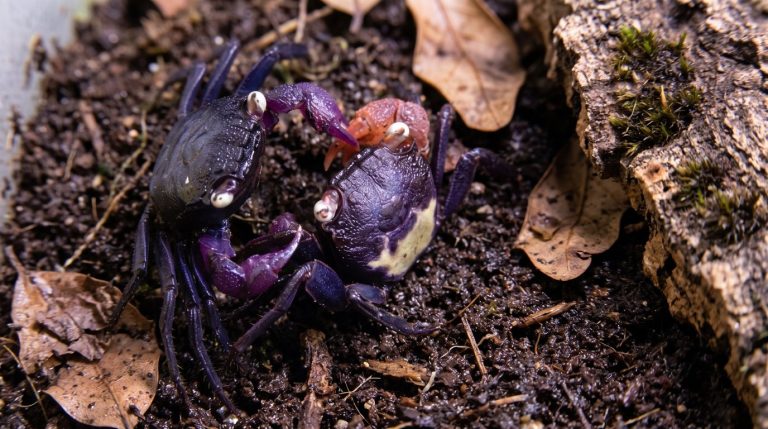
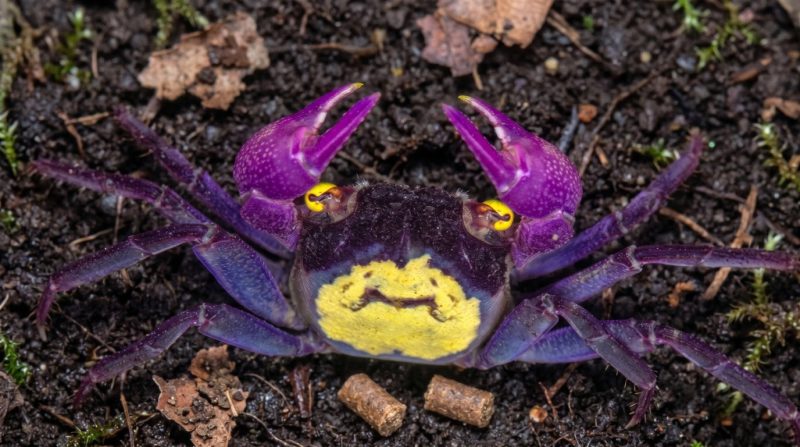
A healthy, settled vampire crab can go a few days without food and come through fine. In a tank where the soil holds springtails and isopods, or where food went in just before the keeper left, crabs have gone several weeks with nothing added. That doesn’t make weeks a plan. Crablets and newly arrived crabs shouldn’t be left that long, and the few days a settled adult handles easily are the gap we’d plan around in everyday vampire crab care.
How long can a healthy vampire crab go without food?
A few days, with no trouble at all, as long as the crab is settled in and the tank is otherwise in good shape: lid closed, land damp, water section full.
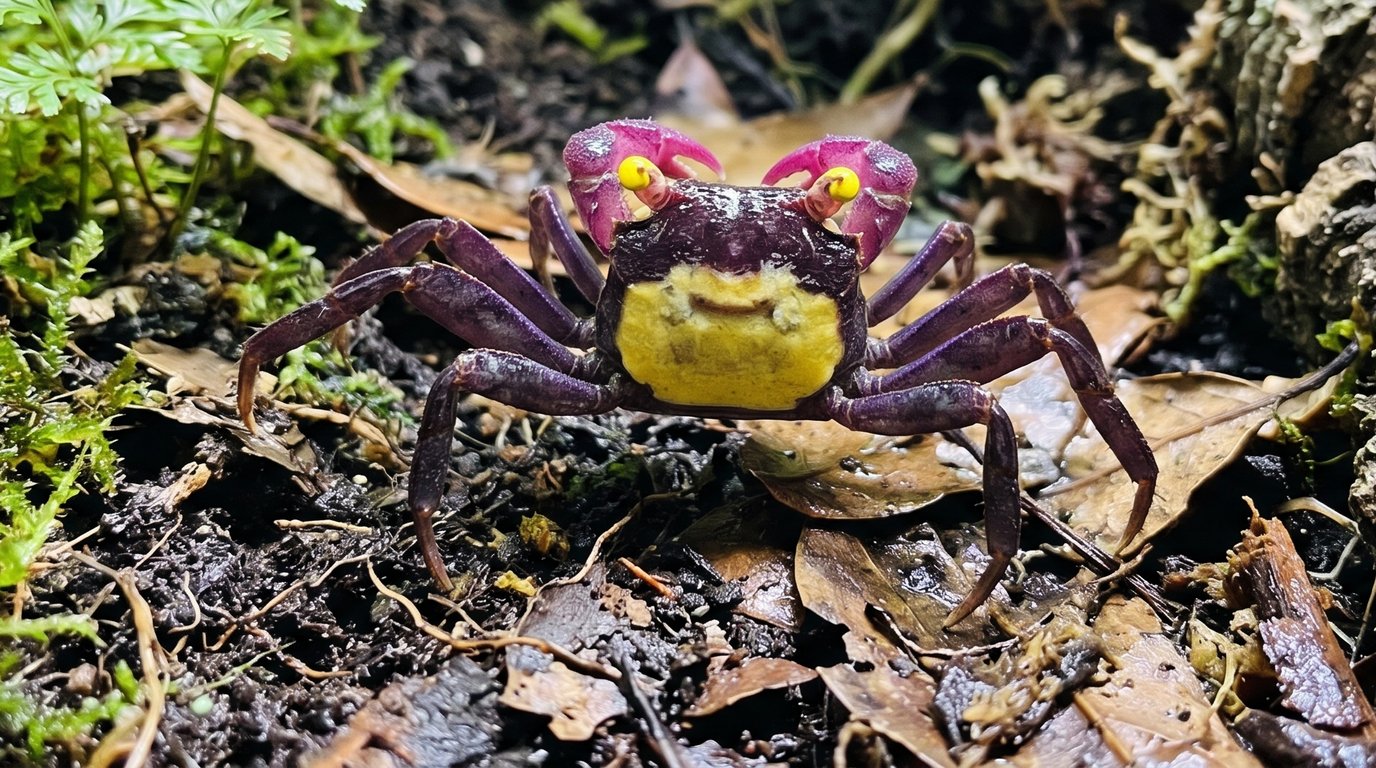
We’ve left our vampire crab paludariums for a few days with no feeding and no misting, and the crabs came through fine.
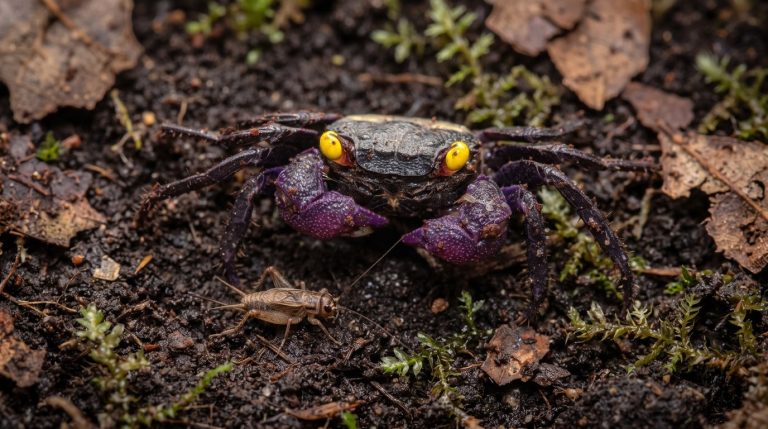
Longer gaps happen too. Settled vampire crabs have come through anywhere from a few days up to several weeks with no food added by their keeper, and no crab was lost to it. Look at what those tanks had, though. The soil held springtails and isopods, or the keeper put in plenty of food before leaving, or there were tank mates to hunt. None of those crabs went truly without food. They went without being fed.
That’s the difference that matters for your tank. A planted paludarium with leaf litter and a living soil gives a crab something to pick at between meals. A bare tank with a dish and a sponge gives it nothing. If you’re working out how often to feed vampire crabs, the same idea applies: the tank does part of the feeding, and the next-morning leftovers tell you how much.
Why we’d plan on days, not weeks, without feeding vampire crabs
Because surviving a long fast and coming through it unharmed aren’t the same thing. Nobody has starved a vampire crab in a study, so the best guide comes from larger relatives. In Chinese mitten crabs (Eriocheir sinensis), a freshwater-reared crab about two to three times a vampire crab’s width, more than half of a starved group was still alive after six weeks, but the starved crabs died at a clearly higher rate than fed ones, and their digestive gland began to waste away.1
So “it lived” and “it was fine” aren’t the same answer. Feed on your normal rhythm, and treat a gap of a few days as the most you’d choose on purpose. Crabs in tanks with a living soil have come through longer gaps by accident. That’s luck you can lean on once, not a schedule.
Which vampire crabs shouldn’t go days without food?
Crablets and newly bought crabs. Both are already close to the edge, for different reasons.
Crablets are the smallest crabs in your tank and still growing. In a freshwater crayfish, the smallest juveniles that never got food never molted at all, and after about nine days without food, feeding them again no longer kept them alive to their next molt. Larger juveniles held out for about seven weeks.2 That’s a different animal, but the direction is the one to plan for: the smaller the crab, the shorter the gap it can take. Keep feeding crablets small amounts on a regular rhythm, and don’t leave a tank with young in it for days.
New crabs are the other group. A newly bought vampire crab often hides and eats little or nothing you can see at first, with the first meal coming anywhere from the first night to about a week after arrival. Newly bought vampire crabs also often die between arrival and about two weeks later, even in a tank where other crabs do well. A crab in that stretch shouldn’t also be going without food because you’re away, so time any order of vampire crabs for a time when you’ll be home for the next two weeks. You choose Male or Female for each crab on the product page, and everything in our catalog is bred or propagated in our own tanks rather than collected from the wild.
Is your vampire crab going without food, or just eating where you can’t see?
Most of the time it’s eating where you can’t see. Vampire crabs feed mostly at night and out of sight, so food set out in the evening goes missing overnight while the keeper never sees a crab touch it. Leave a small piece near the hide or burrow in the evening and look the next morning. If it’s gone, your crab is eating. Run that test before you change foods or go digging for a vampire crab not eating, because a hidden crab that’s feeding at night needs nothing from you.
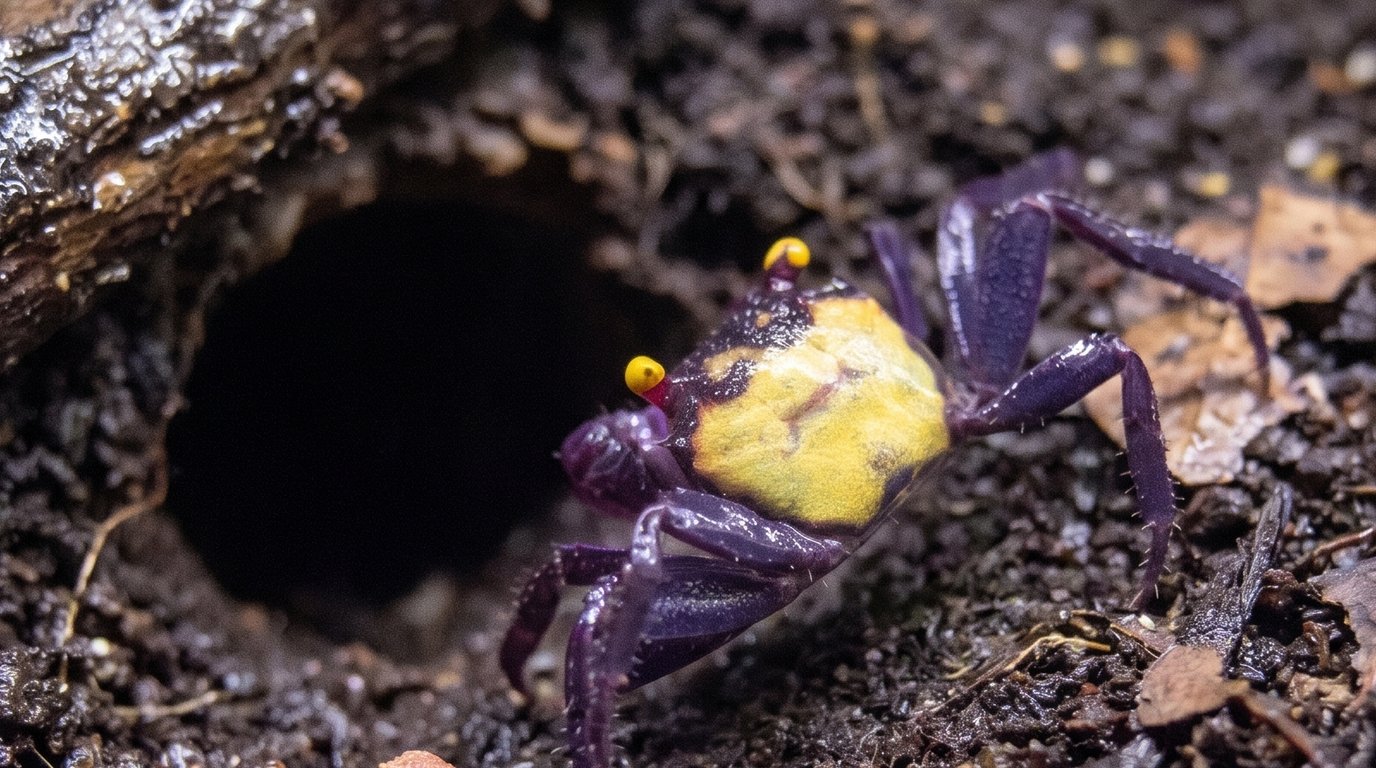
A molt is the other reason a crab skips food for a short while. In our paludariums, a crab goes off its food for a day or two around a molt. A crab that has gone quiet and off its food may simply be getting ready to shed or recovering from it. Leave it alone, keep feeding the rest of the group as usual and don’t dig it out to check. The old shell it leaves behind can look like a dead crab, which is a normal part of vampire crab molting.
Leaving vampire crabs for a few days without feeding them
For a weekend or a few days away, you don’t need anyone to feed a settled group. Feed them as usual the day before you leave, add a little extra food that keeps, such as dry fish food, and skip frozen food, which can mold in a warm, wet tank while you’re gone.
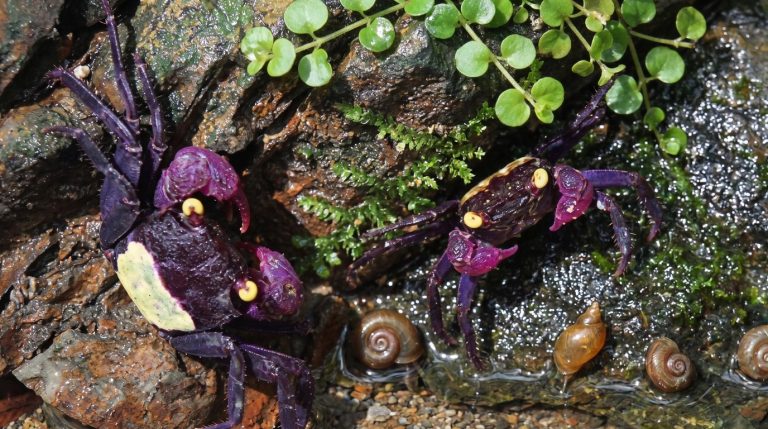
Think about the water section if it holds tank mates. In one tank shared with fish and mystery snails, vampire crabs left unfed for two days while their keeper was ill ate half the fish and most of the snails. Small, slow animals in the water are food to a hungry crab. Vampire crabs eat snails in a well-fed tank too, and a gap in feeding turns a snack into the main course, so feed well before a trip and don’t stretch the gap.
Food is only one part of leaving the tank. A lid with no gaps, a water section topped up the day you leave and a room that won’t overheat matter just as much to vampire crab care while you’re on vacation. For a week or longer, have someone come in to top up the water, add a little food and check the lid.
What to do when your vampire crabs haven’t eaten for a while
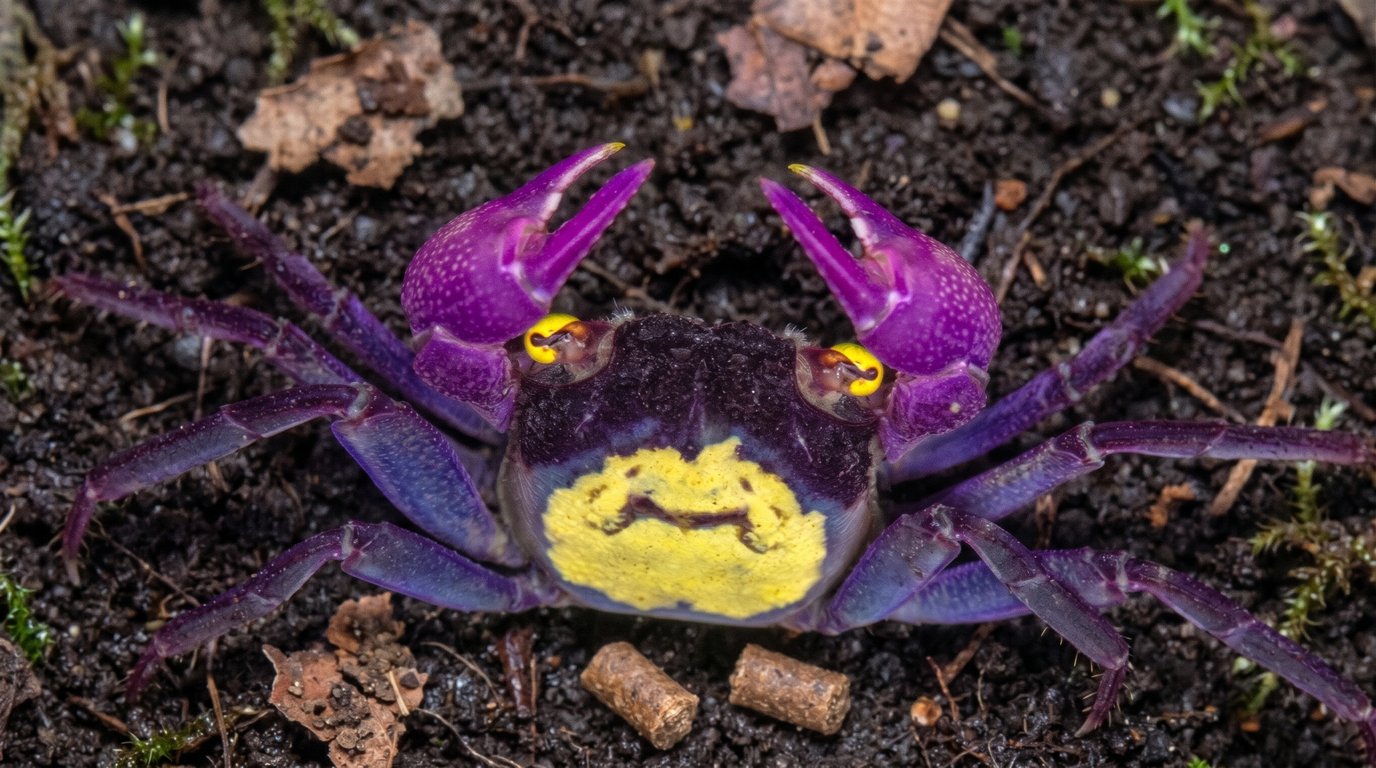
Start small and let the next morning guide you. After a trip or a gap, offer a normal small meal in the evening, check what’s left the next morning and lift any leftovers. Don’t make up for lost meals with a pile of food. Whatever the crabs don’t eat sits in the damp and can mold.
- Food you put out in the evening is gone or picked at by morning.
- Crabs show up after dark the way they did before.
- Leftovers get smaller over the next few feedings, not larger.
Worry when a crab that has been with you a while leaves its food untouched morning after morning, or stops moving, foams at the mouth or drops legs. Those point to something other than a missed meal, and the checks for vampire crabs dying are the place to start.
References
2 Sources
- Huang et al., Antistarvation Strategies of E. sinensis: Regulatory Networks under Hepatopancreas Consumption, Oxidative Medicine and Cellular Longevity, 2020.
- Calvo et al., Starvation resistance in juvenile freshwater crayfish, Aquatic Biology 16, 2012.
Ready to get started?
Shop our Vampire Crab collection
8 products available · Live Arrival Guarantee